At a glance
Evaluate office supplies liquidation pallets by paper specifications, printer compatibility, packaging units, and condition before choosing a load for your resale customers.

Office supplies liquidation pallets can look straightforward until a reseller discovers that the paper is the wrong size, the toner fits an obsolete printer, or the manifest counts individual pens rather than retail packs. The useful buying question is not simply how many items are included. It is how much of the described inventory matches your customers’ equipment, purchasing habits, and packaging expectations.
Start with PalletCove’s liquidation load categories for the broad category picture, then evaluate office supplies at the specification level. A business-supply seller serving local offices needs a different assortment from a marketplace seller shipping individual cartridges or a discount store selling notebooks and loose stationery.
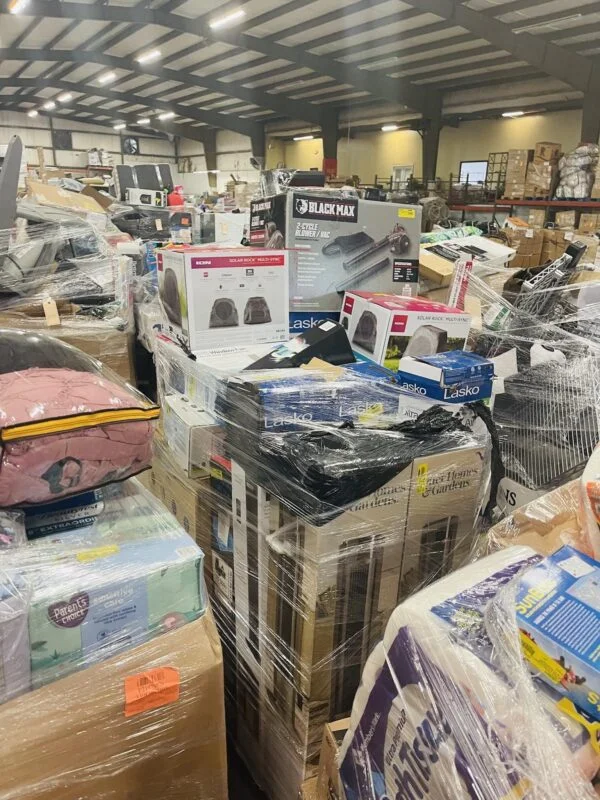
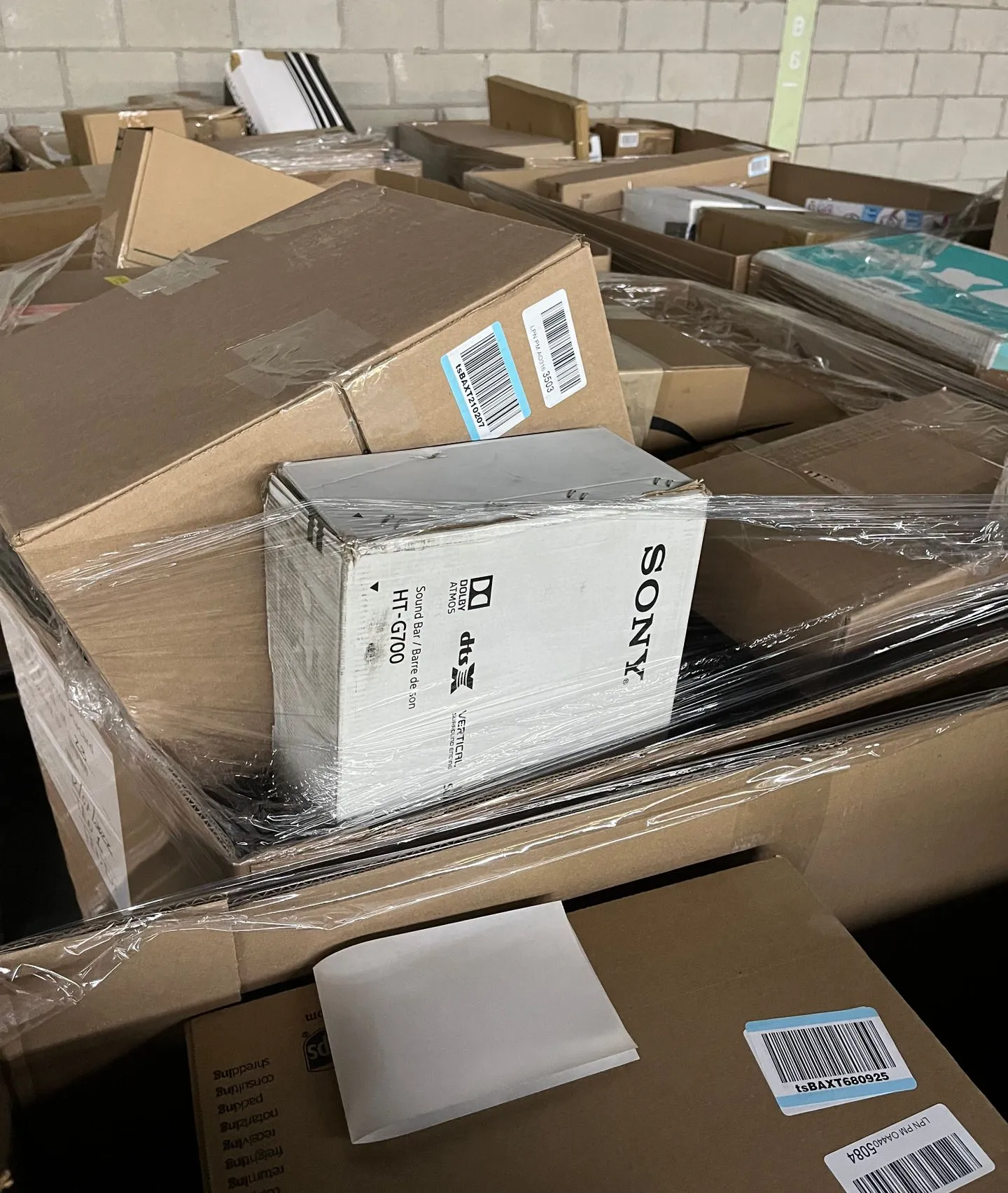
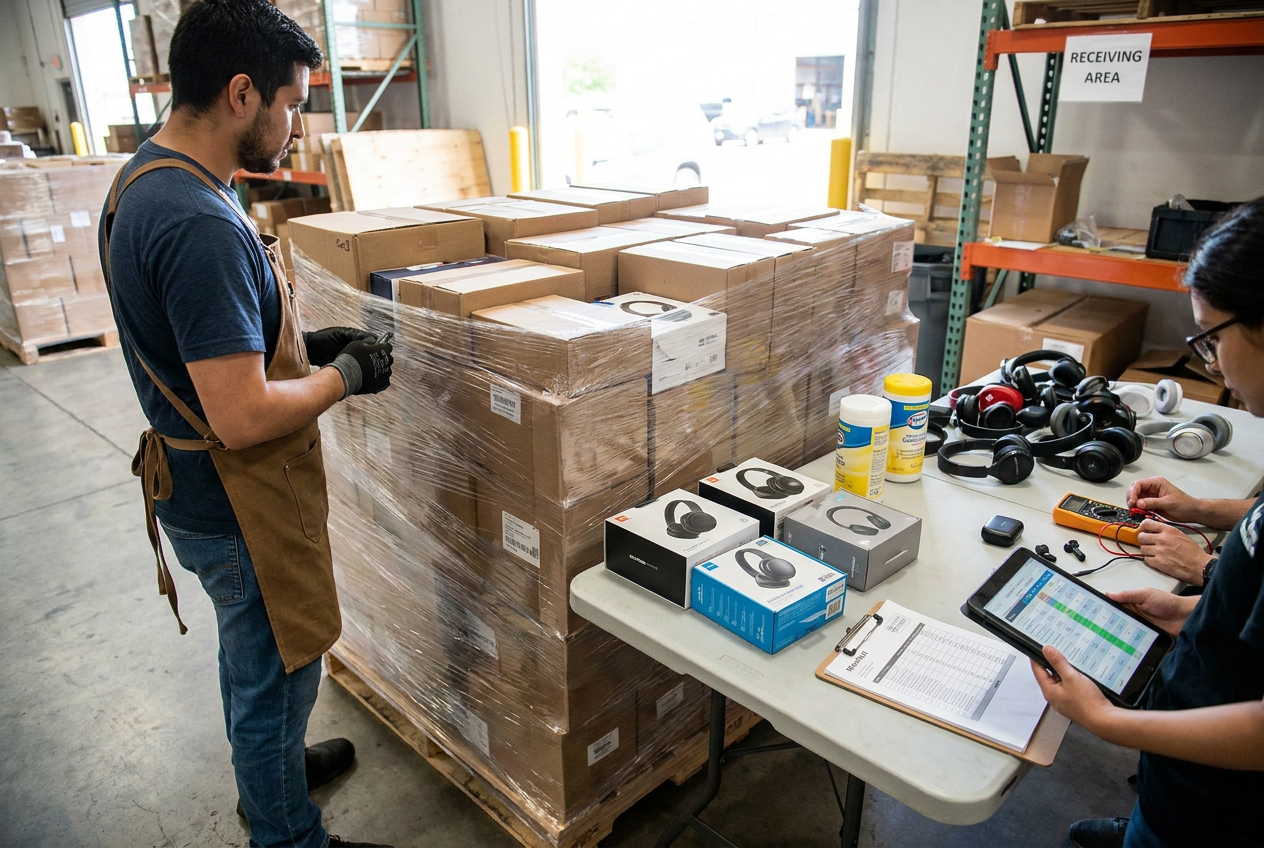
This guide explains what to request, how to interpret the answers, and where uncertainty should change a purchase decision. Representative photos are not a substitute for the listing: contents vary by pallet, pallets are not individually tested, and merchandise is sold as described in the listing.
1. Identify the load type and your customer fit
An office-supply liquidation pallet is a freight-handled assortment of business consumables, stationery, or related accessories sold through liquidation channels. A truckload is a larger shipment that may occupy a full trailer; neither format guarantees a particular assortment or condition grade.
Distinguish a category-focused lot from general merchandise, meaning mixed products spanning several retail departments. The general merchandise category may suit buyers who can handle variety, while the truckload category helps buyers compare larger purchasing formats. Neither category label alone establishes office-supply content.
Keep adjacent categories separate when planning demand:
- Electronics are powered devices and digital accessories; printer hardware belongs here, even when shipped beside stationery.
- Tools are implements and equipment for construction, repair, or maintenance; tool and home improvement pallets require different compatibility checks.
- Apparel means clothing; apparel and footwear pallets depend heavily on sizes and paired inventory.
- HBA means health and beauty aids, often grouped with home and personal care pallets.
- Home goods are household furnishings and everyday domestic items, not automatically business supplies.
- Outdoor power equipment pallets contain powered yard-maintenance equipment rather than routine office consumables.
For adjacent inventory, the guides to power-tool accessory compatibility and smart-home electronics compatibility address their own technical constraints. Do not apply those categories’ resale assumptions to paper or cartridges.
2. Read paper specifications before comparing quantities
Paper specifications determine whether stock suits invoices, school handouts, presentations, mailing, or specialty printing. “White paper” is not an adequate purchasing description.
| Specification | What to verify | Why it matters |
|---|---|---|
| --- | --- | --- |
| Sheet dimensions | Letter, legal, A4, or another stated size | Trays, document formats, and customer demand differ |
| Weight | Basis-weight designation and grams per square meter, when available | Pound ratings are not directly comparable across paper classes |
| Surface | Uncoated, coated, glossy, matte, or specialty | Surface must suit the printer and intended output |
| Brightness and opacity | Manufacturer’s stated specifications | Brightness affects appearance; opacity affects show-through |
| Printer suitability | Laser, inkjet, or explicitly multipurpose | Unsuitable media can print poorly or damage equipment |
| Package condition | Wrapper integrity, moisture signs, bent edges | Handling and storage damage can impair feeding |
Letter paper measures 8.5 × 11 inches; A4 measures 210 × 297 millimeters. They are close enough to confuse in photographs but not interchangeable for every workflow. Legal paper measures 8.5 × 14 inches and serves a narrower demand profile.
A common 20 lb bond sheet is approximately 75 gsm, but “20 lb” is not a universal thickness measurement. Basis weight depends on the paper category’s reference sheet size. Use gsm and the printer’s supported media specifications when comparing unlike stock.
Ask whether cartons contain matching paper specifications or assorted reams. A ream often contains 500 sheets, but specialty packs and other formats vary; verify the label rather than assuming. Water staining, waviness, sticking sheets, or crushed corners deserve attention even when outer cartons appear closed.

3. Match printer consumables by exact identifier
Ink and toner are not interchangeable. Ink cartridges supply liquid ink to compatible inkjet printers; toner cartridges supply powder for compatible laser printers. Drums, waste-toner containers, maintenance boxes, ribbons, and imaging units are separate consumables even when packaging resembles cartridge packaging.
For each meaningful cartridge line, request:
- Manufacturer and complete cartridge part number, including suffixes.
- Compatible printer models and any regional restrictions.
- Color and standard, high-yield, or other stated capacity.
- Whether it is original equipment manufacturer stock, third-party compatible stock, or remanufactured stock.
- Seal condition, date markings, and any available storage information.
- Whether a multipack contains every advertised component.
Cross-check compatibility against manufacturer documentation. Similar numbering or a matching cartridge shape is insufficient. Some printers use chips or firmware controls that affect third-party cartridge acceptance; do not advertise compatibility that you cannot substantiate.
Published page yield generally reflects specified test conditions, not the exact output every customer will achieve. Coverage, settings, and printer behavior affect actual yield. An unopened box also does not prove remaining usable life: storage conditions, age, and seal integrity still matter.
Treat leaked ink, loose toner, damaged seals, and unidentified cartridges as separate evaluation issues. Avoid opening sealed consumables merely to count internal parts if that would compromise their saleable packaging. Plan appropriate handling for unusable consumables and devices rather than assuming everything belongs in ordinary trash.
Buy specifications and identifiable selling units—not an impressive-looking stack of boxes.
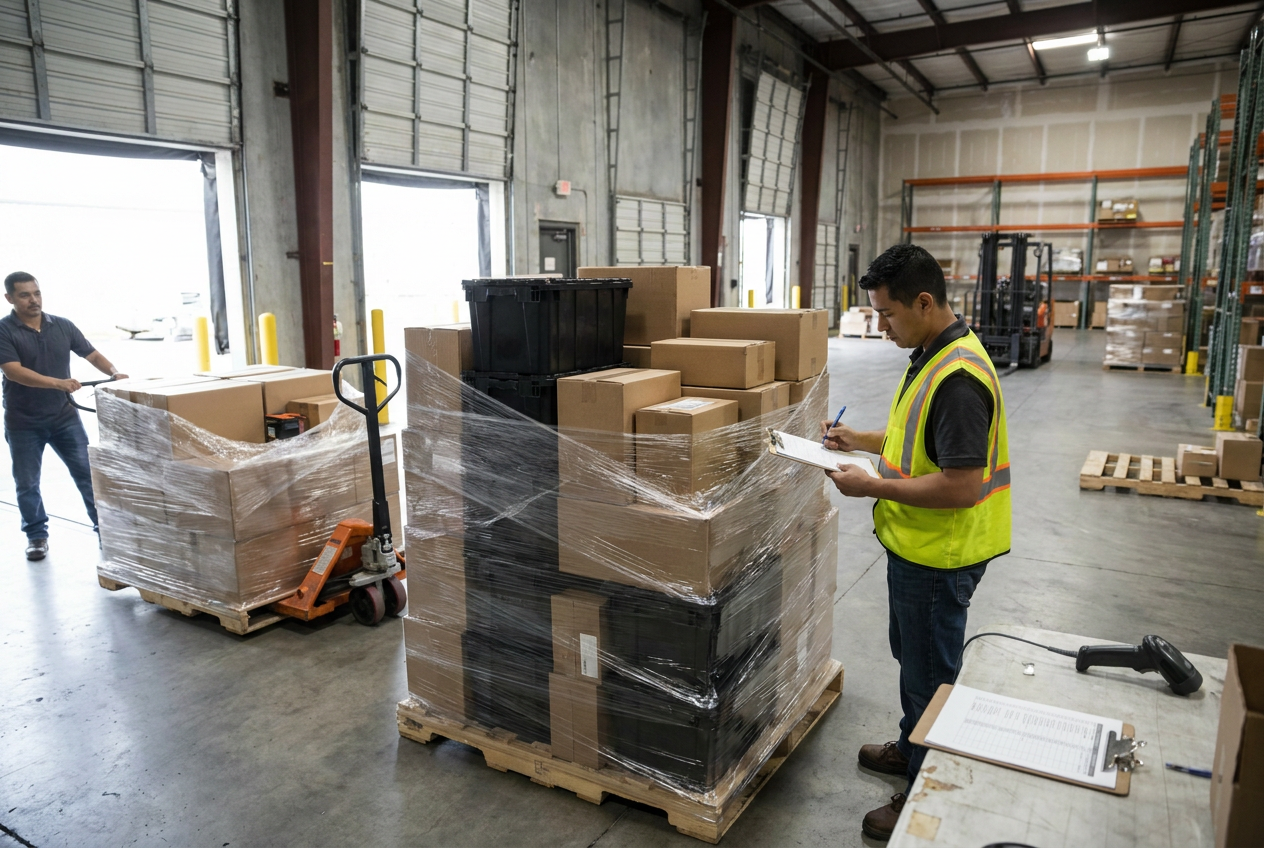
4. Reconcile the manifest with packaging units
A manifest is an inventory description supplied for a lot. Its usefulness depends on detail and accuracy; ask whether it is lot-specific, approximate, or illustrative, and how discrepancies are handled under the listing terms.
The critical distinction is between an each, an inner pack, a retail multipack, and a master case. A quantity of “24” could describe 24 pens, 24 pen packs, or 24 cartons. Those represent different inventories and fulfillment costs.
Build a worksheet with SKU or UPC, description, quantity, unit of measure, pack size, condition, and intended selling unit. For example, if a listing explicitly states ten cartons containing five 500-sheet reams each, that describes 50 reams and 25,000 sheets. Do not apply that calculation to cartons whose pack configuration is unknown.
Also check:
- Whether a carton barcode identifies a case rather than the retail unit.
- Whether assorted colors or sizes are counted as one line.
- Whether opened packs remain complete.
- Whether labels, envelopes, and binder inserts have usable dimensions and quantities.
- Whether dated planners or calendars still fit your selling window.
For adhesive labels, verify sheet layout, label dimensions, and printer suitability. For envelopes, confirm size, window position, closure type, and compatibility with your customers’ mailing workflow.
5. Interpret condition grades without assumptions
A condition grade describes the listed merchandise state, but grading vocabulary is not identical across suppliers. Use the listing’s actual description and exclusions, not a general expectation attached to a label. The guide to liquidation pallet types explains broader format differences.
Overstock describes inventory beyond a seller’s needs; shelf pulls are goods removed from retail shelves. Neither term, by itself, establishes NEW ONLY eligibility or pristine packaging. Customer returns may have been opened, partially consumed, substituted, or returned for an unknown reason.
Mixed-condition lots can combine several states. Used stock may show wear or consumption, while salvage may require recovery, parts harvesting, or disposal rather than ordinary resale. An as-is description should prompt close reading of the stated condition and claims terms, not an assumption that every product has the same return rights.
For office supplies, condition has two layers: the product and its selling package. An undamaged binder in a torn sleeve may suit a discount shelf, while a partially used cartridge creates a different identification and performance problem. Record these separately in your receiving and pricing process.
6. Compare the listed price with usable inventory
PalletCove’s listed price includes freight. Free shipping is the only delivery option on every order to all 48 contiguous states. Evaluate the total listing price against your verified selling units rather than calculating from a promotional retail figure.
A useful planning calculation is:
Listed lot price ÷ estimated saleable units = estimated acquisition cost per saleable unit.
This is a planning tool, not a promise of yield or profit. Separately budget sorting labor, packaging, storage, marketplace expenses, and responsible disposal. For unlike products, avoid assigning the same cost to a paper ream and a toner cartridge simply because each counts as one unit.
The Amazon General Merchandise Truckload listing and WM GM Truckloads Pallets listing are broader-load comparison points, not evidence of dedicated office-supply availability. Check their current descriptions and ask whether documented contents match your requirements. PalletCove is an independent reseller and is not affiliated with, endorsed by, or sponsored by any retailer named.
Use the liquidation pallet buying guide for broader purchasing preparation. Office-specific warning signs include unidentified cartridges, unspecified paper sizes, and case quantities that cannot be reconciled.
7. Order with receiving capacity and timing in mind
Begin with the liquidation pallets hub, then request the available listing details before submitting an order. Clarify the manifest basis, condition, quantities, packaging, and receiving requirements while the order is under review.
No payment is collected on the website order form. After order review, PalletCove emails a secure card link. Credit and debit cards—Visa, Mastercard, American Express, and Discover—are the only accepted payment method. Valid resale certificates are reviewed and applied where the buyer’s state allows.
Handling takes 1–3 business days after payment clears. Transit from Houston is typically 3–7 business days, for an estimated 4–10 business days total. The processing cutoff is 2:00 PM Central Time, America/Chicago, Monday–Friday; after-cutoff confirmations begin the next business day. Weekends and applicable holidays do not count.
Buyers comparing liquidation pallets in Texas and liquidation pallets in Florida receive the same free-shipping framework, though arrival timing remains an estimate.
A pallet shipment may travel LTL, meaning less-than-truckload service, while a larger order may require a full trailer. Confirm shipment configuration, access, unloading arrangements, and storage capacity with the order desk. Paper is dense; match handling equipment to documented shipment weight rather than visual size.
8. Inspect delivery and document claims promptly
Prepare a dry receiving area and keep cartons off damp floors. At delivery:
- Compare shipment identifiers and visible pallet counts with the paperwork.
- Photograph wrapping, cartons, labels, and visible damage before moving or unpacking goods.
- Record visible damage or shortages on delivery paperwork where possible.
- Separate affected merchandise and preserve relevant packaging.
- Reconcile quantities by the manifest’s stated unit of measure.
Report delivery issues within 48 hours and provide the order reference, affected line items, and clear evidence. This reporting request does not shorten eligible new-product return rights.
Under the Refund & Returns Policy, United States products explicitly listed as NEW ONLY qualify for defective and non-defective returns and exchanges within 30 calendar days of delivery. Returns are by mail; the customer is responsible for the return label and shipping. A restocking fee of 15% of the product price applies.
Refund processing takes 10 calendar days after authorized return receipt and inspection, or approval where no physical return is required. Mixed and used loads have separate claims terms, not routine change-of-mind returns. Do not assume overstock, shelf-pull, customer-return, or salvage listings qualify as NEW ONLY.
Frequently asked questions
Are office supplies liquidation pallets always manifested?
Do not assume a manifest is available or complete. Ask what documentation accompanies the specific listing and whether quantities represent individual items, packs, or cases.
Can I assume sealed cartridges work?
No. Sealed packaging does not establish correct compatibility, storage history, or function, and PalletCove pallets are not individually tested. Verify identifiers and describe only what you can support when reselling.
Is a full truckload better than a pallet?
Only if the assortment, volume, storage needs, and sorting workload suit your operation. A larger shipment of incompatible paper or slow-demand cartridges does not become more suitable because it contains more units.
Can damaged cartons still contain saleable paper?
Sometimes, but carton damage requires inspection rather than an automatic acceptance or rejection. Check ream wrappers, sheet edges, moisture evidence, and consistency with the listed condition before assigning inventory to a sales channel.
What is the most common quantity mistake?
Confusing a manifest unit with a retail selling unit. Verify pack sizes and complete multipacks before using item counts to compare prices or publish resale listings.
Talk to PalletCove Liquidation
Choose office supplies liquidation pallets by customer fit: exact paper specifications, identifiable printer consumables, clear packaging units, and a condition description you can work with. Return to the load-category selection hub when comparing office supplies with other assortments.
PalletCove Liquidation LLC is located at 4000 Telephone Rd Unit B11, Houston, TX 77087. Call (713) 819-3904 or email sales@palletcoveliquidation.com. Hours: Mon–Fri 8:00 AM – 6:00 PM CT, Sat 9:00 AM – 2:00 PM CT, Sun closed.
Before choosing a load, contact our order desk to clarify listing details and review current inventory for available options.
About PalletCove Liquidation
Published by PalletCove Liquidation LLC, based in Houston, Texas. Our buying guides cover evaluating liquidation inventory and preparing for delivery. Consult the current product listing and store policies for purchase terms.