At a glance
Assess automotive liquidation pallets with a practical checklist for vehicle fitment, part numbers, missing assembly components, condition, and the documentation you need before ordering.

Automotive liquidation pallets require a different buying discipline from broadly usable merchandise. A replacement part can look intact yet fit only a narrow combination of model year, engine, drivetrain, and production date. An accessory can be correctly identified but unusable without its mounting hardware or wiring adapter.
For an independent reseller, the first question is not how many pieces a load contains. It is how many pieces can be identified accurately, matched to an application, and offered with an honest description of their condition and completeness. Use the liquidation load categories guide for the broader category comparison; this article focuses on those automotive-specific checks.
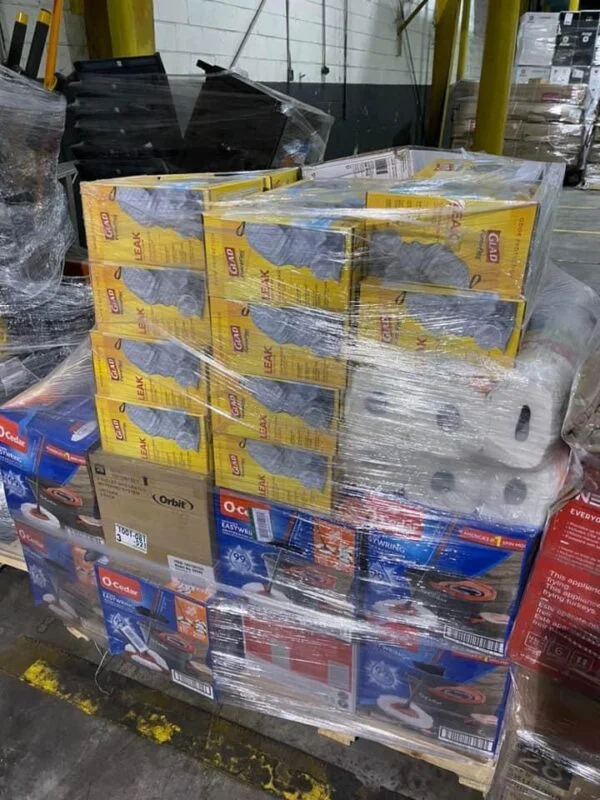
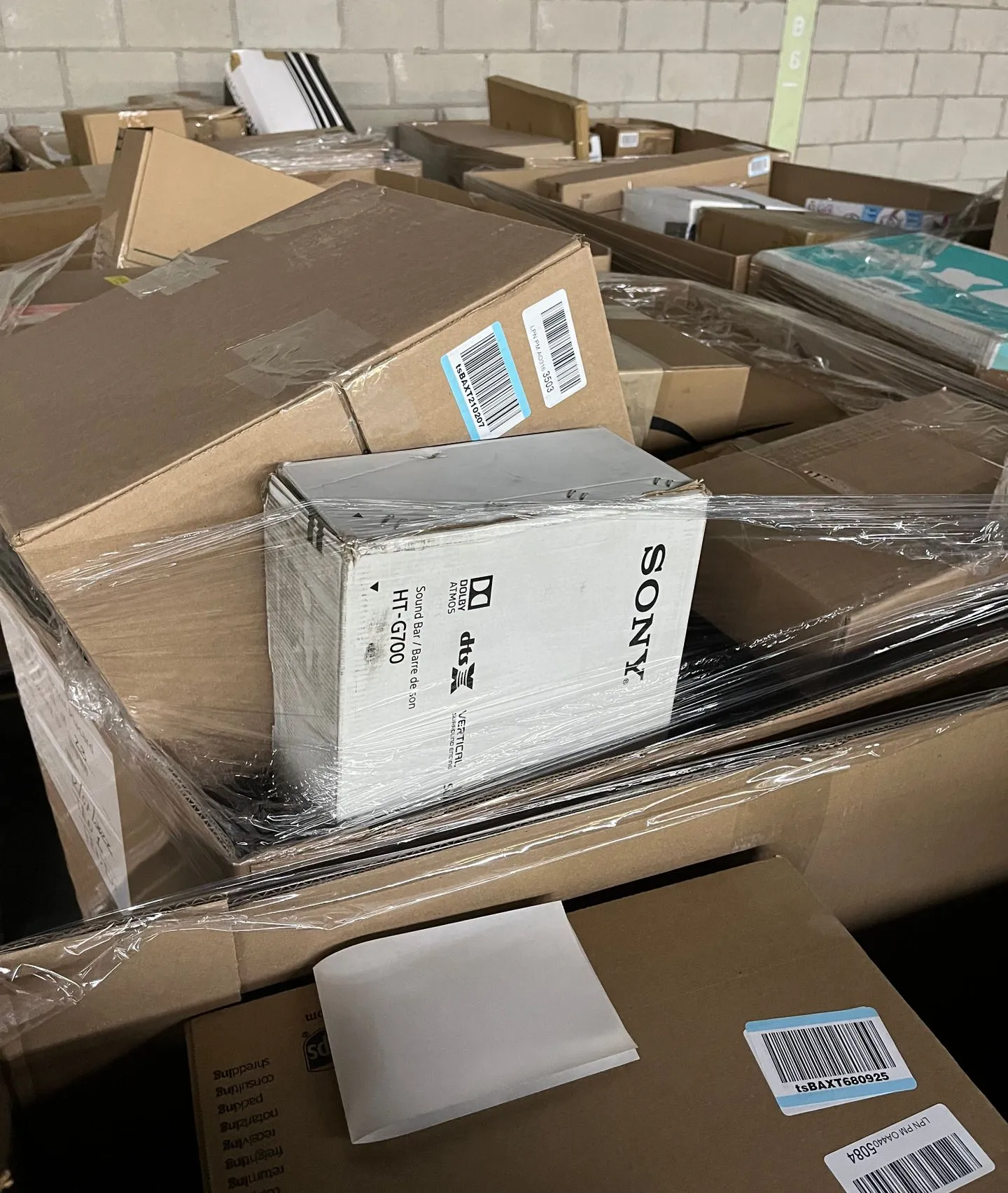
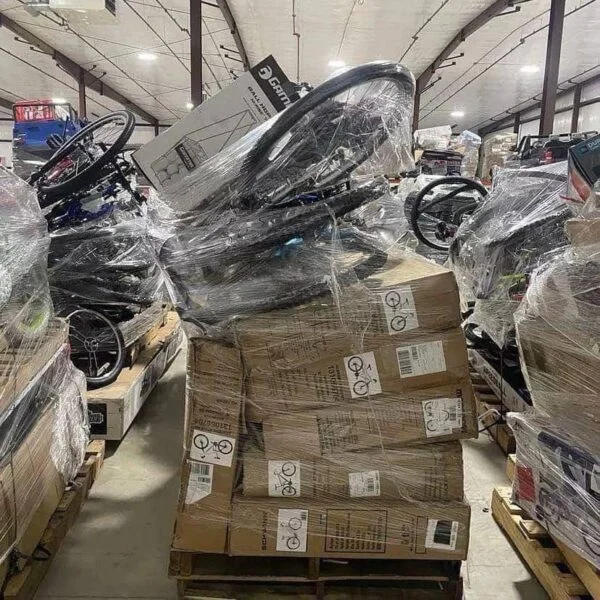
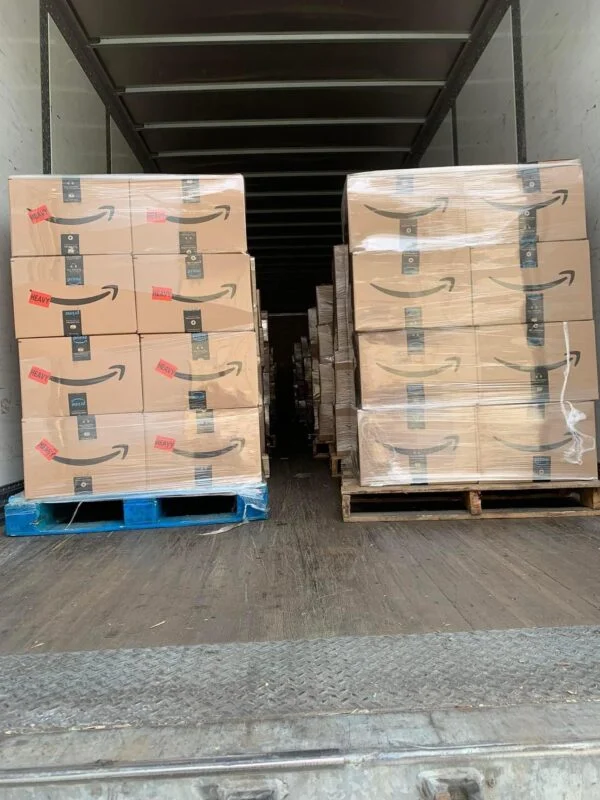
Photos show representative loads, contents of each pallet vary, and pallets are not individually tested. Contents are sold as described in the listing. Treat fitment, identification, and completeness as separate questions rather than assuming one answers the others.
1. Understand what an automotive lot contains
An automotive liquidation pallet is a wholesale grouping of vehicle-related merchandise sold under a listing’s stated contents and condition. Possible merchandise includes accessories, replacement parts, installation supplies, and vehicle electronics; the actual listing determines what is offered.
Keep adjacent categories distinct. General merchandise means assorted goods across product categories. Electronics are electrically powered devices and related components; tools are implements used for installation, repair, or maintenance. Apparel means clothing, HBA means health and beauty aids, and home goods are household-use products such as furnishings and kitchenware. These may share a mixed load, but they need different sorting criteria.
The general merchandise category and truckload category provide broader inventory contexts, not guarantees of automotive content. Similarly, the Amazon General Merchandise Truckload listing and HD GM Truckloads Pallets listing are mixed-load options to examine by their descriptions, not automotive-only substitutes. PalletCove is an independent reseller and is not affiliated with, endorsed by, or sponsored by any retailer named.
Electronics pallets, tool and home improvement pallets, apparel and footwear pallets, home and personal care pallets, and outdoor power equipment pallets have their own assessment requirements. For related compatibility issues, see power tool accessory lot checks and electronics pallet testing costs.
2. Separate load format from condition grade
A category-focused pallet may simplify sorting, while a mixed pallet may contain unrelated merchandise. A truckload increases the identification workload and storage commitment. A full trailer describes shipment scale, not uniform contents or condition. LTL means less-than-truckload transport, where a shipment shares trailer capacity with other freight; the shipment arrangement should be confirmed for the order.
Use the guide to types of liquidation pallets to distinguish formats. Condition grade is a separate description and should be interpreted through the listing rather than an assumed industry-wide grading system.
| Listed condition | What it generally describes | Automotive check |
|---|---|---|
| --- | --- | --- |
| Overstock | Excess inventory | Confirm identification, storage effects, and listing condition |
| Shelf pulls | Merchandise removed from sales shelves | Inspect labels, packaging, and missing inserts or hardware |
| Customer returns | Merchandise returned by customers | Check for installation traces, substitutions, damage, and missing pieces |
| Used | Previously used merchandise | Assess wear and whether function can be established safely |
| Salvage | Merchandise intended for recovery, repair, or parts | Do not assume a complete, functional assembly |
| Explicitly NEW | Merchandise specifically listed as new | Verify that the exact listing supports that description |
Overstock and shelf pulls are not automatically new. An “as-is” description is not a fitment guarantee, and it does not replace the applicable policy or specific listing terms. Ask about ambiguous descriptions before ordering.
3. Verify fitment beyond year, make, and model
Fitment is the match between a part and the vehicle application for which it was designed. Year, make, and model start the search, but often do not finish it. Two vehicles with the same model badge can use different braking, electrical, suspension, or body components.
Before accepting a compatibility claim, check the application details relevant to that part:
- Engine displacement, engine code, and fuel type.
- Transmission and two-wheel-drive versus four-wheel-drive configuration.
- Body style, wheelbase, trim, and equipment package.
- Production date or chassis/VIN range where the catalog specifies a split.
- Front versus rear and left versus right installation position.
- Connector shape, pin count, mounting points, and dimensions.
- Market-specific requirements and emissions application where relevant.
A VIN, or vehicle identification number, can help establish vehicle specifications, but a basic VIN decoder may not resolve every installed option. Use a manufacturer’s application catalog or a reliable parts database, including its footnotes and exclusions.
“Universal” accessories still have limits. Seat covers can depend on seat geometry and side-airbag provisions; roof accessories need suitable mounting systems and load limits. Electrical accessories may require a particular voltage, connector, or communications interface.
A readable part number identifies a candidate part; verified application data establishes fitment, and a separate check establishes completeness.

4. Reconcile the manifest with actual part numbers
A manifest is an inventory document describing a load. Its usefulness depends on the available fields and their accuracy. Ask whether it includes manufacturer, manufacturer part number, quantity, condition, and a meaningful item description. A listing without a detailed manifest leaves more identification work unresolved before purchase.
An internal stock number or marketplace identifier is not necessarily a manufacturer part number. A UPC identifies a packaged product but may not resolve an application revision. A casting number on a housing may identify only the casting, not the complete service assembly.
Use this verification sequence:
- Record the manufacturer and full part number, including suffixes and revision characters.
- Compare packaging labels with markings on the component when accessible. A returned part may be in the wrong box.
- Search the manufacturer’s catalog for application notes and exclusions.
- Check superseded numbers carefully. A replacement number may require additional components or apply only under stated conditions.
- Compare dimensions, connector details, and installation position with the catalog entry.
- Record the source and date of the lookup so later resale descriptions remain traceable.
Do not merge similar-looking numbers into one SKU. Preserve leading zeros, hyphens, and suffixes in your inventory record. Mark unresolved items as unidentified rather than turning a guess into a compatibility claim.
For quantity reconciliation, distinguish pieces from sets. One box may represent one kit containing several components, while several loose pieces may belong to one incomplete kit. Neither packaging count nor manifest line count necessarily equals sellable units.
5. Look for incomplete assemblies and safety limitations
An assembly is a group of components intended to work together. The most valuable-looking component may be present while a small proprietary bracket, sensor, adapter, or controller is missing. Compare contents against the manufacturer’s parts diagram or package-content list, not just a product photograph.
| Item type | Completeness questions | Fitment or resale concern |
|---|---|---|
| --- | --- | --- |
| Lighting assembly | Are modules, covers, brackets, and required adapters included? | Connector and lighting-system variants may differ |
| Mirror assembly | Are mounting hardware and electrical components present? | Heating, cameras, memory, and connector options matter |
| Audio accessory | Are harnesses, mounting pieces, and required interfaces included? | Vehicle integration or activation may be required |
| Roof or cargo accessory | Are clamps, keys, locks, and vehicle-specific mounts present? | A missing mounting component can prevent safe installation |
| Replacement-part kit | Are seals, fasteners, and companion parts included as specified? | Some installation hardware must be replaced rather than reused |
Distinguish missing components from items the manufacturer normally sells separately. Both affect the buyer’s installation requirements, but only one represents an incomplete package relative to its original contents.
Safety-critical parts deserve additional caution. Do not represent brakes, steering components, restraint-system parts, or damaged structural accessories as ready to install based on appearance. Unknown history, recalls, corrosion, cracks, or uncertain identity can make resale inappropriate. Check applicable recall information and obtain qualified assessment where needed; do not improvise tests on airbags or other pyrotechnic devices.
For batteries, leaking fluids, and damaged electronics, separate affected material and seek an appropriate handling or recycling route. Do not put unidentified hazardous material into ordinary disposal.

6. Price the verification workload, not the piece count
The listed price includes freight. Compare offers using that price and the work required to identify, sort, document, store, and responsibly handle the contents. Do not substitute a manifest’s suggested retail figures for evidence of demand or actual condition.
A practical worksheet should separate:
- Purchase price and the quantities described in the listing.
- Identification and catalog-research time.
- Qualified inspection or testing costs where appropriate.
- Missing-component sourcing and replacement packaging.
- Storage space for bulky or slow-moving applications.
- Disposal or recycling needs for unsuitable merchandise.
Dividing price by listed pieces produces only a rough purchase-cost measure. A more useful planning calculation is total acquisition and preparation cost divided by the number of units you can actually identify and responsibly offer. Before buying, that denominator remains an estimate—not a promised yield.
Common mistakes include assuming broad fitment from appearance, treating sealed packaging as proof of contents, counting incomplete kits as complete units, and scaling to a truckload before establishing an identification workflow. The liquidation pallet buying guide covers broader purchasing discipline without replacing these automotive checks.
7. Order, receive, and document the load
Use the liquidation pallets inventory hub to orient your search, then review the exact listing. Buyers researching liquidation pallets in Texas or liquidation pallets in Florida receive the same free-shipping approach: free shipping is the only delivery option on every order to all 48 contiguous states, with freight included in the listed price.
Before submitting an order, clarify available manifest information, listed condition, quantities, and receiving arrangements. No payment is collected on the website order form. After order review, a secure card link is emailed; Visa, Mastercard, American Express, and Discover credit and debit cards are the only accepted payment method. Valid resale certificates are reviewed and applied where the buyer’s state allows.
Handling takes 1–3 business days after payment clears. Transit from Houston is typically 3–7 business days, for an estimated 4–10 business days total. The processing cutoff is 2:00 PM Central Time, America/Chicago, Monday–Friday; after-cutoff confirmations begin the next business day. Weekends and applicable holidays do not count.
On delivery day:
- Photograph the load, wrapping, labels, and visible damage before unpacking.
- Note visible discrepancies on delivery documentation where possible.
- Preserve packaging and order records while reconciling contents.
- Separate damaged, leaking, unidentified, or potentially unsafe merchandise.
- Record differences against the listing or manifest with specific photographs and quantities.
Request delivery-issue reporting within 48 hours. Under the United States Refund & Returns Policy, products explicitly listed as NEW ONLY qualify for defective and non-defective returns and exchanges within 30 calendar days of delivery. Returns are by mail, the customer is responsible for the return label and shipping, and a restocking fee of 15% of the product price applies. Refund processing takes 10 calendar days after authorized return receipt and inspection, or approval where no physical return is required. Mixed/used loads have separate claims terms, not routine change-of-mind returns; the 48-hour reporting request does not shorten eligible new-product returns.
Frequently asked questions
Does an automotive pallet guarantee parts for popular vehicles?
No. Only the listing and available manifest establish the described assortment. Evaluate application breadth from verified part numbers rather than the category name.
Can I verify fitment from a box label alone?
A label is a starting point, not conclusive evidence. Compare it with the actual component and confirm application details through reliable catalog data, especially for customer returns.
Are automotive liquidation pallets individually tested?
PalletCove pallets are not individually tested. Do not assume electrical function, installation readiness, or complete assemblies unless supported by the listing’s description.
Should an incomplete kit be sold as individual parts?
Only when each component can be accurately identified and responsibly described. Do not imply that separated components constitute a complete kit or that missing safety-related hardware is optional.
Is a truckload better than a pallet for automotive resale?
Not automatically. A truckload requires greater capacity for sorting, fitment research, storage, and exception handling; the right scale depends on your operation and the actual load description.
Talk to PalletCove Liquidation
Before committing, establish what is known about identification, fitment, completeness, and condition—and what remains unresolved. Return to the wholesale liquidation load categories for the broad comparison, then assess each automotive opportunity on its own documented contents.
PalletCove Liquidation LLC is located at 4000 Telephone Rd Unit B11, Houston, TX 77087. Call (713) 819-3904 or email sales@palletcoveliquidation.com. Hours are Mon–Fri 8:00 AM – 6:00 PM CT, Sat 9:00 AM – 2:00 PM CT, Sun closed.
For listing questions, contact our order desk and review current inventory before placing an order.
About PalletCove Liquidation
Published by PalletCove Liquidation LLC, based in Houston, Texas. Our buying guides cover evaluating liquidation inventory and preparing for delivery. Consult the current product listing and store policies for purchase terms.