At a glance
Learn how ISBN mix, edition age, binding condition, and textbook content affect book liquidation pallets—and how to evaluate manifests, channel fit, costs, and delivery before ordering.

Book liquidation pallets can contain useful resale inventory, but a large book count tells you little about channel fit. A pallet of current general-interest paperbacks presents a different workload from outdated textbooks, duplicate hardcovers, or books with damaged bindings. The decision starts with what the books are, not how tall the pallet looks.
A liquidation pallet is a bulk shipping unit of merchandise sold under a listing’s stated contents and condition. For the broader category picture, see our liquidation load categories. This guide focuses on the book-specific questions a reseller needs to resolve before committing money, storage space, and sorting labor.
PalletCove Liquidation supplies category-level pallets and full truckloads from Houston. Do not assume a dedicated book lot is available—or that books appear in a mixed load—unless the actual listing supports that description.
Match the ISBN mix to your resale channel
An ISBN, or International Standard Book Number, identifies a particular publication edition and format. Paperback, hardcover, revised, international, and digital versions may have different identifiers. A title match alone is not enough for accurate marketplace listing or buyback evaluation.
Check the copyright page and physical format against the manifest, which is the seller’s inventory record for the load. Older publications may use 10-digit ISBNs, while newer ones typically use 13 digits. Some older or specialty books have no ISBN and require manual identification.
| Book composition | Potential channel fit | Main checks before buying |
|---|---|---|
| --- | --- | --- |
| General-interest fiction and nonfiction | Local bookstores, individual online listings, themed bundles | Title demand, duplicate counts, binding, publication age |
| Textbooks and study guides | Edition-specific online listings or eligible buyback programs | Exact ISBN, edition, course relevance, writing, access materials |
| Children’s books | Local family sales, reading-level bundles | Missing pages, writing, damaged flaps, cleanliness |
| Reference and technical books | Specialist buyers or carefully described used listings | Whether information is outdated, audience, edition |
| Repeated titles | Bulk buyers or established repeat-demand channels | Copies per ISBN and realistic absorption capacity |
Textbooks need edition-level scrutiny
An older textbook is not automatically worthless, but its audience may be smaller if courses require a newer edition. Instructor, international, loose-leaf, and student editions should not be treated as interchangeable. Confirm your marketplace’s requirements before listing them.
Do not assume a used access code is redeemable or that a workbook is blank. Missing supplements can change whether a buyer wants the book. Verify buyback eligibility for the exact ISBN and condition when purchasing; an indicative offer today is not a guaranteed future outlet.
General-interest books need audience-level scrutiny
Novels and narrative nonfiction may remain relevant longer than test-preparation manuals, travel guides, or software references. Still, recognizable titles can face heavy competition. Duplicate copies tie up space if your channel cannot absorb them.
The useful unit of analysis is not books per pallet. It is identifiable, accurately describable books that fit an available sales channel.

Separate source condition from book condition
A condition grade is the listing’s description of merchandise condition, not a substitute for examining individual books. Overstock means excess inventory; shelf pulls are goods removed from retail displays or shelves; customer returns are goods returned by buyers. These source descriptions do not establish that every book is pristine or complete.
Salvage describes inventory offered for recovery or other limited uses under its listing terms. An as-is description signals that the stated condition and limitations matter; it does not justify assuming every product has identical return eligibility.
Evaluate books using concrete defects:
- Binding integrity: loose signatures, detached covers, cracked hinges, or pages separating from the spine.
- Completeness: missing pages, torn maps, absent inserts, or incomplete loose-leaf sets.
- Surface condition: bent corners, shelf wear, dust-jacket tears, and cover creasing.
- Interior markings: highlighting, writing, workbook answers, ownership labels, or library markings.
- Environmental damage: water staining, persistent odors, or suspected mold.
A remainder mark differs from a missing page, but both should be assessed under the destination marketplace’s condition rules. Separate suspect damp or mold-affected books from clean inventory rather than trying to disguise the damage.
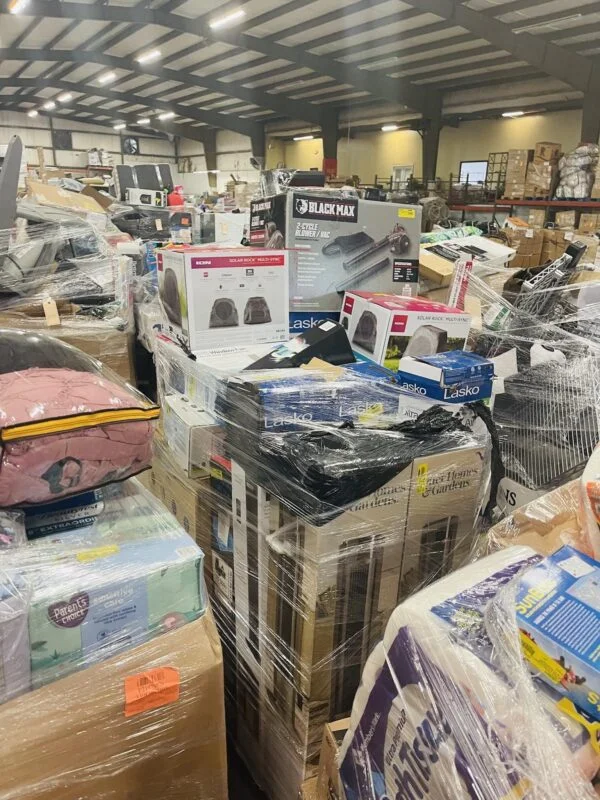
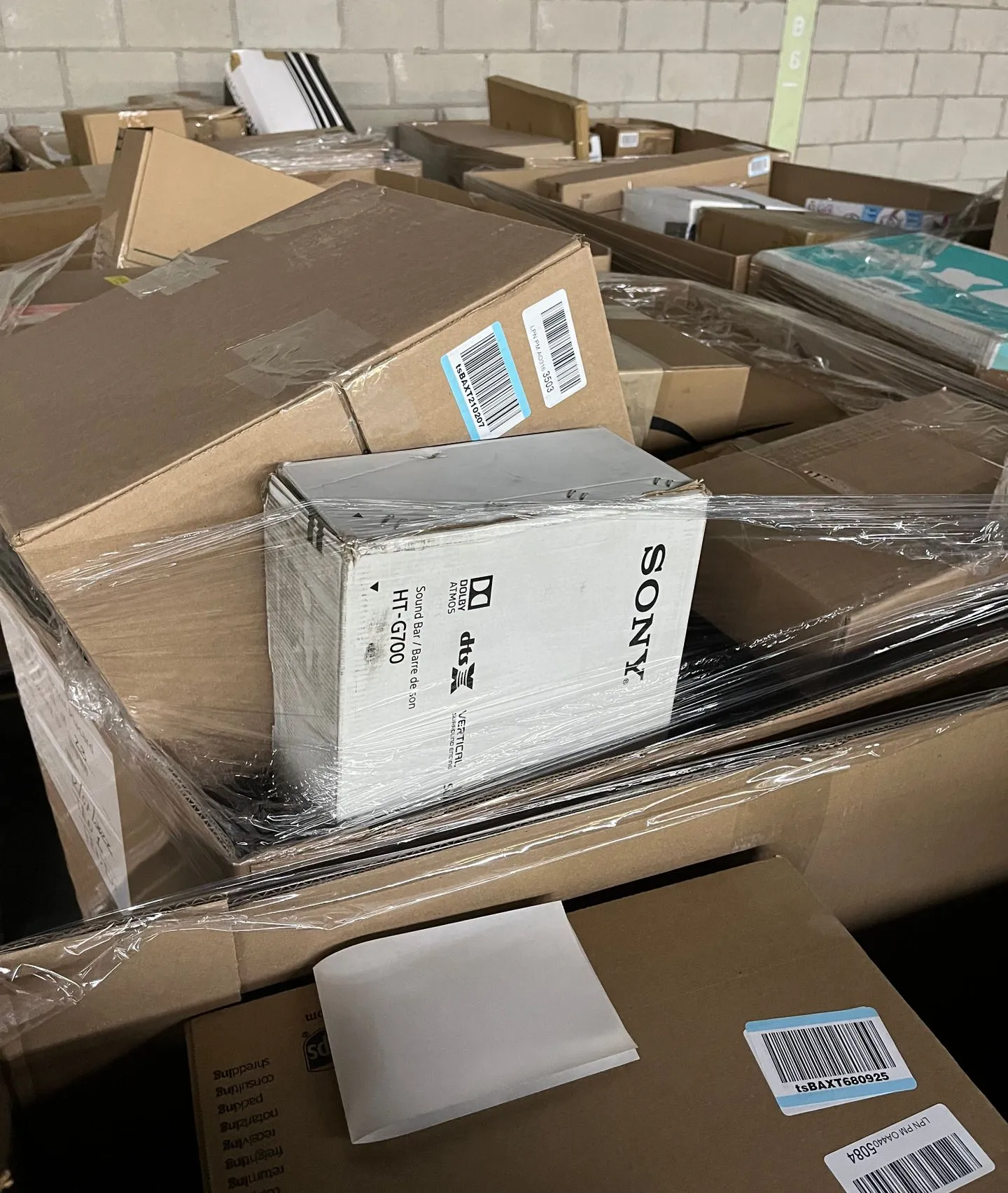
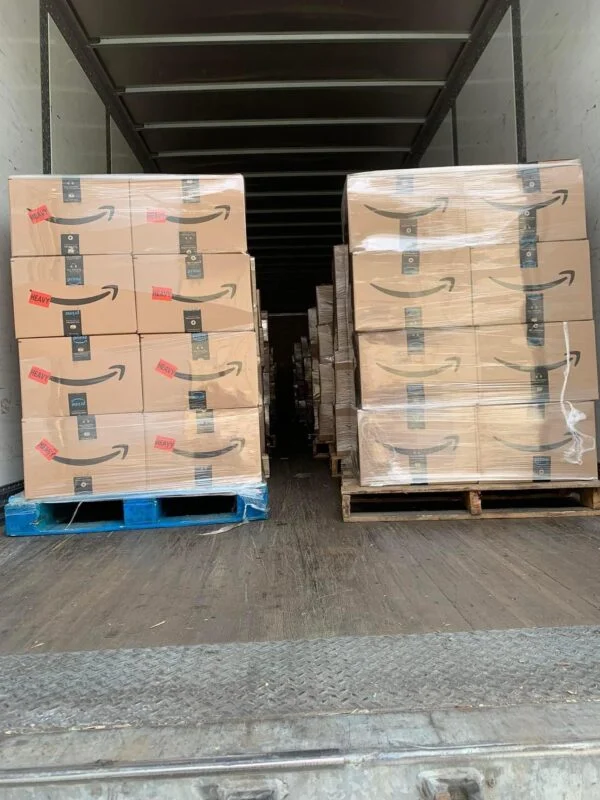
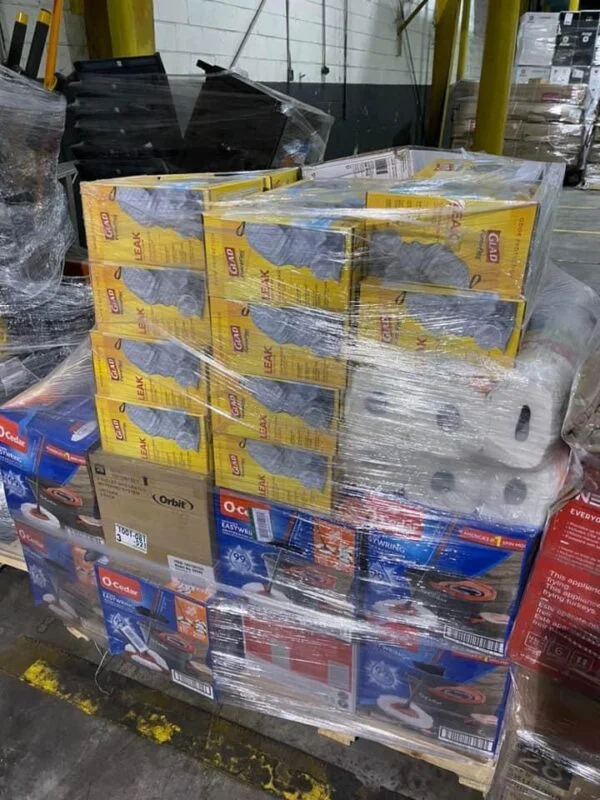
Photos show representative loads. Contents of each pallet vary, pallets are not individually tested, and contents are sold as described in the listing. Do not call overstock, shelf-pull, mixed, used, customer-return, or salvage books new without explicit verified listing evidence.
Read the manifest for concentration and missing information
A useful book manifest identifies ISBN, title, author, publisher, edition, format, quantity, and any available condition notes. Not every lot has that detail. Ask whether quantities are confirmed or estimated and whether the record describes this offered load rather than a representative assortment.
Review the record in a consistent order:
- Count unique ISBNs. Compare title variety with total copies; repeated titles can dominate the load.
- Sort quantities by ISBN. Identify concentrations that would require repeat buyers or bulk outlets.
- Separate formats and editions. Do not merge hardcover, paperback, loose-leaf, and international versions by title.
- Flag age-sensitive subjects. Prioritize textbooks, exams, legal references, medical references, and technology manuals for review.
- Mark unresolved records. Missing ISBNs, ambiguous titles, and absent condition notes create additional labor and uncertainty.
- Check selling eligibility. Confirm your account can list the relevant books and that you can meet documentation requirements.
Compare exact-edition completed sales where available, not just asking prices. A high advertised price does not establish demand. If a sample is supplied, ask how it was selected; a few attractive titles do not establish the composition of an entire pallet.
For an unmanifested load, model a larger unknown portion. If your business depends on a precise textbook mix, insufficient documentation may be a reason to decline rather than guess.
Choose the right load format, not merely the largest one
Book-only loads can simplify category sorting, while mixed loads add unrelated work. General merchandise means assorted goods spanning multiple categories. Electronics are powered or electronic devices; tools are equipment for repair and construction; apparel means clothing; HBA means health and beauty aids; and home goods are household-use products such as furnishings and kitchen items.
Those categories require different checks. Electronics buyers can consult our smart-home liquidation compatibility guide, while tool buyers can review power-tool accessory compatibility checks. Apparel and footwear, home and personal care, and outdoor power equipment also have separate resale considerations; their presence does not help a book-only operation unless it has additional outlets.
Compare general merchandise loads with the truckload category when considering a broader purchase. Listings such as the Amazon General Merchandise Truckload and WM GM Truckloads Pallets are mixed-category comparison points, not evidence of book availability. Verify contents and condition in the current listing. PalletCove is an independent reseller, not affiliated with, endorsed by, or sponsored by any retailer named.
Our guide to pallet types explains broader format differences. A pallet shipment may move by LTL, meaning less-than-truckload freight sharing trailer space with other shipments. A truckload uses a full trailer shipment arrangement; it does not establish a uniform title mix or book count.
Books are dense. Confirm stated weight, dimensions, unloading requirements, and dry storage capacity before scaling up. Processing capacity matters as much as floor space.
Build a cost model around usable inventory
The listed purchase price includes freight. Free shipping is the only delivery option on every order to all 48 contiguous states. Your resale model should therefore start with that listed price, then separately account for your own sorting, storage, packaging, marketplace fees, and outbound customer fulfillment.
Use two measures:
- Acquisition cost per received copy: listed load price divided by actual received book count.
- Acquisition cost per channel-eligible copy: listed load price divided by copies you can accurately list through your intended channel.
The second measure exposes the effect of unusable books and duplicates without pretending that every listed copy will sell. Neither measure predicts profit.
Build conservative scenarios for individual listings, bundles, and books with no viable outlet. Track scanning and grading time, since low-priced books can consume more labor than their selling price supports. Before relying on donation or paper recycling, confirm local acceptance rules, particularly for damaged books and hardcovers.

Order with clear specifications and receiving plans
Use the liquidation pallet buying guide for the general purchasing process and the liquidation pallets hub for broader supply options. For books, write down the required composition, acceptable editions, duplicate tolerance, and condition limitations before submitting an order.
No payment is collected on the website order form. After order review, a secure card link is emailed. Credit and debit cards—Visa, Mastercard, American Express, and Discover—are the only accepted payment method. Valid resale certificates are reviewed and applied where the buyer’s state allows.
Handling takes 1–3 business days after payment clears. Transit from Houston is typically 3–7 business days, for an estimated 4–10 business days total. The processing cutoff is 2:00 PM Central Time, America/Chicago, Monday–Friday; after-cutoff confirmations begin the next business day. Weekends and applicable holidays do not count.
Buyers comparing liquidation pallets in Texas and liquidation pallets in Florida receive the same free-shipping-only arrangement. Confirm receiving access and unloading arrangements before dispatch, and prepare a dry staging area for inspection and sorting.
Inspect delivery and distinguish returns from claims
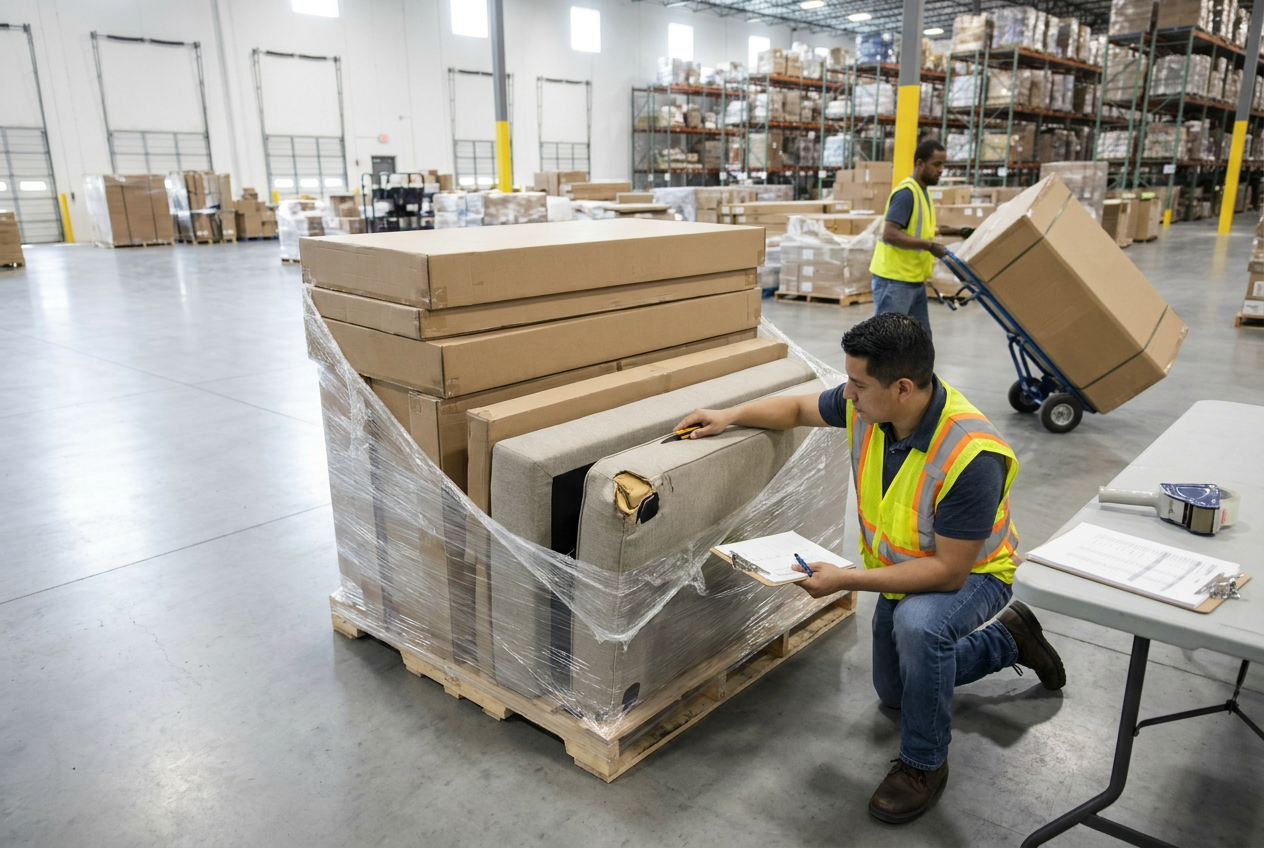
At delivery, photograph the shipment before removing wrapping where practical. Record visible damage, wet cartons, broken wrapping, and apparent shortages, and note visible exceptions on delivery paperwork. Preserve the listing, manifest, order correspondence, packaging, and relevant photographs.
After unloading, compare received quantities and descriptions with the order. Separate transit damage from pre-existing listed defects, and document specific ISBNs or cartons when reporting discrepancies. Request delivery-issue reporting within 48 hours so evidence can be reviewed promptly; this does not shorten eligible new-product 30-day returns.
Under the United States Refund & Returns Policy, only products explicitly listed as NEW qualify for defective and non-defective returns and exchanges within 30 calendar days of delivery. Returns are by mail, the customer is responsible for the return label and shipping, and the restocking fee is 15% of the product price. Refund processing takes 10 calendar days after authorized return receipt and inspection, or approval where no physical return is required.
Mixed and used loads have separate claims terms, not routine change-of-mind returns. Follow the applicable authorization process rather than mailing merchandise back without instructions.
Frequently asked questions
Are book liquidation pallets usually manifested?
Manifest availability and detail depend on the listing. Ask specifically for ISBN-level quantities, editions, formats, and condition information; a total book count is not equivalent to a detailed manifest.
Are older textbooks suitable for resale?
Some have buyers, but course requirements and newer editions can reduce demand. Check the exact ISBN and edition against your intended channel, and disclose missing supplements or used access materials.
Can I list every book under its cover title?
No. Match the physical book to its edition and format, preferably using the ISBN and copyright page. Books without an ISBN need manual identification, and marketplace eligibility must still be checked.
Is a truckload better than a pallet for a new reseller?
Not necessarily. A full trailer increases storage, handling, and sorting demands, while duplicate-heavy inventory can take time to sell. Choose a scale your receiving setup and sales channels can support.
Does free shipping remove all resale expenses?
No. Freight to the buyer is included in the listed price, but your operating costs still include labor, storage, selling fees, packaging, and customer fulfillment. Evaluate those costs before purchasing rather than treating book count as a profit estimate.
Talk to PalletCove Liquidation
Choose book liquidation pallets by verified composition, edition relevance, binding condition, and channel fit—not by recognizable titles in representative photos. Return to the liquidation merchandise categories for the broader load comparison, then contact our order desk with your requirements and review current inventory for actual availability.
PalletCove Liquidation LLC
4000 Telephone Rd Unit B11, Houston, TX 77087
Phone: (713) 819-3904
Email: sales@palletcoveliquidation.com
Hours: Mon–Fri 8:00 AM – 6:00 PM CT, Sat 9:00 AM – 2:00 PM CT, Sun closed
About PalletCove Liquidation
Published by PalletCove Liquidation LLC, based in Houston, Texas. Our buying guides cover evaluating liquidation inventory and preparing for delivery. Consult the current product listing and store policies for purchase terms.