At a glance
Choose your first liquidation pallet by matching one inventory category to your testing skills, selling channel, workspace, and handling capacity—not an estimate of potential returns.

The best liquidation pallets for beginners are not necessarily the cheapest loads or the ones with the most recognizable brands. They are loads whose merchandise you can evaluate, store, describe accurately, and move through a sales channel you already understand.
A liquidation pallet is merchandise consolidated on a shipping pallet for bulk sale. For a first-time reseller, the practical goal is to choose one manageable inventory category—not to purchase the widest possible assortment. Our guide to buying liquidation pallets covers the broader purchasing process; this article focuses on deciding which category fits your operation.
Start with four limits: your testing skills, your selling channel, your available workspace, and your ability to handle the merchandise safely. A category that fails any one of those tests is usually a poor first purchase, regardless of its advertised retail references.
What makes a pallet beginner-friendly?
Beginner-friendly inventory has a workflow you can repeat. You know what to inspect, what information buyers need, how to package each item, and where unfinished inventory will wait.
A pallet listing is the seller’s description of a specific bulk offer. Its unit count is the stated number of merchandise units; confirm whether sets, multipacks, or cartons count as one unit. Its category mix describes the types of goods included. A general-merchandise load can contain several categories even when it is sold under one broad label.
Inspection means examining and documenting merchandise and its condition. Receiving inspection identifies visible delivery problems; item-level inspection later helps determine what you can responsibly offer for resale. Neither should be confused with a supplier guarantee that everything works.
Choose the category you can process consistently, not the load with the most exciting projected resale total.
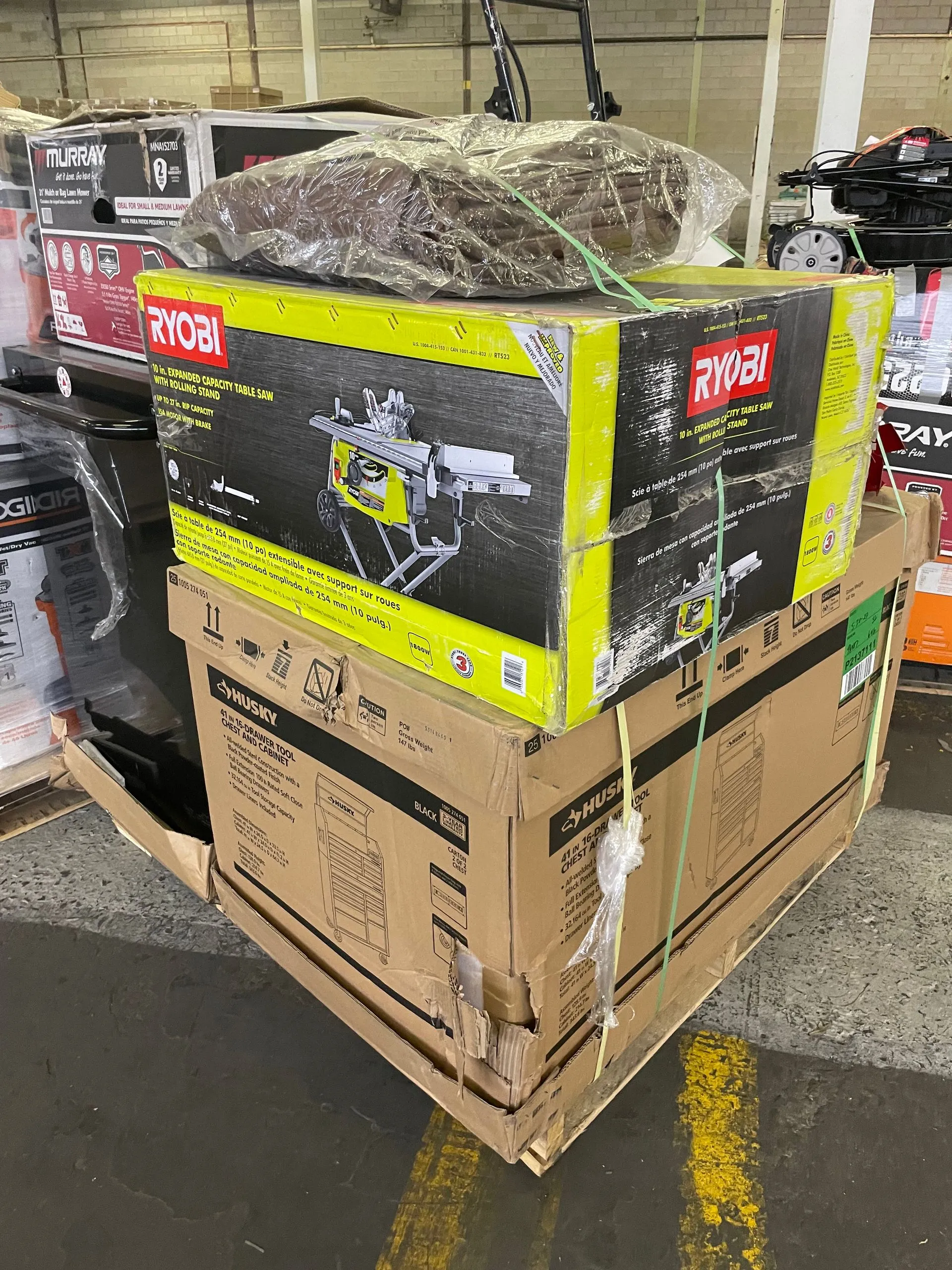
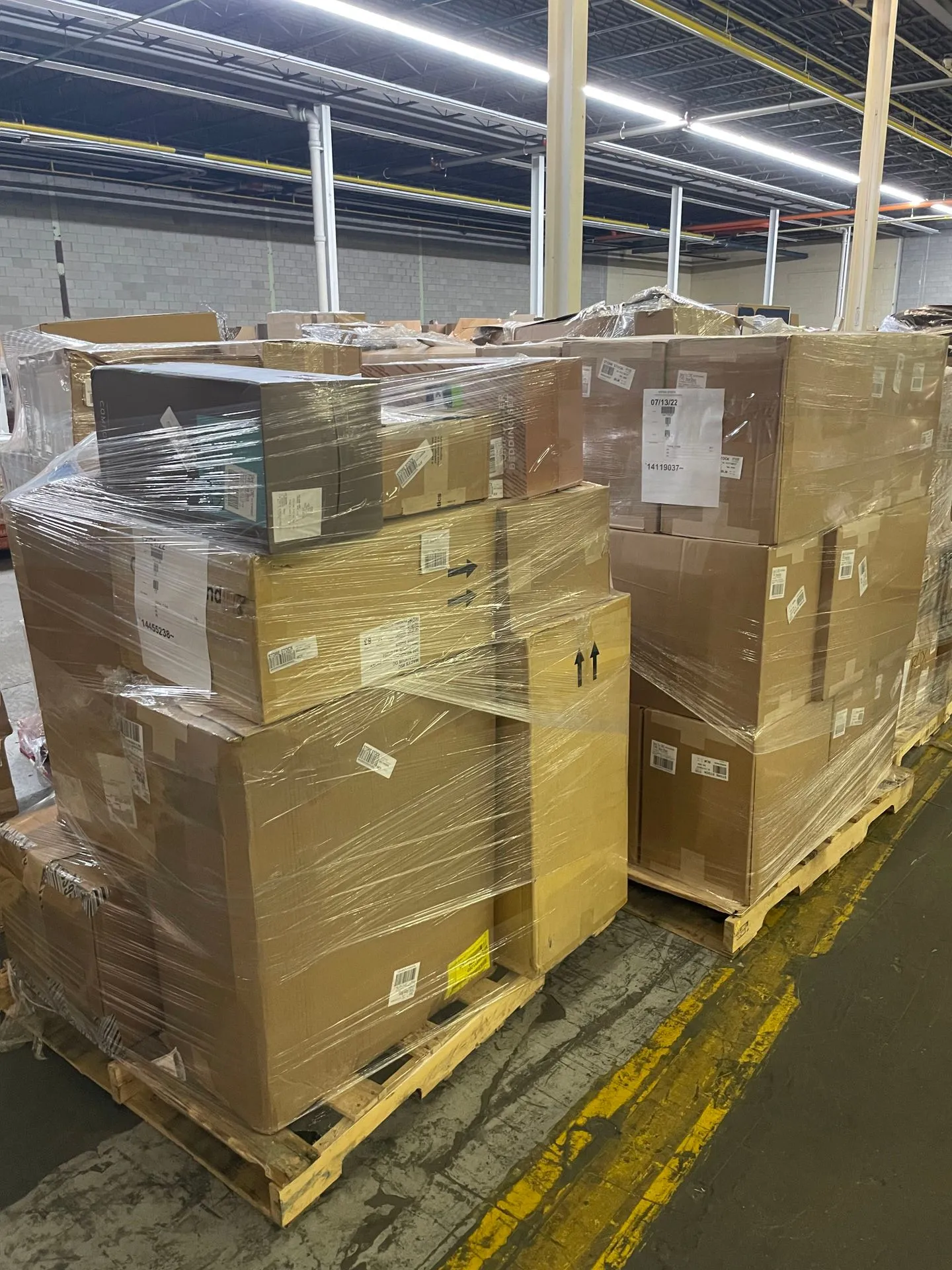
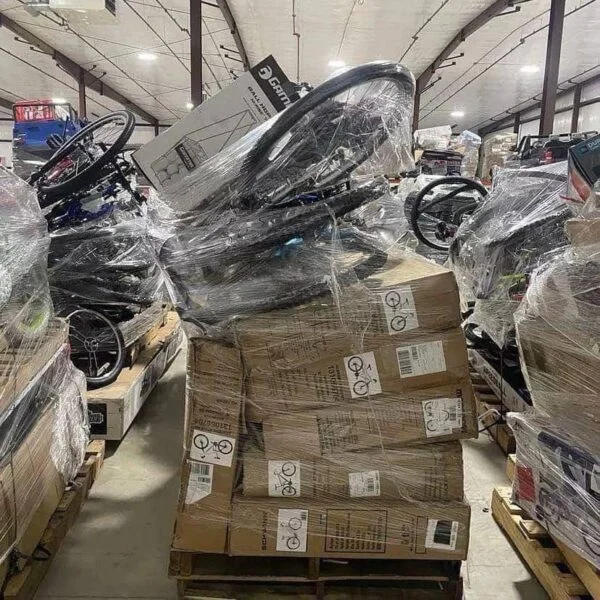
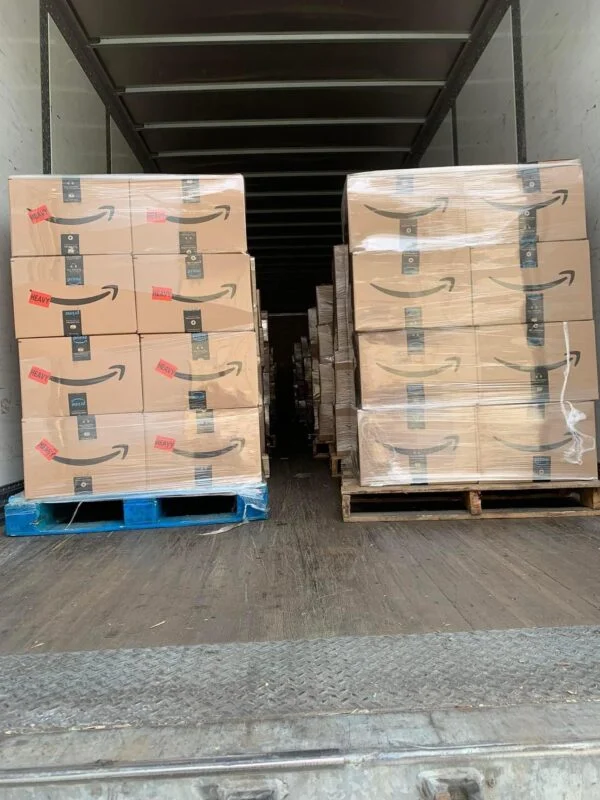
At PalletCove, photos show representative loads, and each pallet’s contents vary. Pallets are not individually tested. Contents are sold as described in the listing, so evaluate the written offer rather than treating a photograph as an exact inventory record.
Match one category to your actual operation
Use this table to narrow the field. These are category-selection principles, not statements about the condition or availability of any particular load.
| Category | Skills and checks needed | Suitable sales approach | Workspace and handling challenge |
|---|---|---|---|
| --- | --- | --- | --- |
| Apparel and textiles | Identify sizes, fabric details, stains, odors, and missing labels | Searchable online listings, local selling, or an existing clothing audience | Clean, dry sorting space and organized size storage |
| Small non-powered home goods | Check completeness, cracks, dimensions, and intended use | Local sales or online listings when packaging is practical | Shelves, protective packing, and room for fragile items |
| Shoes | Match pairs, verify size markings, and inspect soles, interiors, and wear | Size-specific online listings or local selling | Pair management and storage across slow-moving sizes |
| Tools and powered appliances | Understand safe functional evaluation, accessories, and model identification | Buyers who expect precise specifications and condition disclosures | Secure storage, suitable evaluation space, and potentially heavy items |
| Broad general merchandise | Learn several inspection and listing workflows | Multiple established channels | Separate sorting zones and varied packaging supplies |
If you have limited testing skills
Start your research with non-powered merchandise whose important defects are accessible through careful visual inspection and completeness checks. Textiles and some basic home goods may fit, but neither is automatically simple: odors, missing components, fragile materials, or unclear labels still create work.
Avoid assuming that an item powering on establishes that it is safe or fully functional. Batteries, electrical products, children's products, and other safety-sensitive goods can require knowledge beyond a beginner’s capabilities. Check applicable recalls and marketplace restrictions before offering items for sale.
If your channel is already established
Choose inventory that fits that channel’s buying behavior. Apparel sold online needs size and measurement information. Local buyers of bulky goods need clear dimensions and condition descriptions. Small shipped goods need packaging that protects them without making fulfillment impractical.
Browse general-merchandise inventory to understand assortment breadth, and Macy’s category inventory when researching textile-oriented options. A retailer-associated category is not a substitute for checking the actual merchandise mix and condition. PalletCove is an independent reseller, not affiliated with, endorsed by, or sponsored by any retailer named.

Separate category, condition, and load size
A promising category can still be unsuitable if its condition or quantity exceeds your capabilities. Evaluate these as separate decisions.
Understand condition descriptions
A condition grade is the seller’s classification of merchandise condition. Terminology is not universally standardized, so the listing’s explanation matters more than the label alone.
- Overstock: Excess inventory; the term alone does not establish that every item is new or undamaged.
- Shelf pulls: Merchandise removed from retail display or shelves, potentially with handling or packaging issues.
- Customer returns: Previously returned merchandise with potentially varied completeness, use, and functionality.
- Salvage: Merchandise that may require repair, parts recovery, or disposal rather than ordinary resale.
- Explicitly listed NEW: A specific condition designation, not something to infer from sealed-looking packaging or an overstock label.
An as-is description should prompt questions about what is represented and which claims terms apply. It does not replace reading the listing and policy. Beginners without repair skills should generally avoid salvage and loads whose appeal depends on successful repairs.
Understand the purchase scale
A single-category pallet narrows the learning curve; a mixed-category pallet increases it. A truckload expands the quantity, potentially involving a full trailer rather than an individual pallet shipment. LTL means less-than-truckload freight, where a shipment shares trailer capacity with other freight; it describes transportation scale, not merchandise quality.
The guide to types of liquidation pallets provides broader distinctions. For this first purchase, prioritize a quantity you can receive and process without blocking normal work.
For example, the Macy’s Textile Truckload listing is relevant to textile research, while the Home Depot Tool and Hardware Truckload listing illustrates a different category direction. Both are truckload offers: do not treat either as evidence that a smaller pallet or a particular condition is available. Confirm the offered format and current description before ordering.
Read the listing for workload, not imagined returns
A manifest is an inventory document that may identify products, quantities, models, or other details. Availability and detail vary. Ask whether one exists, whether it describes the offered load, and whether quantities are exact or estimated.
A useful listing review answers these questions:
- What is the purchase unit? One pallet, multiple pallets, a bulk lot, or a truckload?
- What does the unit count mean? Individual pieces, sets, or another counting convention?
- How concentrated is the mix? One repeatable product type or unrelated merchandise requiring separate workflows?
- What condition is actually described? Note exclusions, missing accessories, and uncertainty.
- What handling information is available? Request packed dimensions, weight, and receiving requirements.
- What evidence supports the offer? Separate representative images from written contents and condition statements.
If no detailed manifest is available, you need greater tolerance for uncertainty—not greater confidence in the photos. Do not estimate saleable units simply by copying the advertised unit count.
Keep the detailed listing audit separate from category selection. Our article on liquidation pallet listing red flags explains what to clarify before committing. Once a category passes your capability checks, use that audit on the specific offer.
Check space, handling, and your first-order budget
Measure usable working space rather than total room area. You need room for incoming goods, unresolved items, ready-to-list merchandise, packaging, and outgoing orders. Keep walkways and exits clear.
Sketch a simple workflow:
- Receiving and initial documentation.
- Sorting and appropriate item evaluation.
- Cleaning, measurements, and photography.
- Labeled storage for listed merchandise.
- A separate area for damaged, incomplete, or unresolved goods.
If you cannot move heavy merchandise safely with the equipment and help available, remove that category from consideration. Before ordering, confirm delivery access and unloading arrangements with the order desk; do not assume that residential access, a narrow entrance, or an upper-floor workspace can accommodate the shipment.
At PalletCove, freight is included in the listed price. Dividing that price by the stated unit count gives a rough acquisition-cost average—not the cost per saleable item. Packaging, marketplace charges, cleaning materials, storage, disposal, and your processing time still affect your operating budget.
For a workflow trial, time yourself measuring, photographing, describing, and packing a comparable item you already own. Multiply that effort by the proposed quantity as a capacity check, not a sales forecast. See the separate first liquidation pallet budget guide for the fuller budgeting process.

Order and prepare for free delivery
Use the liquidation pallets hub to orient your search, then narrow to the category and load size you can manage. Buyers researching liquidation pallets in Texas or liquidation pallets in Florida should apply the same capability checks.
Free shipping is the only delivery option on every PalletCove order to all 48 contiguous states. Freight is included in the listed price.
No payment is collected on the website order form. After order review, a secure card link is emailed. Credit and debit cards—Visa, Mastercard, American Express, and Discover—are the only accepted payment method. Review the card payment policy before submitting your order. Valid resale certificates are reviewed and applied where the buyer’s state allows.
Handling takes 1–3 business days after payment clears. Transit from Houston is typically 3–7 business days, for an estimated 4–10 business days total. The processing cutoff is 2:00 PM Central Time, America/Chicago, Monday–Friday; after-cutoff confirmations begin the next business day. Weekends and applicable holidays do not count.
Prepare your receiving space before that estimated window. Keep the listing and order information available so the arrival can be documented against the written purchase description.
Inspect delivery and understand returns versus claims
On delivery day, document the shipment’s visible condition before breaking down the load when practical. Photograph wrapping, labels, and visible damage; note visible delivery exceptions on the delivery record where possible. Retain relevant packaging while an issue is being reviewed.
Then compare the received merchandise with the listing and any applicable manifest. Separate transit damage, apparent shortages, and condition discrepancies from ordinary variation that the listing already disclosed. Report delivery issues within 48 hours; that request does not shorten eligible new-product return rights.
Under the United States Refund & Returns Policy, only products explicitly listed as NEW qualify for defective and non-defective returns and exchanges within 30 calendar days of delivery. Returns are by mail, with the customer responsible for the return label and shipping. A restocking fee of 15% of the product price applies. Refund processing takes 10 calendar days after authorized return receipt and inspection, or approval where no physical return is required.
Mixed and used loads have separate claims terms, not routine change-of-mind returns. Do not assume overstock, shelf-pull, customer-return, or salvage merchandise qualifies as new.
Common first-order mistakes include buying too many categories, treating every unit as saleable, overlooking missing accessories, and choosing heavy merchandise without a handling plan. Resolve those problems before purchase rather than relying on a return to correct category mismatch.
Frequently asked questions
What are the best liquidation pallets for beginners without testing experience?
Start by researching non-powered categories you can assess through visual inspection, identification, and completeness checks. Textiles or straightforward home goods may fit, but the actual condition and assortment still determine the workload. No category is automatically defect-free.
Is general merchandise a good first pallet?
It can be if the listed mix stays within your skills and sales channels. A broad assortment can require many different inspection, storage, and packaging processes. A narrower category usually makes a more repeatable first workflow.
Should a beginner buy a pallet or a truckload?
Choose the smallest available purchase format that fits your learning objective and processing capacity. A truckload requires substantially more receiving, storage, and inventory organization. Category familiarity alone does not establish readiness for that scale.
Can I choose a category from the photos alone?
No. PalletCove photos show representative loads, contents vary, and pallets are not individually tested. Use the written listing and ask for clarification about the category mix, condition, quantity, and available manifest.
How do I know I am ready to order?
You should be able to explain how you will receive, inspect, store, list, and fulfill the merchandise. You also need enough budget and space for unresolved or unsaleable items. If one step depends on equipment or skills you do not have, choose a different category or wait.
Talk to PalletCove Liquidation
Your first category should fit your current operation—not an operation you hope to build after the pallet arrives. Return to the buying liquidation pallets guide for the broader process, then compare current inventory with your capability checklist.
Before ordering, contact our order desk to clarify the offered category, purchase size, condition description, and receiving requirements.
- Business: PalletCove Liquidation LLC
- Address: 4000 Telephone Rd Unit B11, Houston, TX 77087
- Phone: (713) 819-3904
- Email: sales@palletcoveliquidation.com
- Hours: Mon–Fri 8:00 AM – 6:00 PM CT, Sat 9:00 AM – 2:00 PM CT, Sun closed
About PalletCove Liquidation
Published by PalletCove Liquidation LLC, based in Houston, Texas. Our buying guides cover evaluating liquidation inventory and preparing for delivery. Consult the current product listing and store policies for purchase terms.