At a glance
Learn what liquidation pallet local pickup requires, how to check vehicle capacity and loading help, and why PalletCove buyers should plan for included shipping rather than warehouse collection.
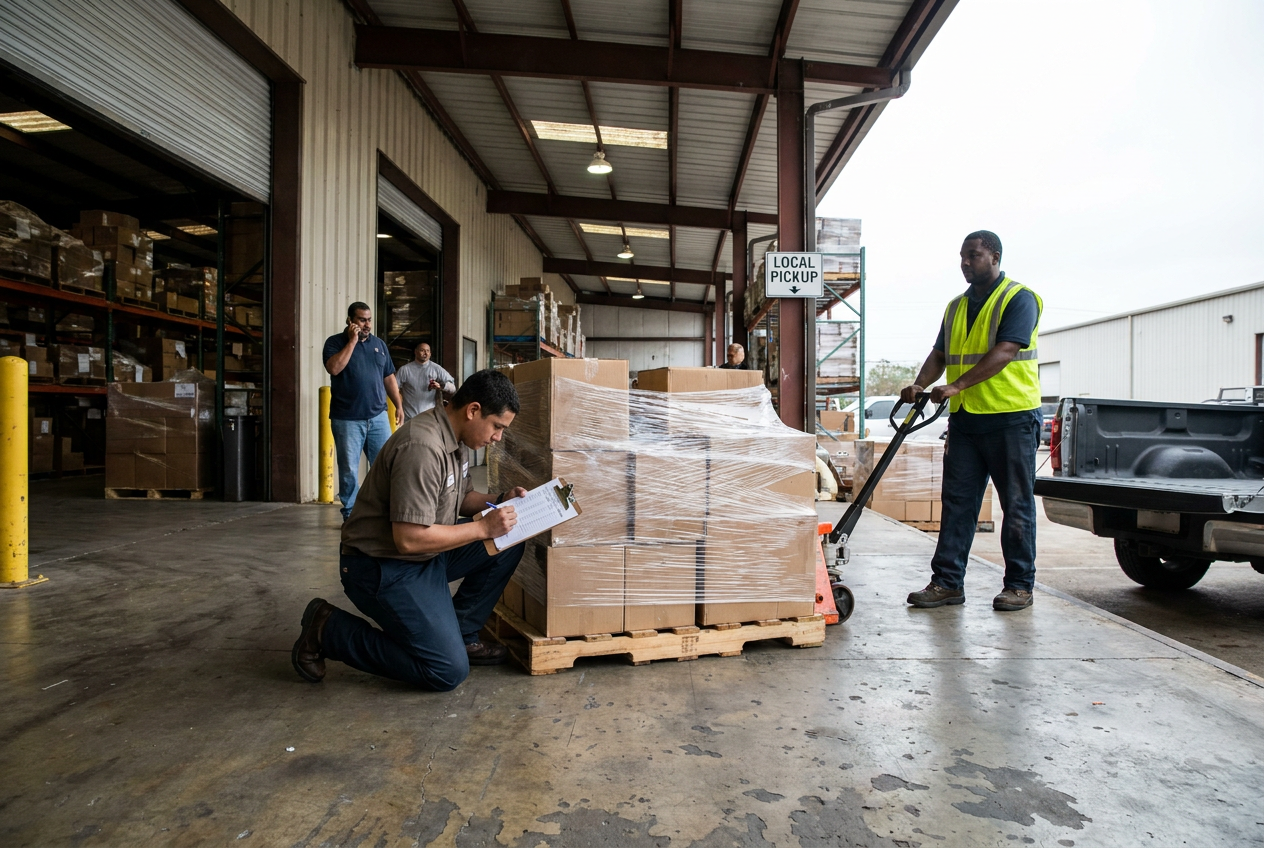
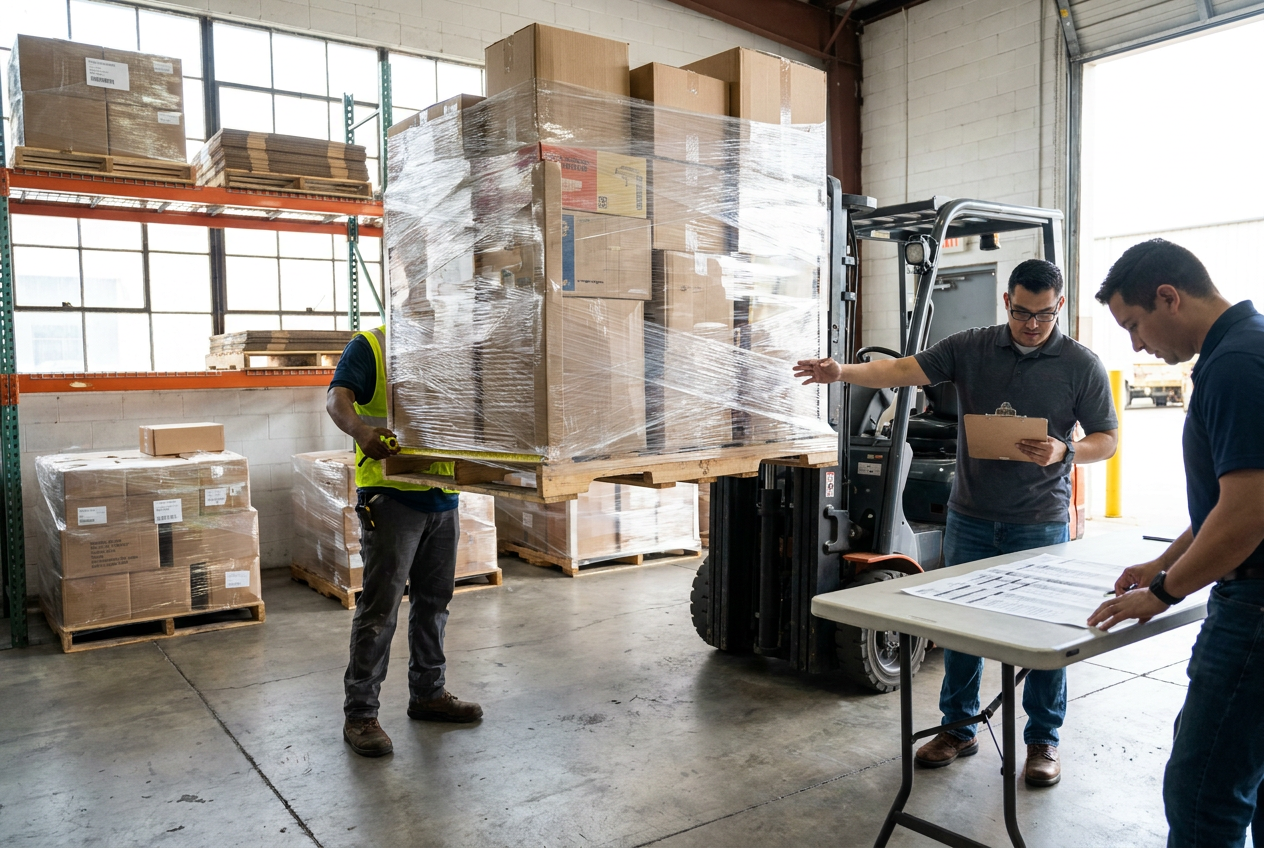
Liquidation pallet local pickup usually means collecting a purchased pallet from a supplier instead of receiving it through a carrier. It involves more than having enough space in a vehicle: the seller must authorize collection, confirm the load’s dimensions and weight, and explain who will load it.
For Houston buyers considering PalletCove Liquidation, there is an important distinction: free shipping is the only delivery option on every order, and freight is included in the listed price throughout the 48 contiguous states. Do not assume a Houston business address means warehouse pickup is available. The pickup guidance below explains the checks involved when buying from a supplier that offers collection; PalletCove buyers should use the receiving guidance instead.
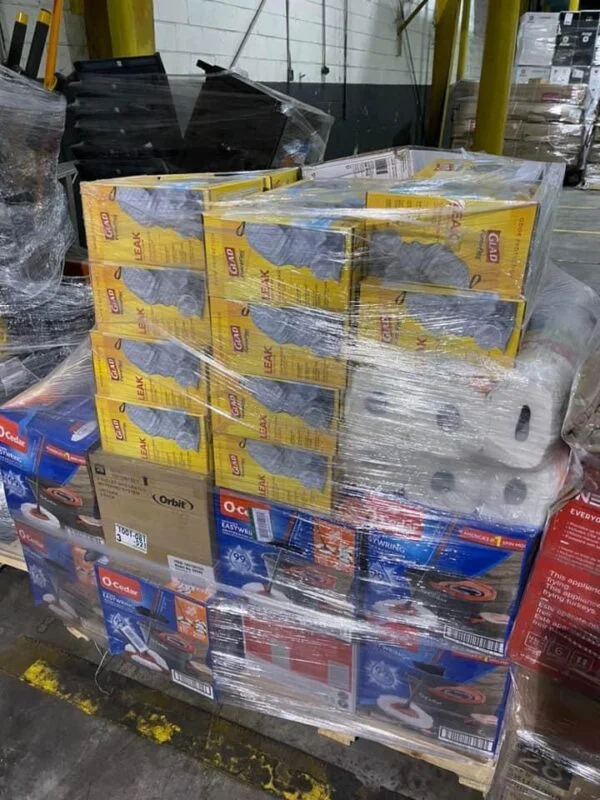
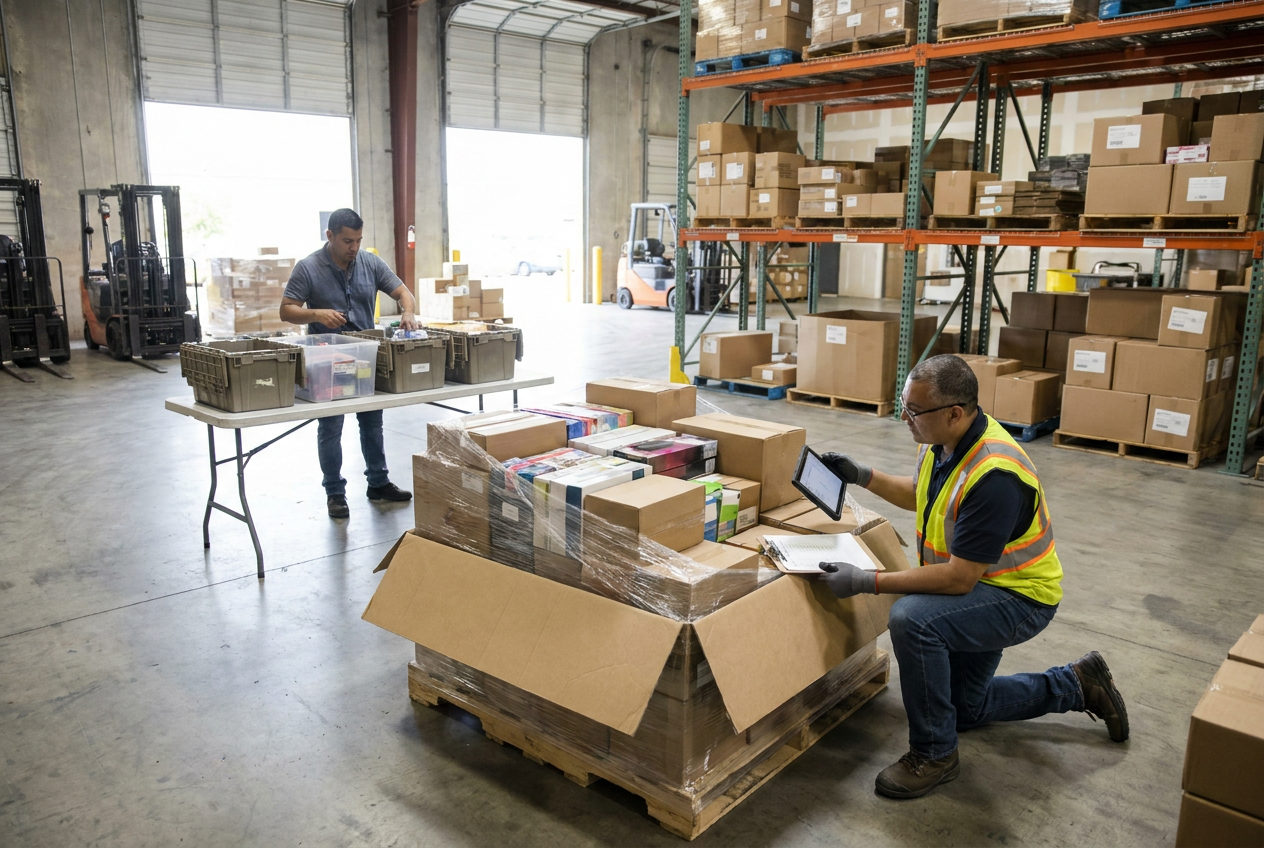
A liquidation pallet is merchandise grouped on a pallet for bulk sale to a reseller. For the broader purchasing process, start with our guide to buying liquidation pallets; this article focuses on moving the purchased load safely and documenting its arrival.
What local pickup does—and does not—include
At a supplier that permits collection, pickup is a coordinated handoff of an authorized order. It does not automatically include shopping the warehouse, opening cartons, selecting individual goods, repacking a load, or having staff secure cargo in your vehicle.
Before arranging a trip, ask whether the seller offers pickup at all. Then obtain written confirmation of the release location, appointment requirements, collection deadline, identification requirements, and available loading equipment. Business hours alone are not a pickup appointment.
A pallet listing is the sales description of a particular pallet or bulk offering. Its unit count is the stated number of merchandise units; it is not the pallet count or shipping weight. Its category mix describes the types of merchandise included, such as household goods, tools, or textiles. Neither figure tells you whether the load will fit through a van door.
Key takeaway: Confirm the fulfillment method before arranging transportation. Vehicle space, loading assistance, and permission to collect are separate questions.
PalletCove buyers can browse the liquidation pallets hub without planning a warehouse collection. Houston proximity does not change the included-shipping arrangement.
Check the load, not just the pallet footprint
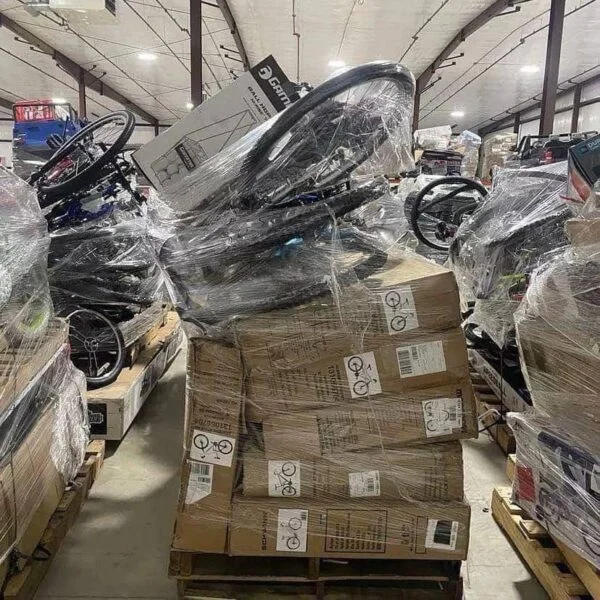
Transport planning starts with the complete loaded dimensions and gross weight, including the pallet and packaging. A familiar pallet footprint is not enough: cartons can overhang, the load can be unusually tall, and dense merchandise can exceed a vehicle’s capacity before filling its cargo area.
| Load detail | What to confirm | Why it matters |
|---|---|---|
| --- | --- | --- |
| Loaded dimensions | Length, width, and height, including overhang | Determines door clearance and usable space |
| Gross weight | Merchandise, pallet, and packaging together | Determines payload and equipment suitability |
| Pallet count | Actual handling units in the order | Prevents confusing one listing with one pallet |
| Stability | Leaning cartons, loose pieces, or uneven weight | Affects handling and restraint planning |
| Unloading method | Equipment and clear access at destination | Prevents arriving with no safe way to unload |
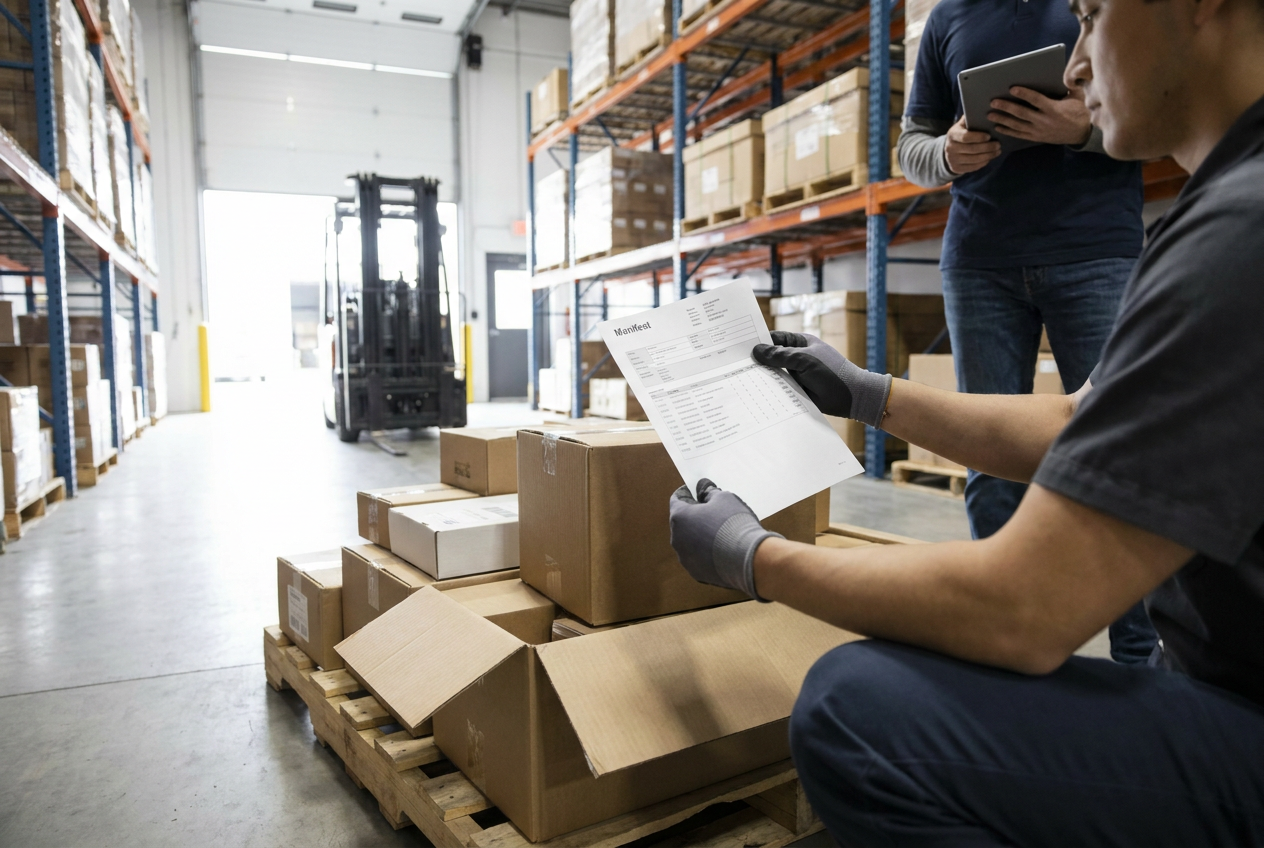
A manifest is an inventory document describing the load, sometimes with quantities, item descriptions, or other available details. Ask whether one is provided and whether its figures are exact or estimates. A manifest is not proof of individual testing, and merchandise counts do not replace shipping measurements.
A condition grade describes the seller’s stated merchandise condition. Customer returns have been returned by customers; overstock is excess inventory; shelf pulls have been removed from retail shelves; salvage may require repair, parts recovery, or other substantial sorting. These terms do not establish identical conditions across suppliers. Read the actual listing, including any as-is limitations, rather than assuming a label guarantees usability.
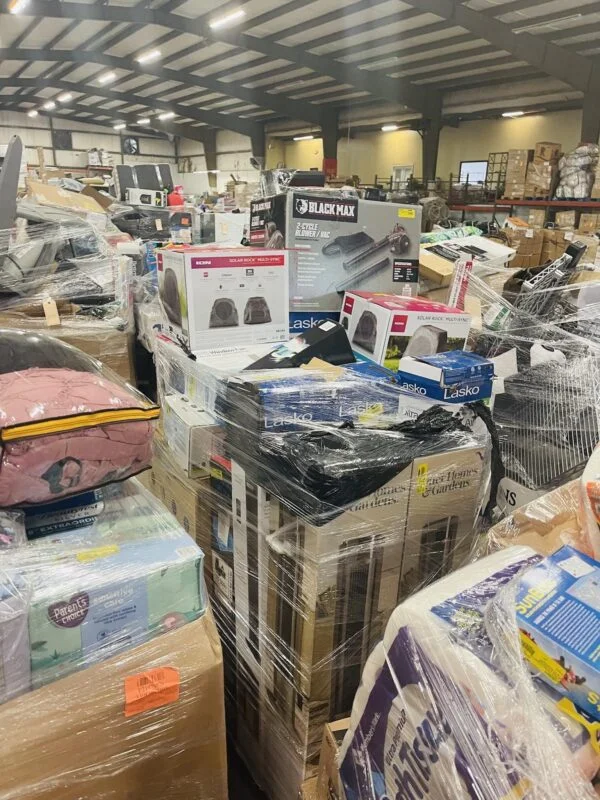
PalletCove photos show representative loads, contents vary, and pallets are not individually tested. Contents are sold as described in the listing. Our pallet listing red flags guide addresses listing evaluation in more detail.
Compare general merchandise inventory with truckload inventory before planning capacity. Offers such as HD GM truckloads and pallets and WM GM truckloads and pallets require checking the actual purchase configuration, not inferring a single-pallet order from the name. PalletCove is an independent reseller, not affiliated with, endorsed by, or sponsored by any retailer named.
Confirm vehicle suitability and loading assistance
Where another supplier permits pickup, provide the vehicle type and relevant measurements before the appointment. A description such as “large SUV” or “pickup truck” is not a capacity specification.
- Verify remaining payload. Use the vehicle’s manufacturer information and subtract occupants, tools, accessories, and other cargo. A towing rating is not a cargo payload rating.
- Measure the loading opening. Check door height, wheel-well clearance, bed dimensions, and usable interior height. Allow room for safe loading and securement.
- Check trailer limits separately. Review trailer capacity, tow-vehicle limits, hitch ratings, and tongue-weight requirements. The lowest applicable limit controls.
- Confirm equipment compatibility. Ask whether the seller’s forklift or other equipment can safely place the pallet in that specific vehicle.
- Plan unloading before departure. A pallet jack moves suitable pallets across appropriate surfaces; it does not lower a pallet from a truck bed to the ground.
Our liquidation pallet dimensions guide explains the measurement checks in greater detail. Do not plan around a standard footprint when actual loaded measurements are available.
Ask who operates loading equipment and who supplies restraints. Permission to collect does not guarantee forklift assistance, and forklift assistance does not mean the operator will select or install your tie-downs. Do not climb into an active loading area or stand beneath a raised load.
If the vehicle or equipment is unsuitable, stop and revise the plan. Breaking down a pallet in the parking area is not an automatic alternative: the supplier must allow it, and loose cartons still require safe handling, capacity checks, and restraints.
Secure the pallet before taking it on the road
At a pickup-enabled supplier, inspect the pallet’s visible stability before loading. A broken pallet base, leaning cartons, or loose upper layers can make transport unsafe. Ask the seller to address an unstable load rather than trying to compensate with tighter straps alone.
Stretch wrap helps hold cartons together, but it is not a substitute for securing the load to the vehicle. Use appropriately rated cargo restraints attached to suitable structural anchor points. The restraint system must control forward, rearward, sideways, and upward movement as applicable to the load and vehicle.
- Position the load according to the vehicle or trailer manufacturer’s loading guidance.
- Keep weight balanced and avoid concentrating it where the floor or axle cannot support it.
- Use edge protection where restraints could crush packaging or be cut by sharp edges.
- Restrain loose pieces separately; do not rely on a closed door or tailgate alone.
- Protect exposed merchandise from weather without treating a tarp as a cargo restraint.
- Check lights, tires, visibility, and closures before moving.
There is no universal strap count for every pallet. Load weight, restraint ratings, angles, anchor points, and applicable cargo-securement requirements all matter. If you cannot establish a safe arrangement, use a qualified transport provider rather than improvising.
Recheck the load at a safe stopping place shortly after departure and during the trip. At the destination, park on a stable, suitable surface and check for shifted cargo before releasing restraints. Never stand where falling cartons could strike you.
How PalletCove ordering and included shipping work
PalletCove’s listed price includes freight. There is no separate local-pickup option to select, and buyers should not assume collecting an order would reduce its listed price. Budget for your own receiving equipment, storage space, sorting labor, and supplies without assuming a particular resale outcome.
After order review, PalletCove emails a secure card payment link. Credit and debit cards—Visa, Mastercard, American Express, and Discover—are the only accepted payment method. No payment is collected on the website order form. See the card payment policy before submitting payment.
Handling takes 1–3 business days after payment clears. Transit is typically 3–7 business days from Houston, for an estimated total of 4–10 business days. The processing cutoff is 2:00 PM Central Time, America/Chicago, Monday–Friday. Confirmations after the cutoff begin the next business day; weekends and applicable holidays do not count.
Valid resale certificates are reviewed and applied where the buyer’s state allows.
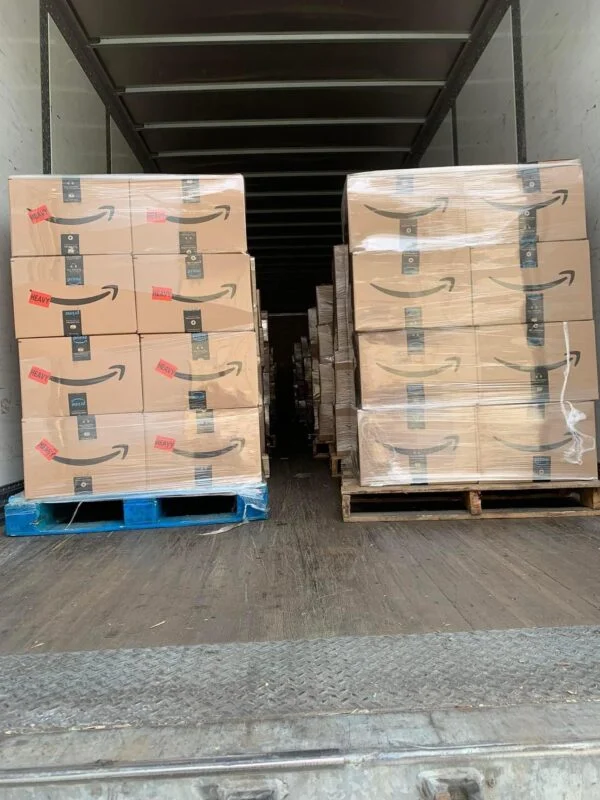
A smaller pallet shipment may move through LTL, meaning less-than-truckload freight sharing trailer space with other shipments. A truckload is a larger bulk purchase; confirm its actual pallet count and handling configuration rather than assuming every truckload occupies an identical full trailer. Our guide to pallet types explains the broader load distinctions.
The same included-shipping arrangement covers buyers seeking liquidation pallets in Texas and liquidation pallets in Louisiana, as well as the other contiguous states. Provide accurate destination and access information, and confirm the receiving arrangements for your order rather than assuming a specific unloading method or advance-call window.
Inspect on arrival and document problems
An inspection is a systematic check of the received shipment against its documentation and visible condition. At delivery, that begins with the outside of the load, pallet count, and packaging—not a claim that every item has been function-tested.
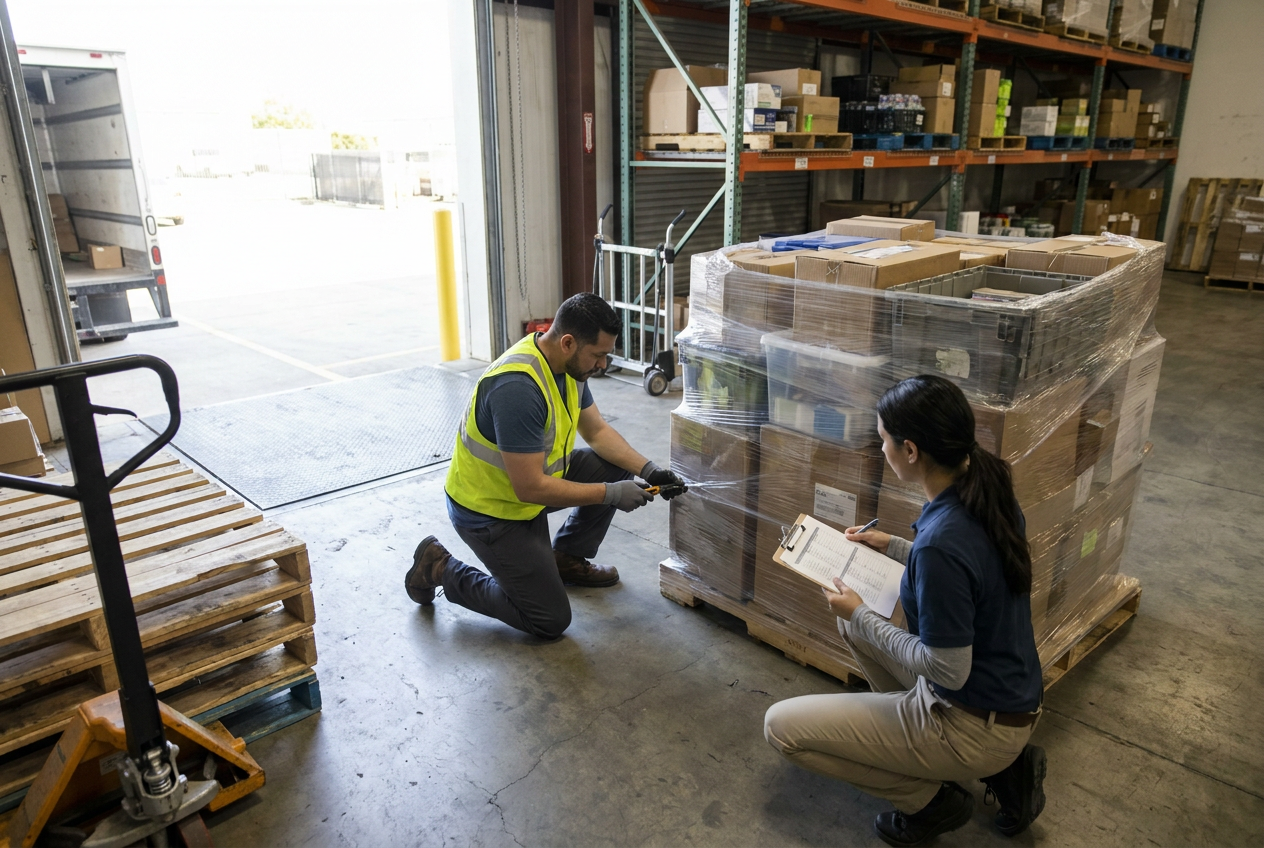
Prepare a clear receiving area and have suitable unloading arrangements confirmed. Keep people away from equipment movement. Before unpacking, take photographs of the load’s accessible sides, labels, wrapping, and any visible damage.
Compare the delivered handling units with the shipping paperwork. Record visible damage or shortages on delivery documents where possible, and retain copies. Once safely unloaded, compare contents with the listing and any supplied manifest. Keep relevant packaging and avoid discarding evidence while an issue is being reviewed.
Report delivery issues within 48 hours, including the order number, photographs, and a concise description. That reporting request does not shorten eligible new-product return rights.
Under the United States Refund & Returns Policy, products explicitly listed as NEW ONLY qualify for defective and non-defective returns and exchanges within 30 calendar days of delivery. Returns are by mail; the customer is responsible for the return label and shipping. The restocking fee is 15% of the product price. Refund processing takes 10 calendar days after authorized return receipt and inspection, or approval where no physical return is required.
Mixed and used loads have separate claims terms, not routine change-of-mind returns. Do not treat overstock, shelf pulls, customer returns, or salvage as new unless the listing explicitly verifies that condition.
Common mistakes that disrupt the handoff
Most transport problems begin with an assumption made before the order arrives. Avoid these shortcuts:
- Driving to a supplier without pickup authorization. A published address is not permission to collect.
- Using unit count to estimate weight. Small, dense products can overload a vehicle.
- Assuming loading assistance includes securement. Confirm responsibilities separately.
- Planning only the outbound journey. Unloading and covered storage must be ready too.
- Treating representative photos as an exact manifest. Use the actual listing and available documentation.
- Delaying arrival documentation. Photograph the load before sorting obscures its original condition.
Category selection, first-order budgeting, and choosing a manageable first pallet remain important, but they cannot resolve an incompatible vehicle or missing unloading equipment. Settle those handling questions before committing to a collection plan elsewhere or finalizing receiving arrangements with PalletCove.
Frequently asked questions
Can I arrange liquidation pallet local pickup at PalletCove?
No local-pickup option is offered under the stated fulfillment arrangement. Free shipping is the only delivery option on every order to the 48 contiguous states, with freight included in the listed price.
Will a liquidation pallet fit in my pickup truck?
That depends on the loaded dimensions, gross weight, available payload, and loading access. Even when the pallet fits between the wheel wells, the load may exceed capacity or lack a safe restraint arrangement.
Does a supplier always provide forklift loading?
No. At a supplier offering pickup, confirm equipment availability, vehicle compatibility, and who operates the equipment before traveling. Also confirm how you will unload at home or your business.
Is stretch wrap enough for the drive home?
No. Stretch wrap helps unitize merchandise but does not adequately secure the pallet to the vehicle. Appropriate rated restraints, suitable anchor points, and a load-specific securement plan are necessary.
Can I test everything before accepting a pallet?
Do not assume item-level testing or carton-by-carton inspection is available at handoff. PalletCove pallets are not individually tested; check the stated condition and document visible shipping issues promptly on arrival.
Talk to PalletCove Liquidation
Use our buying liquidation pallets guide for the full purchasing framework, then contact our order desk to confirm order and receiving details. Browse current inventory for available listings and their stated conditions.
PalletCove Liquidation LLC is located at 4000 Telephone Rd Unit B11, Houston, TX 77087. Call (713) 819-3904 or email sales@palletcoveliquidation.com. Hours are Mon–Fri 8:00 AM – 6:00 PM CT, Sat 9:00 AM – 2:00 PM CT, Sun closed. These are business hours, not pickup appointments; plan for included shipping rather than warehouse collection.
About PalletCove Liquidation
Published by PalletCove Liquidation LLC, based in Houston, Texas. Our buying guides cover evaluating liquidation inventory and preparing for delivery. Consult the current product listing and store policies for purchase terms.