At a glance
Choose liquidation pallet categories around proven customer demand, testing capacity, selling-channel fit and storage limits—not broad rankings or assumptions about resale value.
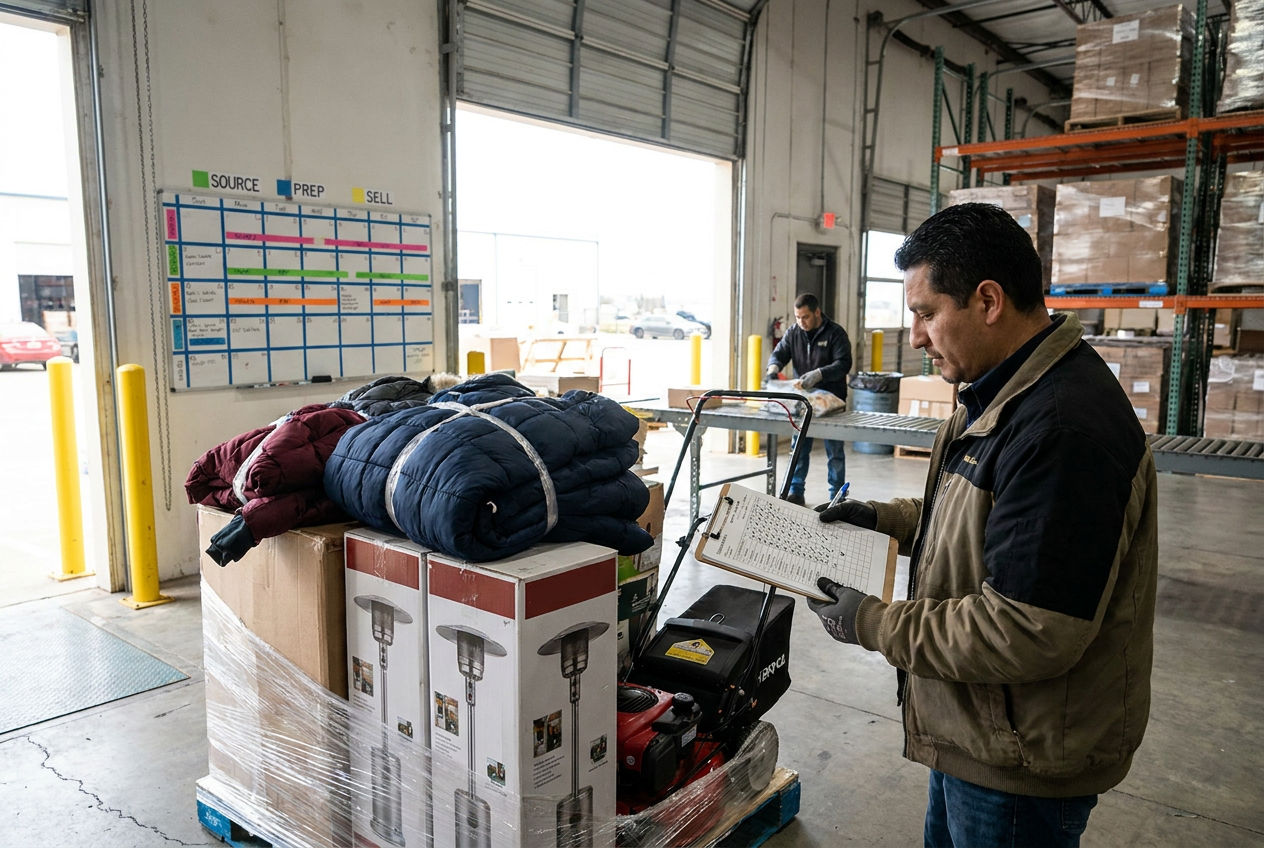
Choosing liquidation pallet categories starts with the customers you can reach and the work your business can perform. A category with recognizable products can still be a poor purchase if you cannot verify condition, describe items accurately, store them safely or sell them through your existing channels.
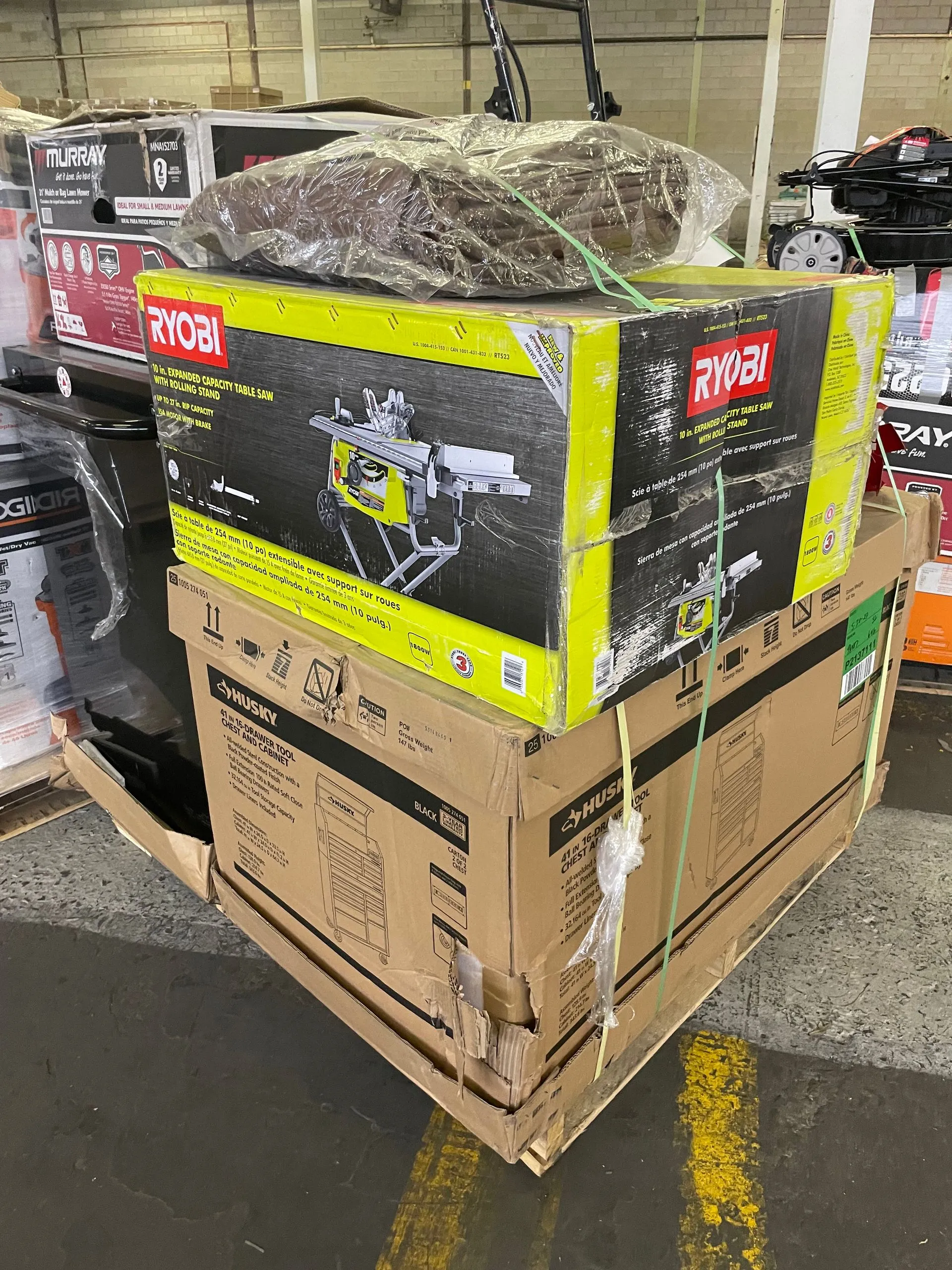
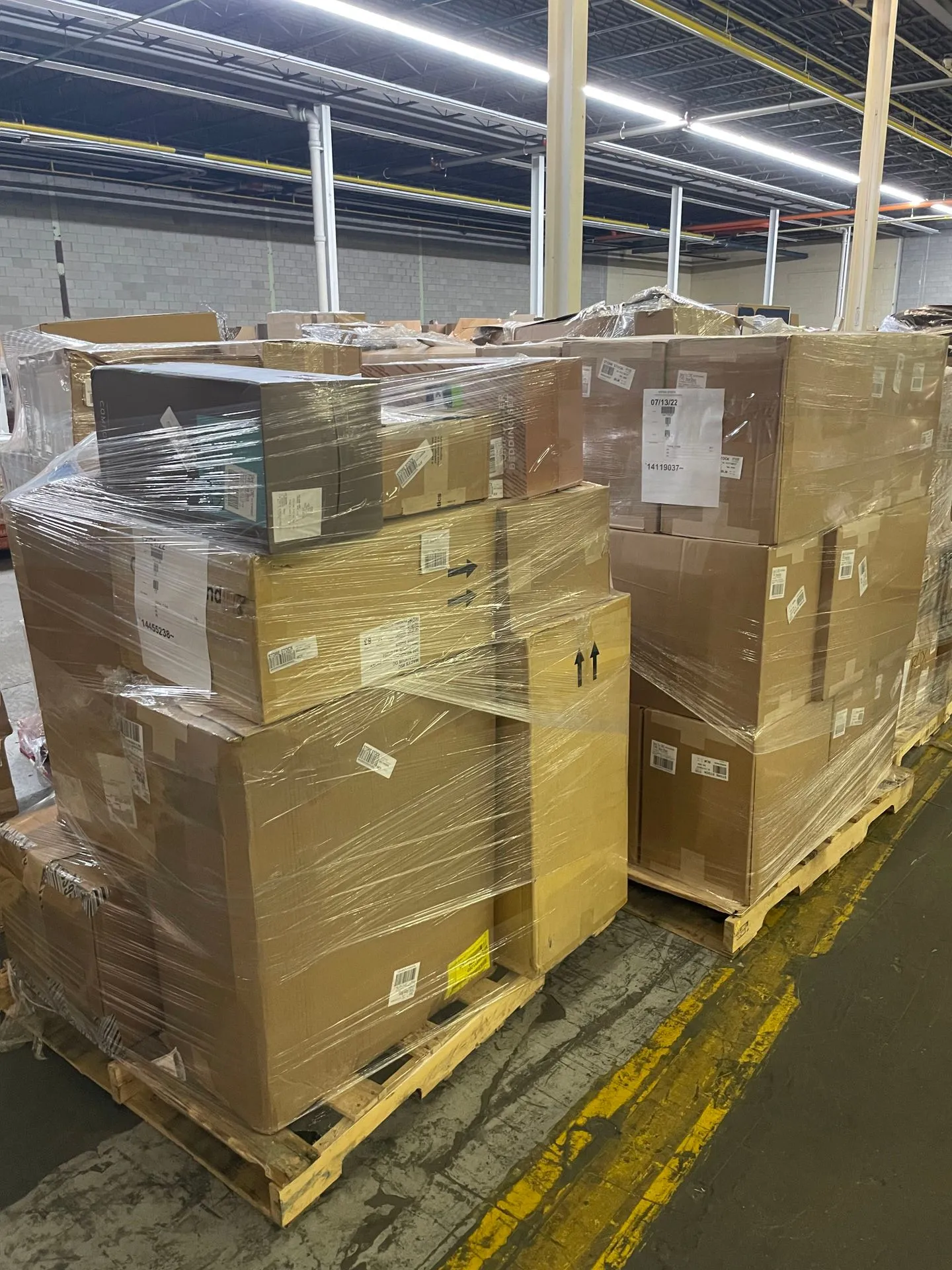
A liquidation pallet is a palletized wholesale lot of merchandise offered for resale. Its category is only one part of the decision: condition, assortment, quantity and processing requirements matter just as much. For the broader purchasing process, use our guide to buying liquidation pallets. This article focuses on deciding which merchandise belongs in your operation.
The goal is not to identify a universally best category. It is to find a repeatable match between demand, skills, selling format and handling capacity—and to reject loads that break that match.
1. Separate category, condition and load format
A pallet listing is the sales description for a particular offered lot. Read it as the source of the stated contents and terms, rather than treating a category label or photograph as a complete specification.
Three distinctions prevent many selection errors:
- Category mix: the distribution of merchandise types within a load, such as apparel, household goods and tools. A broad general-merchandise description does not establish the proportions.
- Unit count: the number of merchandise units stated for the lot. Clarify whether sets, multipacks and individual pieces are counted differently; the count is not automatically a count of ready-to-sell listings.
- Condition grade: the seller’s stated condition classification. Grade names are not necessarily standardized between suppliers.
Overstock generally refers to excess inventory; shelf pulls are merchandise removed from retail display or shelves. Neither term alone verifies that every item is new, complete or undamaged. Customer returns have been returned by purchasers and may have widely varying condition. Salvage signals merchandise that may require parts recovery, repair or other specialized disposition rather than ordinary retail resale.
Treat NEW as applicable only where the listing explicitly states it. If a listing uses “as-is,” read its specific terms rather than assuming either tested functionality or a blanket absence of all claims rights.
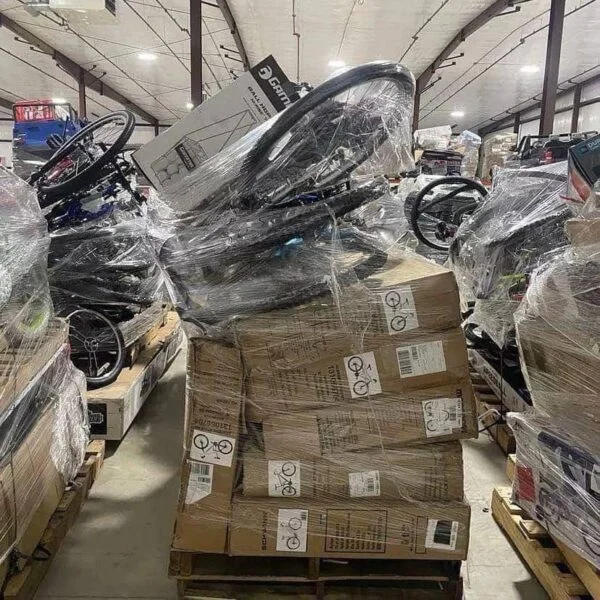
Load format is separate again. A category-focused pallet can concentrate one merchandise family, while mixed pallets broaden the assortment. A truckload is a larger purchase format; confirm the stated pallet count, quantity and configuration rather than assuming every truckload is a full trailer. The guide to types of liquidation pallets explains these broader distinctions.
2. Build a demand-first category shortlist
Begin with sales evidence from the channel you actually use. Completed transactions are more useful than ambitious asking prices. Compare similar products in similar condition, with comparable accessories and selling terms.
For each candidate category, record:
- Who buys it: your existing customers, a local trade audience or a searchable online niche.
- What moves: product types, sizes, specifications and condition levels with observed demand.
- How quickly it moves: distinguish steady demand from seasonal spikes.
- What prevents a sale: missing accessories, uncertain compatibility, bulky packaging or incomplete measurements.
- Where exceptions go: repair, parts sales, another channel or responsible disposal, where appropriate.
Do not confuse category popularity with demand for the actual assortment. A shoe seller needs usable size and style coverage, not merely a large footwear count. A tool reseller needs relevant specifications and compatible components, not just recognizable product shapes.
The general merchandise category can help you identify broad assortments, but breadth creates sorting and merchandising work. The truckloads category addresses purchasing scale, not proof that the merchandise suits your audience.
Choose the category whose uncertainty you can manage—not the one with the most impressive headline quantity.

3. Match merchandise to your selling channel
The same category can work differently across channels. Online buyers often need detailed specifications and reliable packing; local shoppers can evaluate size and appearance in person. A discount-store assortment needs enough consistency for understandable merchandising.
| Merchandise family | Possible channel fit | Work to assess before buying | Common mismatch |
|---|---|---|---|
| --- | --- | --- | --- |
| Apparel and textiles | Online niche selling, local discount retail | Measurements, fabric details, stains, odors and size distribution | Too many sizes or styles outside customer demand |
| Shoes | Searchable online listings, local footwear sales | Pair matching, size accuracy, sole wear and material condition | Quantity without suitable size coverage |
| Tools and hardware | Local trade customers, specialist online selling | Model identification, compatibility, completeness and safe functional assessment | Unfamiliar systems or missing components |
| Small appliances and electronics | Model-specific online selling, knowledgeable local resale | Safe testing, accessories, electrical condition and packaging | Testing backlog or expensive individual shipping |
| Home goods and general merchandise | Local retail, mixed-channel operations | Fragility, dimensions, completeness and assortment sorting | Bulky or breakable items overwhelming storage |
These are possible fits, not claims about any particular load’s contents or condition.
For a textile-focused operation, the Macy’s Textile Truckload listing is a relevant starting point for checking the actual description. For a tool-focused business, review the Home Depot Tool and Hardware Truckload listing. Neither product name establishes a verified grade, unit count, exact assortment or testing status.
PalletCove is an independent reseller and is not affiliated with, endorsed by or sponsored by any retailer named.
Check selling-platform rules before selecting restricted or safety-sensitive merchandise. Recall status, labeling, authenticity requirements and product eligibility can determine whether an otherwise desirable item belongs in your channel.
4. Use testing and handling as purchase gates
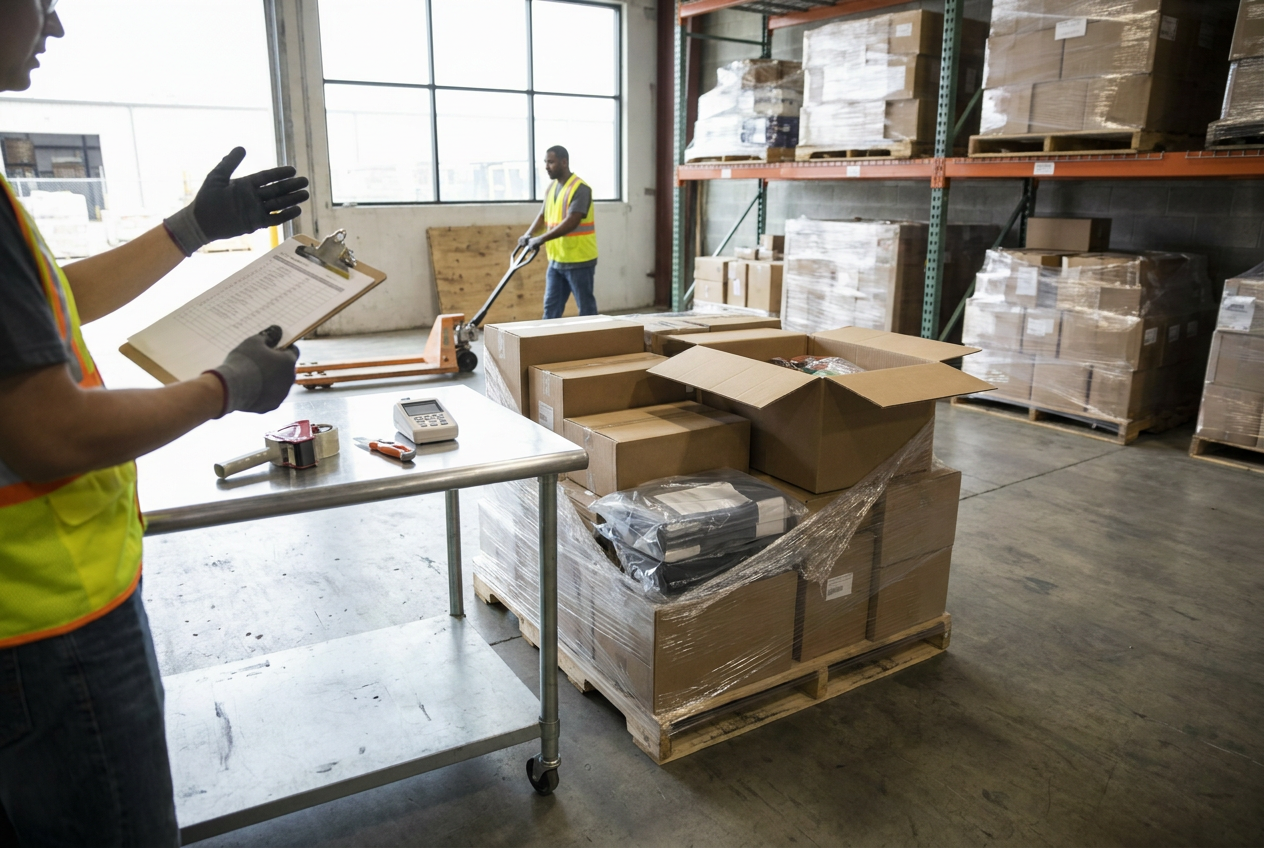
Inspection means examining and documenting a shipment or item to assess its identity, completeness, visible condition and, where appropriate, function. Receiving inspection and item-level assessment are different tasks: an intact pallet does not establish that each product works.
PalletCove pallets are not individually tested. Photos show representative loads, contents of each pallet vary, and contents are sold as described in the listing. Plan your own assessment process without treating photos as a guaranteed inventory map.
Use four gates before approving a category:
- Demand gate: You can identify buyers for the likely assortment without assuming a new audience will appear.
- Skills gate: You can safely assess the merchandise or have an appropriate qualified service available.
- Channel gate: You can describe, list and fulfill the items through an eligible sales channel.
- Handling gate: You can receive, sort, store and move both saleable stock and unresolved items.
A failure on one gate should not be averaged away by strong performance elsewhere. Strong demand does not make unsafe testing acceptable.
Estimate processing time as expected units multiplied by average assessment, cleaning, photography and listing time. This is a planning estimate, not a prediction of condition. Leave space for incomplete items and exceptions; they often occupy a different workflow from sale-ready stock.
For dimensions and receiving-space planning, use the liquidation pallet dimensions guide rather than assuming every pallet has a standard footprint.
5. Validate the listing, manifest and economics
A manifest is an itemized inventory document that may identify products, quantities, models or other details. Availability and detail vary. Ask what it covers, whether quantities are estimates, and whether any stated conditions apply to individual items or only the overall lot.
Without a detailed manifest, category selection depends more heavily on your ability to absorb assortment uncertainty. That does not automatically make a load unsuitable, but it should change your purchasing limits.
Compare listings using these questions:
- What merchandise families are expressly described, and what remains unknown?
- Is the condition stated clearly, including any mixed-condition language?
- What does the unit count represent?
- Are accessories, matched sets or completeness addressed?
- Can you process the whole load, including items outside your preferred subcategory?
Our guide to liquidation pallet listing red flags covers listing evaluation in more detail. Keep that task distinct from deciding whether the category fits your business.
PalletCove’s listed price includes freight. For comparisons, divide the listed lot price by the stated unit count only as a rough acquisition-cost measure—not as cost per saleable item. Then account for your labor, supplies, platform fees, storage, outbound customer shipping and any appropriate repair or disposal work.
Do not base a purchase solely on stated retail values. Actual selling outcomes depend on the specific merchandise, condition, demand and execution. A truckload also ties up more working space and cash than a smaller purchase; scale should follow demonstrated throughput, not simply a lower apparent per-unit figure.

6. Confirm ordering, delivery and claims before committing
Submit the order for review; no payment is collected on the website order form. Credit and debit cards—Visa, Mastercard, American Express and Discover—are the only accepted payment method, through a secure card link emailed after order review. Review the card payment policy when planning your purchase. Valid resale certificates are reviewed and applied where the buyer’s state allows.
Free shipping is the only delivery option on every order to all 48 contiguous states, with freight included in the listed price. The liquidation pallets hub provides a broader inventory entry point; buyers comparing liquidation pallets in Texas and liquidation pallets in Florida should apply the same category-fit checks.
Handling takes 1–3 business days after payment clears. Transit is typically 3–7 business days from Houston, for an estimated 4–10 business days total. The processing cutoff is 2:00 PM Central Time, America/Chicago, Monday–Friday; after-cutoff confirmations begin the next business day. Weekends and applicable holidays do not count.
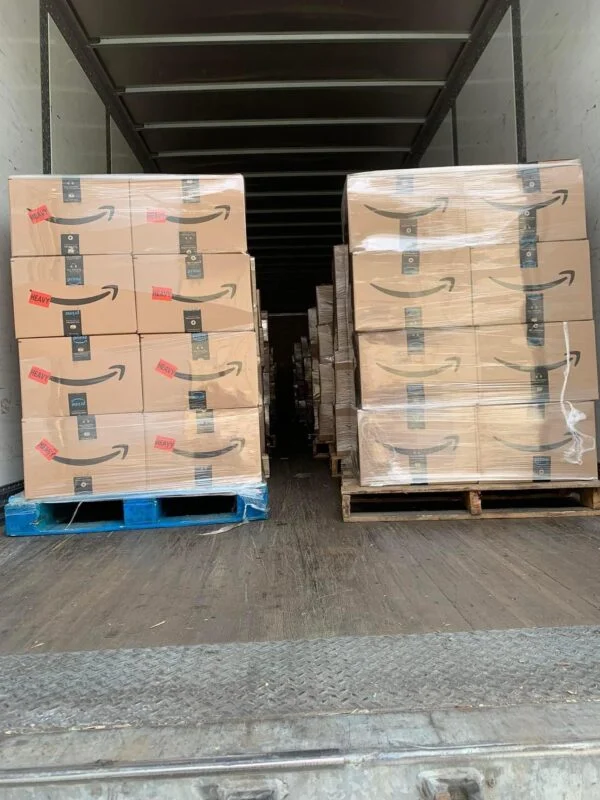
LTL means less-than-truckload freight, where a shipment shares trailer capacity. A full-trailer shipment uses a larger receiving footprint. Confirm the shipment configuration and receiving requirements with the order desk, and ensure your site can handle the load; do not assume particular unloading equipment is included.
On delivery day, document packaging and visible damage, compare the shipment with the order documents, and record discrepancies promptly. Preserve labels, packaging and supporting photos. Request delivery-issue reporting within 48 hours; this does not shorten eligible new-product return rights.
Under the United States Refund & Returns Policy, products explicitly listed as NEW ONLY qualify for defective and non-defective returns and exchanges within 30 calendar days of delivery. Returns are by mail; the customer is responsible for the return label and shipping, and a 15% restocking fee applies to the product price. Refund processing takes 10 calendar days after authorized return receipt and inspection, or approval where no physical return is required. Mixed/used loads have separate claims terms, not routine change-of-mind returns.
7. Avoid category-selection mistakes
The most expensive mismatch is often operational rather than categorical. Watch for these patterns:
- Buying a retailer name instead of an assortment: Source labels do not establish condition or customer demand.
- Expanding category and volume together: A new category already introduces unfamiliar work; a truckload multiplies that uncertainty.
- Ignoring the tail of the load: Less desirable sizes, incomplete sets and bulky exceptions still need space and disposition plans.
- Treating cleaning as testing: Appearance does not establish function or safety.
- Counting units instead of processing capacity: A large count can overwhelm photography, listing and fulfillment.
After each load, record processing hours, condition findings, sales pace, exceptions and remaining stock by merchandise family. Use those observations to refine the next category choice rather than turning one successful item into a blanket buying rule.
Frequently asked questions
Which liquidation pallet categories fit online selling?
Categories with identifiable models, searchable specifications and manageable parcel dimensions may fit online channels. Your ability to verify condition and create accurate listings matters more than the broad category name.
Is general merchandise better than a single-category load?
Neither is universally better. General merchandise spreads assortment across product types but increases sorting work; a focused load can simplify workflows while concentrating demand risk.
Does a manifest guarantee saleable inventory?
No. A manifest describes inventory to the extent stated, but it does not independently establish functionality, completeness or resale demand. Read it alongside the listing’s condition description and terms.
When should a reseller move from pallets to truckloads?
Consider a truckload when you have evidence that your customers, processing workflow and storage can absorb the larger assortment. Repeated sales in a category are more informative than one fast-selling item.
Talk to PalletCove Liquidation
Choose categories that pass your demand, skills, channel and handling checks, then confirm the specific listing. Return to the buying liquidation pallets guide for the complete purchasing process, review current inventory, or contact our order desk with questions about a described load.
PalletCove Liquidation LLC
4000 Telephone Rd Unit B11, Houston, TX 77087
Phone: (713) 819-3904
Email: sales@palletcoveliquidation.com
Hours: Mon–Fri 8:00 AM – 6:00 PM CT, Sat 9:00 AM – 2:00 PM CT, Sun closed.
About PalletCove Liquidation
Published by PalletCove Liquidation LLC, based in Houston, Texas. Our buying guides cover evaluating liquidation inventory and preparing for delivery. Consult the current product listing and store policies for purchase terms.