At a glance
Check liquidation pallet dimensions before ordering: learn how to verify the footprint, loaded height, overhang, weight, and clearance needed for vehicles, doorways, and storage.
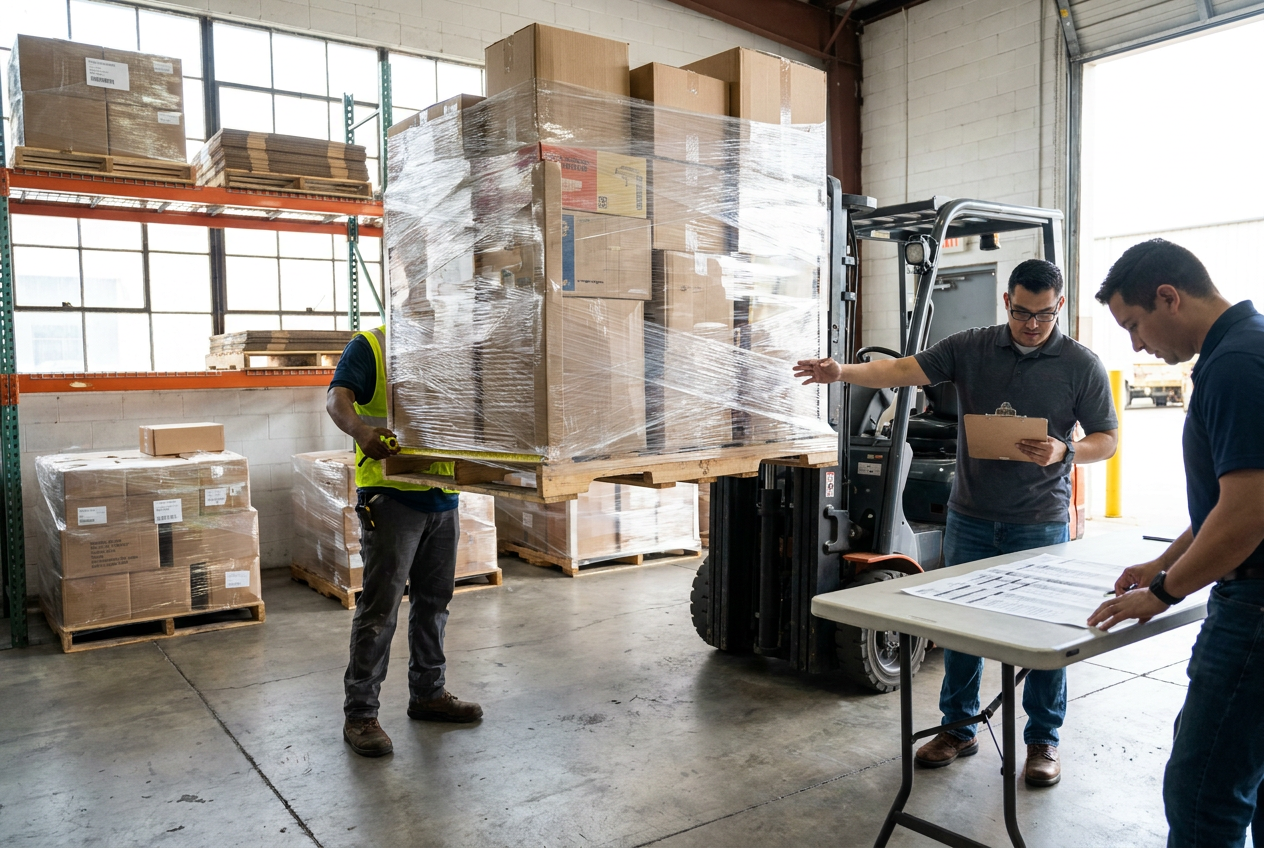
A liquidation pallet is merchandise grouped on a shipping pallet and sold as a lot to a reseller. Whether that purchase fits depends on more than the wooden base: you need the widest loaded footprint, total loaded height, gross weight, and a workable unloading route.
A common North American pallet footprint is 48 × 40 inches, but that is not a guaranteed size for liquidation inventory. Boxes, wrapping, irregular merchandise, and the pallet itself can change the space required. For the broader purchasing process, start with our guide to buying liquidation pallets; this article focuses on measuring fit before committing.
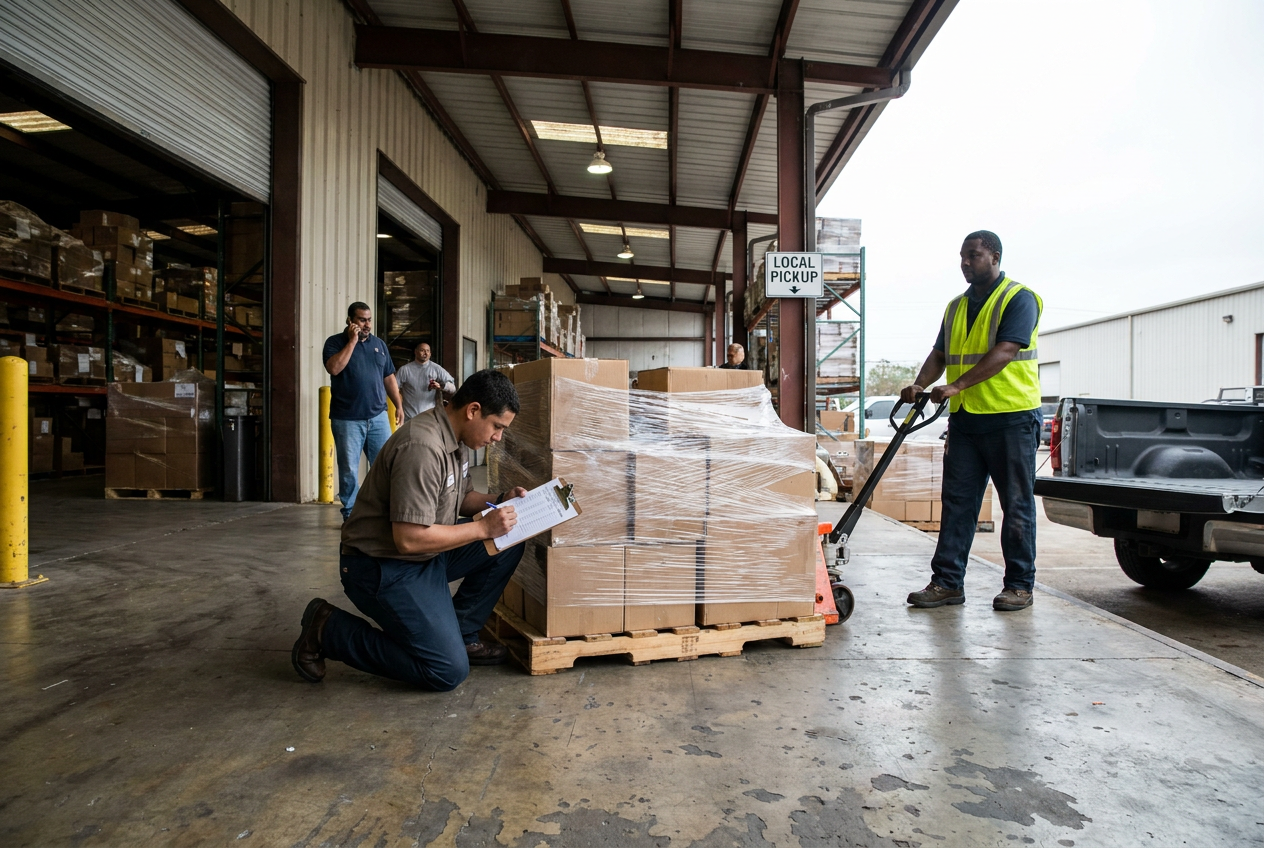
PalletCove ships every order free to the 48 contiguous states; shipping is the only delivery option. Vehicle measurements below apply if you plan to move the shipment after receiving it, not to a customer-pickup service.
What liquidation pallet dimensions actually measure
A pallet listing—the product page describing the lot offered for sale—may give dimensions without making clear whether they describe the base or the complete load. Ask which measurement is being quoted and whether it applies to the shipment you will receive.
| Measurement | What to confirm | Why it matters |
|---|---|---|
| --- | --- | --- |
| Base footprint | Pallet length and width | Establishes the support platform, not necessarily the widest load |
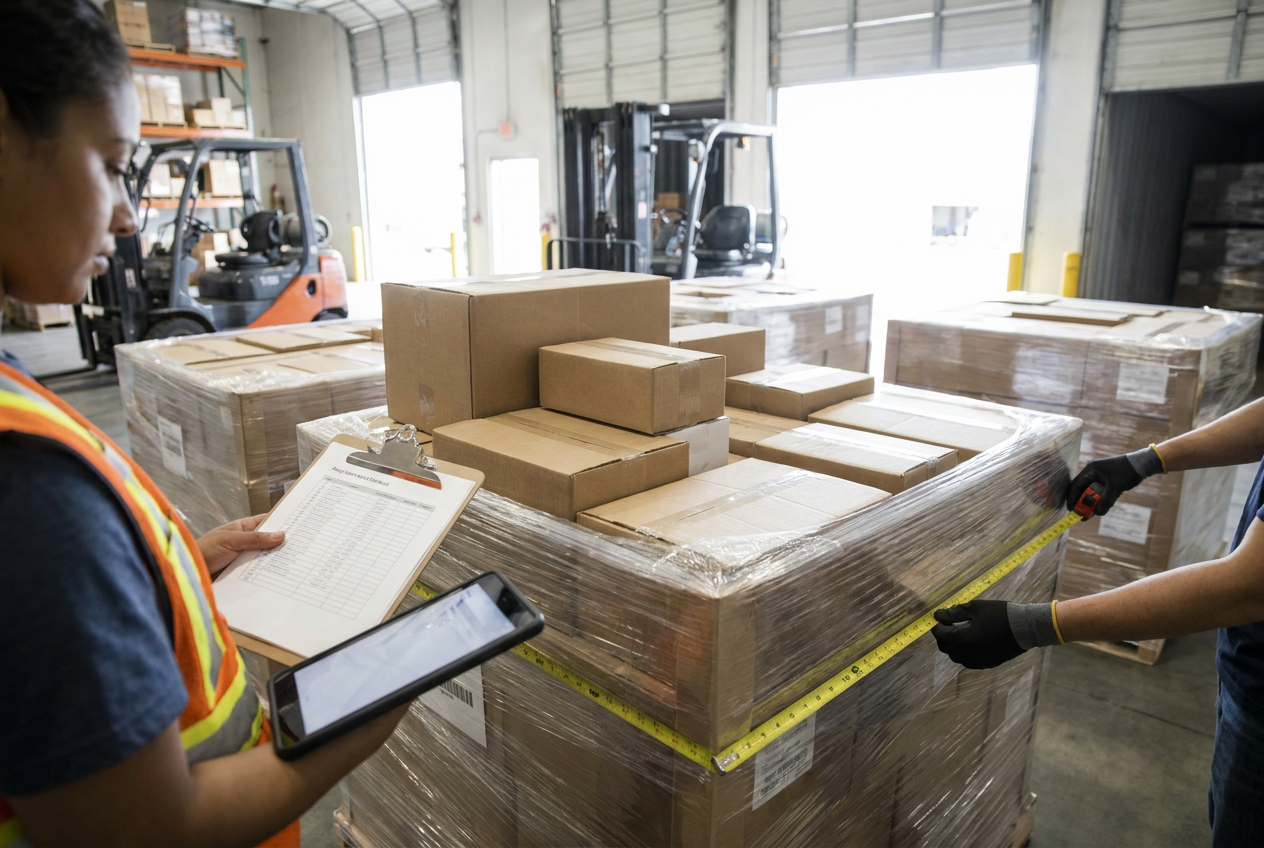
| Loaded footprint | Greatest outside length and width, including packaging | Determines doorway and floor-space requirements |
| Loaded height | Floor to the highest point, including the pallet | Determines clearance under openings and ceilings |
| Overhang | Merchandise extending beyond each pallet edge | Can make the load wider or longer than its base |
| Gross weight | Merchandise, pallet, and packaging combined | Determines equipment and vehicle suitability |
| Fork access | Available entry sides and opening dimensions | Determines whether handling equipment can engage the pallet |
Overhang means merchandise or packaging projects beyond the pallet edge. A 40-inch-wide base with two inches of overhang on each side has a 44-inch loaded width. Do not assume the load is centered: ask for the maximum outside dimensions.
The measurement that determines fit is the complete load at its widest and highest points—not the nominal size of the pallet underneath it.
How load type, condition, and manifests affect fit
Standard cartons, bulky mixed merchandise, and irregular items create different handling problems. A straight-sided stack may fit through an opening that an uneven load on the same base cannot. A truckload—a shipment sold at trailer scale—requires planning for multiple loads and potentially non-palletized merchandise, not simply multiplying one pallet's dimensions.
Use the types of liquidation pallets guide for broader load comparisons. For fit, focus on these distinctions:
- Cartoned loads: Confirm whether any boxes bow outward or extend beyond the base.
- Irregular loads: Request the outermost dimensions, including protrusions and protective packaging.
- Tall loads: Confirm total height and stability; fitting under a ceiling does not make a load safe to move.
- Truckloads: Verify palletized versus floor-loaded inventory, individual load sizes, and unloading requirements.
A condition grade describes the merchandise's stated condition, not its dimensions or handling safety. Customer returns are items returned by buyers; overstock is excess inventory; shelf pulls are goods removed from retail shelves; salvage may require repair, parts recovery, or disposal. Those labels do not establish a uniform packaging condition or mean the goods are new.
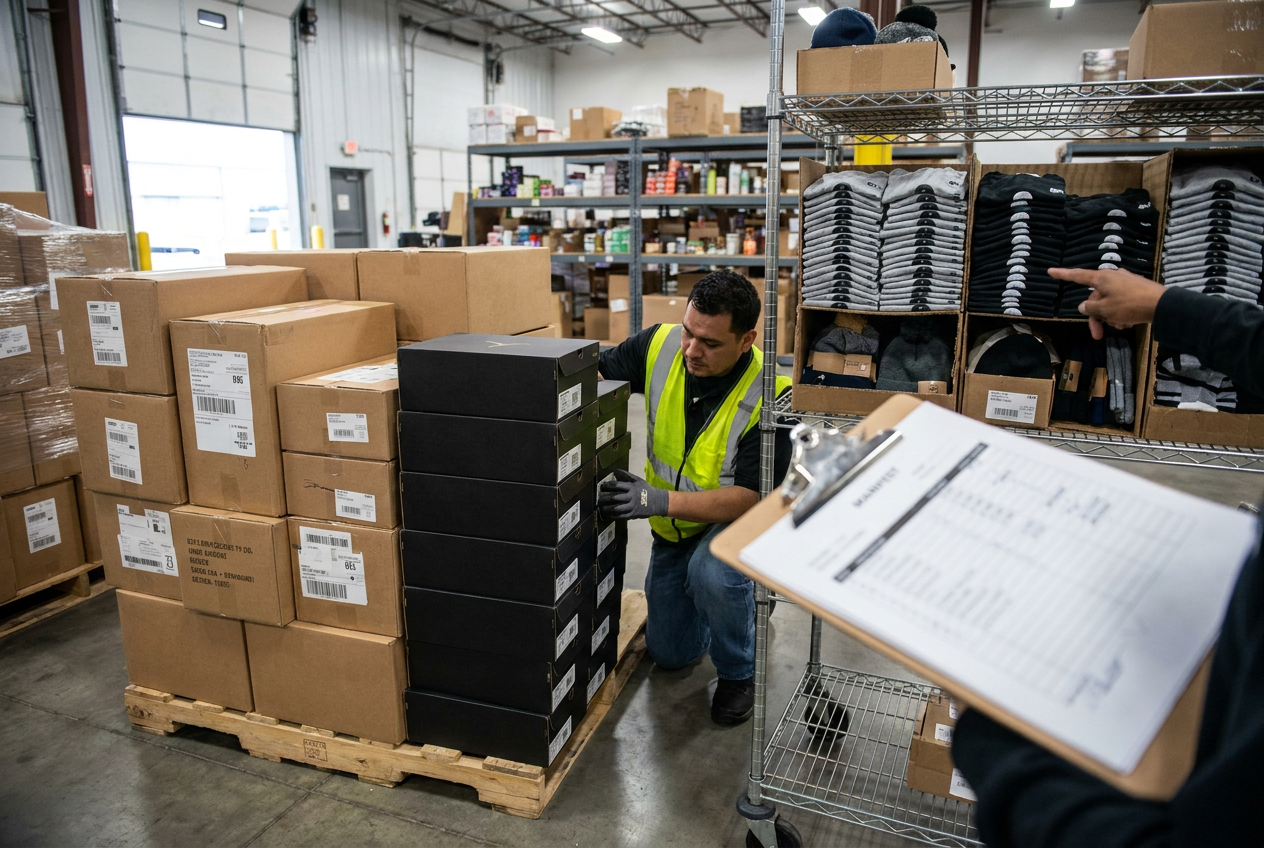
A manifest is an inventory document describing listed contents, sometimes with quantities or other details. Unit count means the number of merchandise units described in the lot, not the number of cartons or pallets. Category mix means the assortment of merchandise types. Neither a high unit count nor a particular category mix reliably predicts height, weight, or storage volume.
Browse general merchandise loads and truckload inventory as different planning starting points. For product-level comparisons, the HD GM Truckloads Pallets listing and WM GM Truckloads Pallets listing are places to review descriptions and request shipment-specific measurements—not evidence that those loads share dimensions.
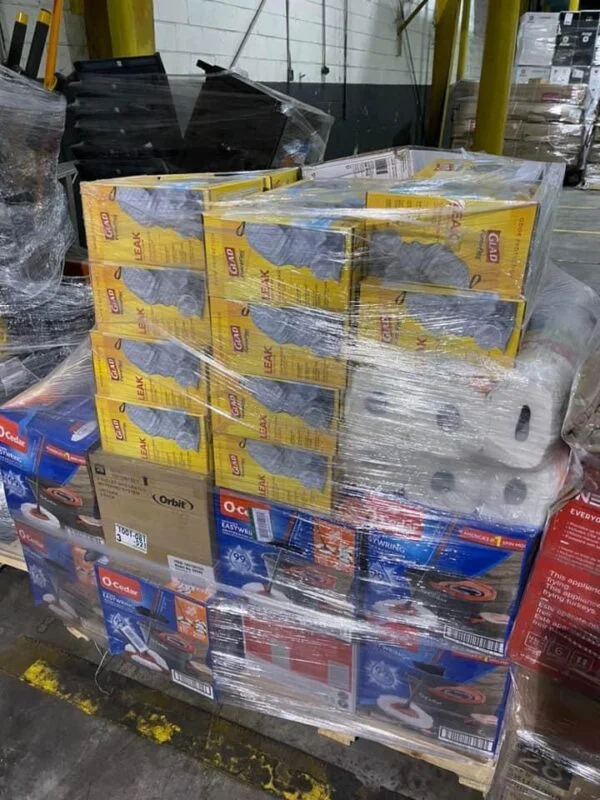
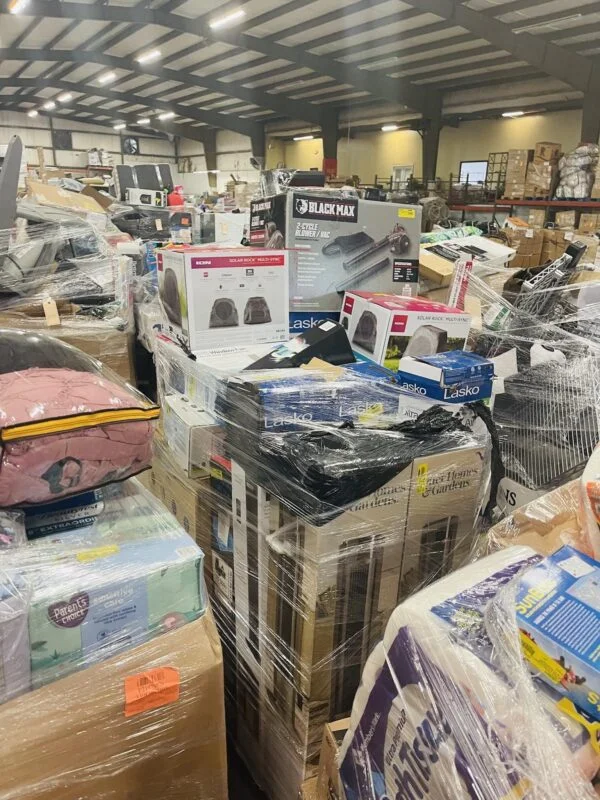
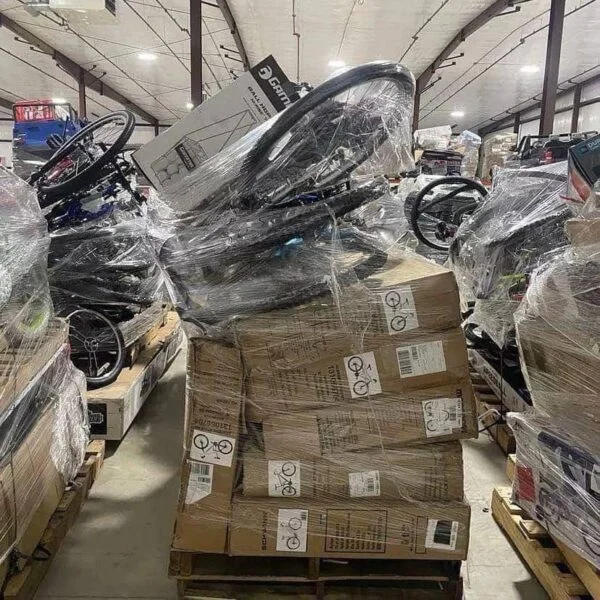
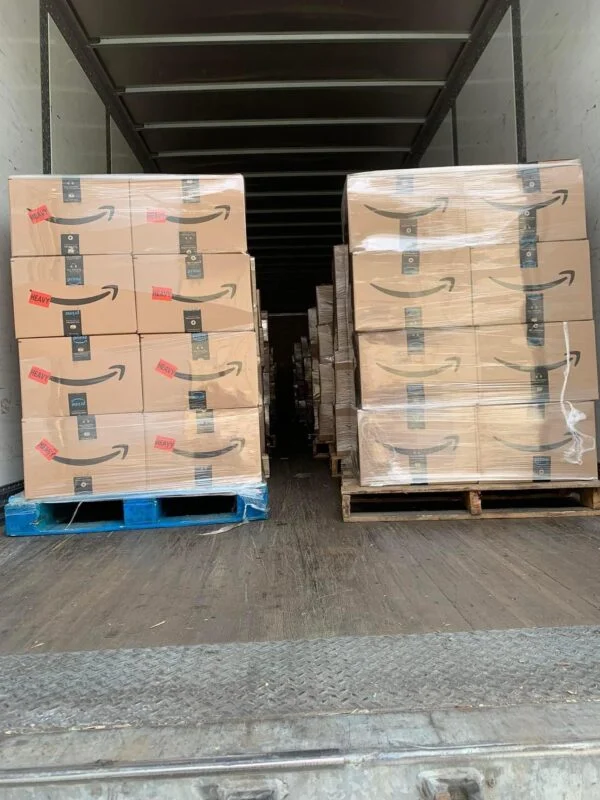
Photos show representative loads; each pallet's contents vary. Pallets are not individually tested, and contents are sold as described in the listing. PalletCove is an independent reseller, not affiliated with, endorsed by, or sponsored by any retailer named.
Get a usable measurement confirmation before ordering
Ask for dimensions in a consistent format: loaded length × loaded width × total loaded height, with units stated. Request gross weight separately. If measurements are estimates, ask what remains unconfirmed rather than treating them as maximums.
Send this checklist with the product name or listing reference:
- What are the pallet base dimensions and maximum loaded dimensions?
- Does the stated height include the pallet and all packaging?
- Is there overhang, and on which sides?
- What is the gross weight of each handling unit?
- How many pallets or other handling units are included?
- Which sides allow fork entry, and are there handling restrictions?
- Are these measurements confirmed for the shipment or representative only?
- Can the load remain intact throughout my unloading and entry route?
Do not infer measurements from a photograph, a product title, or the word “standard.” Our guide to liquidation pallet listing red flags covers broader listing evaluation; the key issue here is whether the dimensions actually describe your order.
If exact fit cannot be confirmed, choose a receiving plan that does not depend on a tight clearance. Do not assume the carrier will dismantle a pallet or move merchandise through an interior doorway.
Measure the vehicle and the entire entry route
Measure the narrowest point along the route, not just the destination. A roomy storage area is irrelevant if the load cannot pass through the entrance or turn in the corridor.
Check any vehicle used after delivery
Compare the loaded footprint with usable floor space between wheel wells and other obstructions. Measure the rear opening independently: a cargo area can be taller or wider inside than its entrance. For an open bed or trailer, check support, containment, tie-down arrangements, and safe loading access.
Check the manufacturer's payload rating, axle limits, and relevant trailer or hitch ratings. Passengers, tools, equipment, and other cargo use available capacity. A pallet that fits geometrically may still exceed the vehicle's safe carrying capacity.
Walk the receiving route
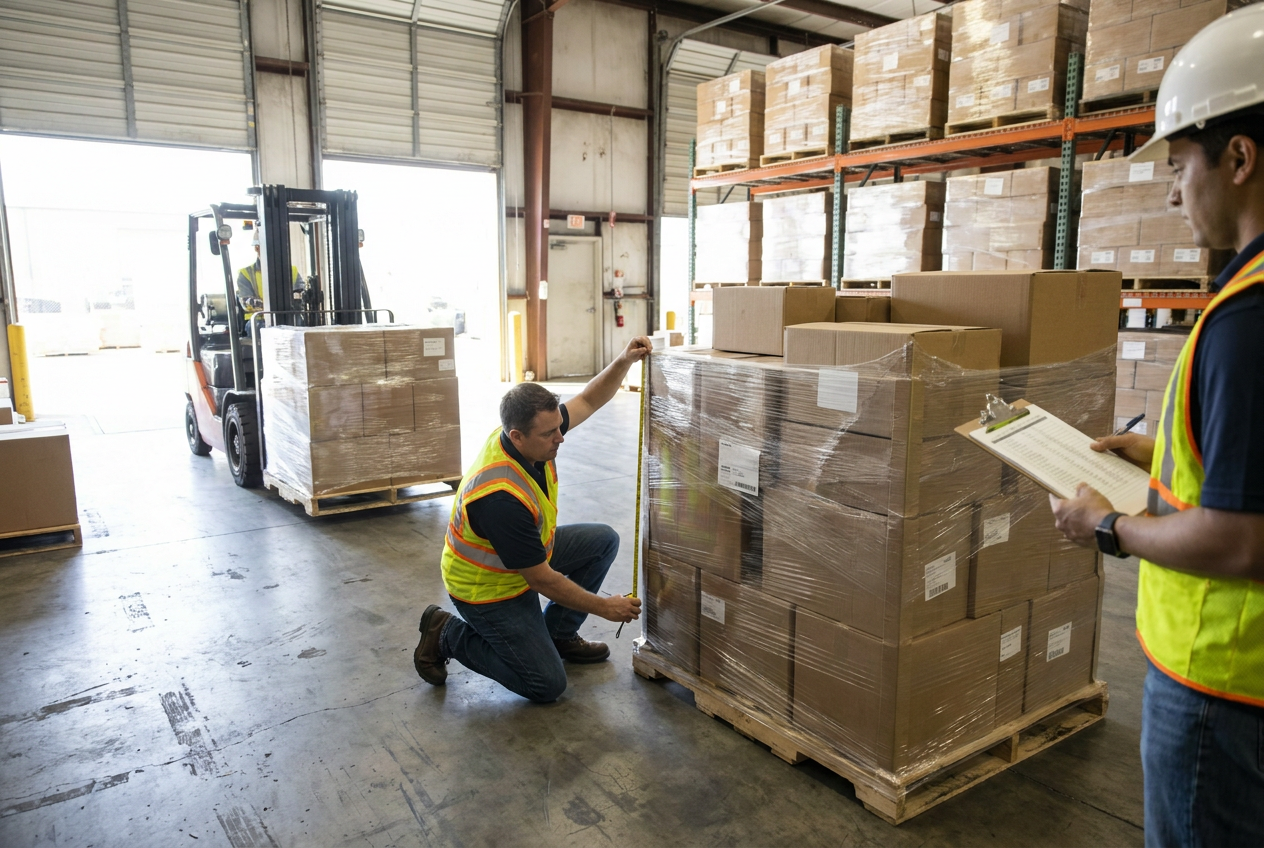
Measure doorway clear width with the door open, clear height beneath the lowest obstruction, thresholds, ramps, and corners. Allow space for the pallet jack or forklift, operator, and steering movement. Equipment lifting the pallet can increase the moving height above its resting height.
For example, a 48 × 40-inch base with two inches of overhang at both width edges produces a 48 × 44-inch load. A 42-inch clear opening will not accept its 44-inch side. A 46-inch opening offers only two inches of total nominal clearance, before accounting for uneven wrapping, alignment, or handling movement.
There is no universal clearance allowance suitable for every load. Ask the equipment operator what working clearance the actual load and route require. Turning a pallet is not automatically a solution: the corner sweep and equipment length need room too.
Plan unloading and storage, not just floor area
LTL means less-than-truckload freight, where shipments share trailer space. A full trailer shipment involves trailer-scale freight. Confirm the delivery arrangement and receiving requirements for your particular order; do not infer unloading services from either term.
Describe the receiving site accurately: dock availability, ground-level access, surface condition, slopes, overhead obstructions, and any suitable equipment. A pallet jack needs an appropriate travel surface and compatible pallet openings. Forklift capacity must be evaluated for the load and its load center, not just a headline weight rating.
A 48 × 40-inch footprint covers approximately 13.3 square feet, but that excludes aisles, overhang, unloading space, inspection space, and sorting. A truckload requires an unloading sequence and enough clear space to avoid blocking later loads.
Avoid three common first-order mistakes: measuring only the base, forgetting the doorway, and filling the receiving area before delivery. Do not stack loaded pallets unless the load, packaging, equipment, and storage system are suitable. If breaking down a load is necessary, arrange a safe work area and handling plan beforehand; never cut restraints on an unstable stack.
Order, pay, and schedule with fit confirmed
The listed price includes freight. Free shipping is the only delivery option on every order to all 48 contiguous states. Whether browsing liquidation pallets in Texas or liquidation pallets in Florida, confirm access and dimensions before submitting an order. The liquidation pallets hub provides the broader inventory starting point.
Budget for receiving equipment, storage, and handling supplies without confusing those business expenses with delivery pricing. The first liquidation pallet budget guide covers that wider planning task. Valid resale certificates are reviewed and applied where the buyer's state allows.
No payment is collected on the website order form. After order review, a secure card link is emailed; Visa, Mastercard, American Express, and Discover credit and debit cards are the only accepted payment method. Review the card payment policy before paying.
Handling takes 1–3 business days after payment clears. Transit from Houston is typically 3–7 business days, for an estimated 4–10 business days total. The processing cutoff is 2:00 PM Central Time, America/Chicago, Monday–Friday; after-cutoff confirmations begin the next business day. Weekends and applicable holidays do not count. Keep receiving space available throughout the estimated window rather than scheduling around an assumed exact arrival date.
Inspect dimensions and document delivery issues
Inspection means checking the shipment's observable condition, packaging, identity, and correspondence with its description. Delivery-day inspection is not proof that every item functions, nor does it replace later inventory review.
Before moving the load into a tight space:
- Photograph the shipment and visible packaging condition.
- Check for leaning, shifted cartons, damaged pallet boards, and new overhang.
- Compare the delivered handling-unit count with shipping documents.
- Verify the outside dimensions before entering a restricted opening.
- Document visible damage or discrepancies on delivery paperwork where possible.
Keep people clear of unstable loads and seek qualified handling help. Request delivery-issue reporting within 48 hours, with photos and order details; this does not shorten eligible new-product return rights.
Under the United States Refund & Returns Policy, products explicitly listed as NEW ONLY qualify for defective and non-defective returns and exchanges within 30 calendar days of delivery. Returns are by mail, the customer is responsible for the return label and shipping, and the restocking fee is 15% of the product price. Refund processing takes 10 calendar days after authorized return receipt and inspection, or approval where no physical return is required.
Mixed and used loads have separate claims terms, not routine change-of-mind returns. Do not treat overstock, shelf-pull, customer-return, or salvage descriptions as verified new condition. If a listing uses “as-is,” review its specific description and applicable terms rather than assuming either universal return eligibility or a blanket no-returns rule.
Frequently asked questions
Are liquidation pallets always 48 × 40 inches?
No. That is a common base footprint, not a universal liquidation pallet size. Confirm both the actual base and the maximum loaded dimensions for the shipment.
Does pallet height include the wooden base?
A total loaded-height measurement should run from the floor to the highest point of the complete shipment. Ask explicitly whether the quoted measurement includes the pallet and packaging.
Will a liquidation pallet fit in a pickup truck?
It depends on the loaded dimensions, gross weight, bed geometry, payload limits, and loading method. Confirm all of those before planning a post-delivery transfer; PalletCove orders ship rather than using customer pickup.
Can I remove wrapping to squeeze through a doorway?
Do not rely on that plan. Wrapping or strapping may stabilize the load, and removing it can let merchandise shift or fall. Arrange safe breakdown in a suitable area if the intact shipment cannot pass.
Can a manifest tell me the space I need?
Not reliably unless it provides usable packaging and shipment dimensions. Item quantities and category descriptions do not establish the complete load envelope or the room needed for sorting.
Talk to PalletCove Liquidation
Before choosing a load, compare confirmed loaded dimensions and gross weight against the narrowest opening, handling equipment, and available storage. For the complete purchasing framework, return to our buying liquidation pallets guide.
Send your listing reference, doorway measurements, receiving setup, and any post-delivery vehicle constraints when you contact our order desk. Then compare options in current inventory without guessing from representative photos.
PalletCove Liquidation LLC
4000 Telephone Rd Unit B11, Houston, TX 77087
Phone: (713) 819-3904
Email: sales@palletcoveliquidation.com
Hours: Mon–Fri 8:00 AM – 6:00 PM CT, Sat 9:00 AM – 2:00 PM CT, Sun closed
About PalletCove Liquidation
Published by PalletCove Liquidation LLC, based in Houston, Texas. Our buying guides cover evaluating liquidation inventory and preparing for delivery. Consult the current product listing and store policies for purchase terms.