At a glance
Compare ACH and wire settlement, bank fees, cancellation limits, and verification steps before paying a liquidation supplier—and understand how PalletCove actually accepts payment.

Comparing ach vs wire transfer matters when a wholesale supplier asks you to move money before releasing inventory. The practical questions are when the supplier can use the funds, what your bank charges, whether an error can be corrected, and how you verify the recipient. A transfer confirmation does not necessarily mean an order is ready for handling.
First, an important distinction: PalletCove accepts only credit and debit cards—Visa, Mastercard, American Express, and Discover—through a secure card link emailed after order review. No payment is collected on the website order form. The ACH and wire information below is general guidance for evaluating other suppliers, not an alternative way to pay PalletCove.
Keep payment decisions separate from tax documentation. Sales tax is a tax on certain sales; a resale certificate is documentation a buyer provides for eligible resale purchases. Valid resale certificates are reviewed and applied where the buyer’s state allows. For the broader documentation framework, see our sales tax and resale certificate policy; this article is not tax advice.
ACH vs wire transfer: the practical differences
ACH means Automated Clearing House, a U.S. network used for electronic bank payments. An ACH credit is money the payer pushes to a recipient. An ACH debit is money a recipient pulls with the payer’s authorization. That distinction matters when discussing authorization, stop-payment requests, and disputed transactions.
A wire transfer is a bank-to-bank transfer processed through a wire system. Domestic wires generally move individually and can settle quickly, but speed does not create buyer protection. International wires involve additional variables and are outside this domestic wholesale comparison.
| Question | ACH | Domestic wire |
|---|---|---|
| --- | --- | --- |
| Typical timing | Standard payments commonly take one to three banking days; eligible Same Day ACH can move faster | Often settles the same business day when accepted before the bank’s cutoff |
| Typical cost structure | Often lower-cost; business account and expedited-service charges vary | Commonly carries an outgoing fee; incoming fees may also apply |
| Cancellation | Pending instructions may sometimes be stopped; processed payments have limited return or reversal options | Cancellation may be possible before execution; a recall after execution is not guaranteed |
| Main verification issue | Correct recipient, routing details, account number, and credit-versus-debit authorization | Correct beneficiary and wire-specific bank instructions |
| Merchandise protection | Not an escrow service or automatic purchase guarantee | Not an escrow service or automatic purchase guarantee |
These are typical patterns, not promises. Bank agreements, payment limits, screening, holidays, and submission times affect the result. Ask the bank about your specific business account rather than assuming consumer-account rules apply.
Key takeaway: Verify the seller and payment instructions before authorizing funds. A faster payment is not a safer purchase, and settlement does not verify the merchandise.

Settlement timing, fees, and inventory release
Three events are easy to confuse: submitting a payment, the banking system settling it, and the supplier confirming that payment has cleared for order processing. A bank status reading “sent” may establish only that the instruction was accepted.
For suppliers that accept bank transfers, ask what starts their handling clock. A supplier might wait for its bank to post the funds or complete a reconciliation against the invoice. An invoice is the seller’s billing document identifying the buyer, goods, amount due, and applicable transaction terms.
Before authorizing a transfer elsewhere, establish:
- The bank’s submission cutoff and the supplier’s separate processing cutoff.
- Whether the supplier requires the invoice number in a reference field.
- Whether inventory is reserved while payment is pending, and for how long.
- Whether your daily transfer limit covers the order.
- The bank’s outgoing, incoming, and expedited-payment charges, where applicable.
Fees should come from current bank disclosures, not a generic online estimate. Even if an account includes free ACH transactions, approval requirements or transfer limits can delay a large purchase. A wire’s higher fee may buy speed, but it does not buy an inspection right or guaranteed recovery.
At PalletCove, follow the card payment policy, not a transfer timetable. Handling takes 1–3 business days after payment clears. The processing cutoff is 2:00 PM Central Time, America/Chicago, Monday–Friday; after-cutoff confirmations begin the next business day. Weekends and applicable holidays do not count.
Cancellation limits: stopping money is not canceling an order
ACH is sometimes described as reversible, but that description is too broad. A sender may be able to cancel an instruction that has not been processed. Once processed, reversals are restricted to qualifying errors and network rules; they are not a general remedy for disappointing inventory.
An ACH debit also raises authorization questions that differ from an ACH credit you initiated. Business-account reporting deadlines can be short. If something appears wrong, contact your bank immediately and ask what deadlines and procedures govern that transaction.
A wire recall is a request, not an undo button. After execution, recovery may depend on the receiving bank, the beneficiary, the availability of funds, and other circumstances. Never send a wire on the assumption that your bank can retrieve it if the seller stops responding.
For any payment method, distinguish these separate issues:
- Payment cancellation: Can the bank stop an unprocessed instruction?
- Order cancellation: Do the seller’s written terms permit canceling the purchase?
- Merchandise claim: Does the delivered load differ from the listing or qualify under a return policy?
If fraud is suspected, notify the bank promptly, preserve correspondence, and ask about recovery procedures. Do not send another payment to “unlock” a refund. Card payments also do not guarantee a successful dispute or replace written merchandise terms.
Verify bank details and the supplier independently
Supplier vetting means checking a seller’s identity, authority to sell the load, business practices, and written terms before purchasing. Verifying account numbers is only one part of that work: authentic banking details do not establish that inventory exists or matches the description.
For another supplier requesting a bank transfer, use a known contact channel obtained independently of the payment email. Confirm the beneficiary’s legal name, bank name, routing number appropriate to the payment method, account number, and invoice reference. ACH and wire routing instructions may differ.
Treat these situations as reasons to pause:
- New banking details arrive after the original invoice.
- The beneficiary name differs from the invoicing business without a documented explanation.
- Someone pressures you to bypass your normal approval process.
- An email claims the usual payment procedure is unavailable.
- A third party requests payment without clearly documented authority.
Call a previously verified number, not a number supplied only in the message announcing the change. For larger orders, separate instruction verification from payment authorization so one person does not control both unchecked.
A W-9 is an IRS form used to request a U.S. taxpayer’s identification number and certification. It can support vendor records when appropriate, but it is not proof of inventory ownership, banking authority, or trustworthiness. Store sensitive vendor documents securely.
Our guide to liquidation supplier payment scams covers related warning signs. If someone requests ACH or wire payment while claiming to represent PalletCove, stop: that conflicts with our card-only process.

Verify the load before deciding how to pay
Payment certainty and merchandise certainty are different. A liquidation pallet is a bulk lot sold on a pallet; a truckload is a larger shipment whose actual scope must be established from the listing. Review the liquidation pallets inventory hub, then use the pallet buying guide or truckload buying guide for broader purchasing preparation.
A manifest is an inventory document describing listed contents, quantities, or other load details. Ask whether one is available, what its fields mean, and whether it is specific to the offered load. Do not assume a category-level offering includes a unit-by-unit manifest.
A condition grade is the seller’s description of merchandise condition—not a universally standardized testing result. Common descriptions need clarification:
- Customer returns: Previously returned merchandise; usability and completeness can vary.
- Overstock: Excess inventory; the term alone does not establish a verified new condition.
- Shelf pulls: Goods removed from selling shelves, potentially with packaging or handling wear.
- Salvage: Merchandise that may require repair, parts recovery, or disposal.
- As-is: A condition-related sales term whose exact scope should be checked against the listing and applicable claims terms.
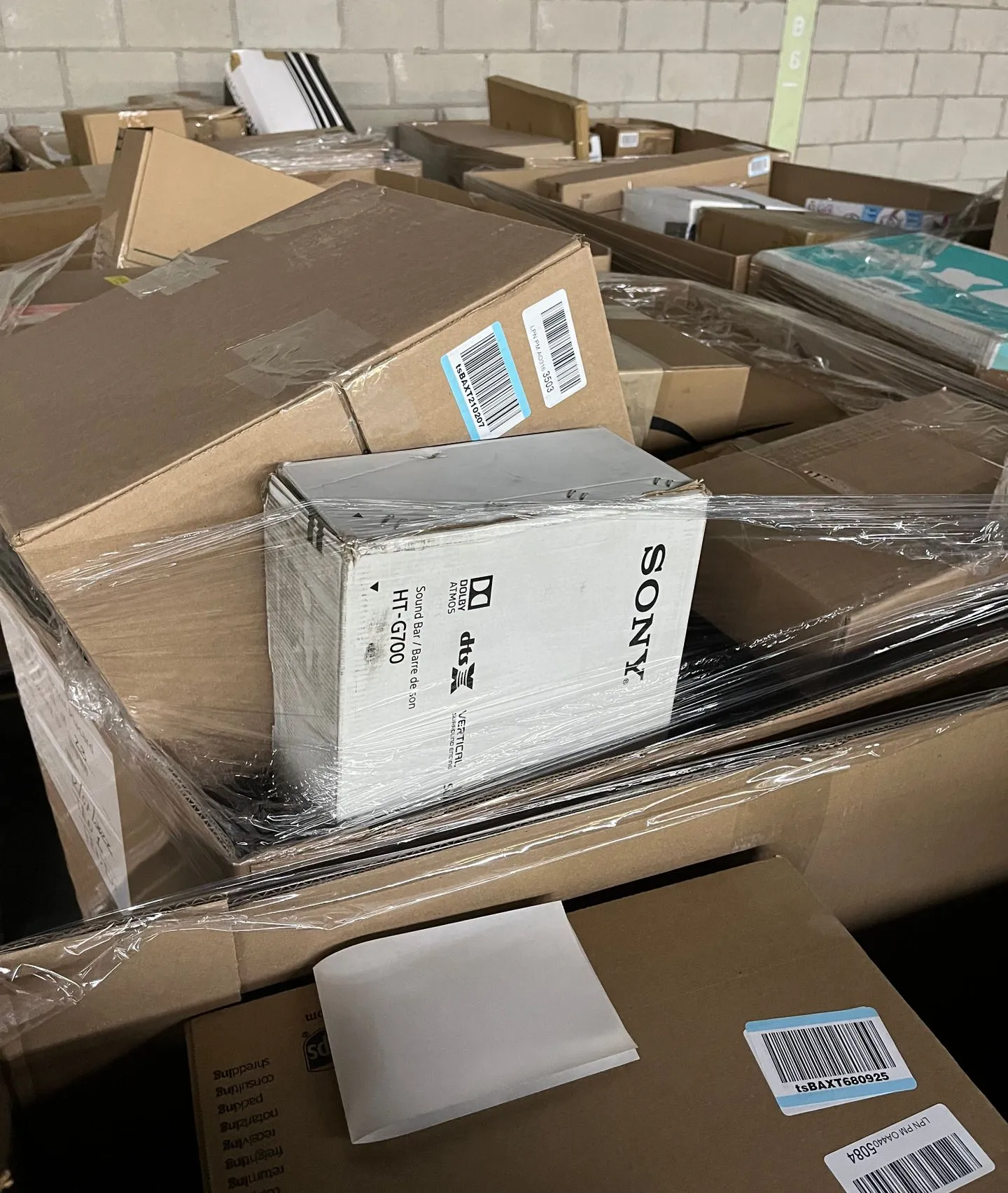
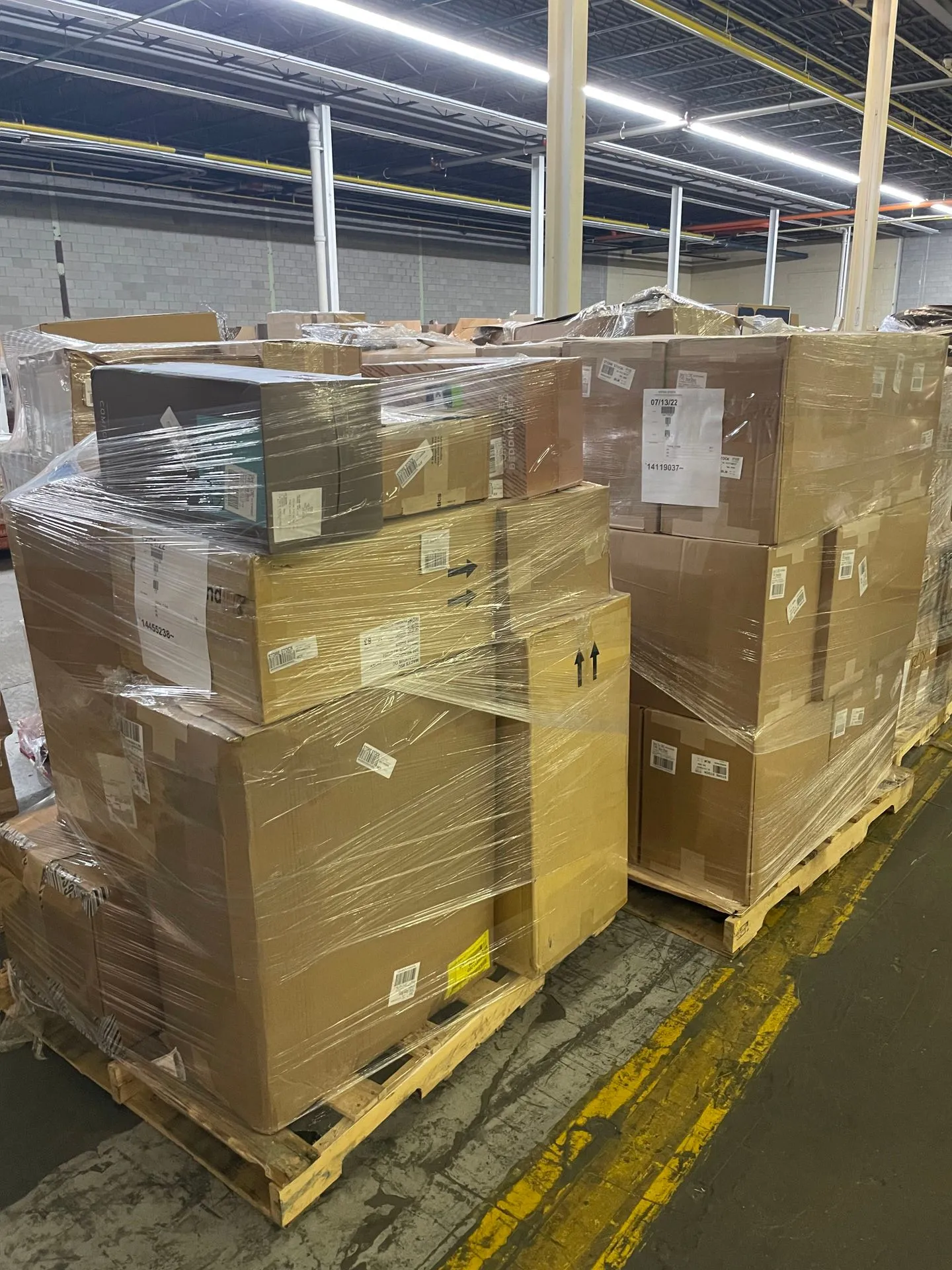
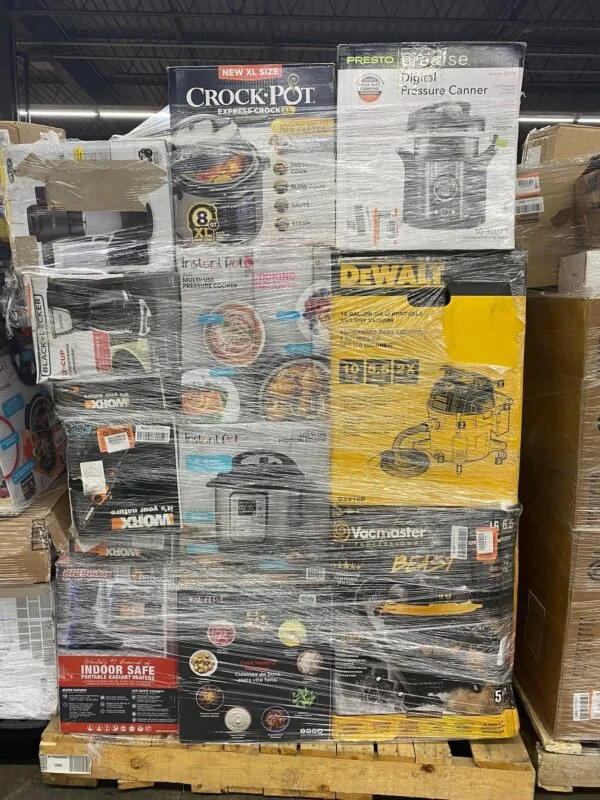
PalletCove photos show representative loads. Contents of each pallet vary, pallets are not individually tested, and contents are sold as described in the listing. Do not infer a condition guarantee from a product name or photograph.
For example, compare the written scope of general merchandise loads with truckload listings. The Amazon General Merchandise Truckload and Macy’s Textile Truckload are different listing destinations; verify each current description rather than transferring assumptions between them. PalletCove is an independent reseller, not affiliated with, endorsed by, or sponsored by any retailer named.
Confirm the unit of sale, listed price, condition description, and documentation before payment. A low bank fee cannot compensate for misunderstanding whether the invoice covers one pallet or a full trailer.
Ordering, delivery, and claims at PalletCove
The website order form does not collect payment. After order review, PalletCove emails a secure card link. Match the reviewed order and amount to your records before paying, and resolve discrepancies first. For certificate-specific documentation, consult the resale certificate liquidation purchase guide.
Free shipping is the only delivery option on every order to all 48 contiguous states; freight is included in the listed price. That applies to buyers researching liquidation pallets in Texas and liquidation pallets in Florida, as well as the other contiguous states.
Transit from Houston is typically 3–7 business days, producing an estimated 4–10 business days total with handling after payment clears. These are estimates, not guaranteed arrival dates. LTL means less-than-truckload freight, where shipments share trailer capacity; a full trailer describes a larger freight movement. Confirm the shipment’s receiving requirements rather than assuming every pallet and truckload uses identical equipment.
On delivery day, inspect accessible packaging and pallet condition, document visible issues on delivery paperwork where possible, and take clear photographs. Reconcile the received shipment with the order documents. Request delivery-issue reporting within 48 hours so evidence can be reviewed promptly; this does not shorten eligible new-product returns.
Under the Refund & Returns Policy, United States products explicitly listed as NEW ONLY qualify for defective and non-defective returns and exchanges within 30 calendar days of delivery. Returns are by mail, the customer is responsible for the return label and shipping, and the restocking fee is 15% of the product price. Refund processing takes 10 calendar days after authorized return receipt and inspection, or approval where no physical return is required. Mixed and used loads have separate claims terms, not routine change-of-mind returns.
Retain the listing, invoice, reviewed order, payment confirmation, correspondence, delivery documents, and claim evidence together. Payment records establish what you paid; listing and delivery records help establish what was promised and received.
Frequently asked questions
Is ACH safer than a wire for buying liquidation pallets?
Neither method verifies the supplier or guarantees merchandise quality. ACH can have different cancellation and return procedures, but those procedures are limited and are not general purchase protection. Vet the supplier and document the load before authorizing either method elsewhere.
Does PalletCove accept ACH or wire transfers?
No. PalletCove accepts only Visa, Mastercard, American Express, and Discover credit and debit cards through a secure card link emailed after order review. No payment is collected on the website order form.
Will sending payment earlier guarantee faster shipping?
No payment method guarantees an earlier dispatch. At PalletCove, handling begins after payment clears and follows the business-day cutoff; transit remains an estimate. Resolve order questions before paying rather than rushing an incorrect payment.
Can I reverse a transfer if a pallet disappoints me?
Disappointment alone does not create an ACH reversal right or guarantee a wire recall. Compare the actual shipment with the listing and applicable claims terms. Report suspected fraud to your bank promptly, but do not assume recovery is assured.
What if payment instructions change unexpectedly?
Pause and verify through a previously established, independent contact channel. Do not rely solely on an email reply or a new phone number in the changed instructions. A bank-transfer request attributed to PalletCove contradicts its accepted payment process.
Talk to PalletCove Liquidation
The useful conclusion to an ACH vs wire transfer comparison is straightforward: understand timing and cancellation limits, verify instructions independently, and confirm what you are buying. For PalletCove orders, use only the emailed secure card link after review. Revisit our sales tax policy for reseller purchases for the broader documentation framework.
PalletCove Liquidation LLC is located at 4000 Telephone Rd Unit B11, Houston, TX 77087. Call (713) 819-3904 or email sales@palletcoveliquidation.com. Hours are Mon–Fri 8:00 AM – 6:00 PM CT, Sat 9:00 AM – 2:00 PM CT, Sun closed.
Before authorizing payment, contact our order desk with order-specific questions and review current inventory for the applicable listing details.
About PalletCove Liquidation
Published by PalletCove Liquidation LLC, based in Houston, Texas. Our buying guides cover evaluating liquidation inventory and preparing for delivery. Consult the current product listing and store policies for purchase terms.