At a glance
Use this practical invoice checklist to verify a liquidation supplier, match load descriptions and quantities, reconcile card payments, and keep documentation ready for delivery and claims.

Wholesale invoice requirements are easiest to understand as a reconciliation task: does the final document identify the seller, describe what you bought, show the agreed price, and connect to your payment and delivery records? For liquidation buyers, those checks matter because a pallet count, merchandise estimate and truckload description can refer to different things.
An invoice is the seller’s billing document recording a transaction and the amount charged. It is not automatically proof of payment, an item-by-item inventory, or a guarantee that every product works. This guide provides a practical buyer checklist rather than a universal legal template; documentation requirements vary by transaction and jurisdiction.
For the broader policy context, review PalletCove’s sales tax and resale certificate policy. Sales tax is a tax on certain sales of goods or services. A resale certificate is documentation a buyer supplies to support purchasing merchandise for resale; valid resale certificates are reviewed and applied where the buyer’s state allows.
Invoice, manifest and purchase order: different jobs
A liquidation purchase often produces several documents. They should agree, but they are not interchangeable.
| Document | Main purpose | What it does not establish by itself |
|---|---|---|
| --- | --- | --- |
| Purchase order | Records the buyer’s requested merchandise, quantities and terms | Seller acceptance, shipment or payment |
| Invoice | Records the seller’s charge for the agreed transaction | Payment completion or item-level condition |
| Manifest | Describes listed merchandise and quantities at its stated level of detail | The final amount paid or guaranteed contents unless expressly agreed |
| Payment confirmation | Records a payment event and its reference | The complete merchandise description |
| Delivery receipt | Records receipt of the shipment and noted exceptions | A complete inspection of every item |
A preliminary estimate or draft invoice should not be confused with the final transaction record. Request the final invoice after the order details are settled, then retain payment confirmation separately if the invoice does not show payment status.
A manifest may identify products, categories or estimated quantities. Ask whether it applies to your specific load, when it was prepared, and whether counts are exact or approximate. General background belongs in the liquidation buying overview; the invoice should capture the commitments specific to your order.
The strongest purchase record is a matching set: final invoice, agreed listing or manifest, payment confirmation, and delivery documentation.
Start with supplier identity and invoice controls
Supplier vetting means checking a seller’s identity, transaction details and stated policies before committing to a purchase. An invoice contributes to that process, but a professional-looking document does not independently prove legitimacy.
Verify these fields before treating an invoice as final:
- Seller identity: legal business name, business address and a working contact channel.
- Buyer identity: your correct purchasing name, billing address and delivery address, clearly distinguished.
- Document controls: invoice number, issue date and the related order number.
- Transaction scope: the specific listing, lot reference or other identifier connecting the invoice to the merchandise.
- Commercial terms: quantities, units, prices, adjustments, total and payment status.
- Supporting references: any applicable manifest version, written condition description and policy references.
For PalletCove purchases, reconcile the seller identity with PalletCove Liquidation LLC. If an unexpected company name appears in correspondence or payment instructions, pause and ask for clarification through a known contact channel. Do not resolve an identity mismatch by assuming a logo is sufficient evidence.
A W-9 is an IRS form used to request a U.S. person’s taxpayer identification number and certification. It is not a resale certificate, invoice, merchandise guarantee or certification of supplier quality. The guide to requesting a wholesale supplier W-9 explains that separate documentation question; sensitive tax documents should be handled through an appropriate secure process.

Match merchandise descriptions, load types and quantities
An invoice line reading only “merchandise” leaves too much unresolved. Seek enough detail to connect the charge to the listing: merchandise category, load type, condition description, quantity basis and agreed reference identifiers.
The liquidation pallets hub covers pallet inventory, while the truckload buying guide addresses larger purchases. On the invoice, distinguish a liquidation pallet from a multi-pallet lot or full trailer. LTL means less-than-truckload transportation; it describes shipment scale, not a condition grade or merchandise quantity.
Identify the unit being sold
The unit price and quantity must use the same basis. One truckload is not one pallet, and one pallet is not one saleable item. A full trailer description alone does not establish an exact pallet count or piece count.
For general merchandise loads, check whether the description identifies a category mix rather than particular products. For truckload inventory, confirm the invoiced unit and any stated load identifiers. Do not convert representative photos into an assumed inventory count.
Product names need the same discipline. If ordering the Amazon General Merchandise Truckload or Macy’s Textile Truckload, match the invoice to the actual listing and agreed order details rather than inferring contents or condition from the name. PalletCove is an independent reseller and is not affiliated with, endorsed by or sponsored by any retailer named.
Preserve the actual condition description
A condition grade is the seller’s stated classification of merchandise condition; terminology is not universally standardized. Common terms require context:
- Customer returns: merchandise returned by customers; the label alone does not establish functionality or completeness.
- Overstock: excess inventory; the term alone does not establish that the entire lot qualifies as new.
- Shelf pulls: goods removed from sales shelves; packaging and condition need the listing’s explanation.
- Salvage: merchandise described for recovery, parts or similar limited uses; confirm the stated scope.
- As-is: a sale qualifier that must be read alongside the specific description and applicable claims terms, not as a substitute for them.
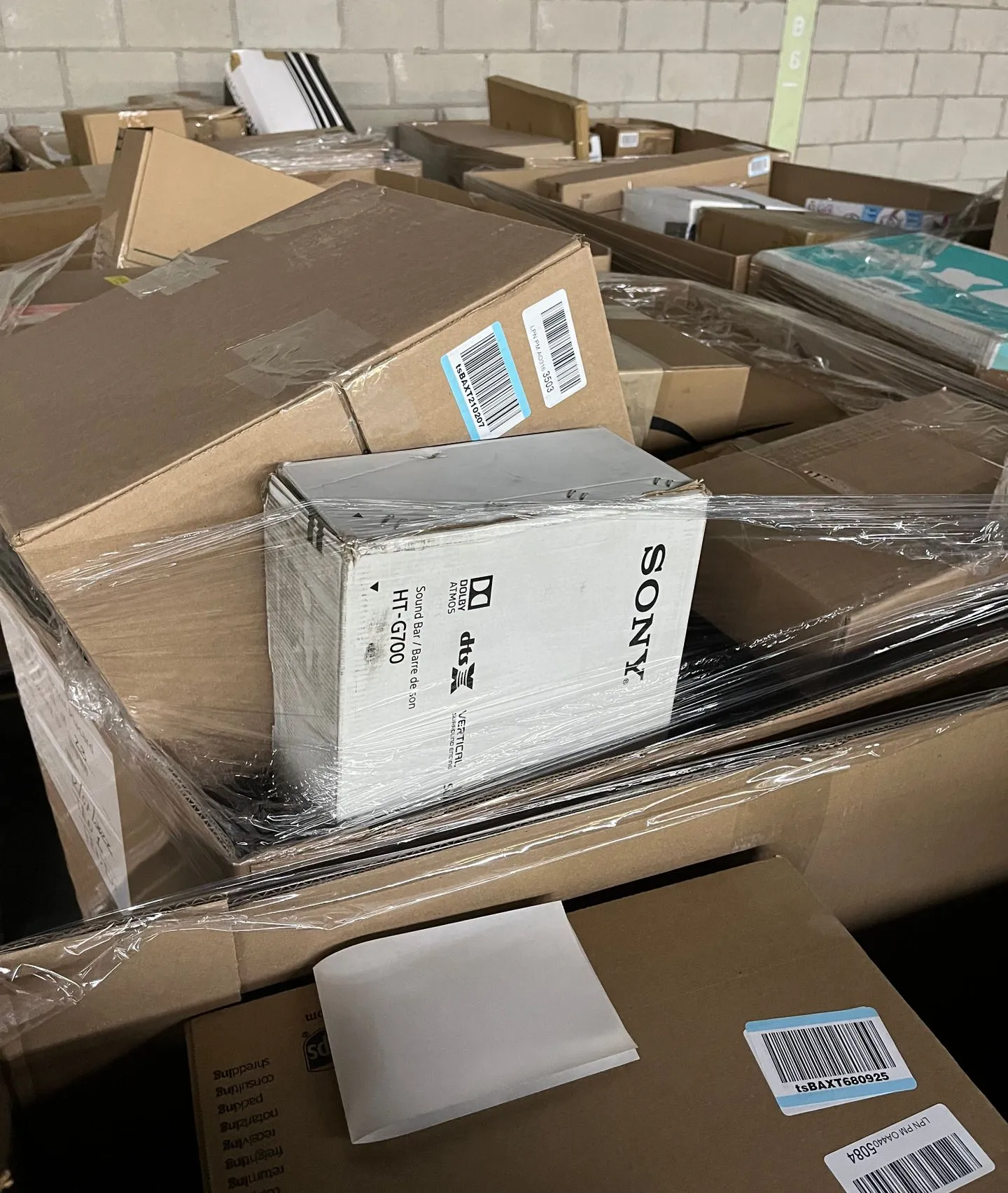
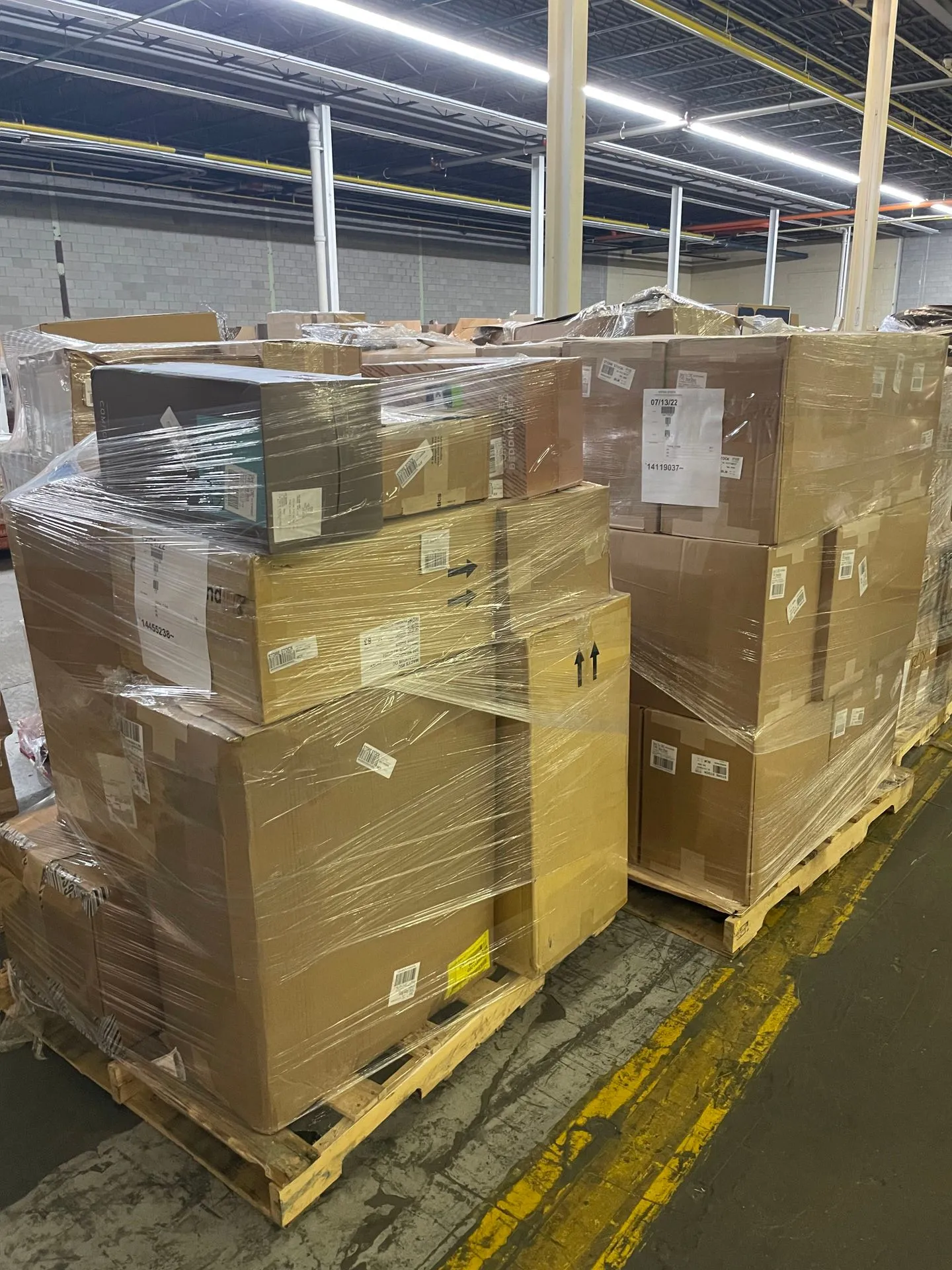
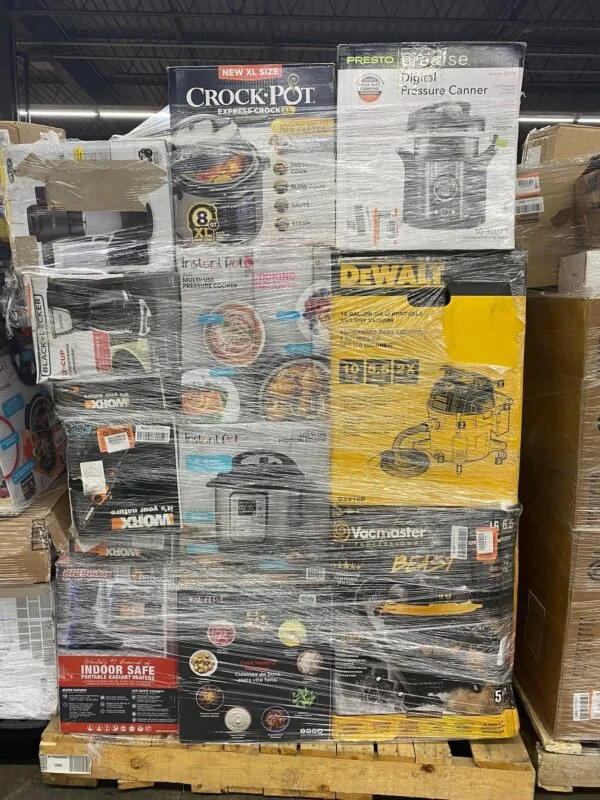
PalletCove photos show representative loads, contents of each pallet vary, and pallets are not individually tested. Contents are sold as described in the listing. Request correction if the invoice changes “mixed customer returns” into “new,” adds an unsupported testing claim, or omits a material condition limitation.
Reconcile prices, adjustments and the final total
The final invoice should make the arithmetic understandable without requiring assumptions about resale value. Review quantity multiplied by unit price, any agreed discount, any separately stated sales tax amount, the total charged and any remaining balance. This is a transaction check, not tax advice.
For PalletCove, free shipping is the only delivery option on every order to all 48 contiguous states. Freight is included in the listed price. The invoice should reflect that pricing structure without adding a separate delivery amount.
The same pricing structure applies to buyers viewing liquidation pallets in Texas and liquidation pallets in Florida. A destination change still needs to be recorded accurately so the invoice and delivery record identify the same order.
If you submit a resale certificate, confirm whether it was reviewed before accepting the final total. Valid resale certificates are reviewed and applied where the buyer’s state allows. Refer broad sales tax basics and resale-certificate questions to the policy rather than assuming a document automatically changes the charge.
Do not treat an estimated retail figure, when present in supporting materials, as the invoice purchase price or a promised resale return. The amount you owe should be independently clear.
Connect ordering and card payment to the invoice
PalletCove collects no payment on the website order form. After order review, a secure card link is emailed. Credit and debit cards—Visa, Mastercard, American Express and Discover—are the only accepted payment method, as described in the wholesale order payment policy.
Use this sequence to keep the records aligned:
- Review the order description, quantity basis, delivery address and total.
- Resolve discrepancies before using the emailed secure card link.
- Retain the payment confirmation and transaction reference.
- Match the charged amount to the final invoice.
- Confirm that the invoice or accompanying record identifies whether payment has cleared and whether any balance remains.
An invoice marked “paid” and a card payment record serve different purposes. Keep both when available. A masked card reference may help reconciliation, but your purchase file should not contain a full card number or security code.
If the invoice amount differs from the payment confirmation, ask for an explanation and corrected documentation. Do not silently amend the seller’s invoice yourself. Paying safely and verifying the supplier are related tasks, but neither replaces matching the actual transaction records.
Carry the invoice through delivery and claims
PalletCove’s handling time is 1–3 business days after payment clears. Transit from Houston is typically 3–7 business days, for an estimated 4–10 business days total. The processing cutoff is 2:00 PM Central Time, America/Chicago, Monday–Friday; after-cutoff confirmations begin the next business day. Weekends and applicable holidays do not count.
Distinguish invoice date, payment-cleared date and delivery date. An invoice date alone does not establish when handling began or when a return window starts.
At delivery, compare the visible shipment identifiers and handling-unit count with the shipping documents and order record. Note visible damage or count discrepancies on the delivery documentation where possible, photograph the condition received, and preserve packaging relevant to a claim. A missing pallet and an unexpected item mix are different issues; describe which occurred without assuming a representative photo establishes promised contents.
PalletCove requests delivery-issue reporting within 48 hours. This request does not shorten eligible new-product 30-day returns.
Under the United States Refund & Returns Policy, only products explicitly listed as NEW qualify for defective and non-defective returns and exchanges within 30 calendar days of delivery. Returns are by mail; the customer is responsible for the return label and shipping, and a 15% restocking fee applies to the product price. Refund processing takes 10 calendar days after authorized return receipt and inspection, or approval where no physical return is required. Mixed and used loads have separate claims terms, not routine change-of-mind returns.

Keep one complete file and avoid common mistakes
Create one order folder containing the final invoice, saved listing, applicable manifest, order correspondence, payment confirmation, delivery record and any authorized adjustment. The guide to reseller bookkeeping for liquidation purchases covers the broader record-keeping workflow.
Common documentation mistakes include:
- Filing a purchase order as though it were the final invoice.
- Treating estimated manifest quantities as exact commitments.
- Confusing handling units with merchandise pieces.
- Treating a retailer name as proof of affiliation or condition.
- Losing the listing description after inventory changes online.
- Keeping an original invoice but discarding its correction or credit record.
When something changes, request a revised document with a clear reference to the original. Preserve the audit trail rather than overwriting the earlier file. Record the reason for an adjustment so a later reviewer can distinguish a price correction from a merchandise claim.
Frequently asked questions
Must a liquidation invoice list every item?
Not necessarily; the appropriate detail depends on what was sold and agreed. A category-level pallet invoice should still identify the load, quantity basis and condition description, with a specific manifest reference when one forms part of the agreement.
Does an invoice prove that I paid?
Not by itself. Retain a payment confirmation and match its amount and reference to the invoice; a stated paid status helps complete the record.
Is a W-9 required with every wholesale invoice?
A W-9 serves a separate taxpayer-identification purpose, not the invoice’s billing purpose. Whether to request one depends on your documentation needs; it does not verify the load’s contents or condition.
What should I do if the manifest and invoice disagree?
Ask the seller to resolve the discrepancy in writing before payment when possible. Identify the exact field—such as pallet count, condition or lot reference—and retain the corrected document with the original.
Does an invoice saying “as-is” mean every product is nonreturnable?
Do not treat that phrase as a universal answer. Read the actual listing and applicable policy: explicitly NEW products have the eligible return terms described above, while mixed and used loads have separate claims terms.
Talk to PalletCove Liquidation
Before filing an invoice, verify the seller, load description, quantity basis, total, payment record and delivery details. Use the sales tax and resale certificate requirements for the broader policy context, and resolve transaction-specific discrepancies in writing.
PalletCove Liquidation LLC is located at 4000 Telephone Rd Unit B11, Houston, TX 77087. Call (713) 819-3904 or email sales@palletcoveliquidation.com. Hours are Mon–Fri 8:00 AM – 6:00 PM CT, Sat 9:00 AM – 2:00 PM CT, Sun closed.
To clarify an invoice or listing description, contact our order desk. When ready to compare available loads, review current inventory.
About PalletCove Liquidation
Published by PalletCove Liquidation LLC, based in Houston, Texas. Our buying guides cover evaluating liquidation inventory and preparing for delivery. Consult the current product listing and store policies for purchase terms.