At a glance
Learn who books a freight delivery appointment, what carriers need from your receiving site, and how to manage schedule changes without mistaking an appointment for a guaranteed arrival.

A freight delivery appointment coordinates when a carrier and your receiving team expect to handle a shipment. For an independent reseller, that coordination matters: workers, unloading equipment, and inventory space must be available together. An appointment is not automatically a guaranteed arrival time.
This guide focuses on booking, confirming, and changing that appointment. For the broader purchasing process, start with our guide to buying liquidation truckloads. A truckload is a shipment sold or transported at truckload scale; the listing and shipping arrangement determine whether it occupies a dedicated full trailer or another configuration.
The most useful scheduling habit is simple: give everyone one accurate receiving profile, then keep one written record of the agreed appointment and subsequent changes.
What a freight delivery appointment actually confirms
A delivery appointment is an agreed receiving date, time window, or check-in slot. It tells the carrier when the destination can receive freight and tells the buyer when to prepare. Ask whether the stated window means driver check-in, unloading start, or completion; those are different expectations.
A tracking estimate is not an appointment. A requested appointment is not confirmed until the party controlling the schedule accepts it. Even a confirmed appointment does not, by itself, guarantee arrival at an exact minute. Traffic, weather, upstream loading delays, equipment issues, and driver operating limits can affect movement.
Treat the appointment as a receiving agreement, not an exact-time arrival guarantee. Confirm the window, its meaning, and the contact for changes in writing.
Load type affects coordination:
- Full trailer: the trailer is allocated to the shipment; this does not establish a universal pallet or item count.
- LTL: less-than-truckload service, where smaller shipments commonly share trailer space and move through a terminal network. The destination terminal may control appointment booking.
- Partial load: freight that uses only part of a trailer; its routing and scheduling depend on the transportation arrangement.
Do not infer the service type from the word “truckload” alone. Ask how your specific shipment will travel. Trailer capacity, full versus partial load selection, and storage planning belong in the broader buying discussion; appointment planning starts with the confirmed configuration.
Who schedules the appointment—and who confirms it?
The responsible scheduler depends on the shipment. A carrier dispatcher, destination terminal, transportation coordinator, or receiving facility may initiate booking. The buyer supplies receiving requirements and confirms that the proposed slot is workable. PalletCove's order desk can help clarify who owns the next step for your order.
| Participant | Information or action needed | Confirmation to retain |
|---|---|---|
| --- | --- | --- |
| Buyer or receiving manager | Hours, contact details, access restrictions, equipment | Written receiving profile |
| PalletCove order desk | Order details and shipping coordination | Order and shipment references |
| Carrier dispatcher or terminal | Routing status and available delivery slots | Accepted appointment window |
| Third-party warehouse | Booking procedure, reference requirements, dock availability | Warehouse booking confirmation |
| Driver | Arrival communication and site instructions | Check-in instructions and receiving contact |
If a warehouse uses a booking portal, disclose that before shipment. Identify who must enter the appointment, what reference is required, and whether the warehouse issues a confirmation number. A calendar entry on your side does not establish that the carrier has accepted it.
Ask three questions before ending the scheduling conversation: “Is this confirmed or requested?”, “Who should I contact if it changes?”, and “What shipment reference should I use?” Do not assume every shipment includes a call 24 hours before arrival.

Receiving details carriers need before booking
A loading dock is an elevated receiving platform that provides access to a trailer for unloading. Whether your location has one affects the delivery plan, but “commercial address” alone does not describe unloading capability.
Send a receiving profile containing:
- The complete delivery address, unit number, business name, and correct truck entrance.
- A primary receiving contact, direct phone number, and backup contact.
- Receiving days and hours, local time zone, lunch closures, and the last acceptable check-in time.
- Whether an appointment is mandatory and whether a booking portal or reference number is required.
- Loading dock availability, ground-level receiving arrangements, and suitable unloading equipment.
- Gate codes or check-in procedures, vehicle restrictions, and known approach or turning limitations.
- Staffing availability and the time your team needs to unload the confirmed configuration.
- Any third-party warehouse requirements that differ from your billing information.
State what equipment you actually have rather than what you expect the truck to provide. If you do not have a dock or suitable equipment, resolve the receiving arrangement before confirming the order. Do not assume the driver will unload, move goods inside, or provide unspecified equipment.
Confirm whether freight is palletized or floor-loaded. Floor-loaded goods are loaded directly into the trailer rather than on pallets, and can require a different crew and unloading plan. Our floor-loaded truckload unloading guide covers those preparations without treating every load as identical.
The same need for accurate receiving information applies to buyers sourcing liquidation pallets in Texas or liquidation pallets in Florida. Always state the destination's time zone instead of assuming everyone is using Houston time.
Order details that shape the receiving slot
A liquidation pallet is a bulk lot of merchandise grouped on a pallet for handling and resale. Category-level loads group merchandise by the listing's category rather than guaranteeing identical contents. Browse liquidation pallets or compare liquidation truckloads for sale, then establish the physical receiving requirements for the selected listing.
Our truckload category and general merchandise category provide different inventory browsing routes. For example, when evaluating the Amazon General Merchandise Truckload and Macy’s Textile Truckload, ask about each listing's current configuration rather than assuming equal unloading time from the truckload label. PalletCove is an independent reseller and is not affiliated with, endorsed by, or sponsored by any retailer named.
A manifest is an inventory document describing a load's listed merchandise, sometimes including quantities or identifiers. Ask whether one is available and what it covers. It is not interchangeable with a bill of lading, the freight transport document identifying the shipment, parties, and transport particulars. Keep both accessible when available, but use the carrier's shipment reference for scheduling.
A condition grade describes the merchandise condition stated in the listing. Customer returns, overstock, shelf pulls, and salvage are distinct descriptions, not synonyms for new or tested-working goods. Read any “as-is” wording with the listing's actual description and applicable claims terms; it does not establish that every product has the same return eligibility.
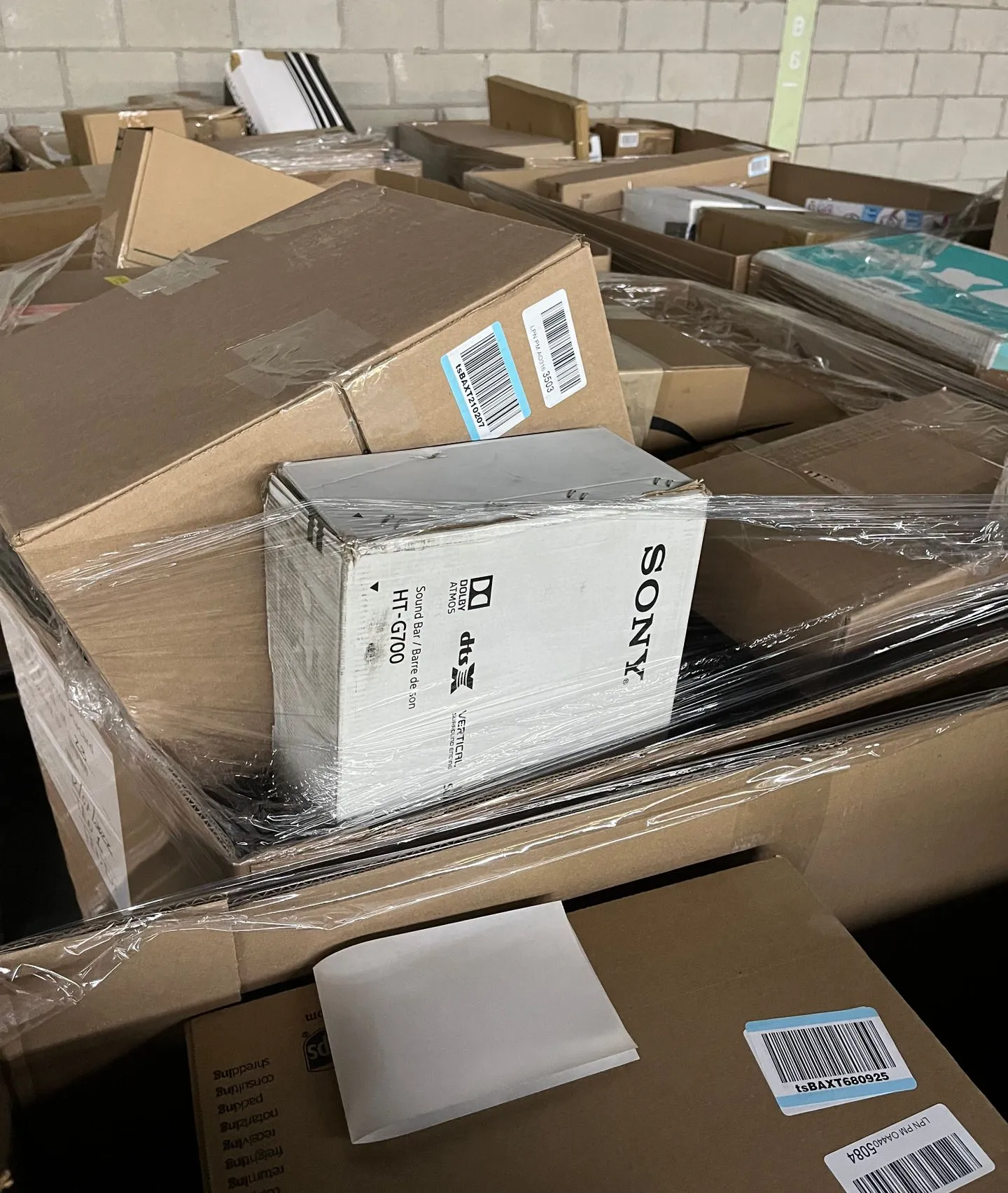
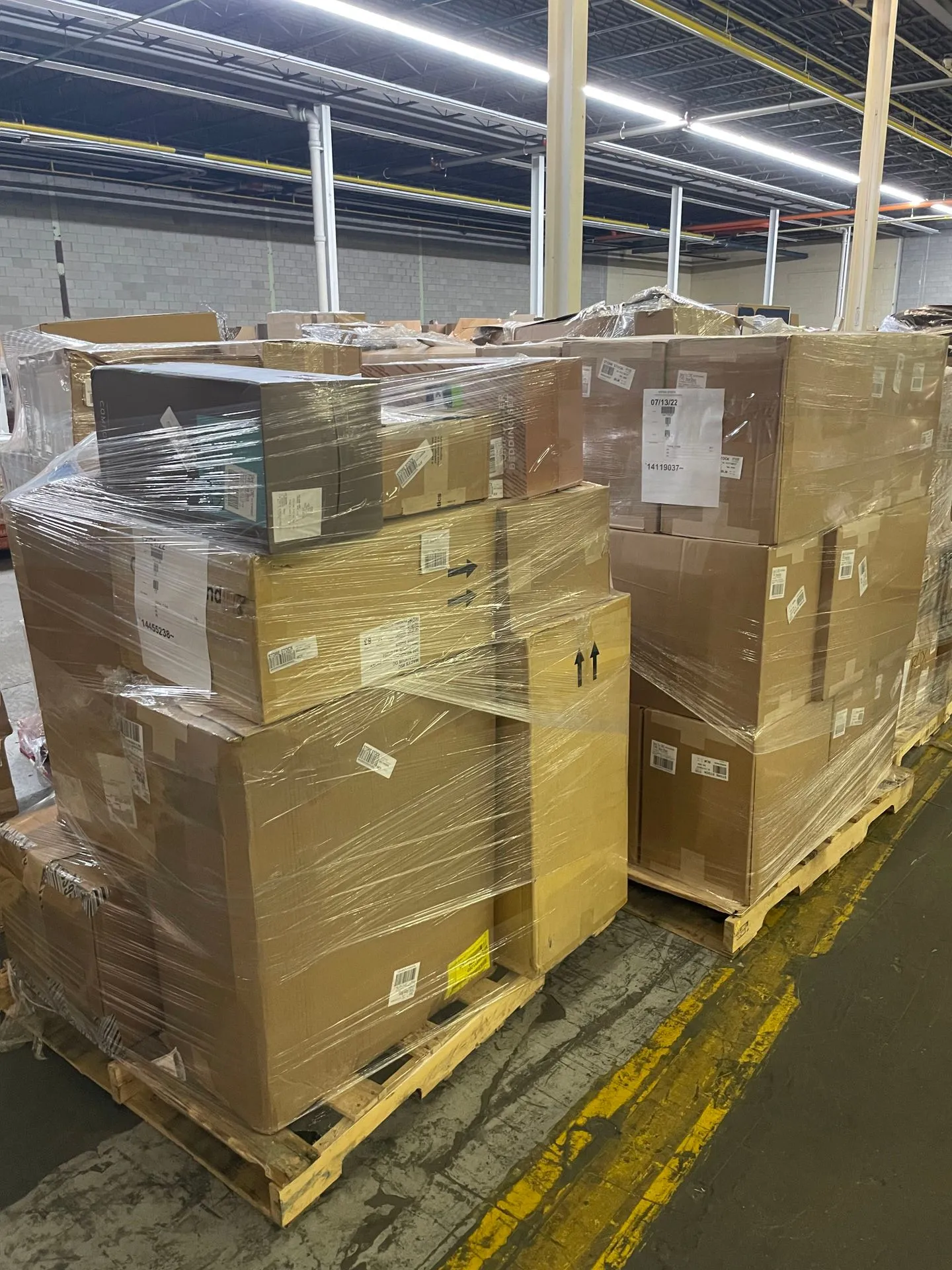
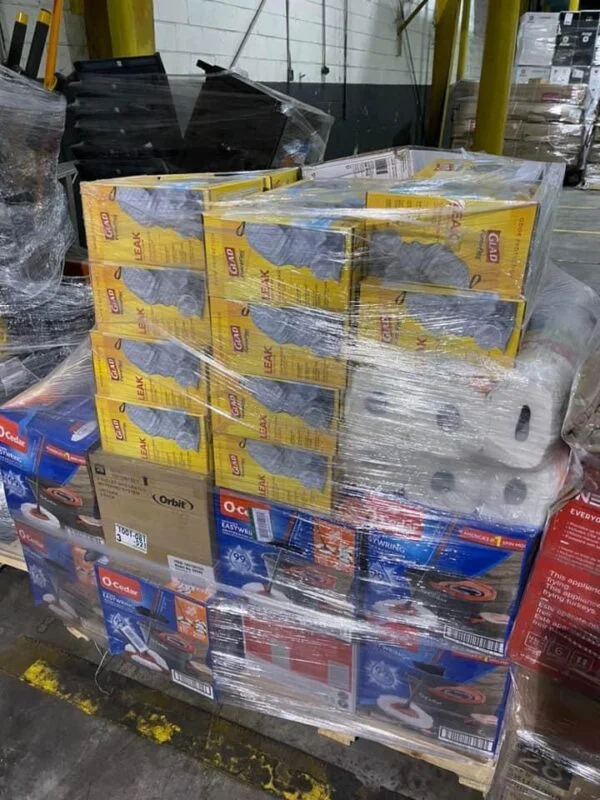
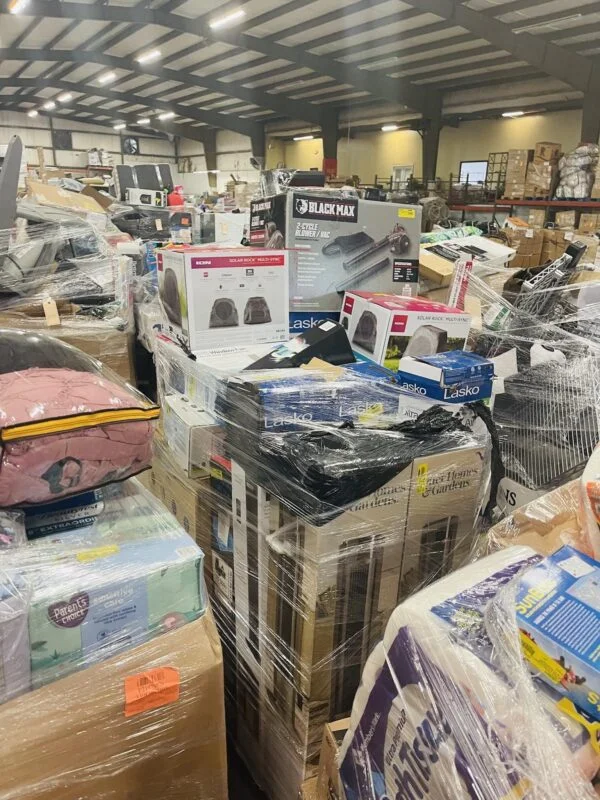
Photos show representative loads. Contents of each pallet vary, pallets are not individually tested, and contents are sold as described in the listing. Plan receiving space for the listed shipment, and separate the unloading appointment from later item-level sorting and evaluation.
From payment to a confirmed delivery window
Free shipping means freight is included in the listed price. It is PalletCove's only delivery option, on every order, to all 48 contiguous states. It does not mean immediate dispatch, an exact arrival time, or that an unprepared site can receive every trailer configuration. Review the shipping policy and delivery timing before arranging staff.
The order sequence is:
- Submit the website order form with accurate order and receiving information. No payment is collected on that form.
- After order review, use the secure card link emailed to you. Credit and debit cards—Visa, Mastercard, American Express, and Discover—are the only accepted payment method.
- Allow 1–3 business days for handling after payment clears.
- Allow typically 3–7 business days in transit from Houston, for an estimated 4–10 business days total.
- Coordinate the receiving appointment once the shipment's schedule and responsible scheduler are established.
The processing cutoff is 2:00 PM Central Time, America/Chicago, Monday–Friday. After-cutoff confirmations begin the next business day. Weekends and applicable holidays do not count. These estimates are planning ranges, not a guaranteed appointment date; receiving availability can also affect scheduling.
If you submit a resale certificate, valid resale certificates are reviewed and applied where the buyer's state allows. Keep order administration separate from appointment confirmation so neither is mistaken for the other.
Changing an appointment without creating conflicting instructions
Contact the identified scheduler as soon as you know the original slot will not work. Include the PalletCove order reference, carrier shipment reference, current appointment, requested alternative, and destination time zone. Tell the order desk as well if the change affects order coordination.
Use a message such as: “For shipment [reference], please change the confirmed appointment from [date/window/time zone] to [requested date/window/time zone]. Our receiving contact is [name/number]. Please confirm acceptance and whether the original booking is canceled.”
Until acceptance arrives, the alternative remains a request. Avoid sending separate, inconsistent instructions to the driver, dispatcher, and warehouse. Ask the scheduler to establish the controlling appointment and circulate the same update to everyone involved.
If the carrier is delayed, ask for the latest estimate and whether rebooking is required. If the driver arrives early, confirm whether your team can safely receive the shipment; do not assume the original window has automatically changed. If your warehouse closes before a delayed arrival, communicate the closure immediately and request the next workable slot.
An address change is more than a time change. The carrier and order desk need to review the new destination and its receiving requirements before you treat it as approved.

Delivery-day checks, documentation, and claims
Before the truck arrives, clear the unloading area, have the receiving contact available, and gather the order and freight references. Use our liquidation truckload receiving checklist for the broader dock and inspection procedure.
At delivery, compare the shipment identifiers with your paperwork. Count accessible handling units against the freight documents and photograph visible damage, disturbed wrapping, or apparent shortages. Record specific exceptions on the delivery receipt before signing where possible, and retain a copy. A pallet count does not verify every item inside a pallet.
Request that delivery issues be reported to PalletCove within 48 hours, with order details, photographs, and delivery documentation. This reporting request does not shorten eligible new-product returns. Do not assume a notation on a receipt alone completes a claim.
Under the United States Refund & Returns Policy, products explicitly listed as NEW ONLY qualify for defective and non-defective returns and exchanges within 30 calendar days of delivery. Returns are by mail; the customer is responsible for the return label and shipping. A restocking fee of 15% of the product price applies, and refund processing takes 10 calendar days after authorized return receipt and inspection, or approval where no physical return is required.
Mixed and used loads have separate claims terms, not routine change-of-mind returns. Retain relevant packaging and merchandise while requesting instructions, and do not send an unauthorized return.
Frequently asked questions
Does a freight delivery appointment guarantee arrival at that time?
No. It establishes an agreed receiving slot, not automatically an exact-time arrival guarantee. Confirm whether the window refers to check-in or unloading, and keep the scheduler's contact available.
Should I book staff using the estimated transit date?
Use the estimate for preliminary planning, then finalize staffing around the confirmed appointment. Handling is 1–3 business days after payment clears, and transit is typically 3–7 business days from Houston; neither range is a specific delivery booking.
What if I cannot reach the carrier to reschedule?
Contact PalletCove's order desk with your shipment reference and the attempted change. Do not assume silence means approval or that the old slot has been canceled. Keep a written record of your communications.
Can a shipment arrive without a call the day before?
Do not assume a universal 24-hour advance call. Ask which notification method applies to your shipment, verify the receiving phone number, and obtain written appointment confirmation when scheduling is required.
What are the most common appointment mistakes?
Common mistakes include treating tracking as a confirmed booking, omitting the time zone, and giving billing information instead of the actual receiving address. Others include assuming unloading equipment is provided or sending conflicting changes to different contacts. One complete receiving profile and one shared confirmation help prevent these problems.
Talk to PalletCove Liquidation
Before booking, confirm the receiving address, equipment, unloading configuration, and person authorized to accept schedule changes. For broader purchasing preparation, return to our liquidation truckload buying guide.
PalletCove Liquidation LLC is located at 4000 Telephone Rd Unit B11, Houston, TX 77087. Call (713) 819-3904 or email sales@palletcoveliquidation.com. Hours: Mon–Fri 8:00 AM – 6:00 PM CT, Sat 9:00 AM – 2:00 PM CT, Sun closed.
To clarify receiving requirements, contact our order desk, or review current inventory before submitting your order.
About PalletCove Liquidation
Published by PalletCove Liquidation LLC, based in Houston, Texas. Our buying guides cover evaluating liquidation inventory and preparing for delivery. Consult the current product listing and store policies for purchase terms.