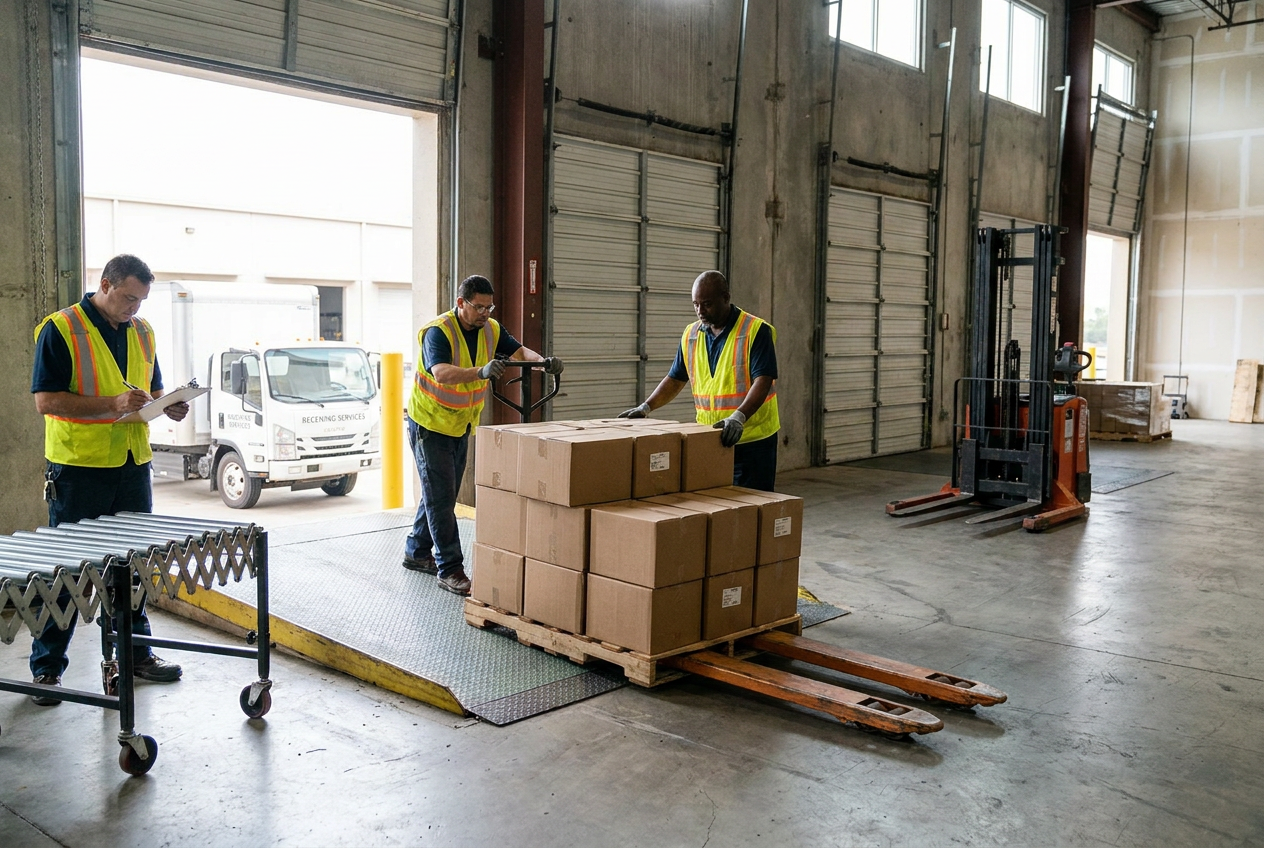
At a glance
Learn how liquidation truckload weight, trailer payload, axle limits, and cargo placement affect what can ship—and what resellers should verify before ordering and receiving a load.
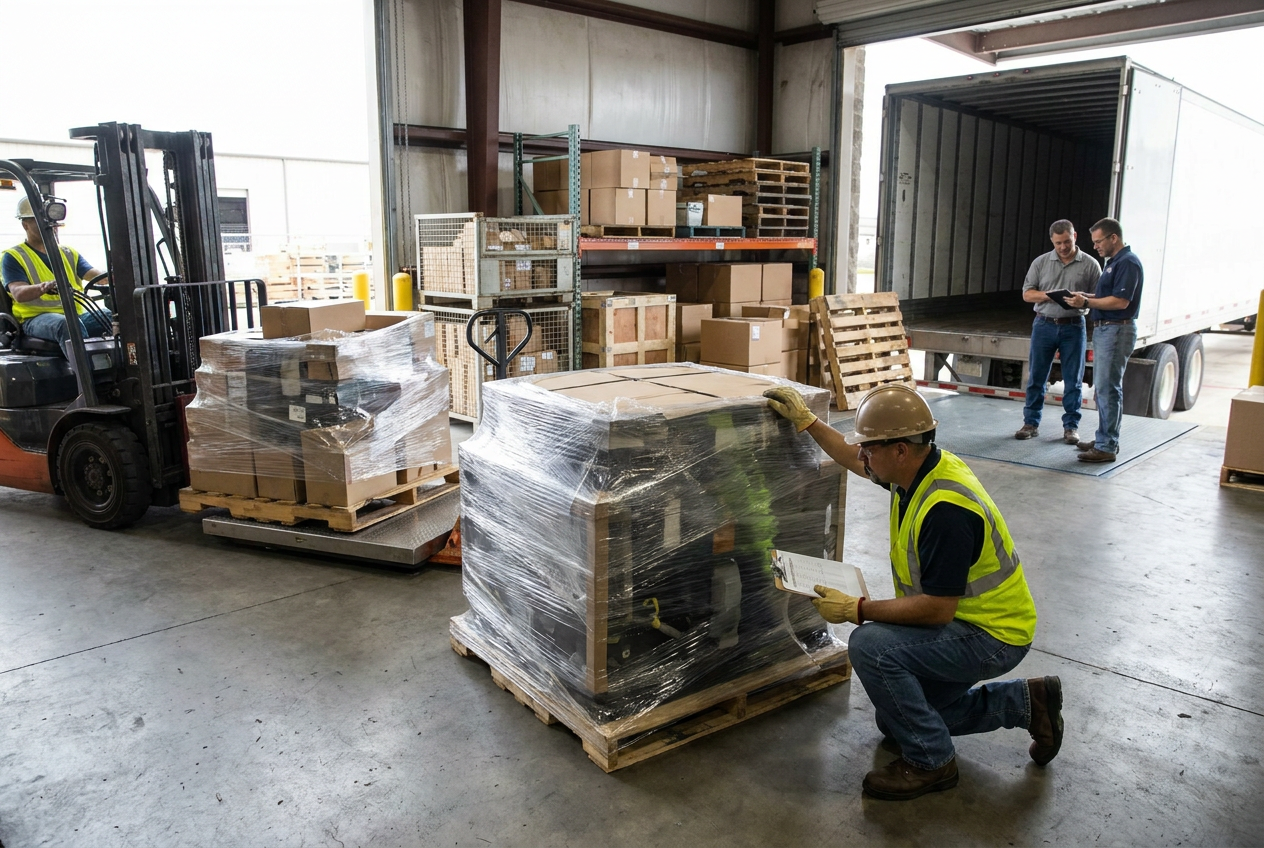
Liquidation truckload weight can limit an order long before a trailer runs out of pallet positions. A load may fit inside the trailer yet exceed its available payload, overload an axle group, or concentrate too much weight in one section of the floor. Pallet count alone cannot establish whether a shipment is safe or legal.
A truckload is a shipment planned around a truck’s carrying capacity; it does not necessarily fill every available cubic foot. For the broader purchasing process, start with our guide to buying liquidation truckloads. Here, the focus is narrower: understanding weight information before ordering and preparing to receive the actual load.
What liquidation truckload weight actually measures
Several different measurements may appear in a listing, manifest, or carrier document. They are related, but they are not interchangeable.
| Term | What it measures | Why it matters |
|---|---|---|
| --- | --- | --- |
| Net merchandise weight | Products without shipping materials | Insufficient by itself for transportation planning |
| Gross pallet weight | Products plus pallet, cartons, wrapping, and other packaging | Useful for load planning and unloading equipment selection |
| Cargo weight | Everything loaded as cargo, including shipping supports | Must fit within available vehicle payload |
| Tare weight | Tractor and trailer weight without the shipment, using a stated operating basis | Determines how much capacity remains |
| Gross vehicle weight | Loaded tractor, trailer, cargo, and operating contents | Must meet applicable legal and equipment limits |
| Axle-group weight | Weight carried by a particular axle or axle group | Can exceed a limit even when total weight is acceptable |
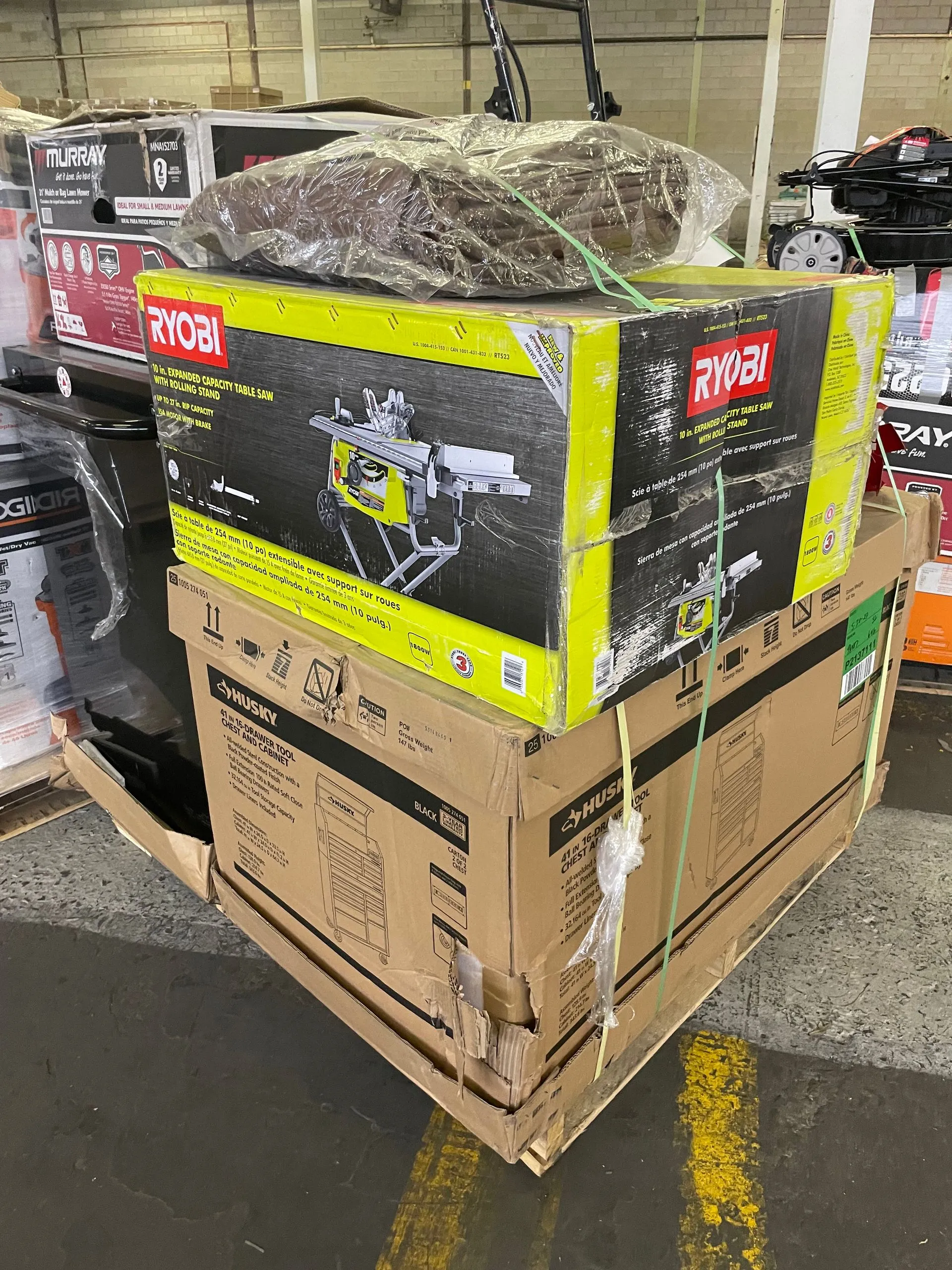
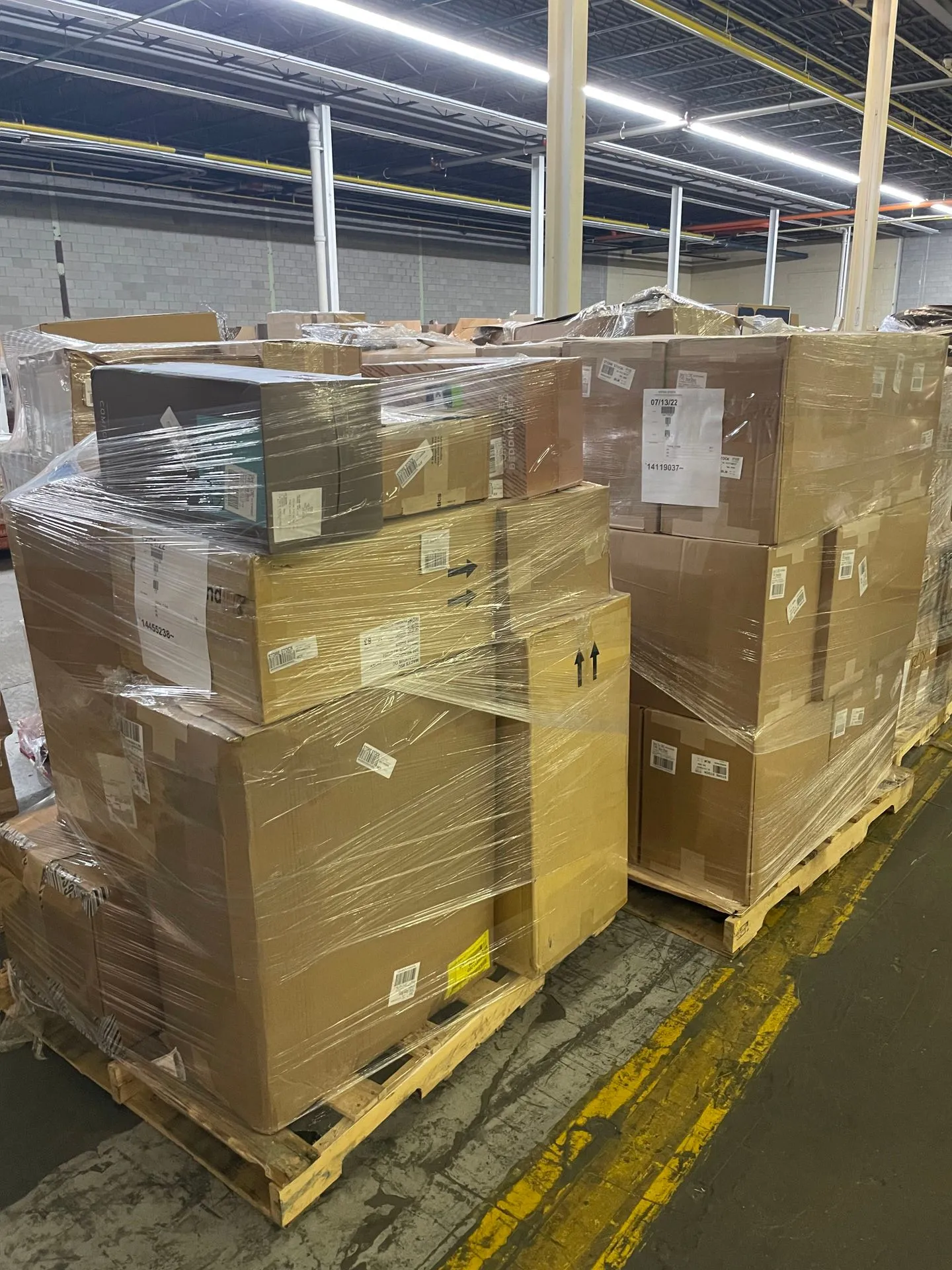
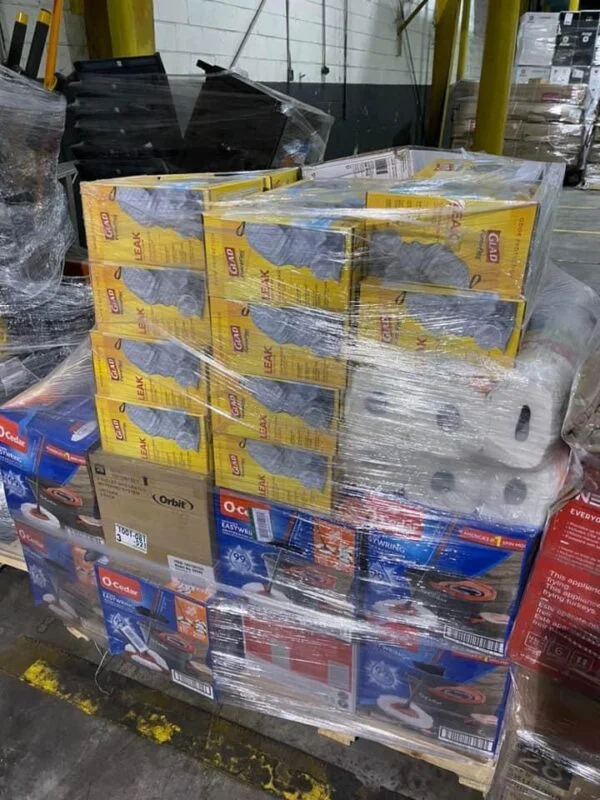
A liquidation pallet is a palletized wholesale lot of merchandise. Its footprint does not reveal its weight: similarly sized pallets can contain textiles, small appliances, hardware, or mixed goods with very different densities.
A full trailer describes a shipment occupying or using the capacity of the trailer. It may be space-limited, weight-limited, or constrained by securement requirements. LTL, meaning less-than-truckload, is freight service that generally combines smaller shipments from multiple shippers. Choosing a smaller shipment does not eliminate pallet-weight or receiving-equipment limits.
The usable capacity of a trailer is the lowest applicable limit—not the largest pallet count advertised for its floor space.
Payload, legal limits, and axle loading are separate checks
For conventional tractor-trailer combinations operating on the U.S. Interstate System, familiar federal limits are 80,000 pounds gross, 20,000 pounds on a single axle, and 34,000 pounds on a tandem axle group. These are general limits, not a universal authorization for every vehicle or route. The federal bridge formula, axle spacing, state rules, posted restrictions, and equipment ratings also matter.
The bridge formula relates allowable weight to axle count and spacing. A carrier must consider it alongside individual axle-group limits. A legal gross total alone does not establish compliance.
Available payload starts with the actual equipment
For a preliminary estimate:
Available cargo payload = applicable gross-weight ceiling − operating tractor-and-trailer tare weight.
Suppose the applicable gross ceiling is 80,000 pounds and the operating equipment weighs 35,000 pounds. The arithmetic leaves 45,000 pounds for cargo. That is an illustration, not a PalletCove shipment specification or a guarantee that any trailer can carry that amount.
Trailer design, refrigeration equipment, fuel, accessories, and other operating weight affect the calculation. Manufacturer ratings for the trailer, tires, axles, and suspension can create lower limits. Ask the carrier to confirm capacity for the assigned equipment rather than assuming every 53-foot trailer has the same payload.
Distribution can invalidate an otherwise acceptable total
Consider an illustrative scale reading of 12,000 pounds on the steer axle, 30,000 on the drive tandem, and 36,000 on the trailer tandem. The total is only 78,000 pounds, but the trailer tandem exceeds the common 34,000-pound federal tandem limit.
Corrective action might require repositioning cargo or adjusting equipment where permitted. Sliding trailer tandems changes axle spacing and weight transfer; it does not remove cargo weight or automatically make a load legal. Those decisions belong to the carrier and loading team, followed by verification.

Why pallet count and merchandise type cannot settle capacity
A 53-foot trailer’s pallet positions describe floor-space geometry, not a weight allowance. Pallet dimensions, overhang, stacking restrictions, trailer dimensions, and loading orientation affect space utilization. Dense freight can reach a weight limit with empty floor space remaining; bulky freight can fill the trailer below its weight limit.
Use the truckload category to identify shipment formats and the general merchandise category to compare available assortments. Neither a category name nor a product photo substitutes for shipment-specific weights.
For example, the Macy’s Textile Truckload listing and Home Depot Tool and Hardware Truckload listing represent different merchandise categories worth evaluating for density and handling requirements. Do not assign either a standard weight without supporting load information. PalletCove is an independent reseller and is not affiliated with, endorsed by, or sponsored by any retailer named.
Condition grade describes the stated merchandise condition, not its transportation weight:
- Overstock: excess inventory; the designation alone does not establish new condition.
- Shelf pulls: goods removed from selling displays or shelves; packaging and condition may vary.
- Customer returns: merchandise returned by customers, with condition governed by the listing.
- Salvage: merchandise described for recovery, parts, repair, or other limited uses as specified.
Pallets are not individually tested. Photos show representative loads, and each pallet’s contents vary. Contents are sold as described in the listing. Where an offer uses “as-is,” read the stated condition and applicable claims terms rather than treating the phrase as a measured quality grade.
Read the manifest and build a usable weight estimate
A manifest is an inventory document describing the shipment’s contents, sometimes with quantities, identifiers, conditions, or weights. It is not necessarily a certified weight record. Ask whether weights are measured or estimated, whether packaging is included, and whether the document matches the actual load being dispatched.
Before committing, request confirmation of:
- Total gross cargo weight, including pallets and packaging.
- Gross weight and dimensions of individual pallets, especially the heaviest units.
- Whether the load is palletized, floor-loaded, or a combination.
- Any heavy-item concentrations, stacking restrictions, or unusual handling requirements.
- How the carrier will verify loaded gross and axle weights where needed.
For illustration, 24 pallets averaging 1,500 pounds would total 36,000 pounds if that average already includes pallets and packaging. If the figure covers merchandise only, supports and shipping materials must still be added. An average also hides outliers: it cannot establish that every pallet is within a forklift’s capacity.
Floor-loaded merchandise rests directly on the trailer floor rather than arriving entirely on pallets. Its cargo weight still counts even when the pallet count is zero. Missing weight data should trigger clarification, not a guess based on a representative photograph.
Weight distribution must work through unloading
A load plan should account for front-to-rear balance, side-to-side balance, cargo securement, and concentrated floor loads. Placing all heavy pallets together can create an axle problem or local stress even when the overall cargo total seems reasonable.
The trailer floor’s capacity is not simply its total payload divided by its length. A heavy item supported on a small footprint and a forklift moving inside the trailer create different loading conditions. Carrier and receiving personnel should verify the relevant equipment ratings.
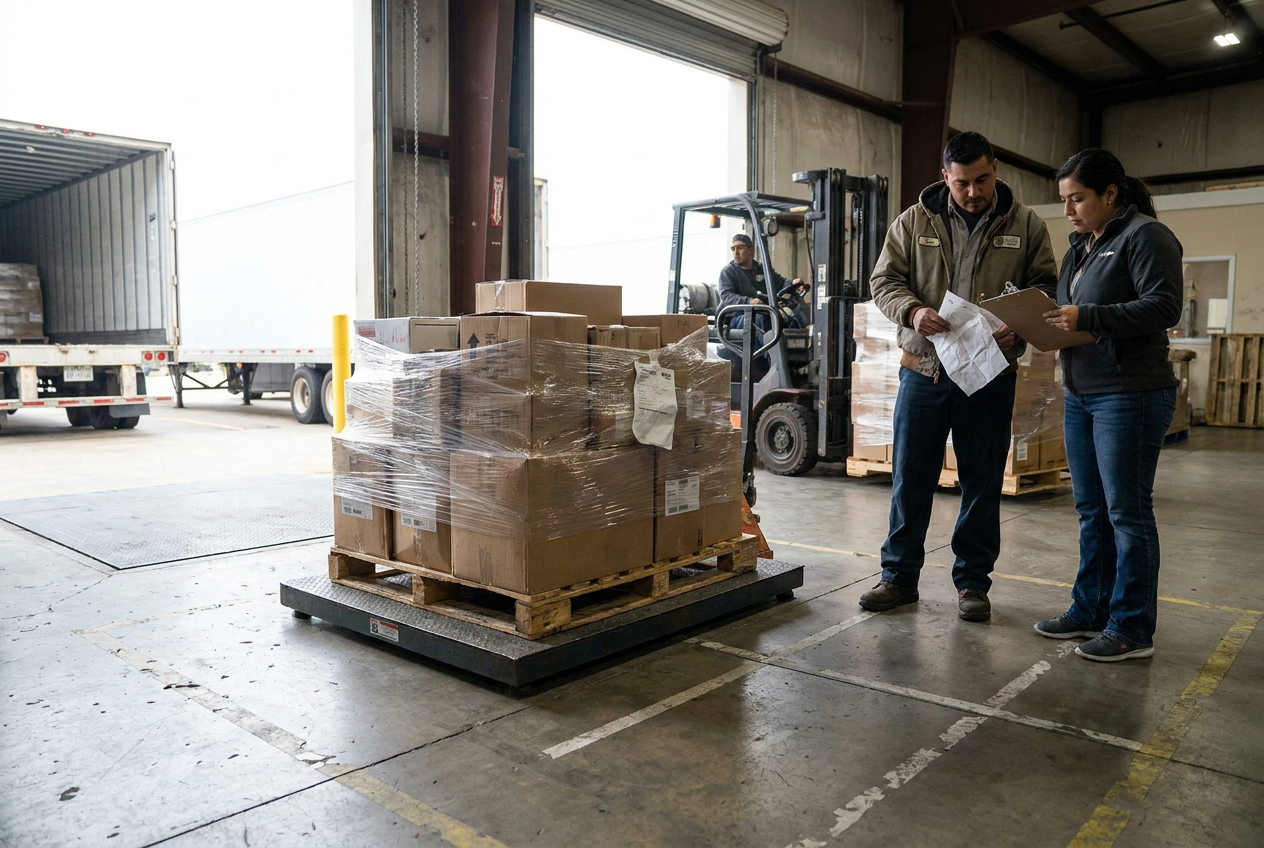
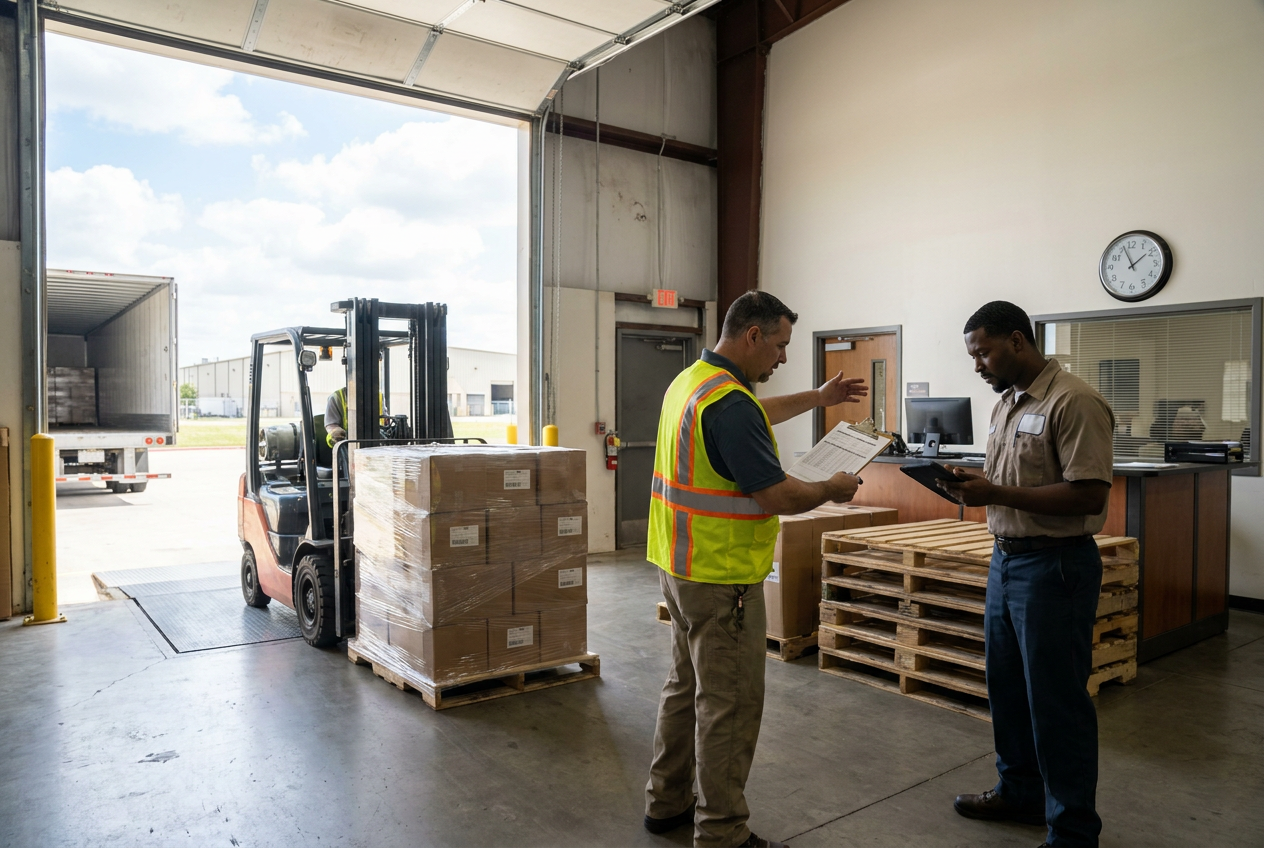
At the destination, a loading dock is an elevated receiving platform used to transfer freight between a trailer and a building. Dock plates or levelers, forklifts, pallet jacks, and receiving floors must suit the actual loads. Forklift capacity depends on load center and configuration, not just a nominal rating on the machine.
Plan the unloading sequence with trained personnel, keep the trailer properly secured during unloading, and follow the facility’s trailer-support procedures. For appointment coordination without repeating the full receiving workflow, see booking a liquidation freight delivery appointment. Staging and storage plans should also account for floor and rack ratings rather than pallet count alone.
Ordering, included freight, and delivery inspection
Compare liquidation truckloads for sale by listed price, described contents, condition, and confirmed handling requirements—not price per pound alone. Weight does not establish resale value or profitability. For smaller purchasing formats, review the liquidation pallets hub.
Free shipping means freight is included in the listed price. It is PalletCove’s only delivery option on every order to all 48 contiguous states, including orders for liquidation pallets in Texas and liquidation pallets in Florida. Included freight does not change legal weight limits or eliminate the need to confirm receiving compatibility.
Submit the website order form for review; no payment is collected on that form. Credit and debit cards—Visa, Mastercard, American Express, and Discover—are the only accepted payment method, through a secure card link emailed after order review. Valid resale certificates are reviewed and applied where the buyer’s state allows.
Handling takes 1–3 business days after payment clears. Transit from Houston is typically 3–7 business days, for an estimated 4–10 business days total. The processing cutoff is 2:00 PM Central Time, America/Chicago, Monday–Friday; after-cutoff confirmations begin the next business day. Weekends and applicable holidays do not count. Review the shipping policy when planning receipt.
A bill of lading is a transportation document identifying the shipment, parties, and freight details, and serving as a receipt for goods accepted for carriage. Its listed weight is not automatically proof that every pallet was individually weighed.
At delivery, compare shipment identifiers and handling-unit counts with the documents. Photograph visible damage, shifted cargo, and discrepancies, and record factual exceptions on the delivery receipt. Do not enter or unload a trailer with visibly unstable freight until safe procedures are established. Our liquidation pallet inspection guide covers the broader inspection workflow.
Claims, returns, and preventable weight mistakes
Please report delivery issues within 48 hours, with the order number, documents, photographs, and a clear explanation. A weight discrepancy should identify the measurement source and whether both figures include the same packaging. Do not assume a lower scale reading proves missing merchandise without checking those details.
Under the United States Refund & Returns Policy, products explicitly listed as NEW ONLY qualify for defective and non-defective returns and exchanges within 30 calendar days of delivery, by mail. The customer is responsible for the return label and shipping; the restocking fee is 15% of the product price. Refund processing takes 10 calendar days after authorized return receipt and inspection, or approval where no physical return is required.
Mixed and used loads have separate claims terms, not routine change-of-mind returns. The requested 48-hour delivery-issue reporting window does not shorten eligible new-product 30-day returns.
Avoid these recurring planning mistakes:
- Treating 80,000 pounds as the cargo allowance rather than gross vehicle weight.
- Assuming legal total weight guarantees legal axle loading.
- Using an average pallet weight to select unloading equipment.
- Treating a full trailer as a fixed pallet count or fixed weight.
- Assuming free shipping makes every receiving setup suitable.
Frequently asked questions
How much does a liquidation truckload weigh?
There is no single standard weight. Merchandise density, packaging, loading format, and the actual assortment determine cargo weight; the assigned equipment and route determine how much can legally travel.
Can a trailer be overweight with empty pallet positions?
Yes. Dense merchandise can exhaust available payload before the floor is full, and poor placement can overload an axle group even below the gross limit.
Does a manifest prove the shipment’s weight?
Not necessarily. Manifest weights may be estimated, exclude shipping materials, or describe a different inventory basis; confirm their source and scope before relying on them.
Will moving pallets fix an overweight load?
Repositioning may correct axle distribution but cannot reduce total cargo weight. If gross weight exceeds the applicable limit, the carrier must arrange a compliant solution rather than simply rearranging pallets.
What weight should I use for receiving equipment?
Use the gross weight and dimensions of the heaviest individual handling unit, not the shipment average. Trained receiving personnel should verify forklift capacity at the actual load center and check dock, floor, and support ratings.
Talk to PalletCove Liquidation
A workable load must satisfy cargo payload, axle loading, distribution, and receiving limits independently. Use our liquidation truckload buying guide for the broader purchase plan, then confirm shipment-specific weight information before finalizing arrangements.
PalletCove Liquidation LLC is located at 4000 Telephone Rd Unit B11, Houston, TX 77087. Call (713) 819-3904 or email sales@palletcoveliquidation.com. Hours are Mon–Fri 8:00 AM – 6:00 PM CT, Sat 9:00 AM – 2:00 PM CT, Sun closed.
To discuss load details and receiving requirements, contact our order desk or browse current inventory.
About PalletCove Liquidation
Published by PalletCove Liquidation LLC, based in Houston, Texas. Our buying guides cover evaluating liquidation inventory and preparing for delivery. Consult the current product listing and store policies for purchase terms.