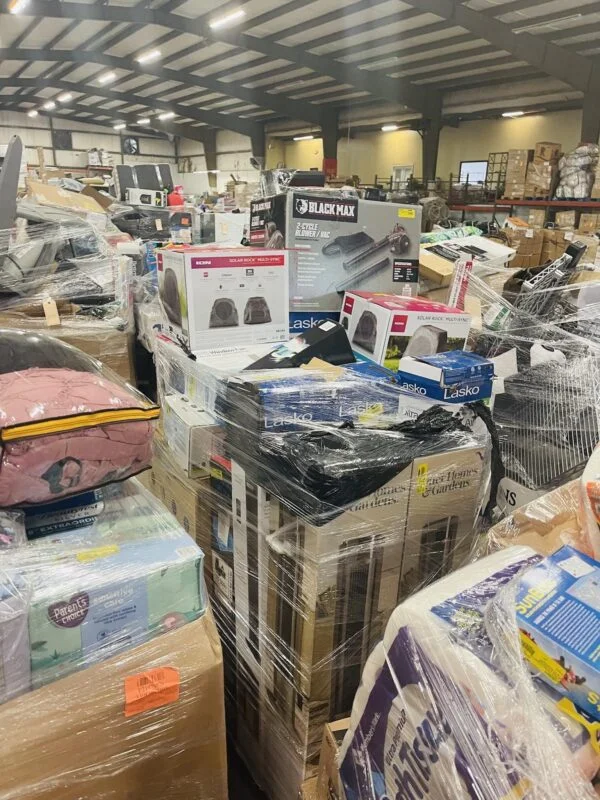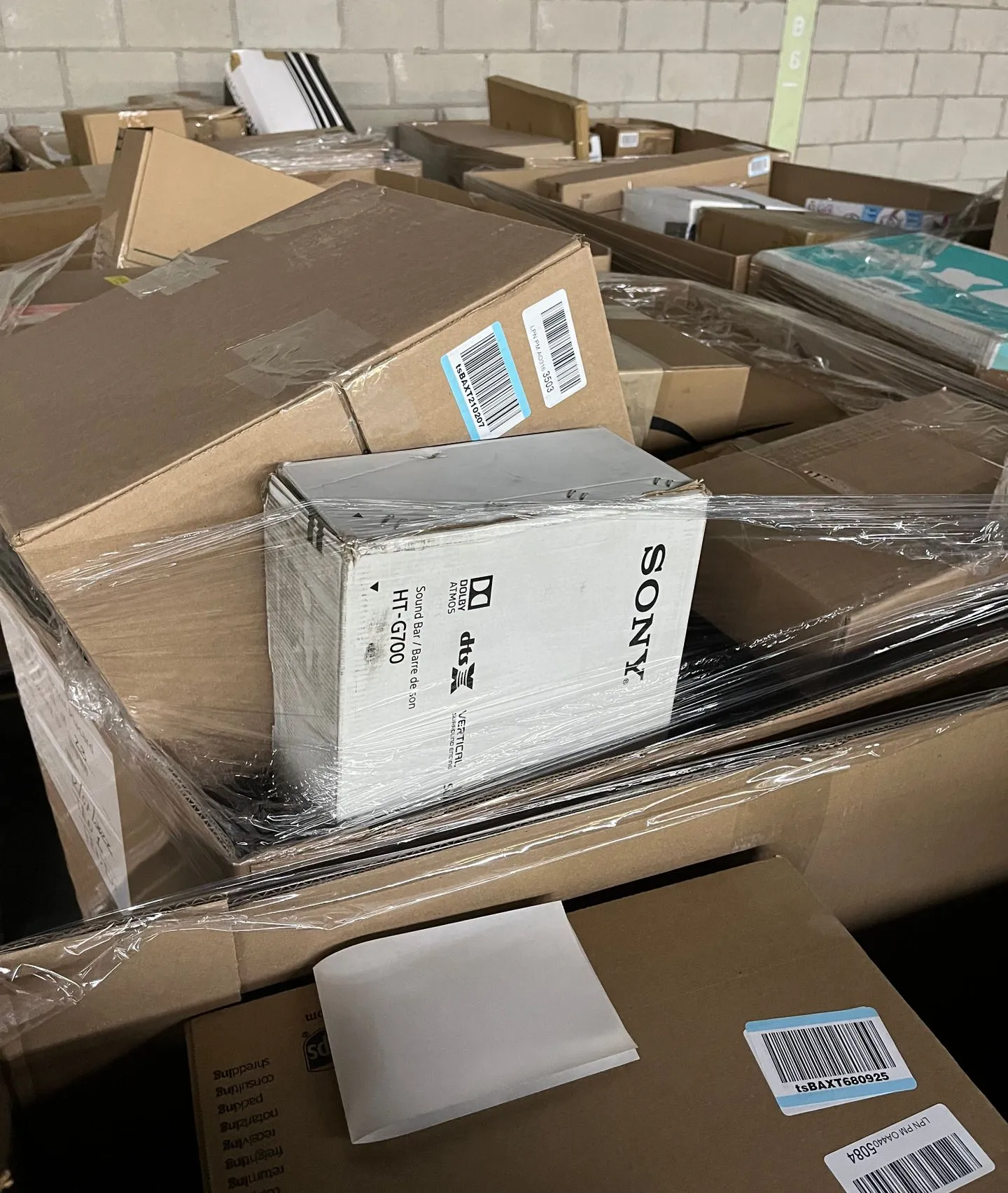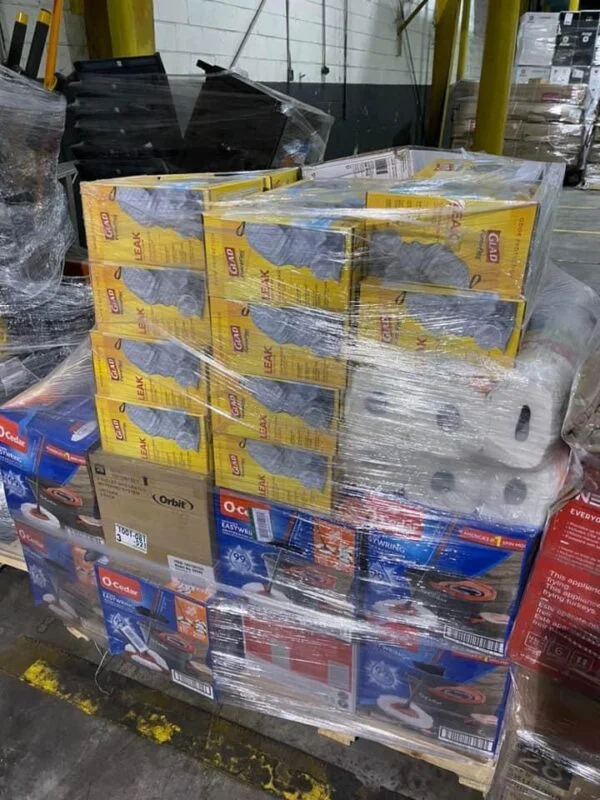
At a glance
Evaluate luggage liquidation pallets by wheel and handle function, zipper damage, nested sets, and missing pieces—then check manifests, receiving requirements, and realistic sorting costs.
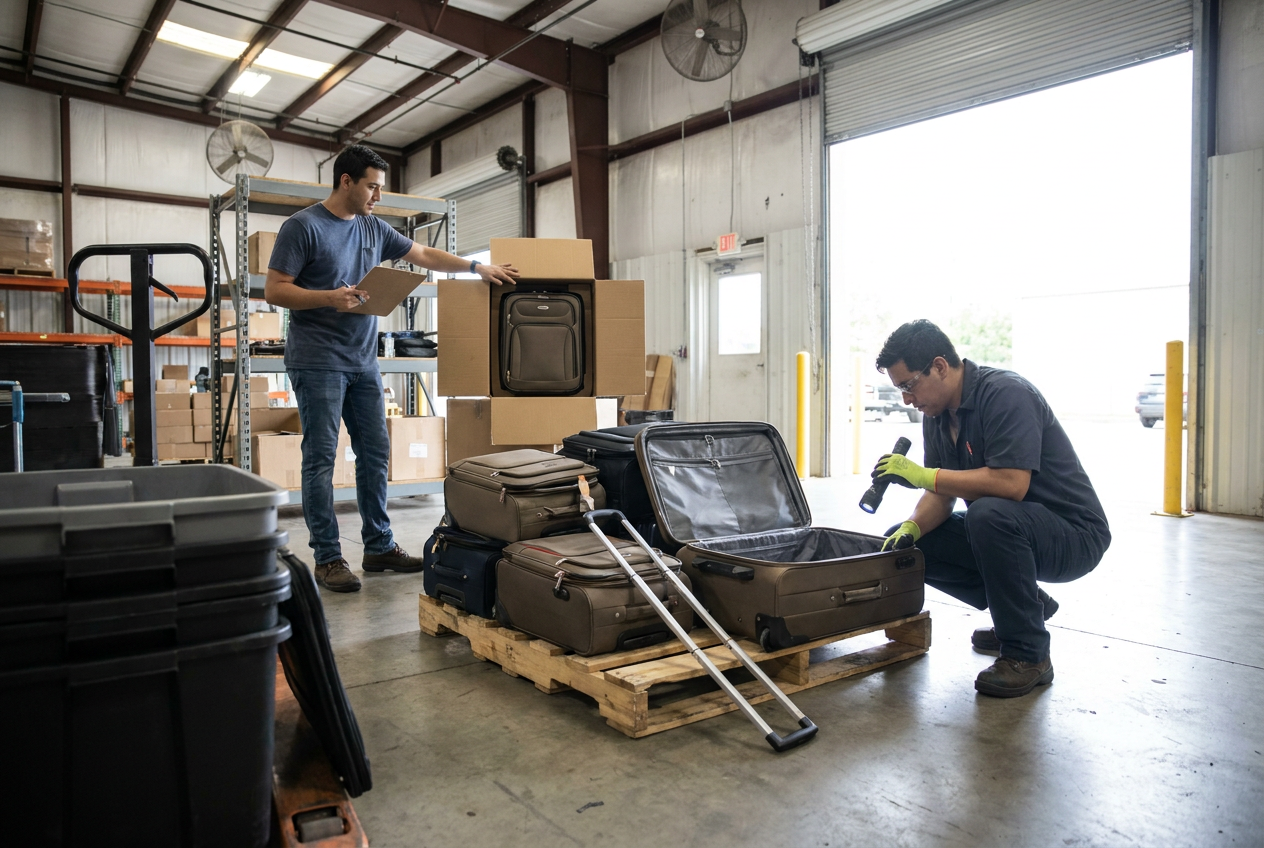
Luggage liquidation pallets require more than a quick check for recognizable styles and clean shells. A suitcase can look presentable while having a cracked wheel mount, a telescoping handle that will not lock, or zipper teeth that separate under light tension. Those faults affect whether you can offer it as functional luggage, repair it economically, or describe it only as a parts item.
For independent resellers, the central buying question is how much usable, accurately describable inventory the load could provide after inspection—not how many attractive cases appear in a photograph. Start with PalletCove’s liquidation load categories for the broad category picture, then use the luggage-specific checks below to evaluate an actual listing.
1. Understand what the load description actually covers
A luggage liquidation pallet is a palletized wholesale lot of travel bags or cases sold through liquidation channels. It may contain individual suitcases, nested luggage sets, duffels, travel totes, or a mixture, but only the listing establishes what is offered. A truckload is a larger shipment occupying a full trailer or the trailer quantity specified in the offer; it is not automatically a uniform assortment.
Luggage may also appear within general merchandise, meaning mixed consumer products across departments. Other departments include electronics, or electrically powered devices; tools, or equipment used for building and repair; apparel, meaning clothing; HBA, meaning health and beauty aids; and home goods, meaning household-use products such as textiles and décor.
General merchandise pallets, electronics pallets, tool and home improvement pallets, apparel and footwear pallets, home and personal care pallets, and outdoor power equipment pallets have different evaluation priorities. Keep those buying decisions separate from luggage inspection. The related guides to shoe size runs and power tool accessory compatibility explain two neighboring category risks without replacing luggage checks.
Choose the load format deliberately:
- Luggage-focused pallets: Confirm the included bag types and whether quantities refer to cases or sets.
- Mixed-category pallets: Establish whether luggage is documented rather than assuming it appears in every load.
- Truckloads: Confirm total quantity, assortment information, storage needs, and your ability to inspect the shipment.
Compare general merchandise load listings with available truckload categories. Neither category label, by itself, guarantees luggage content.
2. Read condition grades and manifests together
A condition grade is the seller’s stated classification of merchandise condition. Labels are useful screening tools, but the listing’s specific description matters more than assumptions about a grade name. The guide to pallet types provides the broader distinction between sourcing and condition categories.
| Listed condition | What the label generally indicates | Luggage-specific questions |
|---|---|---|
| --- | --- | --- |
| Overstock | Excess inventory | Are storage scuffs, packaging changes, or incomplete sets disclosed? |
| Shelf pulls | Merchandise removed from sales floors | Are display wear, missing tags, or handling marks described? |
| Customer returns | Merchandise returned by customers | What is known about wheel, handle, zipper, and interior condition? |
| Mixed or used | Multiple conditions or prior use | Is the mix explained, and what cleaning or repair work might be needed? |
| Salvage | Merchandise intended for recovery, repair, or parts as described | Can parts be identified and removed economically? |
| Explicitly NEW | Merchandise specifically listed as new | What exact contents and packaging details does the listing provide? |
Do not treat overstock, shelf pulls, or customer returns as new without explicit verified listing evidence. “As-is” describes the transaction terms where stated; it is not a mechanical inspection result.
A manifest is an inventory document describing a lot. Ask whether it is available, how current it is, and whether quantities identify individual bags, packaged sets, or outer cartons. Useful fields include model identifiers, dimensions, color, material, quantity, condition notes, and set composition.
Photos show representative loads, and each pallet’s contents vary. PalletCove pallets are not individually tested; contents are sold as described in the listing. A manifest or photograph should not be interpreted as proof that every wheel rolls or every set is complete.
3. Inspect wheels, handles, zippers, and structure
Use these checks to frame pre-purchase questions and organize your own inspection after receipt. They are not a promise of supplier item-level testing.

Wheels and mounting points
Roll each case forward and backward on a level surface. For spinner luggage, check whether each assembly swivels freely and whether the case tracks without dragging. Look for missing tread, flat spots, bent brackets, and hair or debris around axles.
Inspect the shell around every mount. A replaceable wheel is a different repair from a wheel attached to cracked structural plastic. Check inside where accessible: concealed mounting damage can make a seemingly simple replacement impractical.
Telescoping and carry handles
Extend and retract the telescoping handle through its available positions. Check that both rails move together, the release button operates, and the mechanism locks without collapsing under ordinary handling.
Examine top and side carry handles for torn stitching, loose fasteners, and splits at attachment points. A retractable handle can function while a carry handle is unsafe to use. Do not assume parts from a similar-looking case will fit; rail spacing, mounting patterns, and replacement assemblies differ.
Zippers, locks, and closures
Run every main and compartment zipper through its full path. Distinguish a missing pull tab from a damaged slider, separated teeth, or zipper tape torn away from the shell. Close the case normally and apply gentle opposing pressure to identify separation without overloading it.
Check expansion zippers separately. Record stuck locks, missing keys where relevant, and unknown combinations; do not describe a lock as functional without verifying it. A transport-related lock marking does not establish that its mechanism works.
Shells, seams, and interiors
Inspect hard shells for cracks at corners, hinges, and wheel mounts. On soft-sided luggage, inspect seam separation, fraying, punctures, and fabric around handles. Distinguish cosmetic scuffs from failures affecting containment or carrying.
Open every compartment. Check linings, divider panels, restraint straps, buckles, moisture staining, odors, and signs of pests. Isolate suspicious items rather than mixing them with cleared stock, and assess whether cleaning is appropriate before committing more labor.
A cosmetic flaw and a functional failure are not interchangeable: price and describe luggage only after you know which one you have.
4. Reconcile nested sets and missing matching pieces
Nested luggage creates a counting problem. A large case may contain smaller bags, but an outer suitcase is not evidence that the advertised set is inside. Conversely, counting only visible outer cases can understate physical inventory.
Use a repeatable reconciliation process:
- Assign an inventory identifier to the outer case or package.
- Open it and remove all nested pieces.
- Record each piece’s model, color, dimensions, and condition separately.
- Compare the contents with the manifest and any documented set description.
- Mark complete matching sets, incomplete matching groups, and unrelated nested items differently.
Matching color alone does not establish a set. Check design family, shell pattern, trim, hardware, and available model identifiers. Sizes can also overlap across different collections.

Keep two counts: physical pieces and saleable offers. Several individual bags might become one complete-set listing, multiple separate listings, or a repair group. This distinction prevents inflated unit estimates.
Missing matching pieces do not necessarily make the remaining bags unusable. They do change how you should list them. Describe an individual suitcase as an individual suitcase, disclose relevant defects, and avoid implying that an incomplete group is the original complete set.
5. Evaluate price against work and usable inventory
Compare the listed purchase price with your own conservative inspection scenarios. Freight is included in PalletCove’s listed price, and free shipping is the only delivery option on every order to all 48 contiguous states.
A practical planning calculation is:
Allocated cost per saleable offer = (purchase price + your sorting, cleaning, parts, storage, selling, and outbound fulfillment costs) ÷ saleable offers after inspection.
Before buying, the denominator is uncertain. Model different outcomes rather than treating every manifested piece as immediately saleable. Do not substitute advertised retail totals for achievable selling prices.
Include time to locate model-specific wheels, photograph damage, clean interiors, measure bags, and handle bulky packaging. Set a repair-spending limit before ordering parts. Missing handles or damaged zipper tracks can consume more labor than their appearance suggests.
For comparison, the Amazon general merchandise truckload and WM general merchandise pallets and truckloads are broader mixed-merchandise product pages, not evidence of dedicated luggage availability. Consider them only when their current descriptions document an assortment you want. PalletCove is an independent reseller and is not affiliated with, endorsed by, or sponsored by any retailer named.
Common buying mistakes include assuming every nested group is complete, budgeting for generic replacement parts, overlooking storage volume, and buying a full trailer before establishing an inspection workflow. The liquidation pallet buying guide offers a broader purchasing framework.
6. Order and prepare for free shipping
Use the liquidation pallets inventory hub to orient your search, then verify the specific listing before ordering. Ask about condition, manifest availability, counting conventions, receiving requirements, and any unclear descriptions in writing.
No payment is collected on the website order form. After order review, a secure card link is emailed. Credit and debit cards—Visa, Mastercard, American Express, and Discover—are the only accepted payment method. Valid resale certificates are reviewed and applied where the buyer’s state allows.
Handling takes 1–3 business days after payment clears. Transit is typically 3–7 business days from Houston, for an estimated 4–10 business days total. The processing cutoff is 2:00 PM Central Time, America/Chicago, Monday–Friday; after-cutoff confirmations begin the next business day. Weekends and applicable holidays do not count.
Buyers considering liquidation pallets in Texas or liquidation pallets in Florida receive the same free-shipping-only offering. Transit remains an estimate rather than a guaranteed arrival date.
Pallet shipments may move by LTL, meaning less-than-truckload freight sharing trailer space with other shipments; truckloads may occupy a full trailer. Confirm the arrangement for your order and communicate site access, receiving hours, unloading capability, and available staging space beforehand. Do not assume a particular unloading method or advance-call interval.
7. Inspect delivery and understand claims terms
On arrival, document the shipment before dismantling it:
- Photograph accessible sides, wrapping, pallet condition, labels, and visible damage.
- Compare the delivered pallet or shipment count with the paperwork.
- Record visible shortages or damage on delivery documentation where possible.
- Preserve relevant packaging and order records for a claim.
- Reconcile individual contents and nested pieces during unpacking.
Report delivery issues within 48 hours so they can be reviewed promptly. This reporting request does not shorten eligible new-product returns.
Under the United States Refund & Returns Policy, products explicitly listed as NEW ONLY qualify for defective and non-defective returns and exchanges within 30 calendar days of delivery. Returns are by mail; the customer is responsible for the return label and shipping. A restocking fee of 15% of the product price applies.
Refund processing takes 10 calendar days after authorized return receipt and inspection, or approval where no physical return is required. Mixed and used loads have separate claims terms, not routine change-of-mind returns. Keep inspection records and obtain authorization rather than sending merchandise back without instructions.
Frequently asked questions
Does one manifested luggage unit mean one suitcase?
Not necessarily; it may mean an individual case, a set, or a packaged unit. Resolve that counting convention before calculating purchase cost per piece.
Can I assume nested suitcases are a matching set?
No. Open and identify each piece, then compare it with the documented set composition. Similar colors and sizes alone do not prove a match.
Are wheel and handle problems always repairable?
No; damage may extend into the shell or mounting structure, and compatible parts may be unavailable. Evaluate access, parts fit, labor, and structural integrity before deciding to repair.
Can I advertise a small suitcase as airline carry-on luggage?
Measure its exterior, including wheels and handles, and compare it with the relevant airline’s current rules. Publish measurements rather than promising universal airline acceptance.
Are luggage pallets individually tested before sale?
PalletCove pallets are not individually tested. Use the actual listing description to make the purchase decision, then inspect received inventory before making functional claims to your customers.
Talk to PalletCove Liquidation
Choose luggage liquidation pallets around documented contents, workable inspection capacity, and realistic repair limits. Return to the wholesale liquidation category guide when comparing luggage with other load categories, or contact our order desk to clarify a listing before ordering. Check current inventory for available offers rather than assuming a dedicated luggage load is always stocked.
PalletCove Liquidation LLC
4000 Telephone Rd Unit B11, Houston, TX 77087
Phone: (713) 819-3904
Email: sales@palletcoveliquidation.com
Hours: Mon–Fri 8:00 AM – 6:00 PM CT, Sat 9:00 AM – 2:00 PM CT, Sun closed.
About PalletCove Liquidation
Published by PalletCove Liquidation LLC, based in Houston, Texas. Our buying guides cover evaluating liquidation inventory and preparing for delivery. Consult the current product listing and store policies for purchase terms.