At a glance
Learn how to evaluate cleaning supplies liquidation pallets, spot leaks and incomplete labels, separate incompatible chemicals, and plan receiving, storage, claims and resale checks.
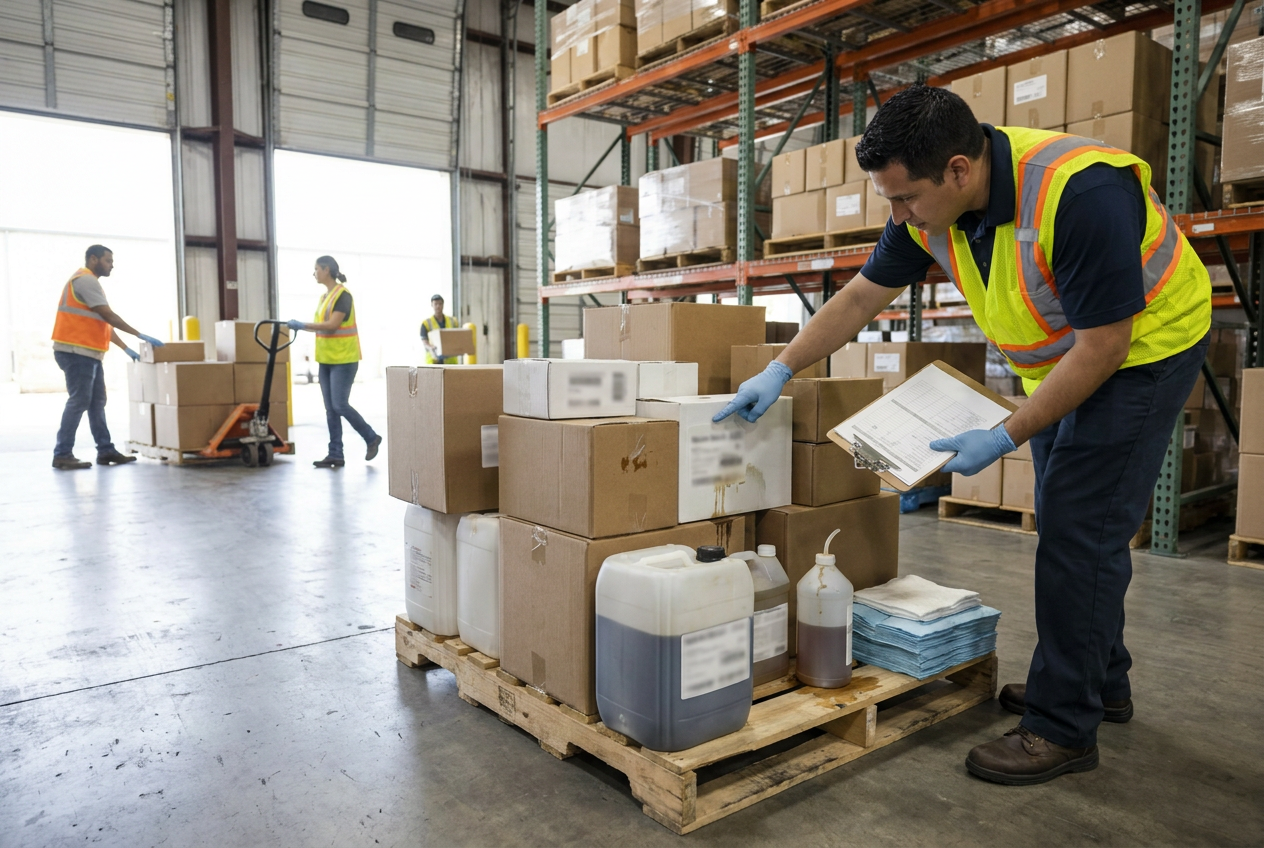
Cleaning supplies liquidation pallets require a different buying checklist from ordinary boxed merchandise. A leaking detergent bottle can damage neighboring cartons; a missing disinfectant label can remove essential use instructions; and incompatible chemicals can turn routine sorting into a safety incident. The useful question is not simply how many units are included, but how many can be safely identified, stored and offered for resale.
This guide focuses on household cleaning inventory. For the broader category picture, start with the liquidation load categories guide. Here, the priority is evaluating containers, labels, manifests and handling requirements before committing space and money to a pallet or truckload.
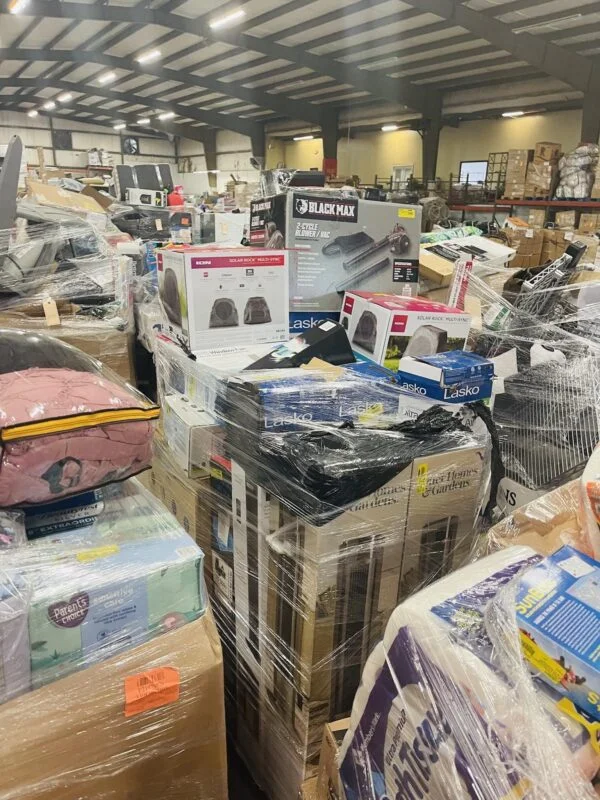
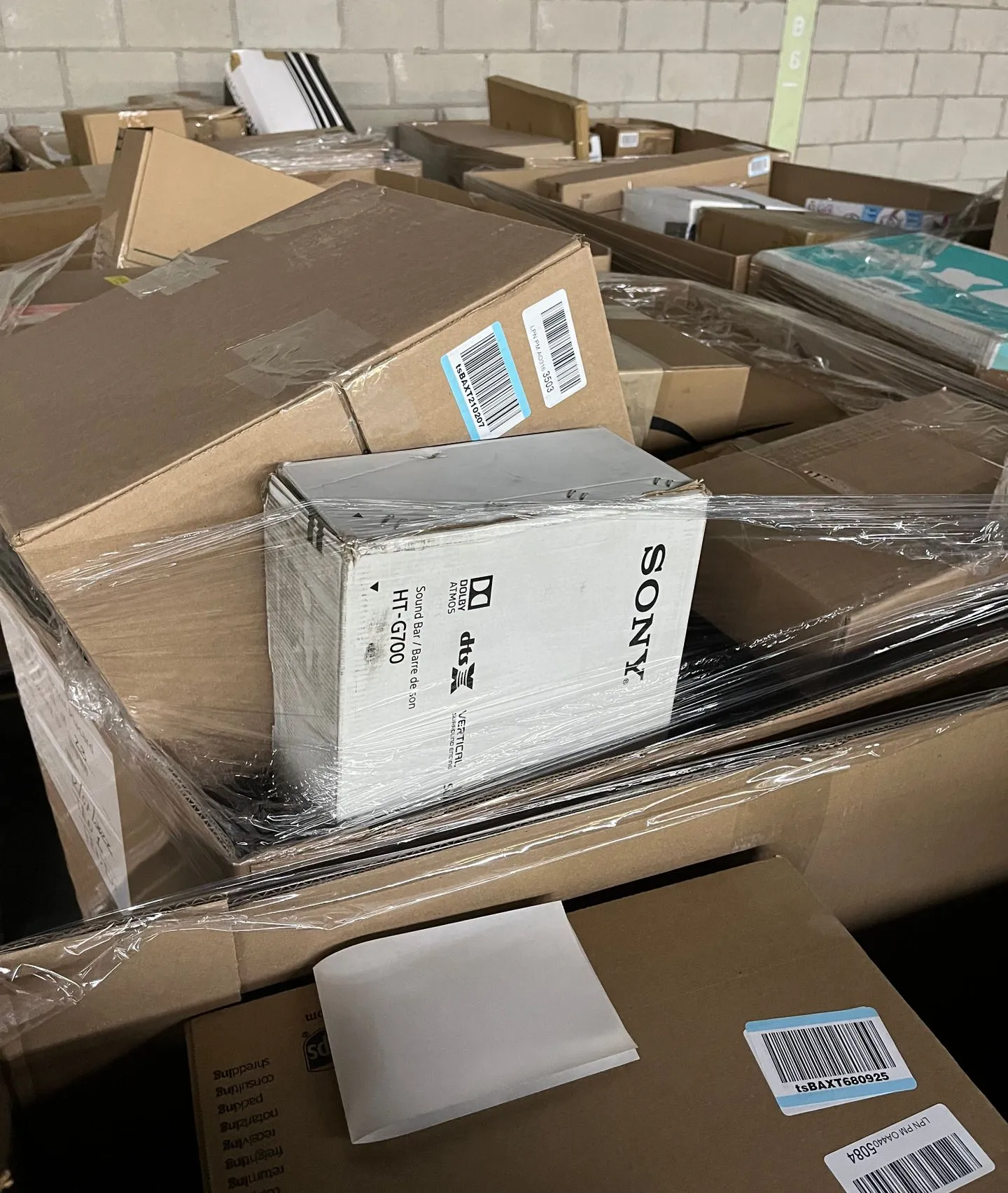
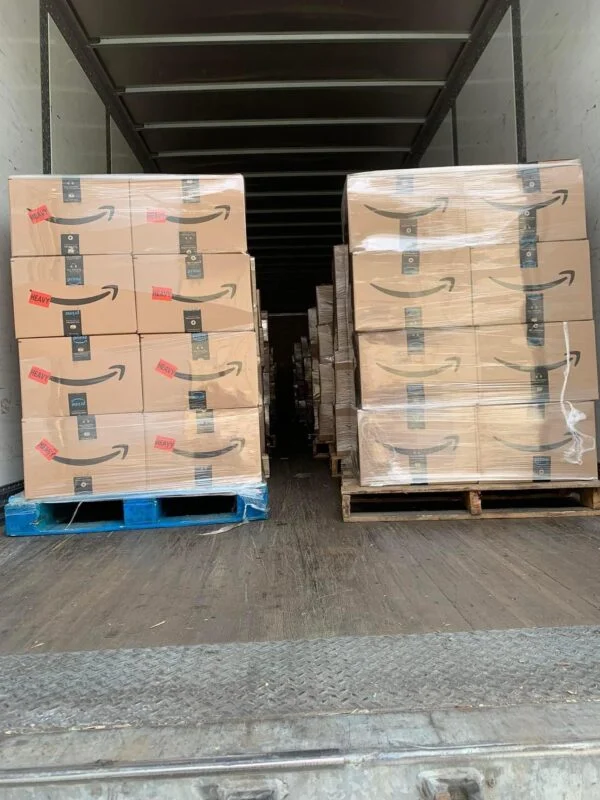
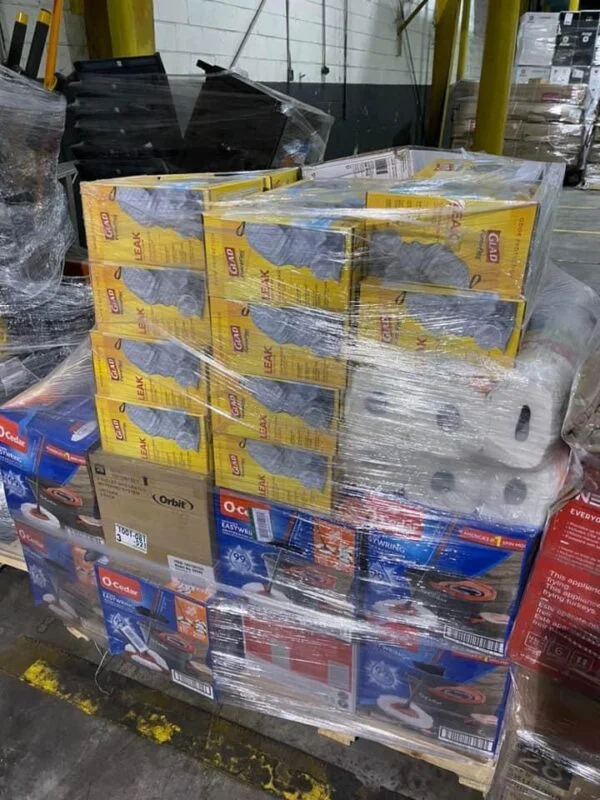
PalletCove Liquidation supplies independent resellers from Houston, Texas. Photos show representative loads, contents of each pallet vary, and pallets are not individually tested. Contents are sold as described in the listing, so the actual listing—not a photograph or category name—must guide the purchase.
1. Define the load before comparing prices
A liquidation pallet is a palletized lot offered through a secondary inventory channel. A truckload is a larger shipment, generally using a full trailer; its composition still depends on the listing. Household cleaning lots may contain laundry detergent, dishwashing products, surface cleaners, disinfectants, cleaning wipes, brushes or similar supplies, but none should be assumed unless described.
General merchandise means mixed consumer products across categories. Home goods are household-use products such as storage items, furnishings and kitchenware. HBA means health and beauty aids, including personal-care products; HBA inventory is not automatically household cleaning inventory.
Keep neighboring categories separate in your buying plan. Electronics are powered devices and accessories; tools are equipment used for repairs or projects; apparel means clothing. General merchandise pallets, electronics pallets, tool and home improvement pallets, apparel and footwear pallets, home and personal care pallets, and outdoor power equipment pallets have different inspection needs. The related guides to smart-home electronics compatibility and power-tool accessory lot compatibility address those checks without replacing chemical-specific screening.
Use the general merchandise category and truckload inventory category to compare available formats. A broad assortment title does not establish that cleaners are included. For example, review the actual descriptions of WM GM truckloads and pallets and the Amazon general merchandise truckload rather than treating either as a dedicated cleaning load. PalletCove is an independent reseller and is not affiliated with, endorsed by or sponsored by any retailer named.
2. Read condition grades and manifests together
A condition grade describes the inventory's listed status, not the safety or completeness of every bottle. The guide to types of liquidation pallets explains the broader formats; cleaning inventory adds container integrity and chemical identification to that assessment.
| Listed condition | What it generally describes | Cleaning-specific checks |
|---|---|---|
| --- | --- | --- |
| Overstock | Excess inventory | Storage history, seals, date codes and label legibility |
| Shelf pulls | Merchandise removed from selling shelves | Scuffed labels, damaged caps, promotional packaging and carton wear |
| Customer returns | Merchandise returned by purchasers | Opened packaging, missing seals, unknown contents and leakage |
| Mixed or used | Assorted conditions or previously used merchandise | Whether any chemical units can be reliably identified and safely resold |
| Salvage | Inventory intended for recovery or other limited uses | Disposal exposure, contamination and restrictions on usable stock |
| Explicitly NEW | Merchandise specifically listed as new | Listing details, damage on arrival and applicable return eligibility |
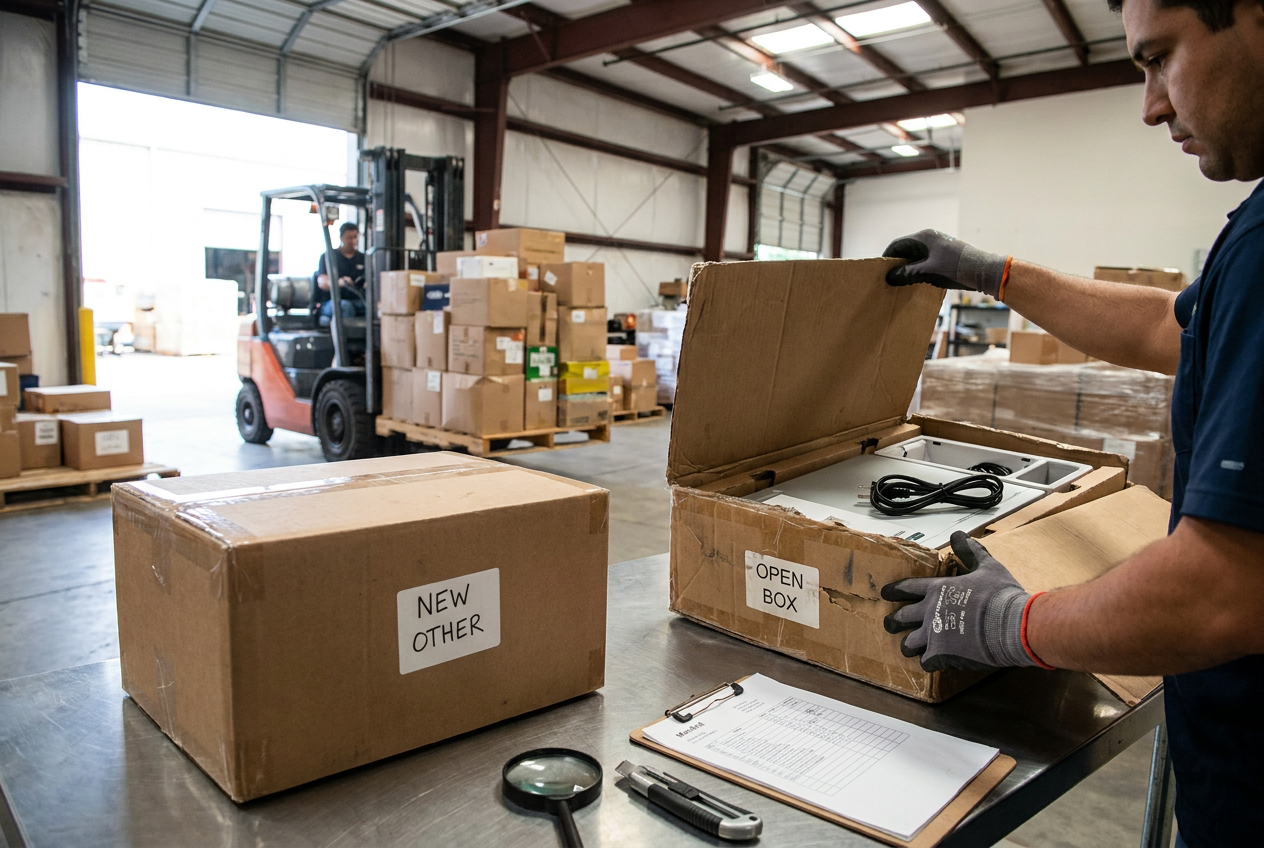
Overstock and shelf pulls are not automatically NEW. Likewise, “as-is” does not tell you whether a bottle is sealed, correctly labeled or suitable for resale. Read the stated condition and claims terms rather than interpreting shorthand as a guarantee.
A manifest is an inventory list. Ask whether one exists, whether it describes the offered load, and whether quantities refer to cases, multipacks or individual units. Useful fields include product name, package size, SKU or UPC, quantity, condition and date information where available. A manifest is not an item-level inspection report.
Before ordering, resolve these questions:
- Are liquids, powders, aerosols and nonchemical accessories identified separately?
- Does the description disclose leaking, opened or damaged merchandise?
- Are case quantities and saleable-unit quantities distinguishable?
- Are manufacturer labels, lot codes and expiration dates readable where applicable?
- Is the assortment known well enough to plan chemical segregation?
If those details are unavailable, budget for uncertainty rather than inventing a usable-unit count.
3. Inspect containers and labels before resale
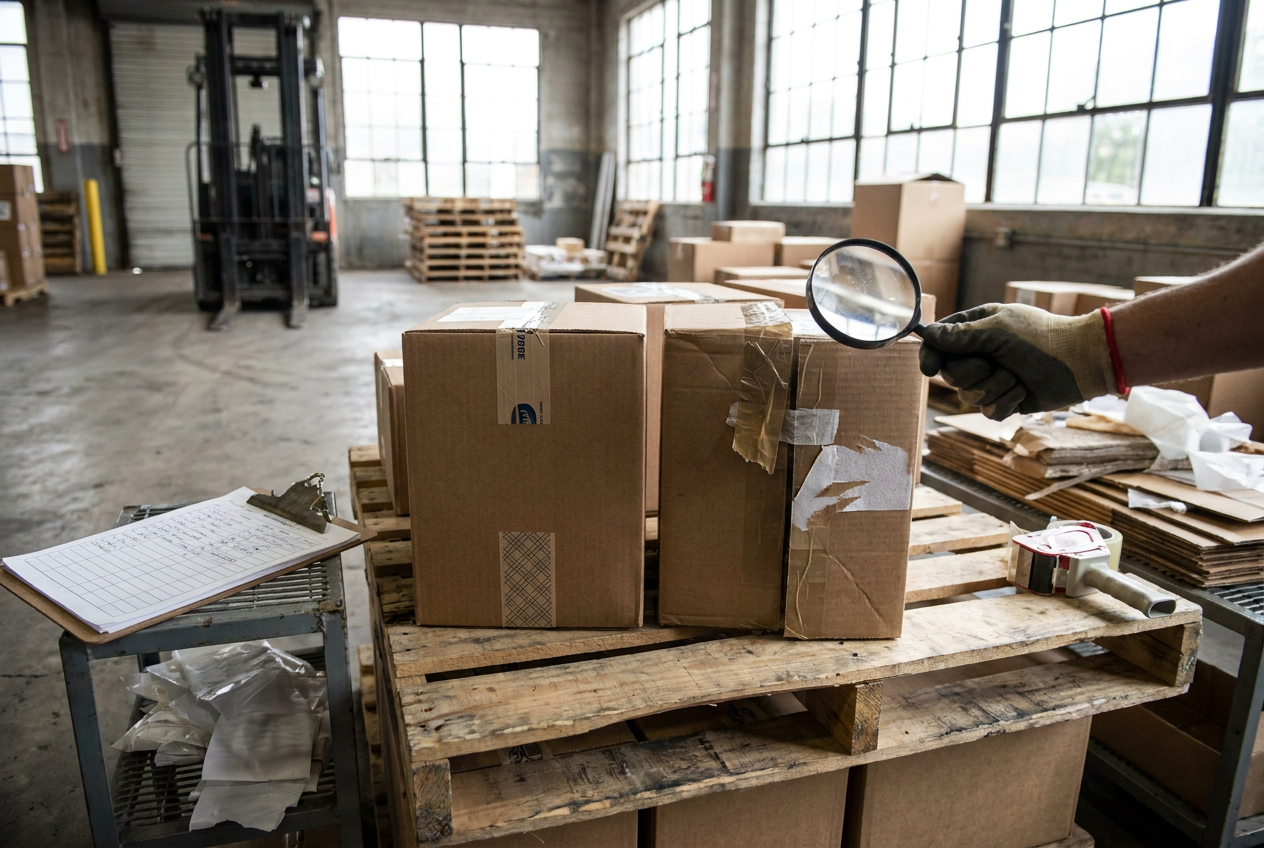
Start with the exterior of the load. Look for damp cartons, staining, collapsed packaging, crusted residue and damaged closures. Do not deliberately sniff containers to identify chemicals, open unknown products or conduct informal mixing tests.
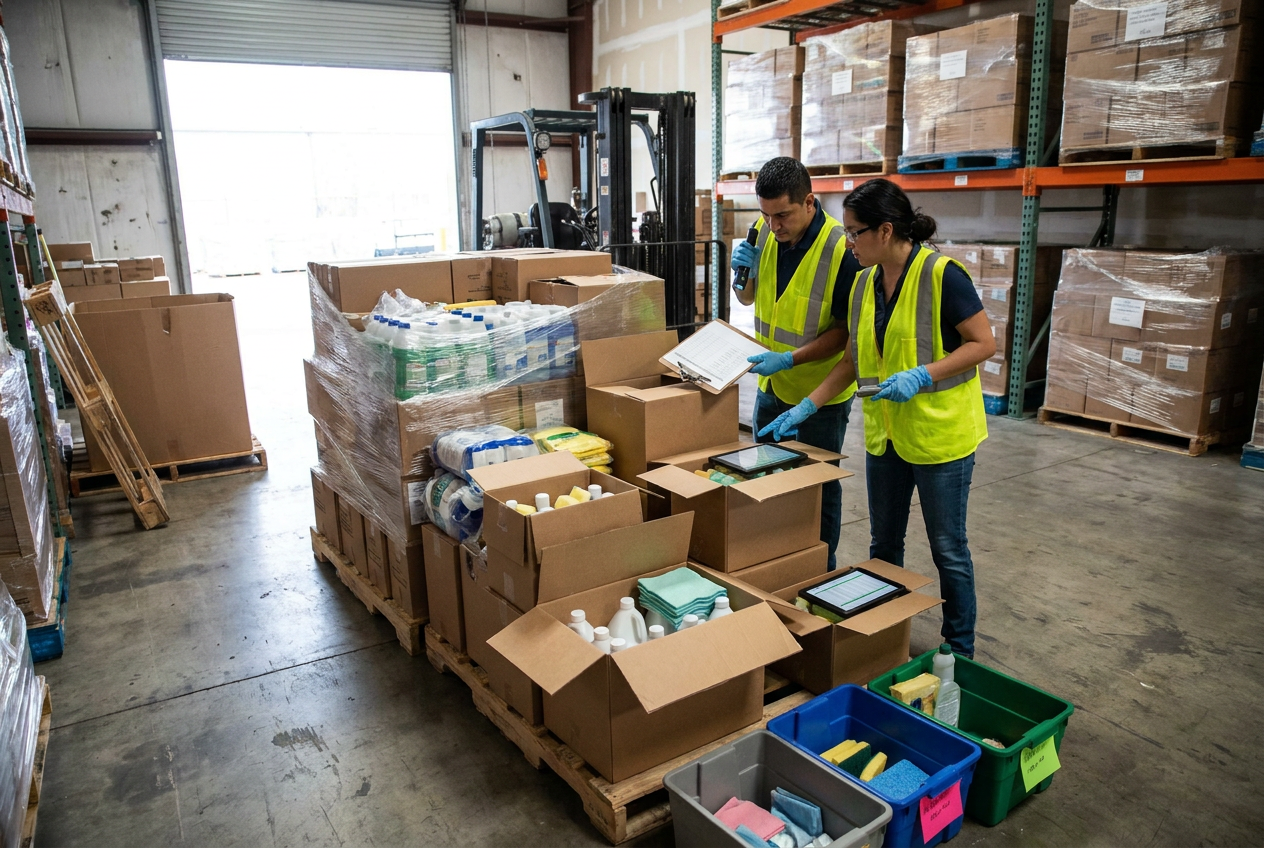
For each otherwise intact unit, check that the container and closure match the product, the cap is secure, and any manufacturer-provided tamper feature is intact. Not every product has an inner seal, so compare against its packaging design rather than applying one rule universally. Unexpected separation, swelling, discoloration or residue warrants a hold for qualified assessment—not an assumption that shaking or tightening the cap fixes it.
A usable label should identify the product and preserve its applicable directions, warnings, first aid and storage or disposal instructions. Disinfectants making antimicrobial claims generally fall under EPA pesticide regulation; their approved labeling includes important use conditions such as dilution and contact time. An unreadable or missing label cannot be replaced with generic instructions.
Keep questionable units out of saleable inventory. Do not decant products into beverage bottles, combine partial containers, transfer labels between products or conceal warnings with price stickers. Screen identifiable products for recalls before listing them. Missing traceability or uncertain contents can make a unit unsuitable for resale even when the package looks clean.
4. Separate chemicals by compatibility, not shelf space
The product label and applicable safety data sheet, or SDS, should drive storage and handling. An SDS provides information about hazards, protective equipment, spill response, storage and incompatible materials. Obtain the sheet for the actual product and formulation when needed; a generic sheet for “cleaner” is not sufficient.
A low purchase price does not make an unidentified, leaking or incompatible chemical safe to handle or resell.
Never mix bleach with ammonia or acids. These combinations can release dangerous gases. Keep oxidizers away from incompatible organic materials and flammables, and separate acids from alkaline products according to product-specific guidance. Do not put incompatible leaking containers into the same tote.
| Product type | Handling priority |
|---|---|
| --- | --- |
| Bleach and other oxidizing cleaners | Protect closures and segregate from incompatible acids, ammonia products and other materials identified by the label or SDS |
| Acidic toilet-bowl or descaling cleaners | Keep away from bleach and incompatible bases; use compatible containment |
| Drain and oven cleaners | Check corrosivity warnings and required protective equipment; isolate damaged containers |
| Alcohol-based cleaners and aerosols | Follow ignition-source, ventilation, temperature and storage restrictions |
| Laundry packets and concentrated detergents | Preserve original packaging and child-resistant closures where supplied; protect from moisture |
| Disinfecting wipes | Check closure integrity, label directions and dates where provided; dried-out contents may not perform as labeled |
Do not assume all gloves resist all chemicals. Select protective equipment using the relevant instructions and hazard assessment. Keep storage away from food, children and unauthorized access, with compatible secondary containment where needed. Check applicable fire-code and workplace requirements before holding substantial quantities.
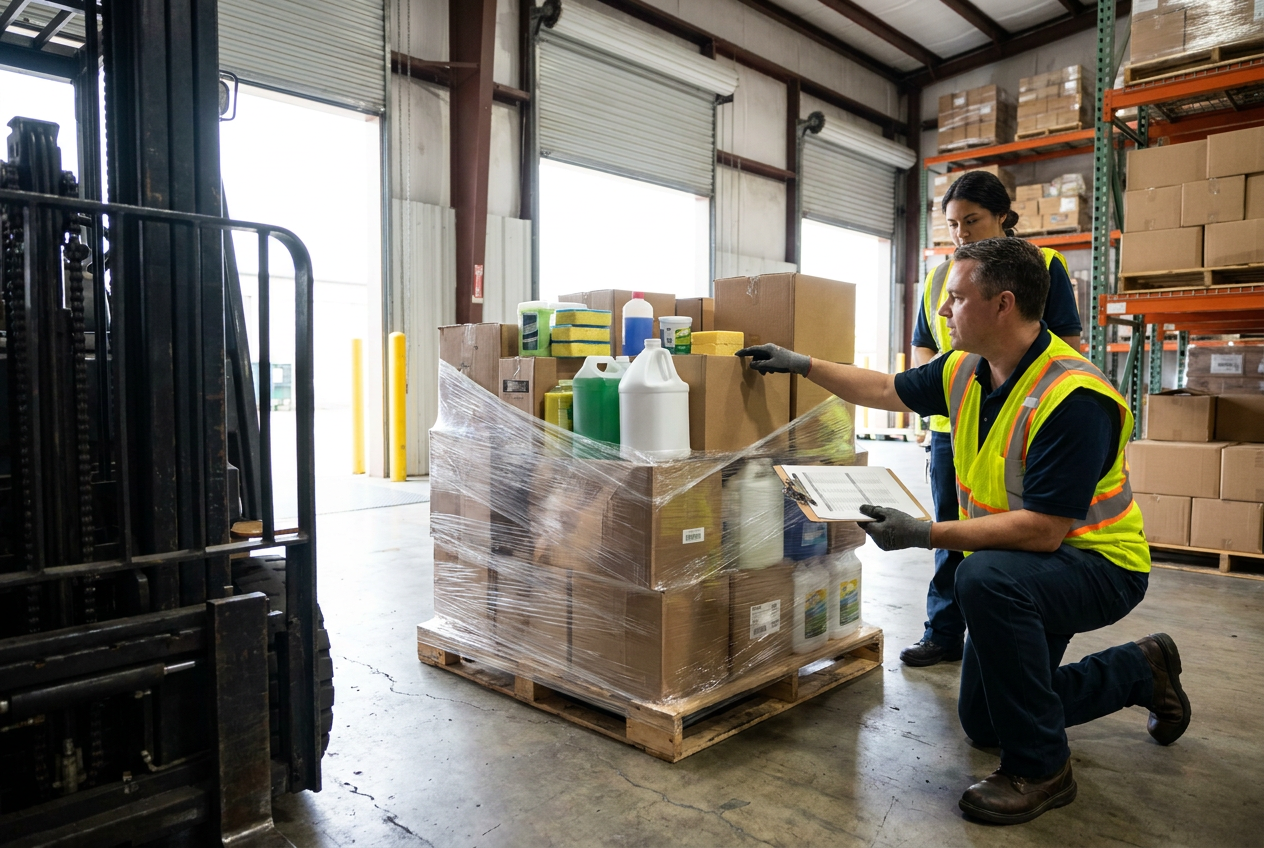
For an active leak, strong fumes or an unknown substance, keep people away and use trained assistance. Do not improvise neutralization or wash residues into drains. Commercial chemical waste may not qualify for household hazardous-waste collection; confirm acceptable handling with the local authority or an appropriate waste contractor.
5. Price the workable inventory, not the headline count
Freight is included in PalletCove's listed price. Free shipping is the only delivery option on every order to all 48 contiguous states. Your internal cost assessment should still account for receiving labor, inspection, compatible storage, packaging and lawful disposal of unusable material.
A useful planning calculation is:
Effective cost per usable unit = total inventory and handling costs ÷ units actually cleared for resale.
Before inspection, use conservative scenarios rather than presenting the denominator as known. A case of small bottles and a case of large jugs impose different storage, handling and selling demands. Concentration, package size and remaining labeled shelf life also matter more than a raw piece count.
Start with a volume you can inspect and segregate promptly. A full trailer amplifies both storage demands and the consequences of an inaccurate assumption. The liquidation pallet buying guide provides a broader purchasing framework, while the liquidation pallets inventory hub helps orient the search. Neither substitutes for the offered load's description.
6. Ordering, payment and receiving preparation
Confirm the listing, condition, available manifest and receiving requirements before submitting an order. No payment is collected on the website order form. After order review, a secure card link is emailed; credit and debit cards—Visa, Mastercard, American Express and Discover—are the only accepted payment method. Valid resale certificates are reviewed and applied where the buyer's state allows.
Handling takes 1–3 business days after payment clears. Transit from Houston is typically 3–7 business days, for an estimated total of 4–10 business days. The processing cutoff is 2:00 PM Central Time, America/Chicago, Monday–Friday; after-cutoff confirmations begin the next business day. Weekends and applicable holidays do not count.
Whether buying liquidation pallets in Texas or liquidation pallets in Florida, plan a receiving area before arrival. Smaller shipments may move by LTL, meaning less-than-truckload freight; larger orders may use a full trailer. Confirm the arrangement for your order rather than assuming a particular unloading method.
- Verify access, unloading arrangements and suitable material-handling equipment.
- Clear a dry inspection area away from saleable stock and incompatible goods.
- Prepare a quarantine area for questionable products and compatible containment.
- Assign someone to document condition and reconcile the shipment with order records.
7. Delivery inspection, claims and returns
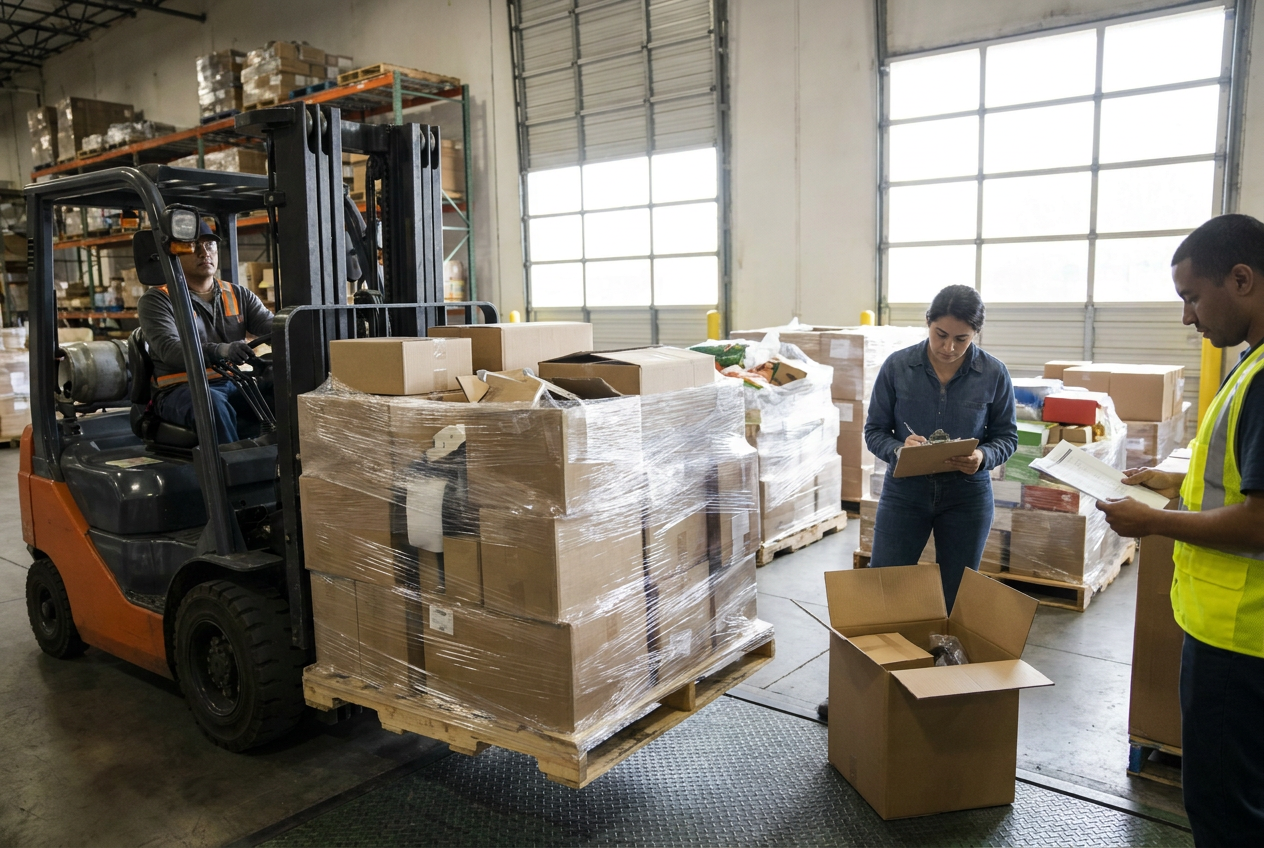
Before moving or unwrapping the shipment, photograph the pallet exterior, visible damage, shipping identifiers and affected packaging. Record visible exceptions on delivery paperwork when possible. Do not dismantle a leaking or unstable load just to obtain better photographs; protect people first.
After safe unloading, compare the received shipment with the order description and any applicable manifest. Separate intact inventory from units requiring review, retaining labels, lot codes and packaging evidence when safe. PalletCove requests delivery-issue reporting within 48 hours. Report promptly with the order number, photographs and a factual description; do not assume a remedy before review.
Under the United States Refund & Returns Policy, products explicitly listed as NEW ONLY qualify for defective and non-defective returns and exchanges within 30 calendar days of delivery. Returns are by mail, the customer is responsible for the return label and shipping, and the restocking fee is 15% of the product price. Refund processing takes 10 calendar days after authorized return receipt and inspection, or approval where no physical return is required.
Mixed and used loads have separate claims terms, not routine change-of-mind returns. The requested 48-hour delivery-issue report does not shorten eligible new-product 30-day returns. Obtain authorization and shipping instructions before sending anything back, especially damaged chemical containers.
Frequently asked questions
Are cleaning supplies liquidation pallets all unused?
No. They may be listed as overstock, shelf pulls, customer returns, mixed inventory or another condition. Only treat a load as NEW when the listing explicitly identifies it that way.
Can I sell a bottle with a damaged label?
Cosmetic wear differs from missing product identity, warnings or directions. Hold any unit whose required information is unreadable or incomplete until its resale suitability can be established; do not create substitute chemical instructions.
Can I clean off a leaking bottle and sell it?
Wiping the exterior does not establish that the closure, contents or neighboring packages are safe. Isolate the unit and follow product-specific guidance; unknown contents, compromised seals or contamination may rule out resale.
Do household cleaners have expiration dates?
Some do, and dates or manufacturer shelf-life guidance can matter especially for disinfectants and certain reactive formulations. Do not invent an expiration date from an unfamiliar lot code or assume that an undated product has unlimited life.
Is a truckload better than a pallet?
Only if the listing and your receiving, storage and sales capacity support that volume. A larger purchase increases the amount needing inspection and segregation; it does not guarantee a better usable-unit outcome.
Talk to PalletCove Liquidation
Choose cleaning inventory by identifiable contents, actual listed condition and your ability to handle it safely. For broader comparisons, return to the load categories overview. Review current inventory, then contact our order desk with questions about a specific listing before ordering.
PalletCove Liquidation LLC
4000 Telephone Rd Unit B11, Houston, TX 77087
Phone: (713) 819-3904
Email: sales@palletcoveliquidation.com
Hours: Mon–Fri 8:00 AM – 6:00 PM CT, Sat 9:00 AM – 2:00 PM CT, Sun closed
About PalletCove Liquidation
Published by PalletCove Liquidation LLC, based in Houston, Texas. Our buying guides cover evaluating liquidation inventory and preparing for delivery. Consult the current product listing and store policies for purchase terms.