At a glance
Buying as-is liquidation pallets? Learn what to clarify about condition, manifests, warranties, delivery evidence and claims before committing to a pallet or truckload.

Buying as is liquidation pallets means evaluating both the merchandise description and the purchase terms. “As-is” can allocate substantial condition risk to the buyer, but it does not answer every question about warranties, missing merchandise, delivery damage or available remedies. Those details need to be resolved before payment—not inferred after unloading.
For an independent reseller, the practical question is: which uncertainties are included in this purchase, and which specific seller commitments remain? Start with the broader liquidation pallet types and condition guide if you need to compare load types. This article focuses on the written clarifications that make an as-is purchase more understandable.
What as-is means—and what it does not establish
As-is generally describes a sale in which the buyer accepts the goods in their stated condition, with limitations on warranties or condition-related remedies. Its legal effect depends on the agreement, the representations made and applicable law. It is not a universal phrase that automatically erases every obligation.
Separate three issues:
- Description: What merchandise, quantity and condition does the seller say it is supplying?
- Warranty: What assurance, if any, applies to operation, quality or fitness for a particular use?
- Remedy: What process applies if delivery or merchandise does not meet an applicable commitment?
An as-is term may limit implied warranties, subject to applicable law. Specific factual promises can still matter; a general disclaimer does not necessarily negate an express description. Whether a particular statement creates an enforceable warranty is a legal question, not something to assume from a listing headline.
Read the warranty terms for liquidation purchases alongside the listing. Ask whether any seller or manufacturer coverage applies to that exact lot and what written documentation supports it. A branded carton or warranty insert is not proof of transferable coverage.
Key takeaway: Accepting uncertain condition is different from agreeing that the seller may supply anything. Identify the description, exclusions and claim process separately.
Identify the load type and condition before discussing remedies
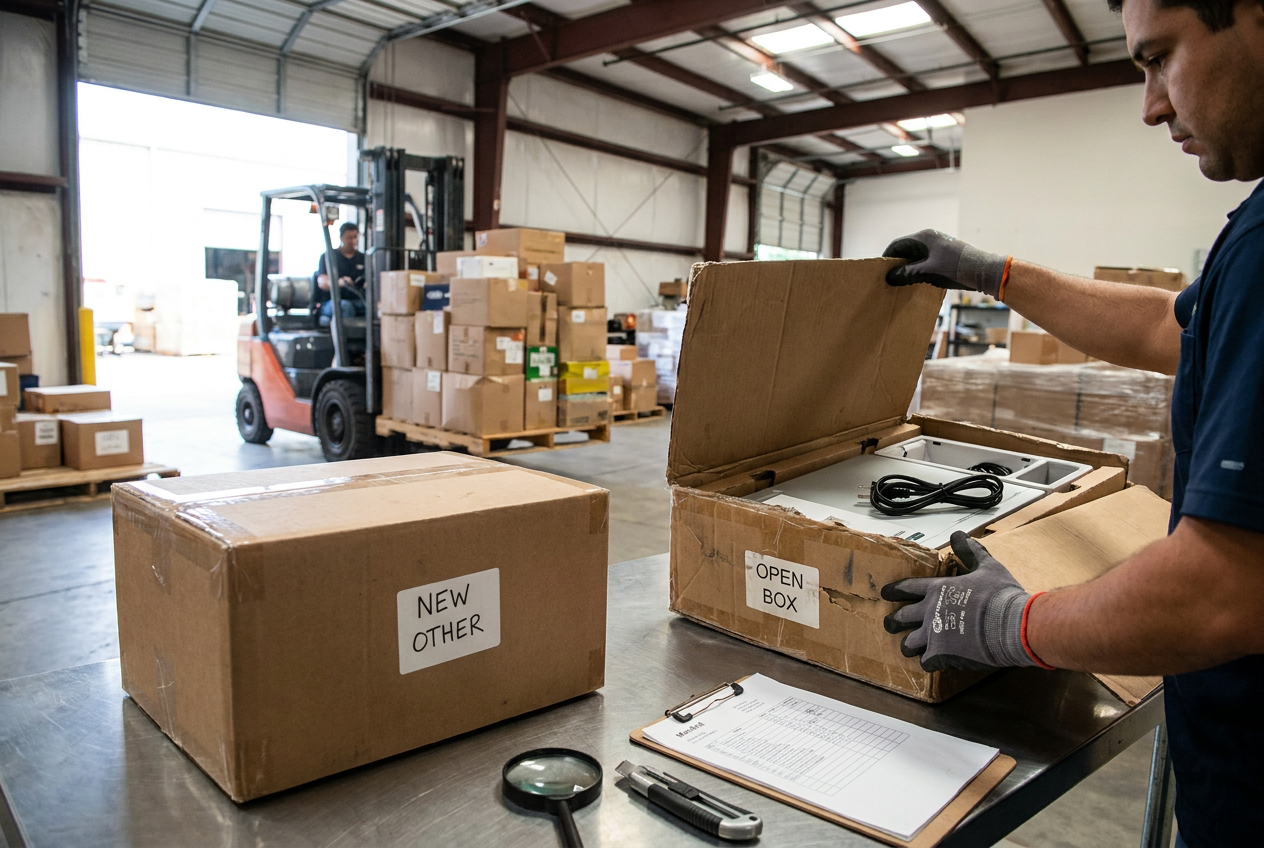
A condition grade is a seller’s classification of merchandise condition. Grading systems are not universal: “Grade A,” “mixed” or “Tier 2” needs the seller’s definition, not a buyer’s assumption. As-is is a sale term, not a substitute for a useful condition description.
| Listed merchandise type | What the term generally describes | Clarification to request |
|---|---|---|
| --- | --- | --- |
| Customer returns | Goods returned by previous customers, for potentially different reasons | Are defects, missing parts or incomplete packaging within the described condition? |
| Overstock | Inventory exceeding a seller’s needs | What condition is actually stated, and what storage or packaging issues are disclosed? |
| Shelf pulls | Goods removed from retail shelves or displays | Are labels, packaging wear or display-related issues expected? |
| Salvage | Merchandise designated for recovery, repair, parts or material value rather than presumed ordinary resale | What limitations and safety-related disclosures apply? |
| Mixed condition | A load containing more than one stated condition | Are the included conditions identified, and is any composition actually committed to? |
None of these labels alone proves that merchandise is new, complete or working. In particular, overstock and shelf pulls should not be treated as NEW unless the listing explicitly verifies that condition.
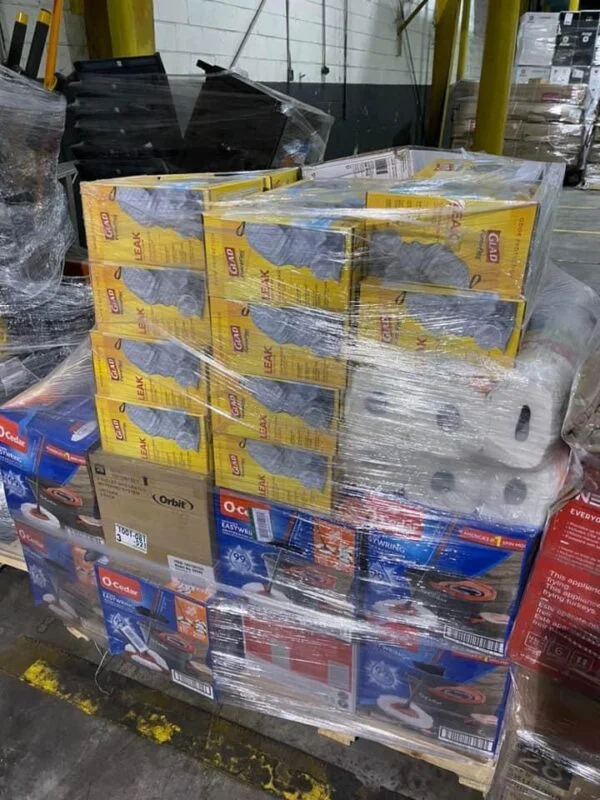
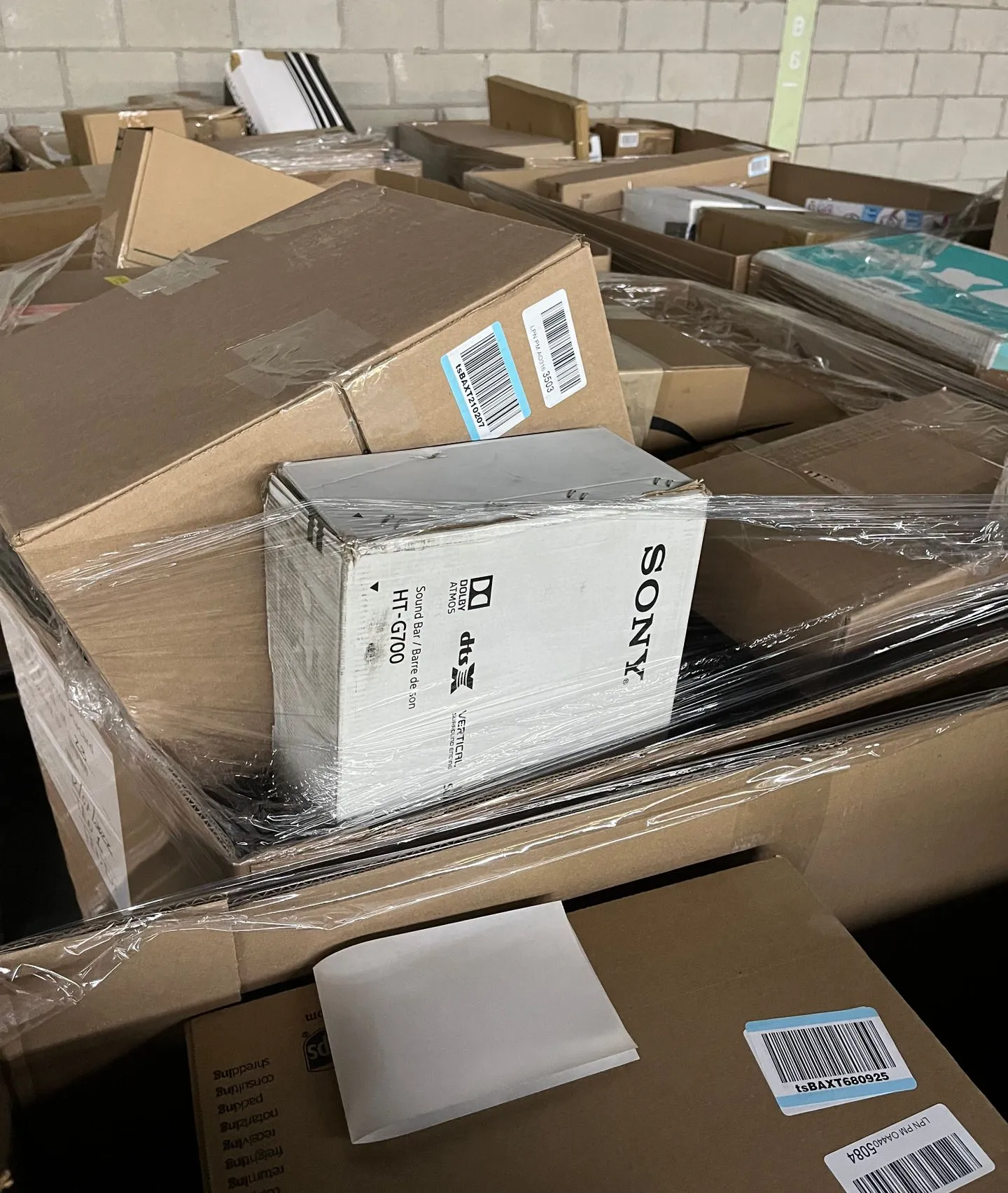
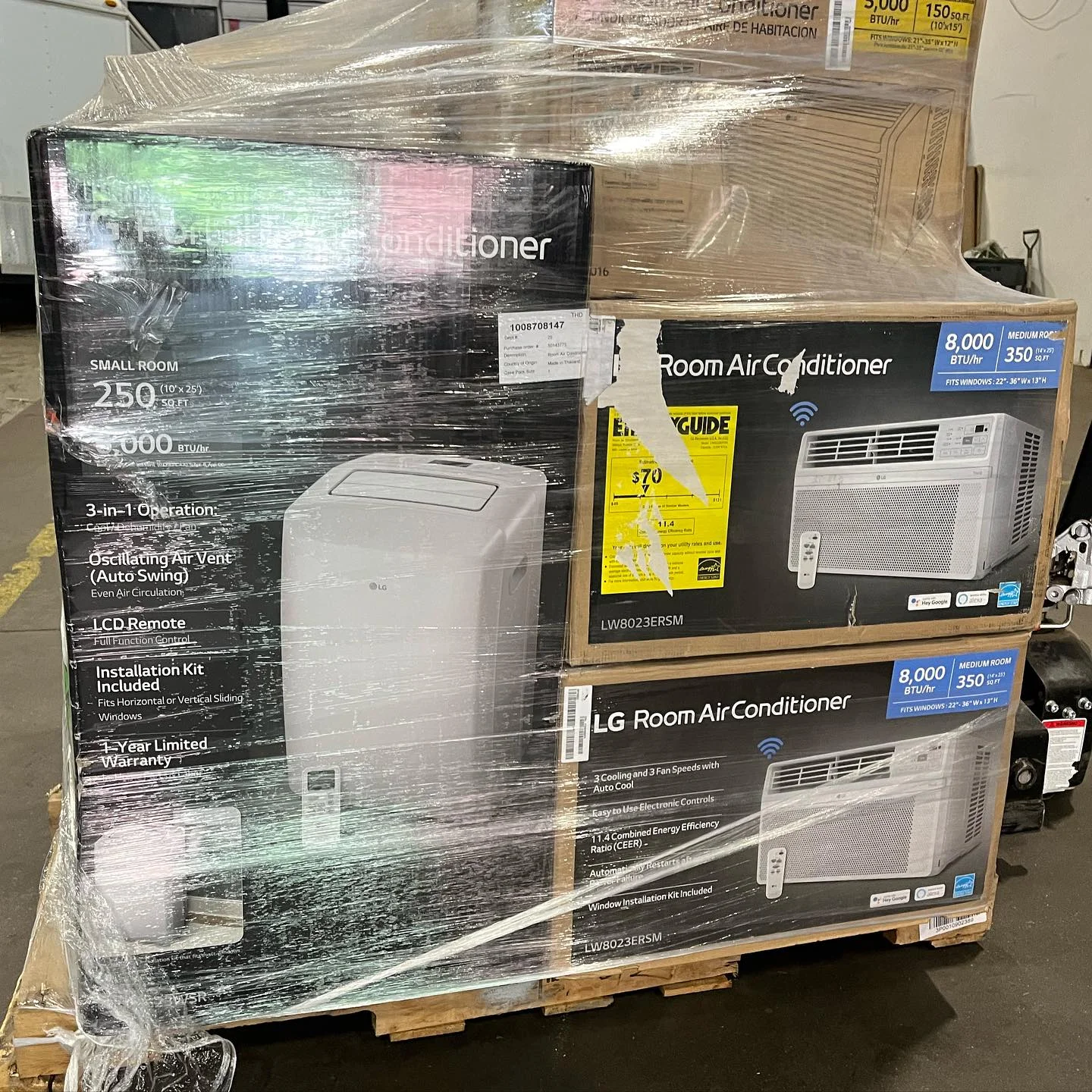
PalletCove’s photos show representative loads; contents of each pallet vary. Pallets are not individually tested, and contents are sold as described in the listing. Do not interpret attractive packaging as evidence of item-level testing.
For the broad sourcing context, see the wholesale liquidation overview. The separate salvage liquidation pallets guide examines salvage-specific exposure in more depth; do not assume every as-is load is salvage, or that every salvage item is repairable.

Establish what the manifest actually commits to
A manifest is an inventory document describing a lot, potentially including categories, product identifiers, quantities or other fields. Its usefulness depends on its scope and accuracy commitments. A lot-summary manifest may describe broad categories without identifying every item.
Before relying on one, ask:
- Does this document apply to the exact lot being ordered, or is it an example?
- Is it item-level, carton-level or a category summary?
- Are quantities exact, estimated or subject to stated tolerances?
- Does it describe condition, or only product identity?
- Are substitutions permitted, and what limits apply?
- What discrepancy qualifies for review, and what evidence is required?
A manifested load is not automatically tested or guaranteed complete. An unmanifested load offers less item-level visibility, but still needs a clear listing description. The blind versus manifested pallets comparison explains that distinction without treating either format as a condition guarantee.
Save the manifest version supplied before purchase. If a document changes, request confirmation of which version governs the order. Also clarify whether any displayed retail reference values are informational only; they are not evidence of achievable resale prices or recoverable proceeds.
Compare listings and price the uncertainty
For category-level buying, compare the disclosed terms in general merchandise liquidation inventory with the scale and receiving requirements in liquidation truckload inventory. A liquidation pallet and a full trailer can carry similar condition uncertainty, but the larger purchase can require substantially more sorting space and labor.
Specific listings such as the Amazon General Merchandise Truckload and HD GM Truckloads Pallets should be evaluated by their actual current descriptions. Their names alone do not establish testing, condition, manifest availability or warranty coverage. PalletCove is an independent reseller and is not affiliated with, endorsed by or sponsored by any retailer named.
Confirm whether the listed price buys one pallet, a specified group of pallets or a truckload. Ask what quantity measure controls the sale: pallet count, carton count, item count or another stated measure.
Freight is included in PalletCove’s listed price. Free shipping is the only delivery option, on every order, to all 48 contiguous states. For your own operating budget, separately consider unloading capability, storage, sorting labor, replacement parts, disposal and selling expenses. These are business planning inputs, not evidence of a particular resale outcome.
Run a downside scenario before ordering: could you manage the load if usable inventory takes longer to identify or some goods cannot be offered for resale? Avoid turning an estimated item count into a guaranteed per-unit acquisition cost.
Get a written purchase record before paying
Use a short clarification request rather than a vague “Is everything good?” Ask the order desk to confirm:
- The listing identifier, purchased unit and actual listed condition.
- Which photos and documents are representative versus lot-specific.
- Known exclusions, including missing accessories or packaging limitations where applicable.
- Any warranty coverage and the exact scope of as-is language.
- The governing manifest, quantity commitments and substitution rules.
- Claim eligibility, reporting deadlines, evidence and possible remedies.
- Receiving arrangements appropriate to the destination.
Request a revised order summary if an answer changes the purchase description. Save the listing, written answers, order confirmation and applicable policy version together. Do not assume a conversation changes the contract unless that change is confirmed by an authorized seller representative.
PalletCove collects no payment on the website order form. After order review, a secure card link is emailed; credit and debit cards—Visa, Mastercard, American Express and Discover—are the only accepted payment method.
Valid resale certificates are reviewed and applied where the buyer’s state allows. Resolve documentation questions during order review rather than assuming treatment based on another purchase.
Plan delivery and document what arrives
The liquidation pallets inventory hub serves buyers across the contiguous United States, including buyers seeking liquidation pallets in Texas and liquidation pallets in Florida. The same free-shipping coverage applies across all 48 contiguous states.
Handling takes 1–3 business days after payment clears. Transit from Houston is typically 3–7 business days, for an estimated total of 4–10 business days. The processing cutoff is 2:00 PM Central Time, America/Chicago, Monday–Friday; after-cutoff confirmations begin the next business day. Weekends and applicable holidays do not count.
Clarify whether the shipment will move as LTL, meaning less-than-truckload freight sharing trailer capacity, or as a full trailer shipment. Confirm receiving access, unloading equipment and scheduling arrangements without assuming a particular advance-call window or unloading service.
On delivery day:
- Compare the shipment identifiers and visible pallet count with the delivery paperwork.
- Photograph the load before breaking down wrapping, including visible damage and labels.
- Record observable shortages or damage on delivery paperwork accurately; distinguish visible facts from unverified contents.
- Preserve packaging and relevant shipment documents while a delivery issue is reviewed.
- As you sort, record discrepancies against the applicable listing or manifest and separate affected goods.
Do not claim to have checked every item when only the exterior was inspected. Signing for a pallet count and verifying internal item quantities are different tasks.

Distinguish returns, warranty requests and shipment claims
A change-of-mind return, a defective-product return, a warranty request and a shipment discrepancy are different processes. A claim is a request for review, not an automatic entitlement to a refund, replacement or credit.
Under PalletCove’s United States Refund & Returns Policy, products explicitly listed as NEW ONLY qualify for defective and non-defective returns and exchanges within 30 calendar days of delivery. Returns are by mail; the customer is responsible for the return label and shipping. The restocking fee is 15% of the product price. Refund processing takes 10 calendar days after authorized return receipt and inspection, or approval where no physical return is required.
Mixed and used loads have separate claims terms, not routine change-of-mind returns. Request those terms before payment, including applicable deadlines and how discrepancies are measured. Do not presume that a defect within a disclosed condition category creates a remedy, or that as-is language necessarily defeats a documented shipment issue.
Please report delivery issues within 48 hours so they can be documented promptly. That reporting request does not shorten the eligible new-product 30-day return window described above.
Common mistakes include discarding wrapping before documenting damage, mixing goods from several orders, assuming a manifest proves functionality and returning goods without authorization. Keep each claim tied to an order, a specific written commitment and clear evidence.
Frequently asked questions
Does as-is mean no warranty of any kind?
Not necessarily. As-is language may limit warranties, but its effect depends on the agreement and applicable law. Ask which coverage is excluded and whether any specific written warranty or description still applies.
Can I return an as-is pallet because I dislike the assortment?
Do not assume a change-of-mind return is available for a mixed or used load. Obtain the applicable claims terms before buying and distinguish dissatisfaction from a documented failure to meet the purchase description.
Does a manifest guarantee working merchandise?
No. A manifest documents inventory information; it does not establish functionality unless an applicable written commitment specifically says so. Check quantity, condition and testing representations separately.
Are representative photos a promise of specific contents?
No. PalletCove’s photos show representative loads, and contents of each pallet vary. Base the purchase on the actual listing description and any confirmed lot-specific documentation.
What should I do when damage is visible at delivery?
Photograph the visible condition, record accurate observations on delivery paperwork and retain relevant packaging. Report the issue promptly and follow the applicable claims process rather than assuming a remedy or sending merchandise back unapproved.
Talk to PalletCove Liquidation
Before purchasing, make sure the condition description, manifest commitments, warranty limitations and claims process tell a consistent story. Return to the guide to liquidation pallet types and conditions for the broader comparison, then resolve the exact lot’s unanswered questions in writing.
PalletCove Liquidation LLC is located at 4000 Telephone Rd Unit B11, Houston, TX 77087. Call (713) 819-3904 or email sales@palletcoveliquidation.com. Hours are Mon–Fri 8:00 AM – 6:00 PM CT, Sat 9:00 AM – 2:00 PM CT, Sun closed.
To clarify a purchase, contact our order desk with the listing and your questions, or review current inventory before submitting an order.
About PalletCove Liquidation
Published by PalletCove Liquidation LLC, based in Houston, Texas. Our buying guides cover evaluating liquidation inventory and preparing for delivery. Consult the current product listing and store policies for purchase terms.