At a glance
Learn how different condition groups can share a liquidation pallet, what an overall grade leaves unclear, and which questions help resellers evaluate the mix before ordering.

Mixed condition liquidation pallets can contain merchandise with different histories, packaging states, levels of completeness, and functional status. A pallet described with one overall grade does not necessarily contain units that all meet that grade individually. For a reseller, the important question is what that label actually describes—and what remains unknown.
The broader guide to liquidation pallet types and condition groups explains the main inventory formats. Here, the focus is narrower: how to interpret a mixed pallet, ask for meaningful clarification, and plan receiving and sorting when the supplier provides only a single condition label.
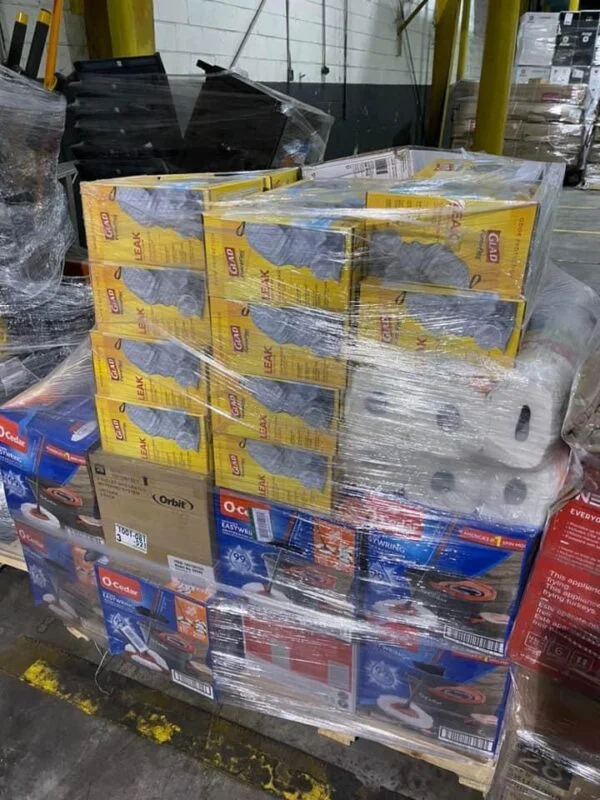
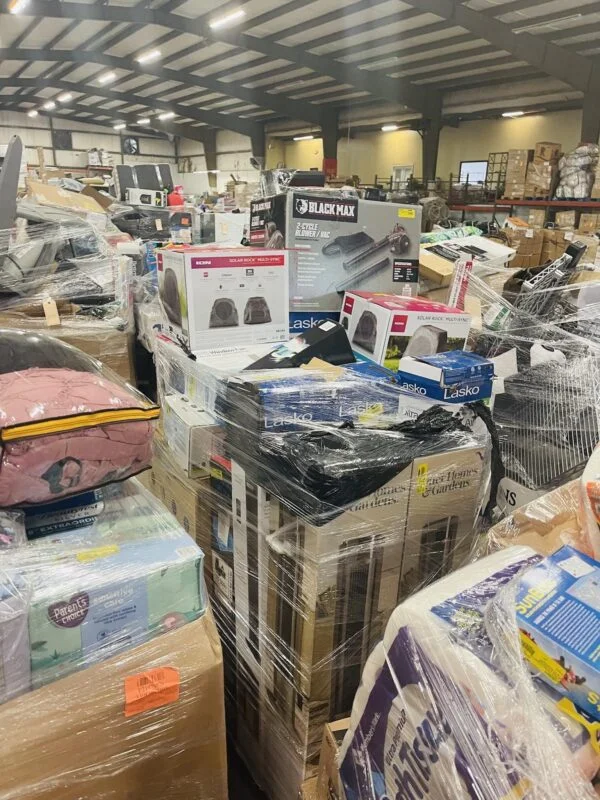
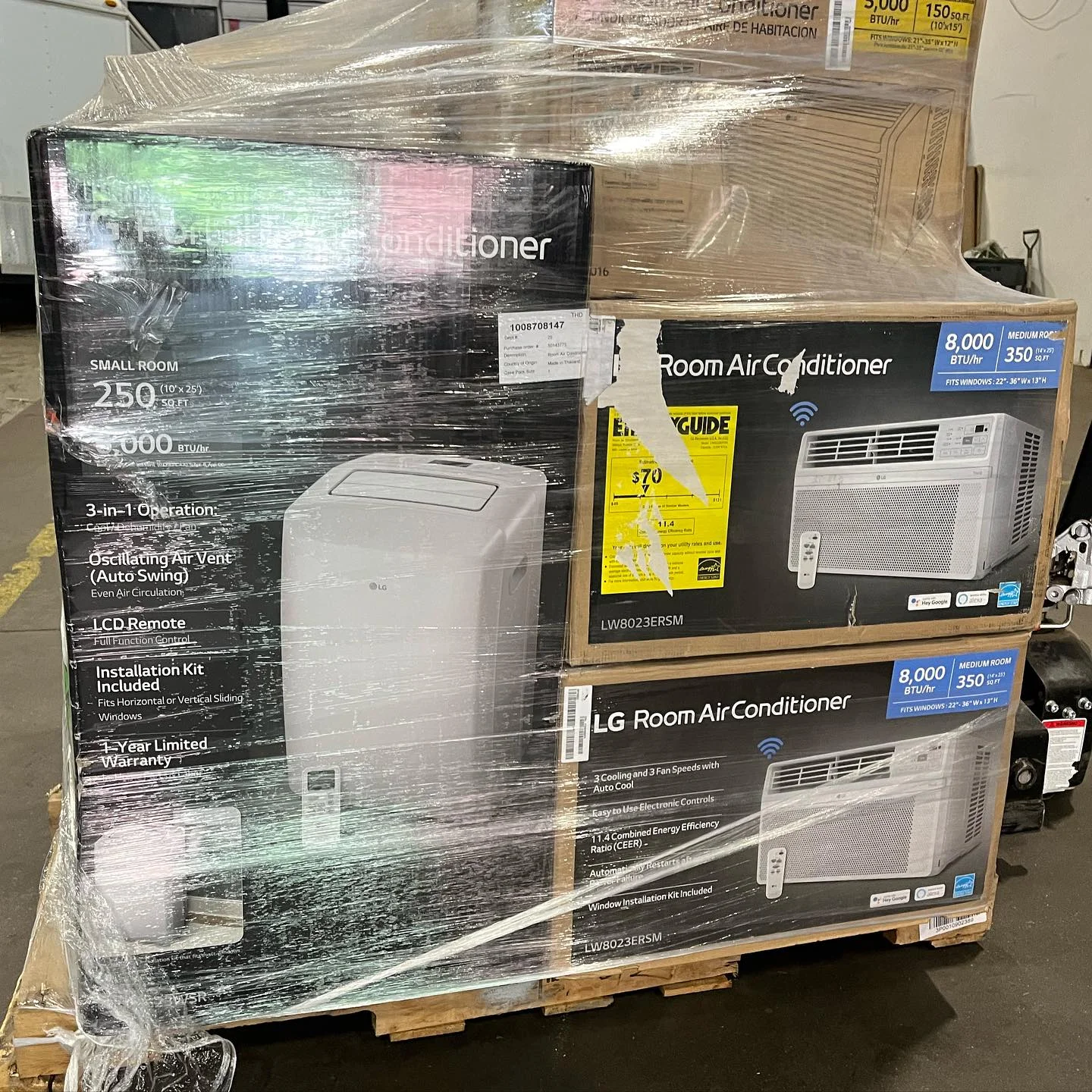
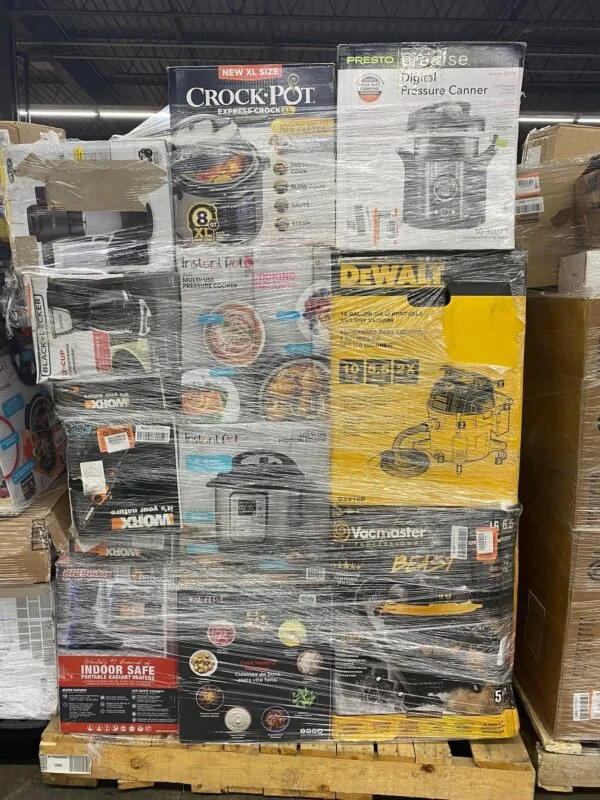
At PalletCove Liquidation, photos show representative loads, each pallet’s contents vary, and pallets are not individually tested. Contents are sold as described in the listing. Those boundaries matter more than assumptions based on packaging or a familiar product name.
What can coexist inside a mixed-condition pallet?
A condition grade is a supplier’s shorthand classification of merchandise condition. Grading systems are not universal: the same letter or descriptive term can mean different things across suppliers. A grade may summarize a lot rather than describe each item.
The mix can involve several overlapping dimensions:
| Term or dimension | What it means | What it does not establish |
|---|---|---|
| --- | --- | --- |
| Customer returns | Merchandise sent back by customers | Why it was returned, whether it works, or whether parts are complete |
| Overstock | Excess inventory that remained unsold | That every unit qualifies as explicitly listed new merchandise |
| Shelf pulls | Merchandise removed from sales-floor inventory | Untouched packaging or absence of handling wear |
| Salvage | Merchandise designated for repair, parts recovery, recycling, or similarly limited use | That economical repair is possible |
| Packaging condition | The state of the carton, wrapping, or retail package | The functional condition of the contents |
| Functional status | Whether operation is known, unknown, or described as defective | Cosmetic condition or accessory completeness |
These are not interchangeable classifications. A customer return might have an intact box but a missing accessory. A shelf pull might have damaged packaging without any stated functional defect. Neither example establishes what any particular PalletCove pallet contains.
For the source-history distinctions, see shelf pulls versus customer returns and overstock. Mixed condition loads apply the same interpretation problem at a larger scale: a truckload can vary both within individual pallets and between pallets.

What to ask when there is only one overall grade
A useful overall grade has a defined scope. Does it apply to every unit, to the predominant condition, to a sample, or simply to the lot as a purchasing category? Without that distinction, buyers can mistake a broad description for a unit-level commitment.
Ask these questions before submitting an order:
- What is the written definition of this grade? Request observable criteria rather than adjectives such as “good.”
- What does the grade cover? Separate appearance, packaging, completeness, and operation.
- Is it a minimum condition or an overall description? Ask whether lower-condition items can be included.
- Which condition groups are known to be present? Ask specifically about returns, shelf pulls, overstock, and salvage where relevant.
- Is the breakdown measured or estimated? If a share is stated, clarify whether it is based on units, cartons, pallets, or another basis.
- What remains unverified? Missing accessories, unidentified products, and unknown functionality are separate uncertainties.
- Which written description governs the order? Save the listing and request clarification of any conflicting statements.
A single pallet grade is not a condition distribution. Buy against the written description, and keep unknowns separate from verified facts.
If no breakdown exists, record that as an unknown rather than inventing one from photos. It may still be a workable purchase, but only if your operation can absorb sorting, storage, and unresolved condition without relying on a particular outcome.
As-is generally means merchandise is offered in its disclosed present condition, without an implied promise of improvement or repair before sale. It does not replace the actual listing or applicable policy. The separate guide to as-is liquidation pallet terms explains which boundaries buyers should clarify.
Read the manifest without treating it as a test report
A manifest is an inventory record describing a lot’s contents. Depending on the available document, it may show product descriptions, identifiers, quantities, condition notes, or reference values. Its usefulness depends on which fields are present and how they were prepared.
A manifested lot has an inventory record; an unmanifested or blind lot lacks that level of itemized visibility. Neither format, by itself, establishes whether merchandise works. A lot-summary manifest can identify broad categories without providing unit-by-unit condition information.
Use three passes when reviewing a manifest:
- Identity: Can you distinguish actual products from generic category descriptions? Are model or product identifiers available?
- Quantity: Does “quantity” mean individual pieces, sets, cases, or another unit? Are incomplete sets identified?
- Condition: Are notes attached to individual lines, or does one overall statement cover the whole load?
For detailed field interpretation, use the guide to reading a liquidation manifest line by line. Here, the essential distinction is between knowing what is listed and knowing its condition.
Ask whether the document corresponds to the offered lot, when it was prepared, and whether quantities or descriptions are estimates. If it contains reference retail values, do not treat those figures as expected selling prices or evidence of condition.
Representative photos can help explain a category or packing format. They cannot establish the contents of your specific pallet, the proportion of each condition group, or what is inside closed cartons.
Price the workload, not just the pallet
Mixed-condition inventory creates several cost centers after delivery: receiving, sorting, identification, cleaning where appropriate, checking completeness, storage, listing, and handling units unsuitable for your intended sales channel. Some merchandise may require qualified repair or appropriate recycling rather than resale.
A basic planning model is:
Listed purchase price + internal handling costs + supplies + storage + repair or disposition costs = planned operating commitment.
Freight is included in PalletCove’s listed price. Free shipping is the only delivery option on every order to all 48 contiguous states. Do not add a second freight line to the purchase-price comparison.
Where an order specifies a piece count, purchase price divided by that count gives an acquisition-cost average—not a cost per sellable item. If the usable count is unknown, calculate several internal scenarios rather than presenting one optimistic result as fact.
Compare general merchandise inventory with available liquidation truckloads according to your receiving space and sorting capacity. A larger load can multiply unresolved condition questions rather than reduce them.
For listing-level comparisons, review the HD GM truckloads and pallets listing and WM GM truckloads and pallets listing. Use their current written descriptions; the product names alone do not establish matching grades, exact contents, or availability. PalletCove is an independent reseller and is not affiliated with, endorsed by, or sponsored by any retailer named.
Ordering and planning free delivery
The liquidation purchasing overview provides broader buying context. For a mixed-condition order, first confirm the listed category, quantity basis, overall condition description, available manifest, and any unresolved questions in writing.
No payment is collected on the website order form. After order review, a secure card link is emailed. Credit and debit cards—Visa, Mastercard, American Express, and Discover—are the only accepted payment method. Valid resale certificates are reviewed and applied where the buyer’s state allows.
Handling takes 1–3 business days after payment clears. Transit from Houston is typically 3–7 business days, for an estimated total of 4–10 business days. The processing cutoff is 2:00 PM Central Time, America/Chicago, Monday–Friday; confirmations after cutoff begin processing the next business day. Weekends and applicable holidays do not count.
An individual pallet may move through LTL, meaning less-than-truckload freight, while a truckload may occupy a full trailer. Confirm the shipment format and receiving requirements for the particular order rather than assuming that every load arrives the same way.
The liquidation pallets destination hub includes regional buying information, including liquidation pallets in Texas and liquidation pallets in Florida. The same free-shipping-only policy applies throughout the 48 contiguous states.
Inspect delivery and distinguish claims from returns
Delivery inspection should establish what arrived and its visible transport condition. It cannot instantly establish the operating condition of every item in a mixed pallet.
- Compare shipment identifiers and visible pallet counts with the delivery paperwork.
- Photograph the load before removing wrapping, including visible damage and identifying labels.
- Record visible shortages or damage on delivery paperwork where possible, without guessing about concealed contents.
- Preserve packaging and organize unpacking photos so discrepancies can be traced to the shipment.
- Compare received contents with the listing and any applicable manifest, separating expected disclosed condition from potential discrepancies.
Request delivery-issue reporting within 48 hours so supporting evidence can be reviewed promptly. That request does not shorten eligible new-product return rights.
Under the United States Refund & Returns Policy, products explicitly listed as NEW ONLY qualify for defective and non-defective returns and exchanges within 30 calendar days of delivery. Returns are by mail; the customer is responsible for the return label and shipping, and the restocking fee is 15% of the product price. Refund processing takes 10 calendar days after authorized return receipt and inspection, or approval where no physical return is required.
Mixed and used loads have separate claims terms, not routine change-of-mind returns. Do not assume a mixed lot qualifies for the new-product program because some packaging looks unopened. A discrepancy report should identify the order, quote the relevant description, explain the difference, and include supporting records; it should not assume a particular resolution.

Common mistakes that obscure the mix
- Equating sealed packaging with verified new condition. Use the explicit listing, not an inference from a carton.
- Treating unknown function as confirmed failure—or confirmed operation. Unknown means neither has been established.
- Assuming every pallet in a truckload has the same mix. Ask whether any breakdown is load-wide or pallet-specific.
- Treating salvage as ordinary open-box stock. Salvage can require a different repair, parts, or recycling workflow.
- Combining every defect into one bucket. Cosmetic wear, missing components, and functional problems affect handling differently.
- Planning around an undocumented sellable share. A purchasing decision should remain workable without an invented condition distribution.
Frequently asked questions
Does mixed condition mean mixed product categories?
No. A category-level liquidation pallet can contain one merchandise category with several condition groups. A general merchandise pallet can mix both categories and conditions, so ask about each separately.
Does an overall grade apply to every item?
Not necessarily. Ask whether it represents a minimum standard, a predominant condition, or a lot-level description, and request the supplier’s written definition.
Can a manifest verify that items work?
An inventory record does not establish functionality unless it explicitly includes relevant verified information. PalletCove pallets are not individually tested, so do not interpret listed product names or quantities as testing evidence.
What if the supplier cannot provide condition percentages?
Treat the distribution as unknown and ask which condition groups may be present. Decide whether your storage, labor, and disposition options can accommodate that uncertainty without relying on a specific mix.
Are mixed-condition pallets eligible for ordinary returns?
Mixed and used loads have separate claims terms rather than routine change-of-mind returns. The 30-calendar-day return and exchange program described above applies only to products explicitly listed as NEW ONLY, subject to the linked policy.
Talk to PalletCove Liquidation
The best interpretation of a mixed pallet is a written description of what is known, what varies, and what has not been verified. Return to the pallet types and condition grades guide for the broader framework, then compare that framework with the specific listing.
For clarification before ordering, contact our order desk and review current inventory.
PalletCove Liquidation LLC
4000 Telephone Rd Unit B11, Houston, TX 77087
Phone: (713) 819-3904
Email: sales@palletcoveliquidation.com
Hours: Mon–Fri 8:00 AM – 6:00 PM CT, Sat 9:00 AM – 2:00 PM CT, Sun closed.
About PalletCove Liquidation
Published by PalletCove Liquidation LLC, based in Houston, Texas. Our buying guides cover evaluating liquidation inventory and preparing for delivery. Consult the current product listing and store policies for purchase terms.