At a glance
Compare new other and open box inventory through packaging, signs of use, and missing parts. Learn what to verify before buying liquidation pallets and creating accurate resale listings.
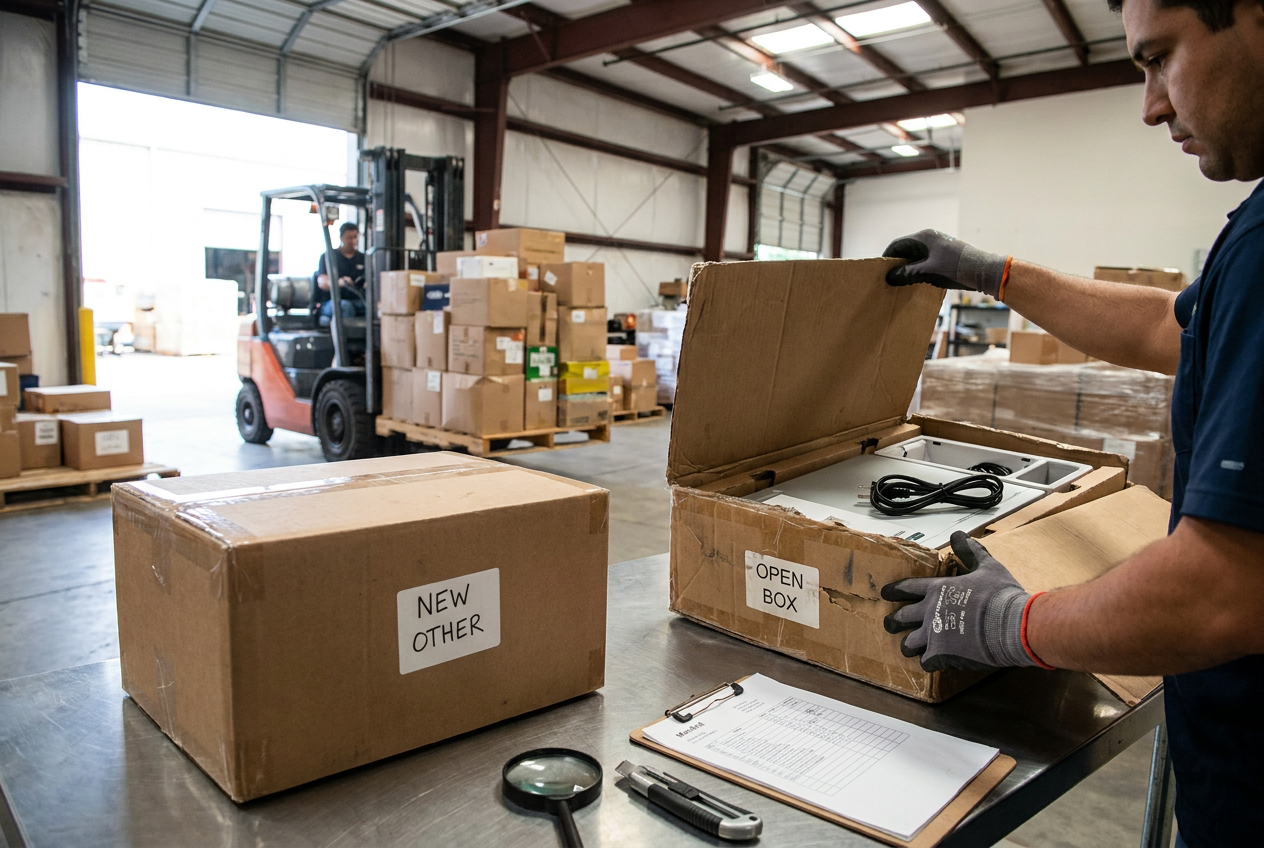
The practical difference in new other vs open box is not simply whether a carton has been opened. “New other” commonly suggests unused merchandise with an exception, such as missing original packaging. “Open box” describes a packaging circumstance, but its meaning can range from an unused inspection return to merchandise with limited handling or use, depending on the seller and marketplace.
For a reseller, neither label replaces evidence. Packaging, signs of use, completeness, and documented functionality are separate questions. A clean carton cannot prove an unused product, and an unused product can still be incomplete. For the broader relationship between source streams and grading, see our guide to liquidation pallet types and condition grades.
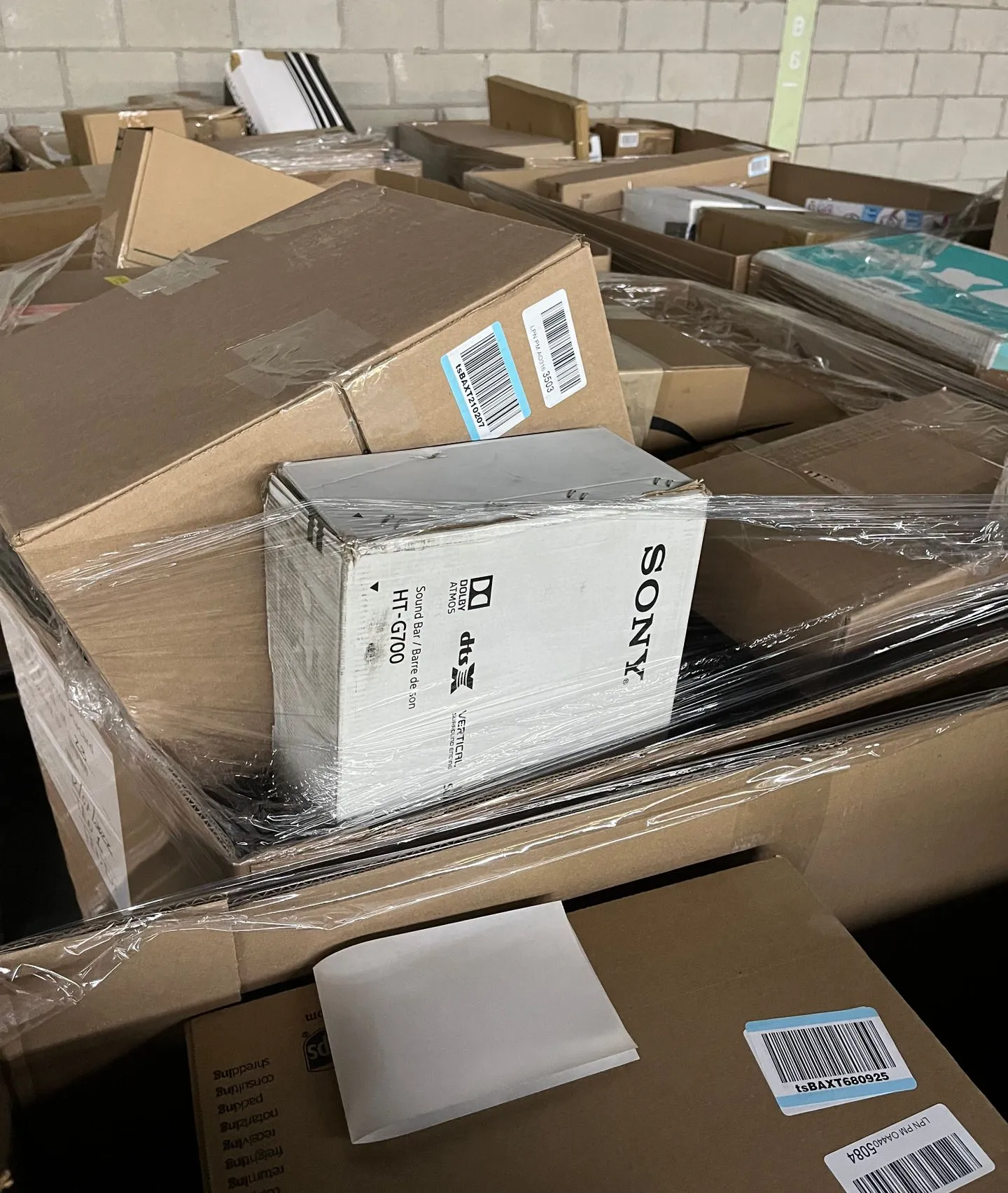
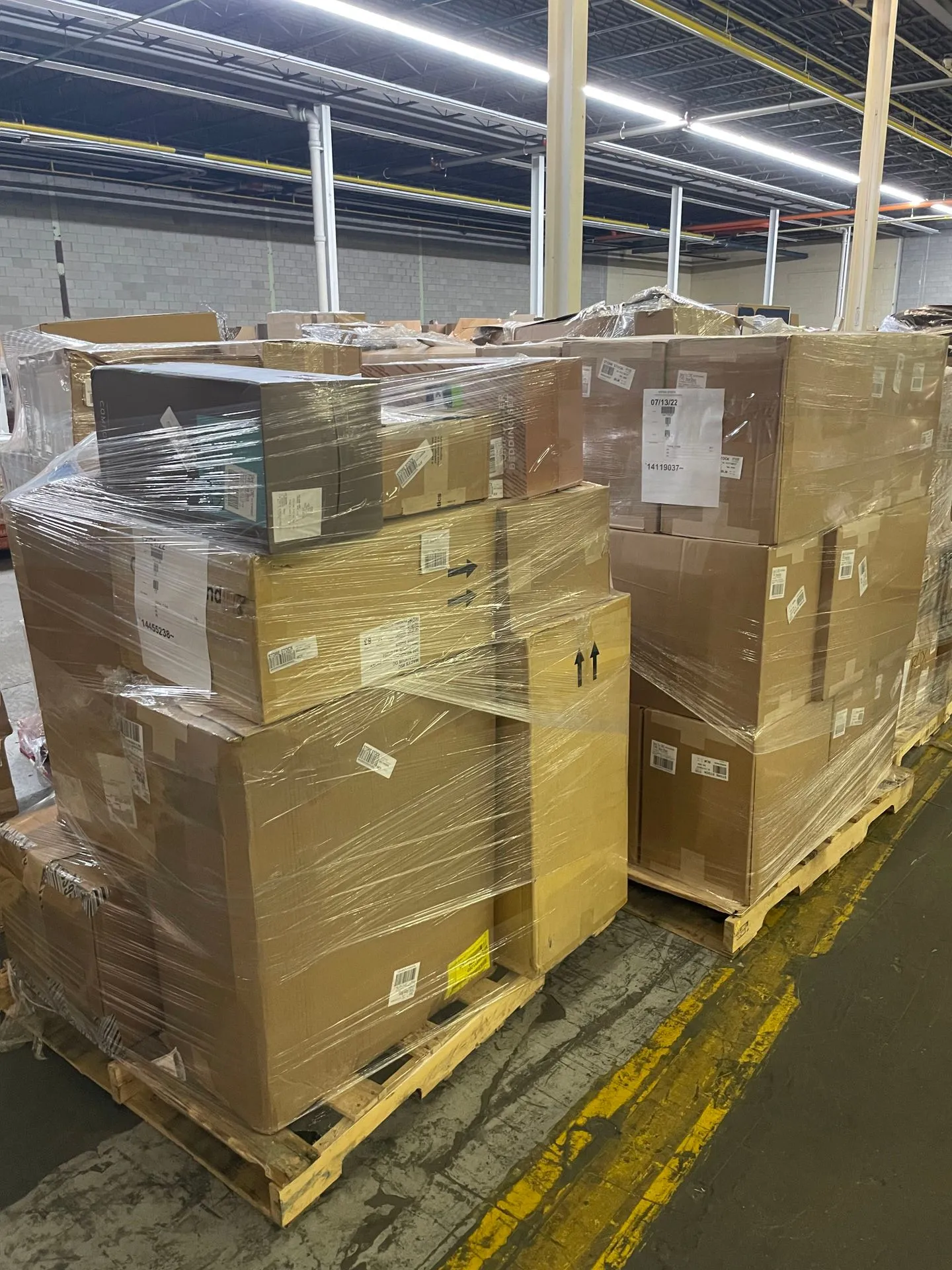
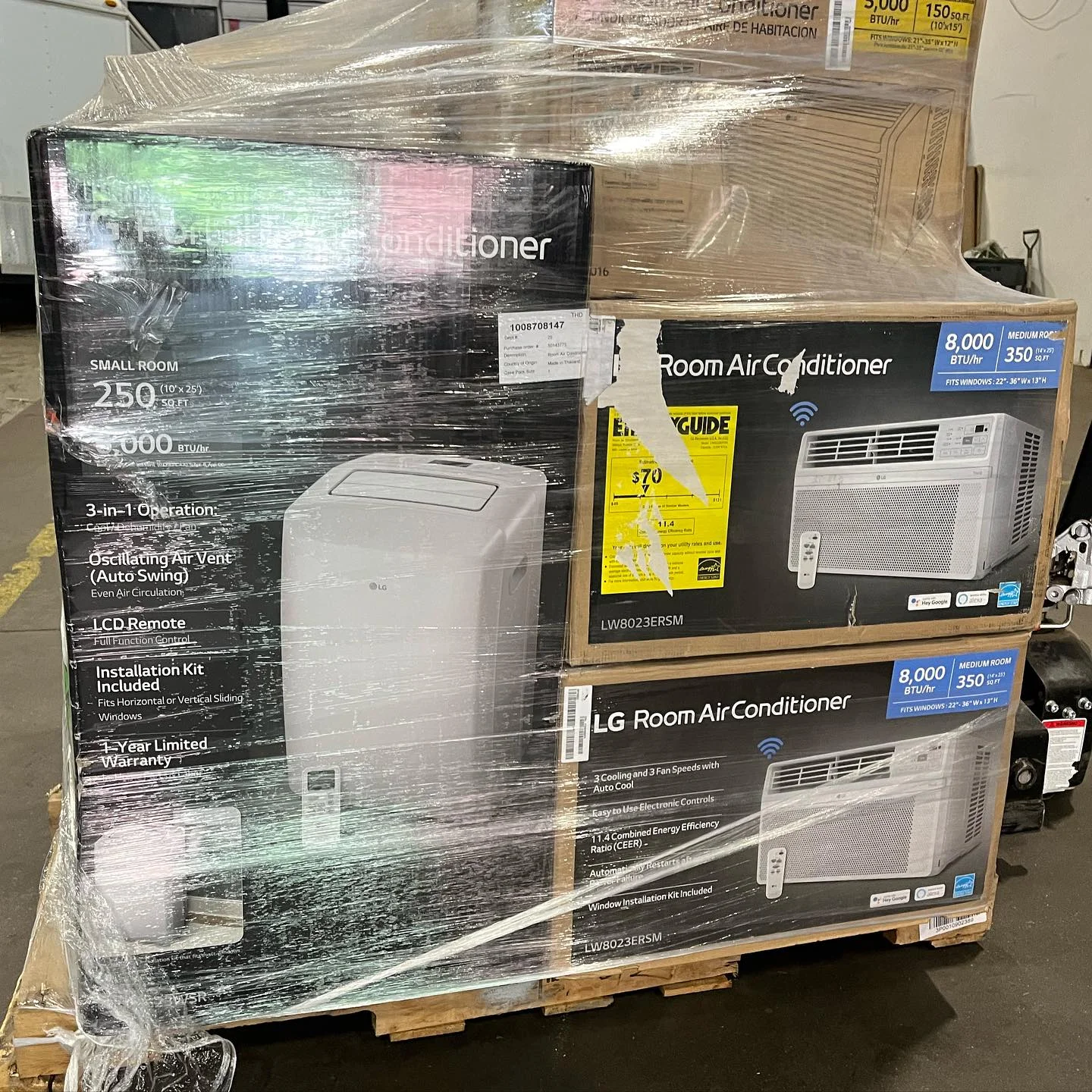
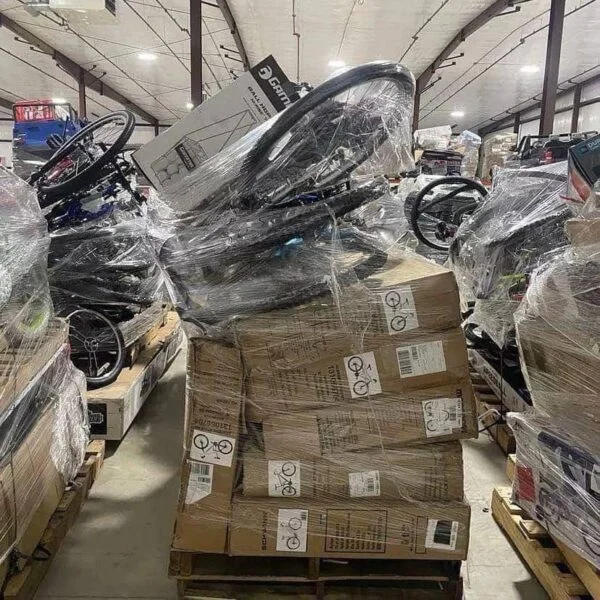
PalletCove Liquidation supplies category-level liquidation pallets and full truckloads from Houston. Photos show representative loads, each pallet’s contents vary, and pallets are not individually tested. Contents are sold as described in the listing—not according to assumptions attached to a familiar condition label.
What new other and open box actually tell you
A condition grade is a supplier’s or marketplace’s classification of merchandise condition. It is useful only when its definition is clear. Grades are not universally standardized, and the same wording may have different requirements across sellers, selling platforms, and product categories.
| Verification point | New other: common interpretation | Open box: common interpretation |
|---|---|---|
| --- | --- | --- |
| Previous use | Expected to be unused, subject to the stated definition | Must be established; an opened package alone proves nothing about use |
| Packaging | Original packaging may be damaged, replaced, or absent | Packaging has generally been opened or is no longer factory sealed |
| Completeness | Do not assume every accessory is included | Do not assume every accessory is included |
| Functionality | Label alone is not testing evidence | Label alone is not testing evidence |
| Resale eligibility | Must satisfy the destination marketplace’s current rules | Must satisfy the destination marketplace’s current rules |
A supplier might use “open box” broadly for an opened-return stream, while a marketplace permits that condition only for products meeting specific unused, packaging, and accessory requirements. Another marketplace may not offer “new other” as a selectable condition for that category.
Check the destination marketplace’s current category-specific definition before listing. Do not copy the supplier’s grade into your resale listing when your inspection or the platform’s rules require a different classification.
Treat the label as a claim to verify: packaging, evidence of use, completeness, and functionality each need their own answer.
Verify packaging, use, and completeness separately
Packaging: opened does not automatically mean used
Look for broken seals, replacement tape, crushed corners, shipping labels, mismatched carton identifiers, and protective inserts. These details help explain the packaging history; they do not independently establish product condition.
A resealed carton might contain an unused item inspected after delivery. An apparently sealed carton might have been repacked. Compare the model identifier on the product with the carton and manifest rather than relying on the box illustration.
Evidence of use: inspect the product itself
Relevant indicators vary by category. Look for wear at contact points, residue, mounting marks, missing protective films, altered settings, or incomplete protective wrapping. For textiles, examine laundering indicators, staining, odors, and missing care or size labels.
Distinguish storage dust and handling marks from operational wear. When the evidence is inconclusive, describe what you observed instead of asserting “never used.” For connected electronics, prior account association or an activation lock can matter even when the exterior looks untouched.
Completeness: compare against the correct model
Build a model-specific checklist using the manufacturer’s published contents where available. Check adapters, remotes, cables, mounting hardware, lids, attachments, manuals, and required safety components. Separate optional extras from parts needed for safe operation.
An unused appliance missing a necessary attachment is not equivalent to a complete unused unit. Likewise, an item that powers on has not necessarily passed a full functional evaluation. Any testing you perform later belongs in your own inspection record; it should not be attributed to the supplier.

Read the manifest without confusing source with condition
A manifest is an inventory document describing a lot, potentially including product descriptions, identifiers, quantities, and condition information. A lot-summary manifest may provide only category totals or broad descriptions. Neither format automatically establishes item-level completeness or functionality.
Ask whether a stated grade applies to every listed unit, selected lines, or the load overall. Confirm whether quantities are exact or estimates and whether the document corresponds to the offered lot. Our line-by-line guide to reading a liquidation manifest explains the broader document checks.
Source terms answer a different question from condition labels:
- Customer returns are merchandise returned by customers; they may include unused, used, incomplete, or defective items.
- Overstock is excess inventory that was not sold through its intended channel. The term alone does not verify new condition.
- Shelf pulls are products removed from retail selling areas; packaging wear or handling may be present.
- Salvage describes merchandise offered for repair, parts recovery, or other limited recovery uses, as specified by the listing.
- As-is means merchandise is offered in its described existing condition, subject to the applicable terms. It is not a synonym for unused, tested, or complete.
The shelf pulls vs customer returns vs overstock guide covers those source distinctions in depth. Do not classify an entire return load as open box or an overstock load as new without explicit verified listing evidence.
Mixed-condition loads can contain different grades within the same pallet or truckload. Manifested versus unmanifested loads differ in available inventory information, not automatically in quality. If a load is unmanifested, ask what category and condition information is available and avoid assuming a hidden itemized inventory exists.
Compare listings and pricing on the same basis
Start with the actual listing rather than the product name. The general merchandise category and truckload inventory category offer different browsing contexts, but neither category label establishes a condition grade.
For example, when reviewing the Amazon General Merchandise Truckload listing, verify the stated condition and documentation before interpreting any opened packaging. Apply the same approach to the Macy’s Textile Truckload listing: textile inspection requires different checks, but a product title still does not establish unused condition. PalletCove is an independent reseller and is not affiliated with, endorsed by, or sponsored by any named retailer.
Compare the listed price against what is actually documented:
- Confirm the purchasing unit: liquidation pallet, multi-pallet lot, or full truckload.
- Establish the available quantity information and its limitations.
- Identify explicitly disclosed packaging, missing-part, and condition exceptions.
- Budget your own receiving, sorting, storage, inspection, and replacement-component work.
- Evaluate whether the inventory fits your resale channel’s condition rules.
Free shipping is the only delivery option, and freight is included in the listed price on every order to all 48 contiguous states. A truckload’s price is not evidence that every item meets one grade. Any average acquisition cost derived from a documented count is a planning figure—not a guaranteed cost per sellable unit or a resale-value promise.
Clarify condition before ordering and payment
Use the wholesale liquidation overview for the broader purchasing process, and browse the liquidation pallets hub for available buying options. Before ordering, request clarification of any wording that would materially affect your resale description.
Useful questions include:
- Does “new other” explicitly mean unused in this listing?
- What packaging and accessory exceptions are disclosed?
- Is “open box” a lot-level descriptor or a documented item-level grade?
- Is any functionality evidence available, and what does it actually cover?
- Which return or claims terms apply to this particular lot?
PalletCove accepts only Visa, Mastercard, American Express, and Discover credit and debit cards. After order review, a secure card payment link is emailed; no payment is collected on the website order form. Valid resale certificates are reviewed and applied where the buyer’s state allows.
Handling takes 1–3 business days after payment clears. Transit from Houston is typically 3–7 business days, for an estimated total of 4–10 business days. The processing cutoff is 2:00 PM Central Time, America/Chicago, Monday–Friday; after-cutoff confirmations begin the next business day. Weekends and applicable holidays do not count.
Buyers comparing liquidation pallets in Texas and liquidation pallets in Florida receive the same free-shipping-only delivery option. Confirm receiving requirements for the shipment: LTL, meaning less-than-truckload freight, and a full trailer can require different unloading arrangements. Do not assume delivery equipment or appointment details that have not been confirmed.
Inspect delivery and preserve return or claim evidence
Delivery inspection and item inspection serve different purposes. At arrival, document the shipment’s visible condition before unpacking. During sorting, record product-specific discrepancies against the listing and available manifest.
- Photograph the wrapped load, visible damage, and shipping identifiers.
- Compare received handling units with the delivery paperwork and note visible discrepancies.
- Retain packaging and relevant documents while reviewing a problem.
- Record model identifiers, missing components, and observed wear during sorting.
- Keep affected merchandise identifiable while requesting instructions.
Request delivery-issue reporting within 48 hours so supporting evidence can be reviewed promptly. That reporting request does not shorten eligible new-product returns.
Under the Refund & Returns Policy, United States products explicitly listed as NEW ONLY qualify for defective and non-defective returns and exchanges within 30 calendar days of delivery. Returns are by mail; the customer is responsible for the return label and shipping. A restocking fee of 15% of the product price applies. Refund processing takes 10 calendar days after authorized return receipt and inspection, or approval where no physical return is required.
“New other” and “open box” do not automatically establish NEW ONLY eligibility. Mixed and used loads have separate claims terms, not routine change-of-mind returns. Confirm the applicable terms for the listing rather than treating every product as either returnable or final sale.
Warranty coverage is also a separate question. Review the Warranty Policy rather than assuming an unused appearance establishes manufacturer coverage or a transferable warranty.

Avoid common resale-listing mistakes
The most consequential mistake is turning uncertainty into certainty. “Appears unused” is an observation; “factory new” is a stronger claim that needs appropriate evidence and marketplace eligibility.
Avoid these shortcuts:
- Treating representative load photos as proof of your exact contents.
- Using one clean sample to grade an entire mixed-condition load.
- Calling an item complete without checking model-specific components.
- Describing a brief power-on check as comprehensive testing.
- Assuming original packaging proves warranty coverage.
- Copying a supplier’s condition label without checking marketplace rules.
Maintain separate records for packaging condition, cosmetic observations, included components, and any functionality checks you perform. That separation supports a more accurate listing than a single broad adjective.
Frequently asked questions
Is new other the same as open box?
Not necessarily. New other commonly suggests unused merchandise with a stated exception, while open box generally indicates opened packaging. The supplier’s definition and your destination marketplace’s rules determine whether the labels overlap.
Can customer returns be sold as new other?
Only when the individual item’s verified condition and the marketplace’s rules support that classification. Being a customer return neither proves use nor proves unused condition. A return-load description alone is insufficient.
Does open box mean complete and working?
No universal definition guarantees both. Check the listing’s explicit statements about accessories and functionality, and document your own findings before resale. PalletCove pallets are not individually tested.
Should I pay more for new other than open box?
Not based on the wording alone. Compare documented condition, completeness, inventory detail, and the work required to prepare the goods for your sales channel. A clearer description can be more useful than a seemingly better label.
What if the manifest and physical condition disagree?
Preserve the listing, manifest, delivery records, and photographs showing the specific discrepancy. Keep affected merchandise identifiable and request review under the applicable claims terms. Do not assume a disagreement automatically qualifies the entire load for a routine return.
Talk to PalletCove Liquidation
Before buying, resolve three questions: what the label means, what evidence supports it, and which terms apply. Return to our liquidation pallet types and condition guide for the broader framework, then compare the specific listing against your resale requirements.
PalletCove Liquidation LLC is located at 4000 Telephone Rd Unit B11, Houston, TX 77087. Call (713) 819-3904 or email sales@palletcoveliquidation.com. Hours are Mon–Fri 8:00 AM – 6:00 PM CT, Sat 9:00 AM – 2:00 PM CT, Sun closed.
To clarify a listing’s condition language, contact our order desk before ordering, or review current inventory for the actual descriptions and available load formats.
About PalletCove Liquidation
Published by PalletCove Liquidation LLC, based in Houston, Texas. Our buying guides cover evaluating liquidation inventory and preparing for delivery. Consult the current product listing and store policies for purchase terms.