At a glance
Compare shared and dedicated trailers for liquidation orders, including handling, scheduling, receiving, and claims, so you can choose an arrangement that fits your resale operation.
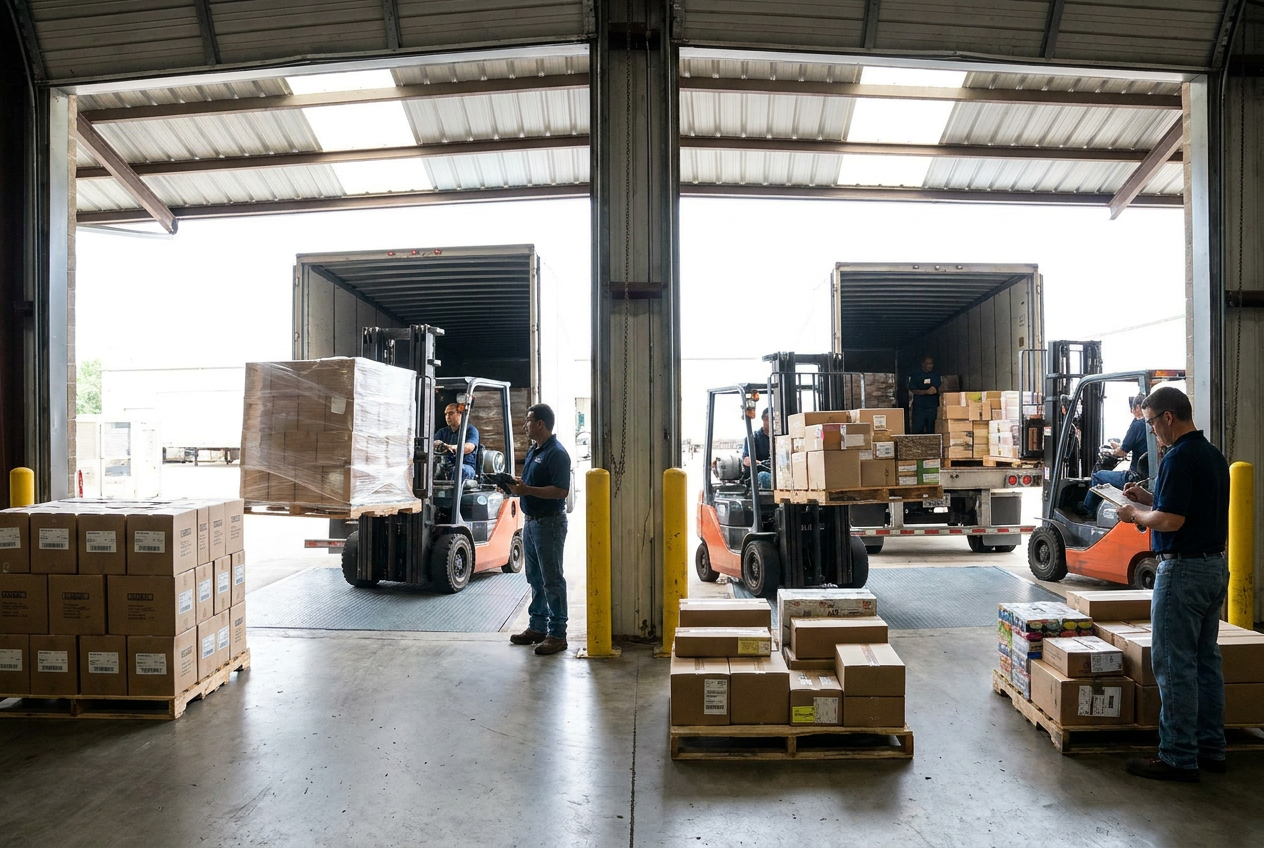
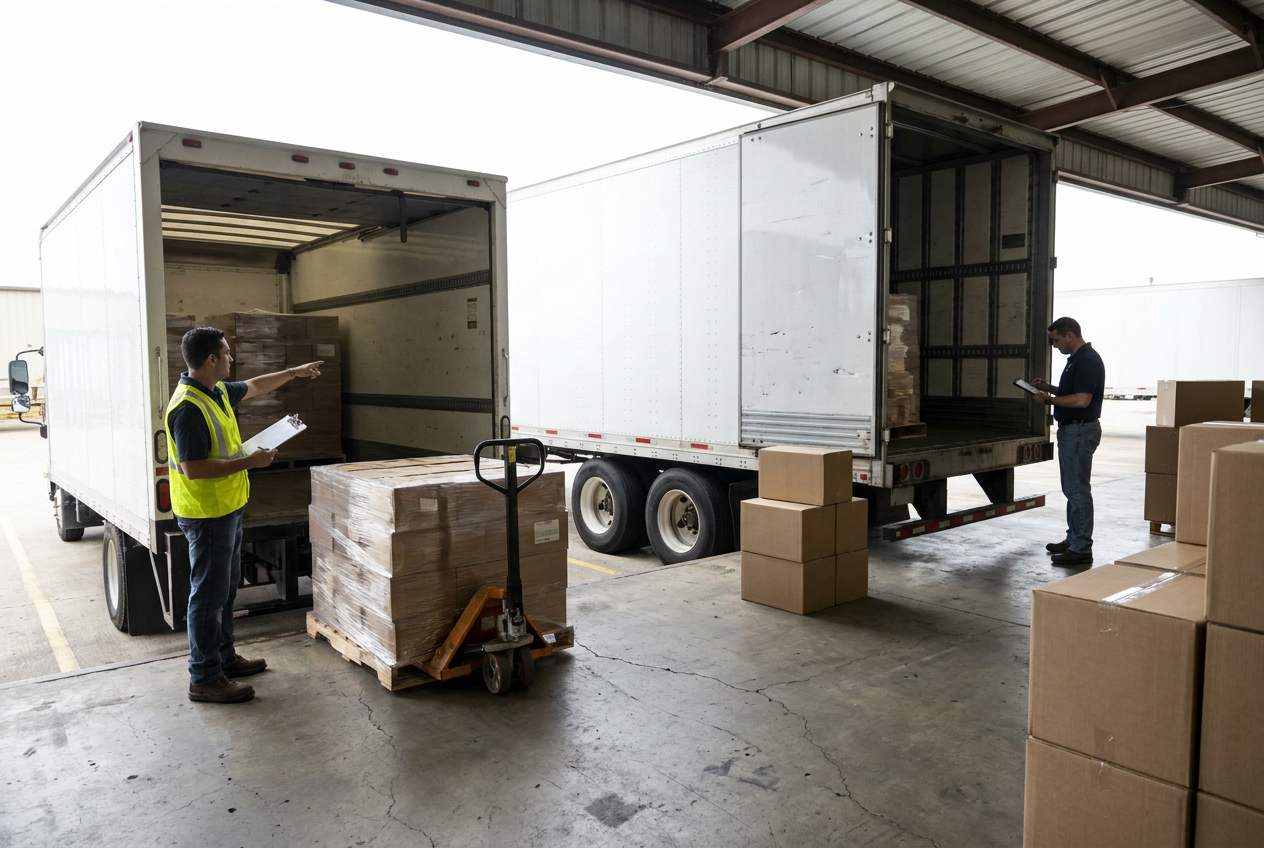
For liquidation buyers, the practical difference between partial truckload vs full truckload is not simply how much merchandise fits inside a trailer. It is whether your order shares transportation with other freight, how often it may be handled, and how well the delivery arrangement matches your receiving operation.
A truckload is a large shipment of merchandise, although a listing’s use of that word does not by itself establish exclusive trailer use. Start with the broader guide to buying liquidation truckloads for purchasing fundamentals. Here, the focus is narrower: choosing between shared-trailer and dedicated-trailer arrangements without relying on pallet counts or freight-price calculations.
PalletCove Liquidation supplies category-level liquidation pallets and full truckloads from Houston. Confirm the transportation arrangement for the specific order rather than assuming a smaller purchase receives a particular carrier service or a truckload listing guarantees a dedicated trailer.
What partial truckload and full truckload actually mean
A partial truckload generally occupies part of a trailer alongside other shipments. Depending on the carrier’s operating model, it may move on a consolidated route with relatively few transfers. However, “partial” alone does not guarantee that freight stays on one trailer.
Full truckload, when describing transportation service, generally means a trailer dedicated to one shipment. A full trailer in this context means exclusive use of the trailer’s available carrying space—not necessarily merchandise packed to every physical limit. Weight, loading configuration, and securement can leave unused space.
LTL, or less-than-truckload, is a shared-freight service that commonly uses terminal networks to consolidate and transfer shipments. Partial truckload and LTL therefore are not interchangeable terms: both share space, but their routing and handling can differ.
| Decision factor | Shared-trailer arrangement | Dedicated-trailer arrangement |
|---|---|---|
| --- | --- | --- |
| Other freight | Other shipments occupy trailer space | Trailer is reserved for the shipment |
| Handling | Transfers depend on the service and route | Often fewer intermediate transfers; verify routing |
| Scheduling | Other stops and consolidation can affect timing | Fewer competing stops, but appointments still matter |
| Receiving workload | Can suit a smaller intake if the order is smaller | Often concentrates more inventory into one arrival |
| Best fit | Orders that do not require exclusive space | Orders benefiting from exclusive space and coordinated unloading |
Choose the handling and receiving plan first; do not treat “truckload” as a promise of a particular route, condition, or delivery date.

Handling exposure: ask about transfers, not just labels
Every unloading, staging, and reloading event creates another opportunity for packaging damage, freight separation, or identification problems. That does not mean shared transportation is inherently unsuitable. It means buyers should understand the handling path and packaging requirements before committing.
A shared trailer moving directly between planned stops can behave differently from an LTL shipment moving through multiple terminals. Dedicated transportation can reduce intermediate handling, but it does not eliminate damage risk or replace proper securement.
Ask these questions during order review:
- Will the order travel with other customers’ freight?
- Is terminal transfer expected, and could the shipment change trailers?
- Will the entire order arrive together, or could it be split?
- Is the merchandise palletized, floor-loaded, or arranged another way?
- What unloading equipment and access does the planned delivery require?
A liquidation pallet is merchandise grouped on a pallet for wholesale sale and movement. A truckload may contain palletized merchandise or use another loading method; the listing and order confirmation should establish which applies. Floor-loaded goods require a different labor plan from freight that can be moved with suitable pallet-handling equipment.
Trailer capacity and legal weight are separate constraints. For that related issue, consult the guide to liquidation truckload weight limits, rather than judging shipment suitability from visible empty space.
Match the order to your resale operation
The strongest reason to choose a smaller order is often operational capacity, not transportation terminology. A reseller with limited sorting space may benefit from less inventory arriving at once, even when the business could eventually sell more.
Compare your available receiving labor, secure storage, sorting stations, and outbound sales workflow. A dedicated shipment is useful only if you can unload and process it safely. Receiving a large lot and then leaving it inaccessible behind newer stock creates avoidable inventory-control problems.
Browse liquidation pallets when evaluating a smaller intake, and compare liquidation truckloads for sale when your operation can manage larger lots. Neither purchasing format should be selected solely because it sounds more economical.
The truckloads category and general merchandise category help separate purchasing scale from merchandise scope. A narrowly focused category can still involve substantial unloading work, while mixed merchandise may require more sorting after delivery.
For example, compare the listing details for the Shoes Truckload and Amazon General Merchandise Truckload. Use each listing’s stated contents, condition, and loading information—not the product name—to judge suitability. Do not assume either listing can be divided into partial orders. PalletCove is an independent reseller and is not affiliated with, endorsed by, or sponsored by any retailer named.
Condition grades and manifests are separate from freight service
A dedicated trailer does not establish better merchandise condition. A condition grade describes the inventory’s stated condition, while the transportation arrangement describes its movement. Evaluate those two issues independently.
Common liquidation descriptions include:
- Overstock: excess inventory; the term alone does not establish NEW condition.
- Shelf pulls: merchandise removed from a selling floor or retail inventory, potentially with packaging or handling wear.
- Customer returns: merchandise returned by customers, with condition and completeness dependent on the listing.
- Salvage: merchandise that may require repair, parts recovery, or other specialized handling, as described.
A manifest is an inventory record that may identify products, quantities, or other shipment details. Ask whether one is available, which fields it includes, and whether it describes the actual lot or provides an estimate. Do not treat a manifest as proof of functionality, completeness, or future resale results.
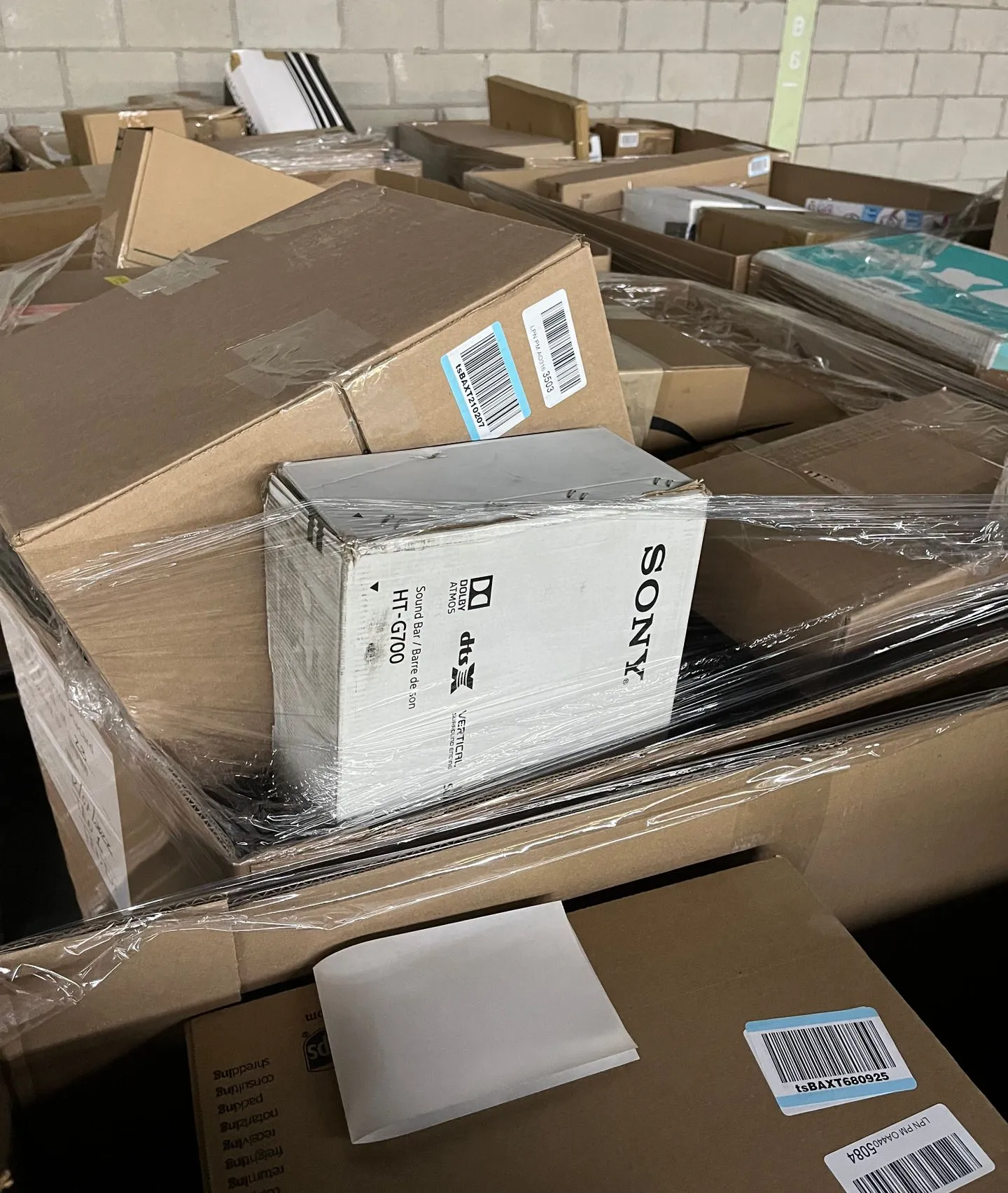
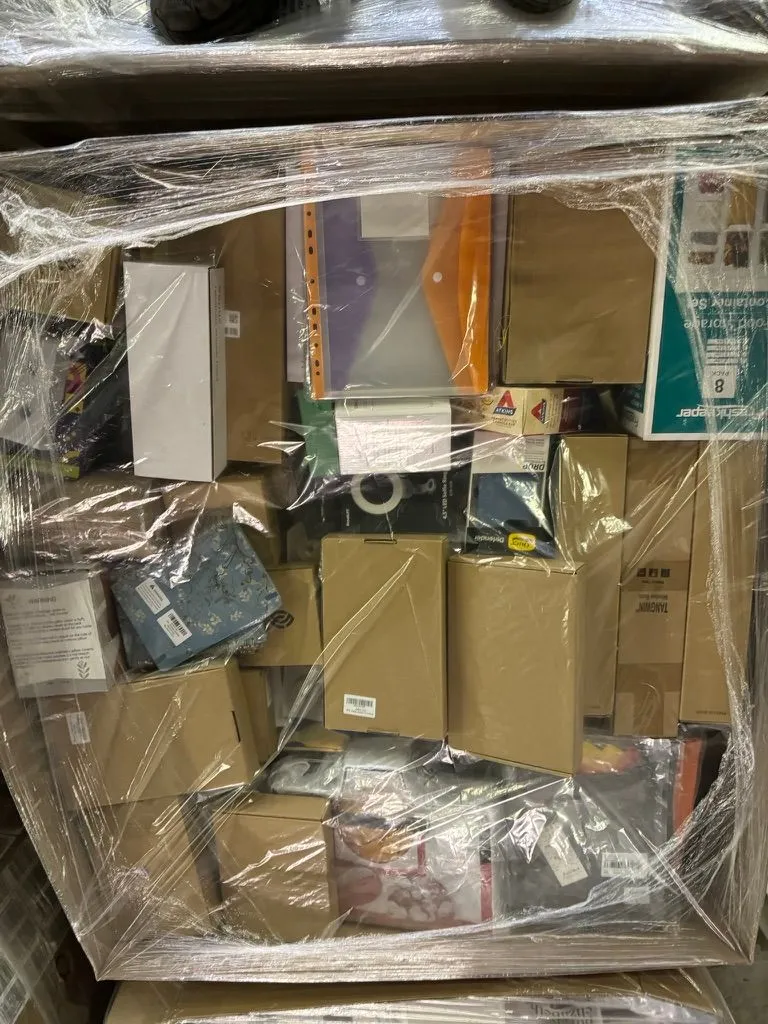
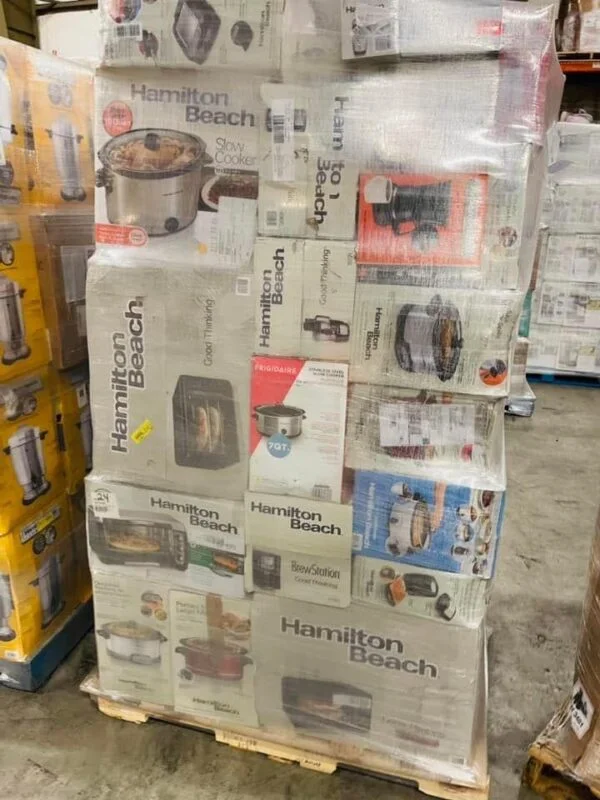
Photos show representative loads. Contents of each pallet vary, pallets are not individually tested, and contents are sold as described in the listing. An “as-is” description should be read alongside the listing and applicable policy, not interpreted as a universal cancellation of every buyer remedy.
Before choosing shared or dedicated transportation, determine whether the merchandise matches your ability to sort, assess, repair where appropriate, and store it. Freight service cannot resolve a mismatch between the lot’s stated condition and your business model.
Listed pricing, ordering, and delivery timing
At PalletCove, free shipping means freight is included in the listed price. It is the only delivery option on every order to all 48 contiguous states. The shared-versus-dedicated comparison is therefore about operational suitability, not a separate freight-price calculation.
The same shipping scope applies to buyers browsing liquidation pallets in Texas and liquidation pallets in Florida. Destination still matters for route planning and receiving coordination, so provide complete delivery information during order review.
Follow this ordering sequence:
- Review the listing’s merchandise description, condition, price, and available inventory information.
- Submit the website order form. No payment is collected on that form.
- Confirm the loading arrangement, delivery address, receiving access, and any unresolved order details during review.
- Pay through the secure card link emailed after order review. Credit and debit cards—Visa, Mastercard, American Express, and Discover—are the only accepted payment method.
- Prepare receiving staff and space once shipment information becomes available.
Valid resale certificates are reviewed and applied where the buyer’s state allows.
Handling takes 1–3 business days after payment clears. Transit is typically 3–7 business days from Houston, for an estimated 4–10 business days total. The processing cutoff is 2:00 PM Central Time, America/Chicago, Monday–Friday; after-cutoff confirmations begin the next business day. Weekends and applicable holidays do not count.
These are estimates, not guaranteed arrival dates. Shared routes may depend on consolidation and other deliveries, while dedicated transportation still depends on carrier availability, road conditions, and receiving coordination. Review the free-shipping and delivery policy before scheduling labor around an assumed arrival.
Receiving, inspection, and claims
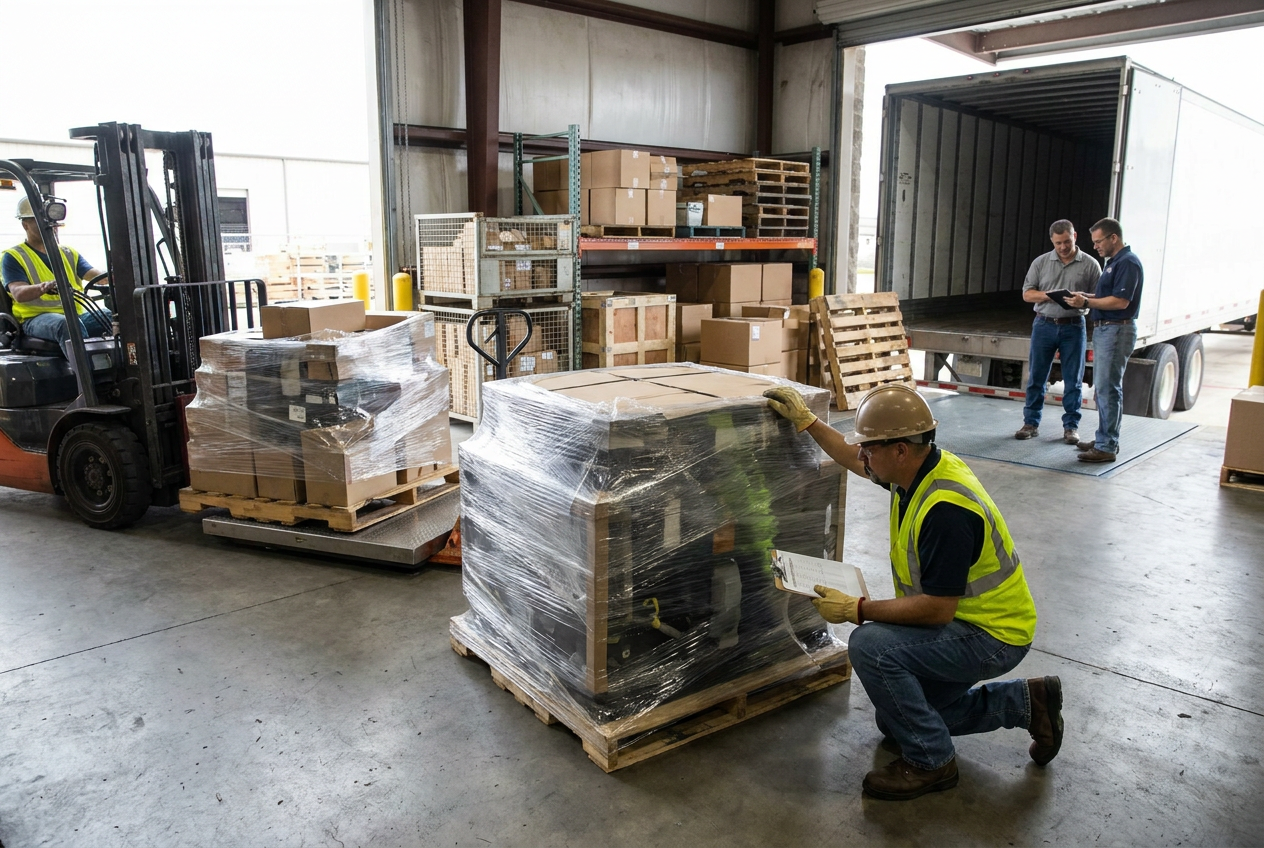
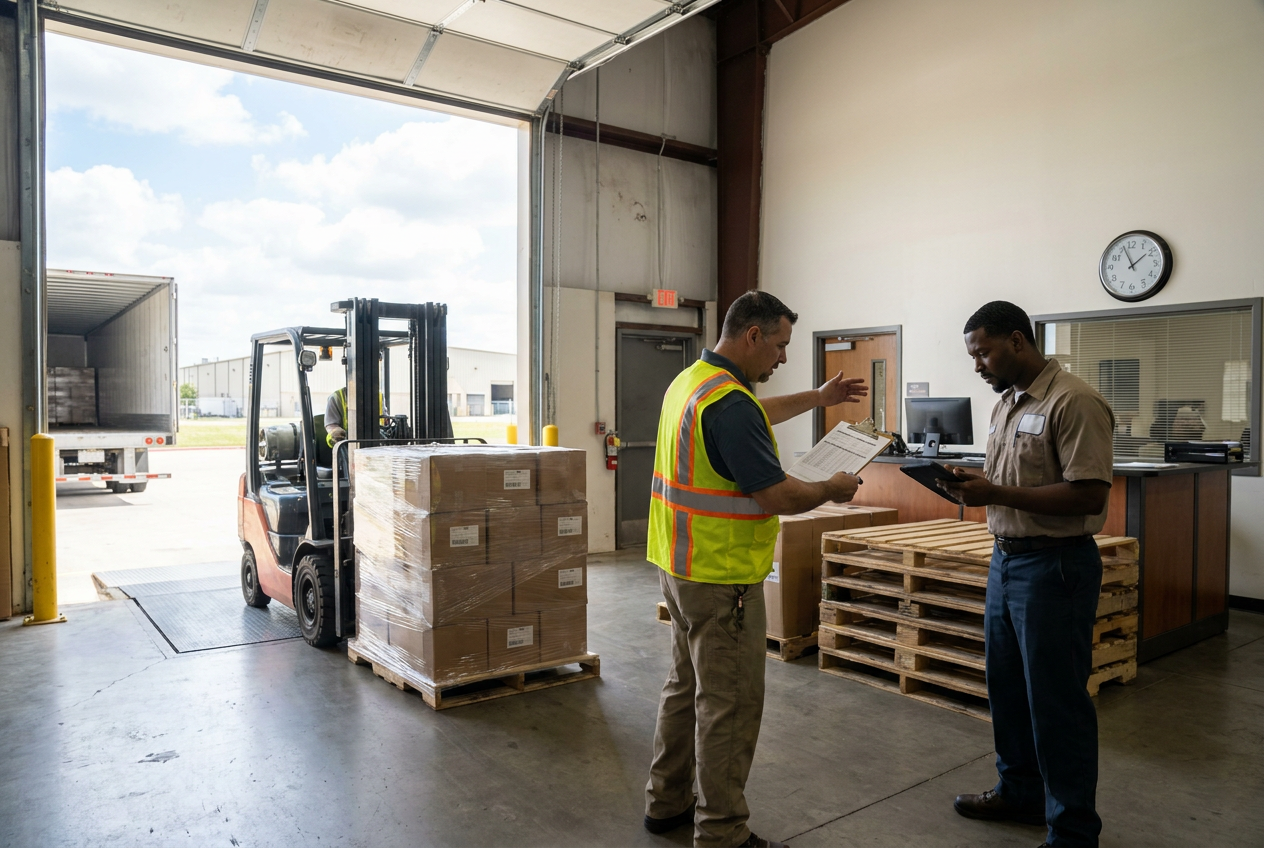
A loading dock is a raised receiving platform that allows suitable freight vehicles to be unloaded at approximately trailer-floor height. Having a dock does not automatically mean every trailer can access it; approach space, clearance, equipment, and staffing also matter.
Provide accurate site information before dispatch. If you do not have a dock, ask the order desk to confirm a workable unloading plan rather than assuming a particular vehicle or unloading device will arrive. The separate guide to booking a freight delivery appointment covers appointment coordination in more detail. Do not assume a universal 24-hour advance call.
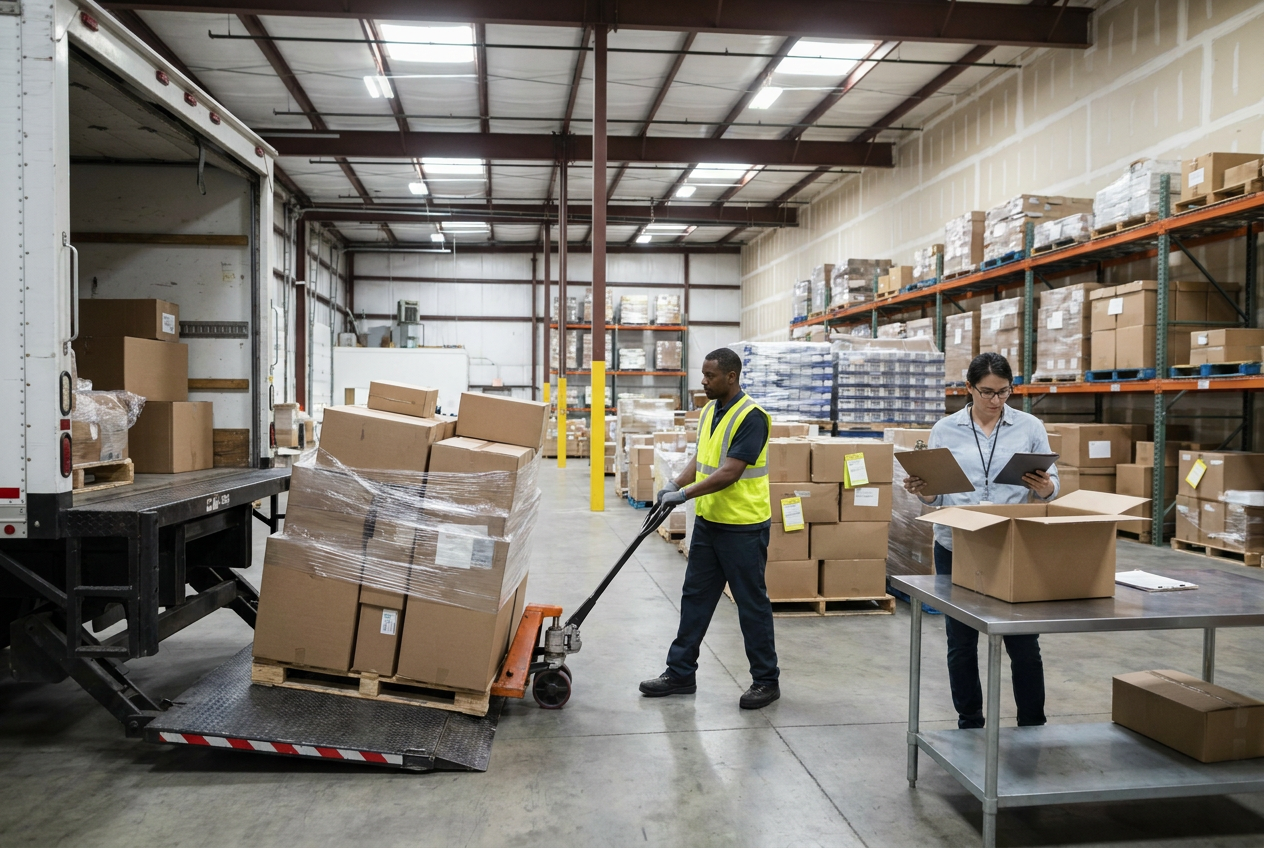
The bill of lading, often abbreviated BOL, is a freight document recording shipment and transportation details. It helps identify what is being moved, but it is not a substitute for a merchandise manifest or item-level testing.
On delivery day:
- Match the shipment identifiers to your order and available freight paperwork.
- Check the shipping-unit count where applicable and look for visible damage, broken wrapping, or shifted freight.
- Photograph the freight as received and record specific visible discrepancies on the delivery paperwork before signing, where possible.
- Preserve packaging, labels, and documents while sorting out any issue.
- Report delivery issues promptly, requested within 48 hours, with the order details and supporting evidence.
Visible transit damage and a merchandise-condition concern are different issues. Describe what you observed without assuming the cause. Moving freight into storage before documenting its arrival can make later review harder.
Under the United States Refund & Returns Policy, products explicitly listed as NEW ONLY qualify for defective and non-defective returns and exchanges within 30 calendar days of delivery. Returns are by mail; the customer is responsible for the return label and shipping. A 15% restocking fee on the product price applies. Refund processing takes 10 calendar days after authorized return receipt and inspection, or approval where no physical return is required.
Mixed and used loads have separate claims terms, not routine change-of-mind returns. The request to report delivery issues within 48 hours does not shorten eligible new-product 30-day return rights. Retain the listing description and order records so the review can distinguish disclosed condition from a delivery discrepancy.
Common mistakes when comparing load arrangements
- Equating partial truckload with LTL: ask about transfers and routing instead of relying on the label.
- Assuming a full truckload means exclusive trailer use: confirm whether the term describes the merchandise lot or the transportation service.
- Choosing by available floor space alone: include sorting capacity, safe aisles, and storage organization in the decision.
- Treating dedicated service as an express-delivery promise: use the stated timing estimates and confirmed appointment information.
- Assuming a smaller order needs no receiving plan: even a limited shipment needs suitable access, equipment, and staff.
- Confusing representative photos with a guaranteed manifest: evaluate the actual listing and available lot documentation.
A useful final check is to write down the agreed loading method, expected shipment grouping, receiving requirements, and unresolved questions before paying. That short record is more useful than choosing a freight label first and investigating the details afterward.
Frequently asked questions
Is partial truckload the same as LTL?
No. Both generally share transportation space, but LTL commonly moves through a terminal network, while partial truckload may use a different consolidation model. Confirm the expected transfers for the specific shipment.
Does a full truckload always stay on one trailer?
Do not assume that from a product title. Dedicated transportation generally reduces intermediate handling, but the actual routing and any equipment changes should be confirmed during order review.
Can I buy part of a listed truckload?
Only if the available listing or order review confirms that purchasing option. A truckload product is not automatically divisible just because shared-trailer transportation exists.
Is free shipping available for both smaller and larger orders?
Yes. Free shipping is PalletCove’s only delivery option on every order to all 48 contiguous states, with freight included in the listed price. The receiving plan still needs to match the shipment and delivery site.
Does a dedicated trailer guarantee better merchandise?
No. Trailer use does not change the listed condition grade, verify a manifest, or establish functionality. Pallets are not individually tested, and merchandise must be evaluated against its listing description.
Talk to PalletCove Liquidation
The right arrangement is the one that fits your order, handling tolerance, and receiving capacity. For the broader purchasing framework, return to the liquidation truckload buying guide. To clarify a specific listing or delivery setup, contact our order desk and review current inventory.
PalletCove Liquidation LLC
4000 Telephone Rd Unit B11, Houston, TX 77087
Phone: (713) 819-3904
Email: sales@palletcoveliquidation.com
Hours: Mon–Fri 8:00 AM – 6:00 PM CT, Sat 9:00 AM – 2:00 PM CT, Sun closed.
About PalletCove Liquidation
Published by PalletCove Liquidation LLC, based in Houston, Texas. Our buying guides cover evaluating liquidation inventory and preparing for delivery. Consult the current product listing and store policies for purchase terms.