At a glance
Learn what to ask an insurance agent about product liability, inventory protection and exclusions for used or returned merchandise before buying liquidation pallets or truckloads.
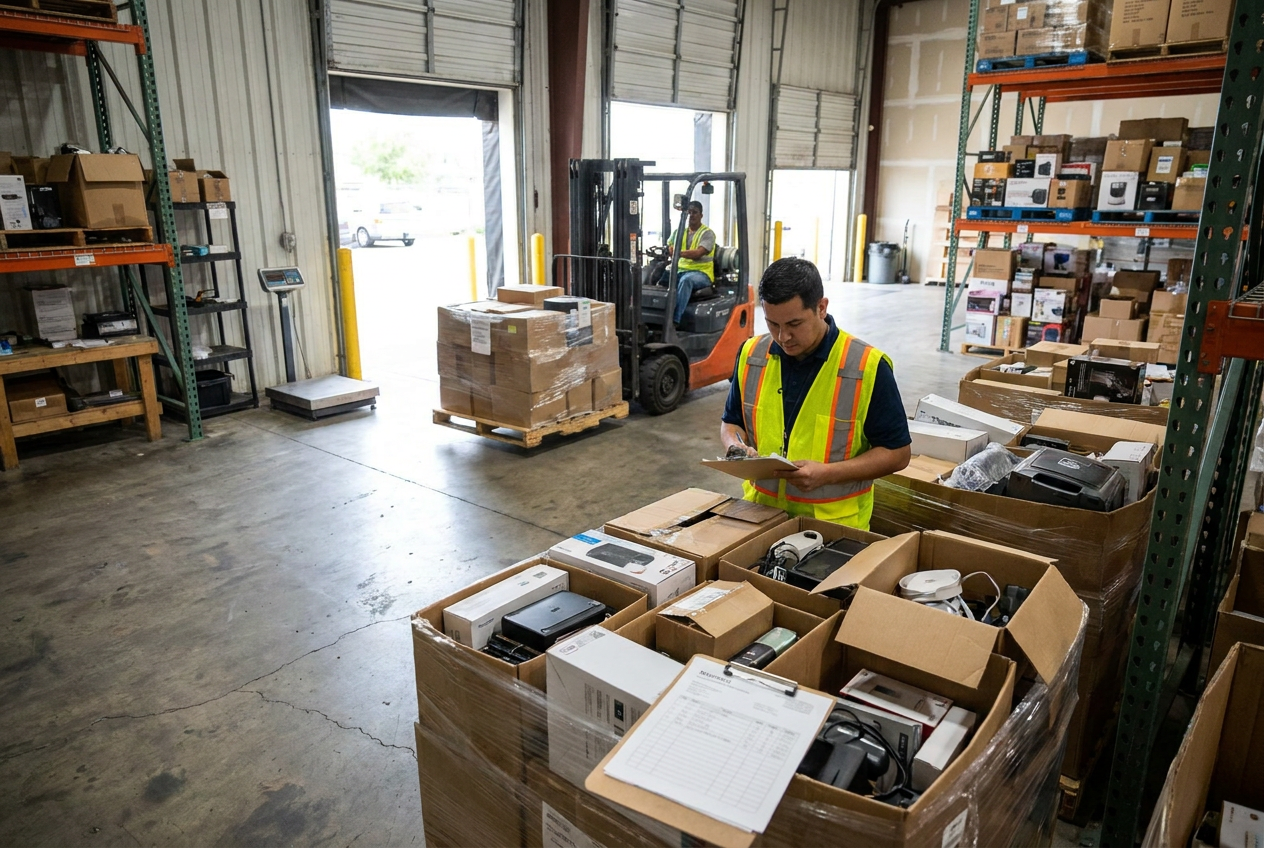
Buying liquidation inventory creates two different insurance questions: what happens if your stock is damaged at your premises, and what happens if something you sell injures someone? Reseller business insurance needs to address both, especially when your inventory includes customer returns, used goods or products with uncertain histories.
For the broader purchasing and documentation framework, start with PalletCove’s reseller sales tax and resale certificate policy. A resale certificate is documentation a buyer submits to support qualifying purchases for resale. Sales tax is a transaction tax; valid resale certificates are reviewed and applied where the buyer’s state allows. Neither document establishes insurance coverage.
This guide focuses on questions to ask a licensed insurance agent about product liability, commercial property and merchandise exclusions—not freight coverage. Policy language, endorsements and your disclosed operations determine coverage; a business insurance label alone does not.
1. Describe the operation before requesting a quote
A liquidation pallet is a bulk lot sold on a pallet; a truckload is a larger purchase that can substantially increase inventory concentrated at one location. PalletCove supplies category-level pallets and full truckloads to independent resellers. Its liquidation pallets hub is a starting point for understanding the buying format, not an item-level inventory guarantee.
Tell the agent what you actually do: receive, inspect, store, clean, repair, repackage, list and sell merchandise. Disclose online marketplaces, your own website, local pickup, booths and retail premises. Explain whether you sell directly to consumers or wholesale to other resellers.
Bring these details to the conversation:
- Business legal name, locations, annual sales and employees.
- Product categories and the actual condition descriptions you purchase.
- Average and maximum inventory cost at each storage location.
- Any repairs, modifications, repackaging or private labeling.
- Customer pickup arrangements and off-site storage.
- Prior claims and known product-safety problems.
Ask: “Will the insurer’s application and business classification accurately describe these activities?” An incomplete description can create underwriting or claim problems. Disclose changes before adding materially different products or operations.
2. Explain load types, condition grades and manifests
A condition grade is a seller’s description of merchandise condition, not a universal testing standard. A manifest is an inventory document describing a load; its detail and accuracy depend on the listing and supplier. Neither substitutes for inspection or establishes that an insurer accepts the goods.
Use the guide to liquidation pallet types to distinguish buying formats, then discuss these exposures with your agent:
| Merchandise description | What to disclose | Question for the agent |
|---|---|---|
| --- | --- | --- |
| Overstock | Excess inventory with the condition stated in the listing | Does eligibility depend on original packaging or documented condition? |
| Shelf pulls | Goods removed from retail display or shelves | Are missing packaging, instructions or accessories material to coverage? |
| Customer returns | Goods previously returned, with potentially varied histories | Does the policy exclude returned, previously owned or untested merchandise? |
| Used merchandise | Prior use and any inspection or repair you perform | Are used-product sales covered across every category I sell? |
| Salvage | Inventory requiring careful evaluation for parts, repair or disposal | Are salvage sales or repaired products excluded? |
Overstock and shelf pulls should not automatically be described as new. “As-is” describes a transaction’s condition or warranty allocation; it does not automatically eliminate liability to an injured third party.
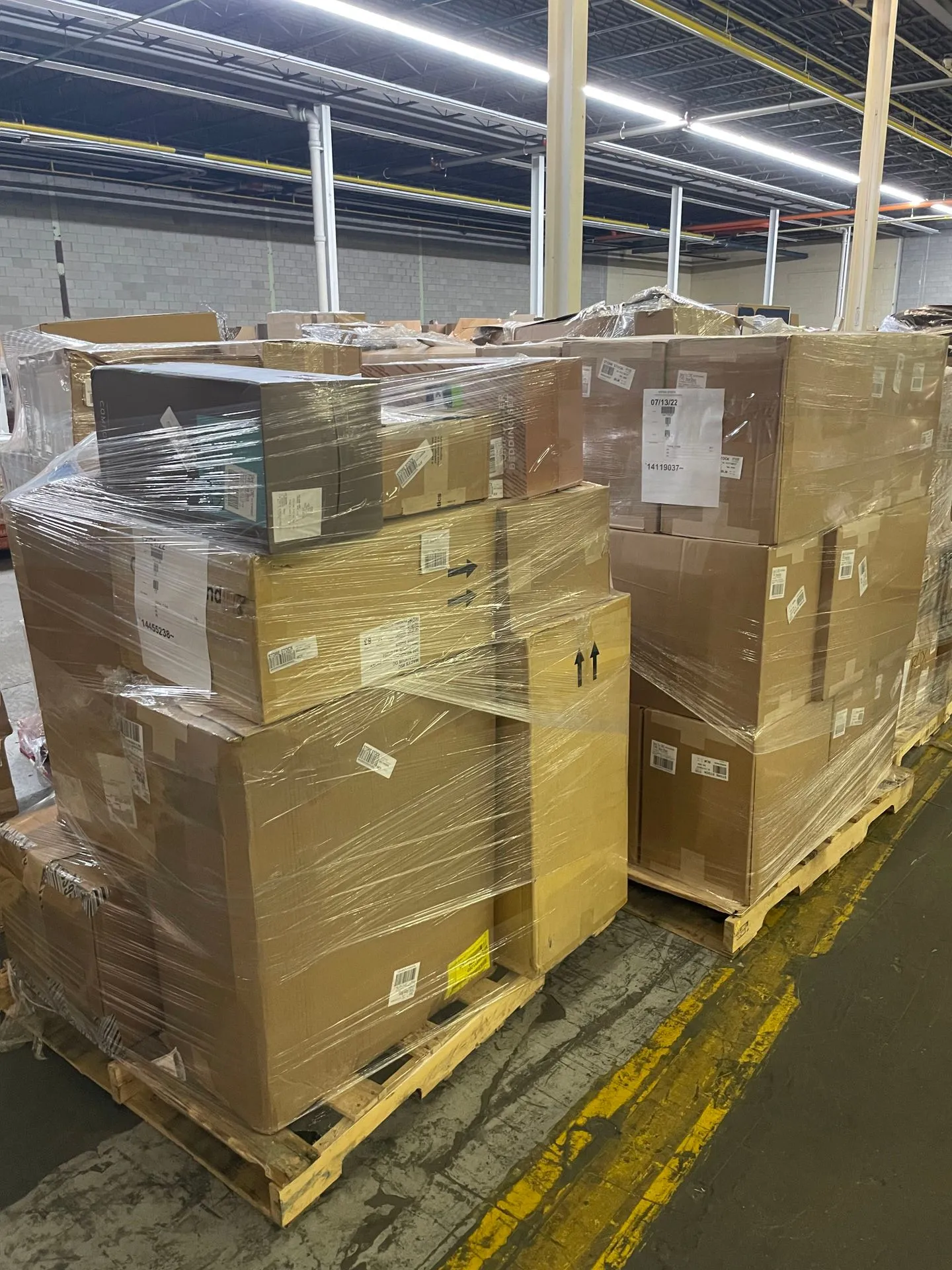
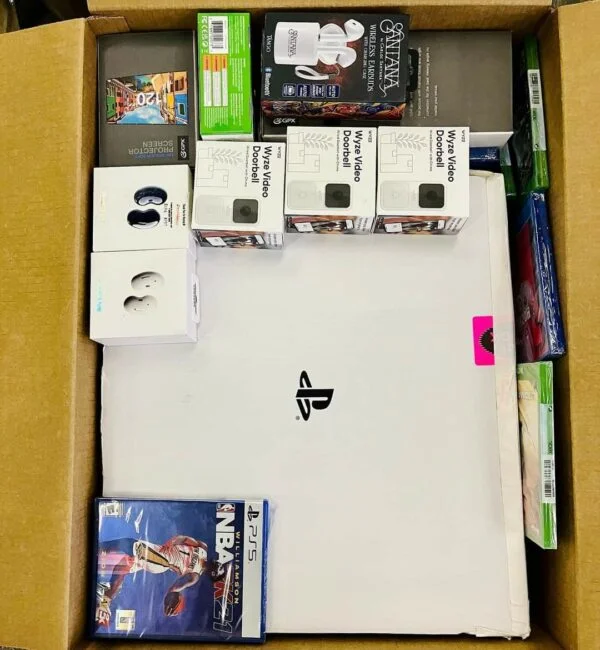
PalletCove’s photos show representative loads. Contents of each pallet vary, pallets are not individually tested, and contents are sold as described in the listing. Share those facts with the insurer rather than describing every unit as inspected or working.
For purchases beyond pallets, the liquidation truckload buying guide provides purchasing context. LTL means less-than-truckload shipping; a full trailer represents a larger load format. For this insurance discussion, the relevant issue is how much merchandise will accumulate at your premises, not its transportation coverage.

3. Ask about product liability beyond the policy name
Commercial general liability commonly addresses certain third-party bodily injury and property damage claims. Products-completed operations coverage is the part often relevant when a product causes harm after sale. Coverage remains subject to definitions, exclusions, limits and other terms.
Ask the agent to answer these questions using the proposed policy and endorsements:
- Are my used and returned products eligible? Request confirmation for each material category, not merely “retail sales.”
- Which products are excluded? Ask specifically about batteries, electrical goods, tools, children’s products, food-contact items and any other categories you actually sell.
- Do repairs change coverage? Cleaning, replacing components, rebuilding and altering products may create different exposures.
- What happens when a customer alleges injury? Ask about claim reporting, defense obligations and whether defense expenses reduce available limits.
- What limits apply? Understand per-occurrence limits, the products-completed operations aggregate and any category-specific sublimits.
- Is coverage occurrence-based or claims-made? If claims-made, ask about retroactive dates and reporting requirements after cancellation.
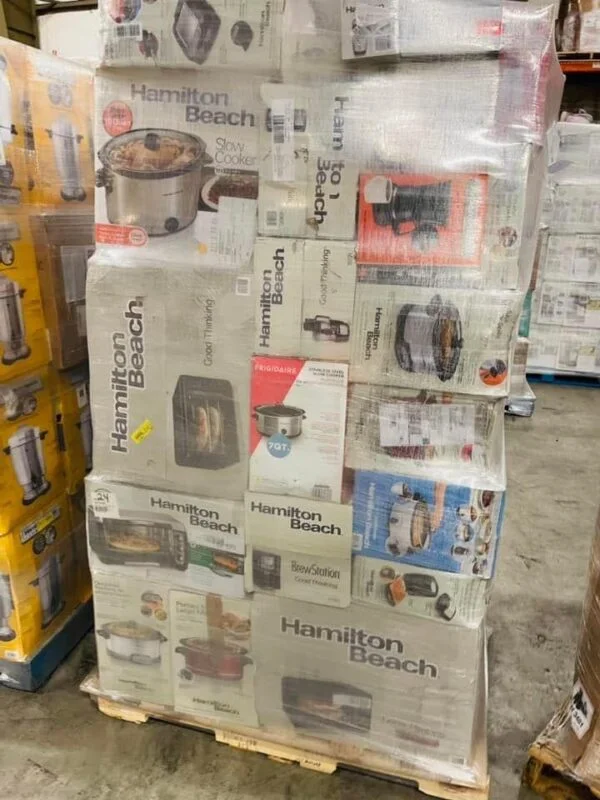
Use real listings to make the discussion concrete. The general merchandise category can involve a broader product mix than a narrowly focused business. Compare the underwriting questions raised by a bulk Hamilton Beach truckload with those raised by a Macy’s textile truckload, without assuming either listing’s current condition or contents.
PalletCove is an independent reseller and is not affiliated with, endorsed by or sponsored by any retailer named.
A policy called “business insurance” is not proof that used, returned, repaired or salvage merchandise is covered. Ask where the policy addresses your actual products and activities.
Also separate injury claims from dissatisfied-customer costs. Product liability is not ordinarily a guarantee that merchandise will work, and ordinary refunds, replacement of your defective product and recall expenses may not be covered. Ask whether separate recall coverage is available and appropriate; do not assume it is included.
4. Match commercial property coverage to inventory exposure
Commercial property insurance can cover business personal property, including qualifying inventory, against covered causes of loss at covered locations. It does not make every damaged or unsellable item an insured loss.
Start with valuation: “If liquidation inventory is destroyed, how will the insurer calculate its value?” Ask whether the policy uses replacement cost, actual cash value, a selling-price provision or another basis. Do not assume an advertised retail figure or hoped-for resale price determines reimbursement.
Discuss:
- Peak stock: Can the limit handle overlapping purchases before prior inventory sells?
- Locations: Are a home garage, rented storage unit and separate warehouse covered?
- Perils: How are theft, water damage, flood and wind addressed?
- Restrictions: Are there protective-safeguard requirements, theft sublimits or vacancy conditions?
- Deductibles: Are different deductibles used for different causes of loss?
- Coinsurance: Could insufficient declared values reduce a covered payment?
- Interruption: Would covered property damage trigger business-income coverage, and what records would support lost income?
The truckload inventory category is relevant when planning peak values. A larger purchase can outgrow a limit selected when the business held only a few pallets.
Whether sourcing liquidation pallets in Texas or liquidation pallets in Florida, disclose the actual storage address. A sales territory or supplier address is not a substitute for scheduling your premises. Ask when coverage begins for goods accepted into storage; transportation coverage is outside this guide.
5. Identify exclusions before paying for coverage
Ask for the forms and endorsements—not just a premium summary. If the agent says an exclusion does not apply, request a written explanation identifying the relevant language. An email explanation does not itself amend a policy.
Important questions include:
- Does any exclusion mention used goods, secondhand goods, salvage or refurbished products?
- Are particular products, ingredients, materials or sales channels excluded?
- Does coverage change if I import, relabel or modify goods?
- Are known defects, product withdrawal, recall costs or impaired property excluded?
- Are missing stock and unexplained inventory shortages covered under property insurance?
- Does the policy exclude deterioration, wear, mechanical breakdown or preexisting damage?
An item that arrived broken and later proves unsellable is different from stock damaged by a covered premises loss. Similarly, insurance does not replace recall screening, safe storage or appropriate inspection. Quarantine suspect goods and verify safety requirements before offering them for sale.
Ask what warranties or operating conditions the insurer requires. Never promise the insurer that every item is tested if your process does not support that statement.
6. Build an order-to-claim documentation trail
Supplier vetting means checking a supplier’s identity, policies, listing disclosures and documentation before purchasing. A W-9 is a federal form used to provide taxpayer identification information and certifications; it is not an insurance certificate or proof of product quality.
An invoice is the seller’s transaction document identifying the purchase and charges. Use the wholesale invoice documentation guide for invoice questions and the liquidation inventory record-keeping guide for bookkeeping details. Keep those broader tasks separate from your insurance coverage review.
Ordering and receiving
PalletCove’s listed price includes freight. Free shipping is the only delivery option on every order to all 48 contiguous states. Preserve the listing, available manifest, condition description, invoice and order correspondence; ask your agent how the total acquisition cost should be documented for valuation.
Under the wholesale order payment policy, Visa, Mastercard, American Express and Discover credit and debit cards are the only accepted payment method. A secure card link is emailed after order review; no payment is collected on the website order form.
Handling takes 1–3 business days after payment clears. Transit is typically 3–7 business days from Houston, for an estimated 4–10 business days total. The processing cutoff is 2:00 PM Central Time, Monday–Friday; after-cutoff confirmations begin the next business day. Weekends and applicable holidays do not count.
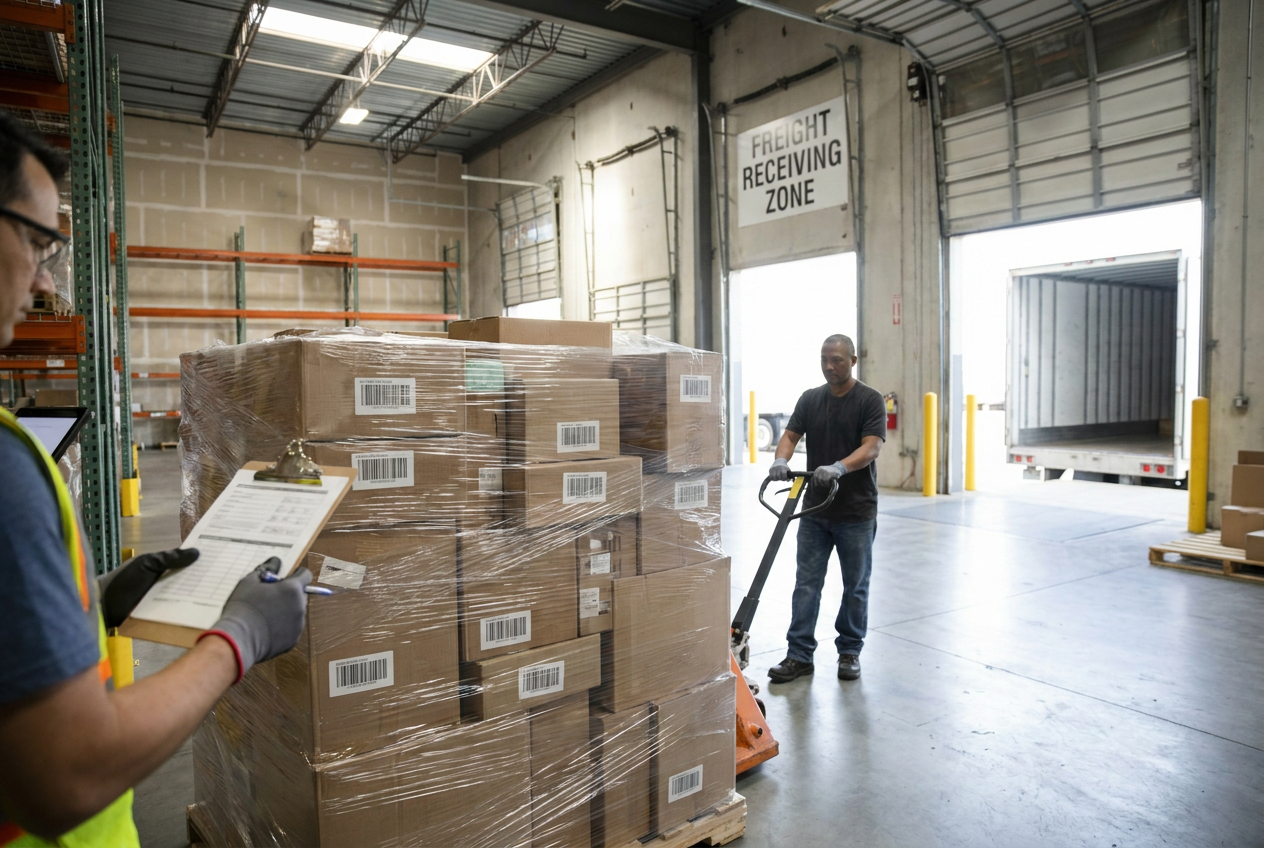
On delivery day, photograph visible condition, retain delivery paperwork, record discrepancies and segregate damaged or unsafe merchandise. Request delivery-issue reporting within 48 hours. This documentation supports supplier discussions and inventory records; it does not establish insurance coverage.
Returns and claims are separate processes
Under the United States Refund & Returns Policy, only products explicitly listed as NEW qualify for defective and non-defective returns and exchanges within 30 calendar days of delivery. Returns are by mail, the customer pays the return label and shipping, and the restocking fee is 15% of the product price. Refund processing takes 10 calendar days after authorized return receipt and inspection, or approval where no physical return is required.
Mixed and used loads have separate claims terms, not routine change-of-mind returns. The requested 48-hour delivery-issue reporting does not shorten eligible new-product 30-day returns.
For an injury allegation or potentially insured premises loss, notify the insurer promptly under its reporting rules. Preserve relevant goods, records and communications; ask before disposing of evidence, admitting liability or agreeing to a settlement.
Frequently asked questions
Does general liability automatically cover used merchandise?
No. Eligibility and exclusions vary by insurer, product and operation. Ask the agent to identify coverage for your specific used and returned inventory in the policy documents.
Does selling as-is prevent product liability claims?
No. An as-is sale does not automatically eliminate responsibility for injury or property damage. Ask legal counsel about sales terms and your agent about insurance coverage.
Will insurance reimburse unsellable customer returns?
Not simply because they are unsellable. Preexisting defects and disappointing inventory performance are different from covered property losses or covered third-party liability claims.
Do I need coverage when selling from home?
Discuss business inventory, customer visits and product sales with an agent. Do not assume homeowners or renters insurance covers those exposures; business exclusions or limits may apply.
Should I update coverage before buying a truckload?
Yes, review limits and disclosures before increasing inventory or changing categories. Ask whether temporary increases, additional locations or new activities require an endorsement.
Talk to PalletCove Liquidation
Before buying, obtain the listing details your agent needs, disclose your operating practices and confirm coverage in writing. Common mistakes include understating peak inventory, treating manifests as safety certifications and assuming ordinary returns are insurance claims. For the broader purchasing framework, revisit the reseller sales tax and certificate policy.
PalletCove Liquidation LLC can help with order and listing questions, not insurance advice. Review current inventory or contact our order desk for purchase documentation questions.
- Address: 4000 Telephone Rd Unit B11, Houston, TX 77087
- Phone: (713) 819-3904
- Email: sales@palletcoveliquidation.com
- Hours: Mon–Fri 8:00 AM – 6:00 PM CT, Sat 9:00 AM – 2:00 PM CT, Sun closed
About PalletCove Liquidation
Published by PalletCove Liquidation LLC, based in Houston, Texas. Our buying guides cover evaluating liquidation inventory and preparing for delivery. Consult the current product listing and store policies for purchase terms.