At a glance
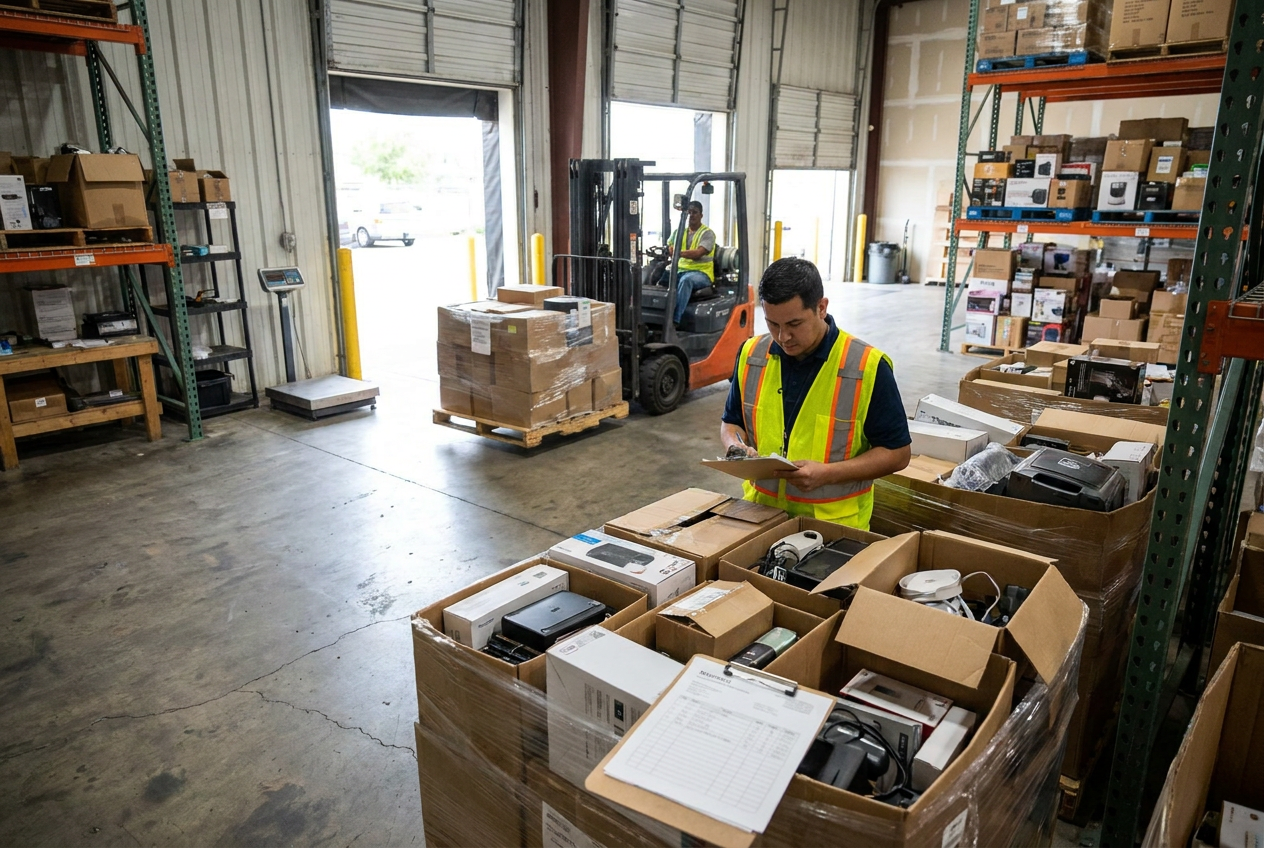
Learn how liquidation resellers can check official recalls, match model and serial numbers, quarantine affected stock, and document authorized remedies before listing merchandise for sale.
Selling recalled products is not a condition-disclosure problem you can solve with an “as-is” label. For consumer products covered by a recall announced through the U.S. Consumer Product Safety Commission (CPSC), federal law prohibits selling or offering the recalled products for sale. A liquidation source, sealed package, or buyer acknowledgment does not create an exception.
The practical rule is straightforward: identify the product, check official recall information, hold any potentially affected inventory, and follow the specific recall remedy. Do not release merchandise simply because it powers on or appears undamaged. This article focuses on that workflow; for the broader purchasing framework, see PalletCove’s sales tax and resale certificate policy. A resale certificate is a buyer-provided document supporting a qualifying resale purchase; valid resale certificates are reviewed and applied where the buyer’s state allows. Sales tax is a transaction tax governed by applicable state and local rules.
What counts as a recalled product?
A product recall addresses a safety problem through instructions issued by the responsible company and relevant regulator. Depending on the notice, the remedy may involve a repair, replacement, refund, return, or specified disposal process. A recall is different from an ordinary warranty issue, cosmetic damage, or a customer’s unwanted purchase.
For most household consumer goods, start with the CPSC recall database. The federal recall portal points to other authorities, including the FDA for many foods, cosmetics, and medical products; USDA FSIS for covered meat and poultry; and NHTSA for vehicles and certain vehicle equipment. Apply the rules and instructions of the agency responsible for the product—not a single generic procedure to every category.
A recall may cover only specified model numbers, manufacturing dates, serial ranges, or lot codes. Similar-looking items can have different recall status, while different brand names can sometimes appear in the same notice.
“As-is” describes a sales condition; it does not authorize selling recalled products or replace an official recall remedy.
Treat unresolved matches as a hold, not an automatic clearance. If a label is missing or illegible, ask the recalling company how to identify the item before offering it for sale.
Build recall screening into liquidation purchasing
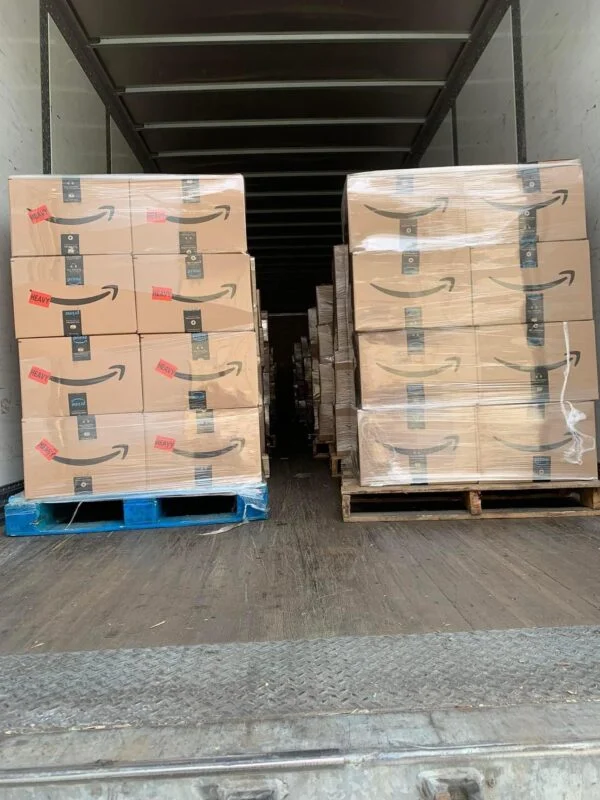
A liquidation pallet is a bulk unit of merchandise sold together; a truckload is a larger shipment that can contain many pallets or other bulk configurations. Pallet shipments may move by LTL, meaning less-than-truckload freight, while a full trailer carries a larger consolidated order. Neither format changes the need to screen individual products.
Use the guide to liquidation pallet types and truckload buying guide for broader format decisions. For recall screening, the important distinction is whether you can identify each potentially affected unit—not how many units you purchased.
| Listing term | What it generally describes | Recall-screening implication |
|---|---|---|
| --- | --- | --- |
| Overstock | Excess inventory | Unused goods can still be recalled. |
| Shelf pulls | Merchandise removed from sales floors | Packaging and labels may need closer inspection. |
| Customer returns | Previously purchased and returned merchandise | Verify the actual item against the box and manifest. |
| Salvage | Goods intended for recovery under the listing’s description | Do not assume parts recovery bypasses recall restrictions. |
| NEW | A condition expressly stated in the listing | New condition is not evidence of recall clearance. |
A condition grade is the seller’s description of merchandise condition. It is not a universal safety certification. A manifest is an inventory list that may include descriptions, quantities, model identifiers, or other fields; it is a starting point, not proof that every listed identifier matches the delivered item.
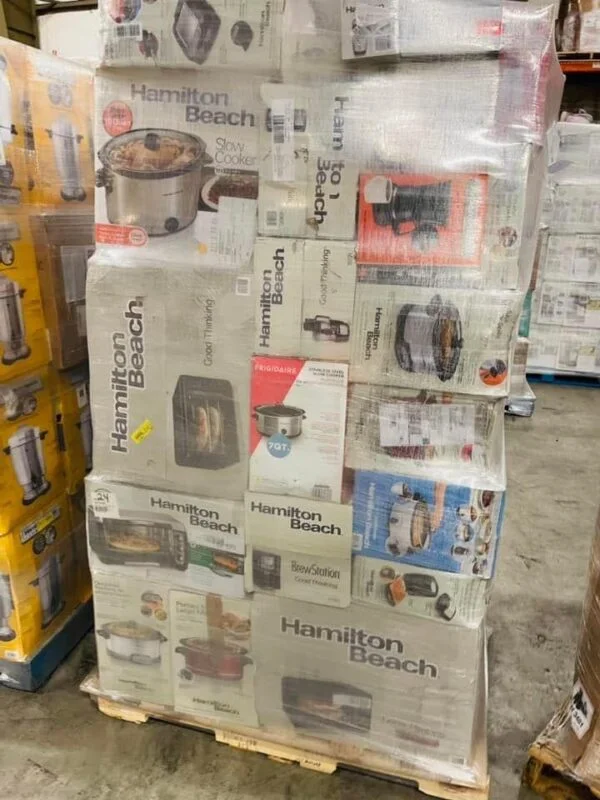
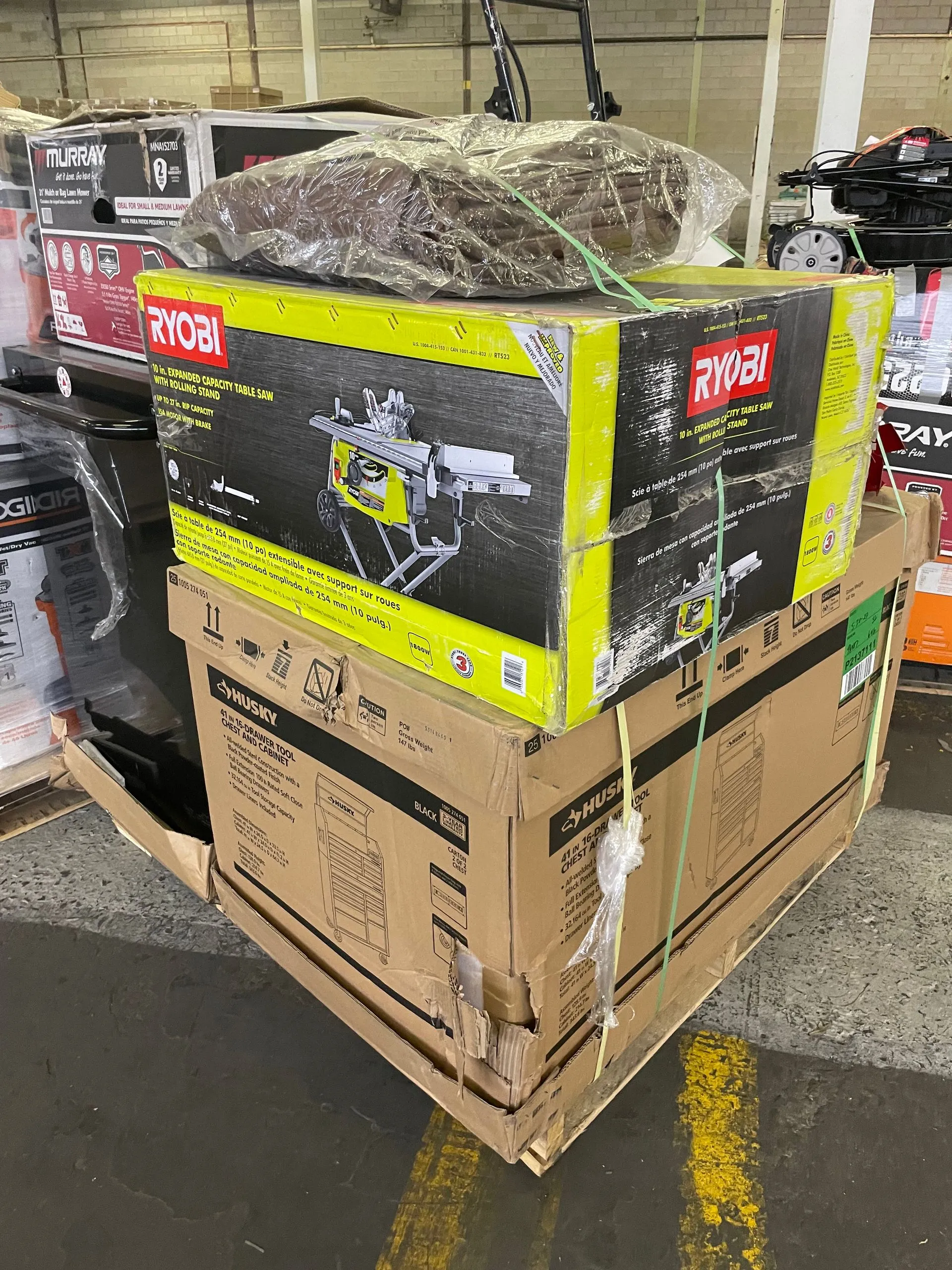
When reviewing general merchandise loads or truckload inventory, consider the labor needed to identify different product families. Listings such as the Bulk Hamilton Beach Truckload and Home Depot Tool and Hardware Truckload are examples of purchase options—not statements that their contents are recalled or recall-free. Check current descriptions and actual labels.
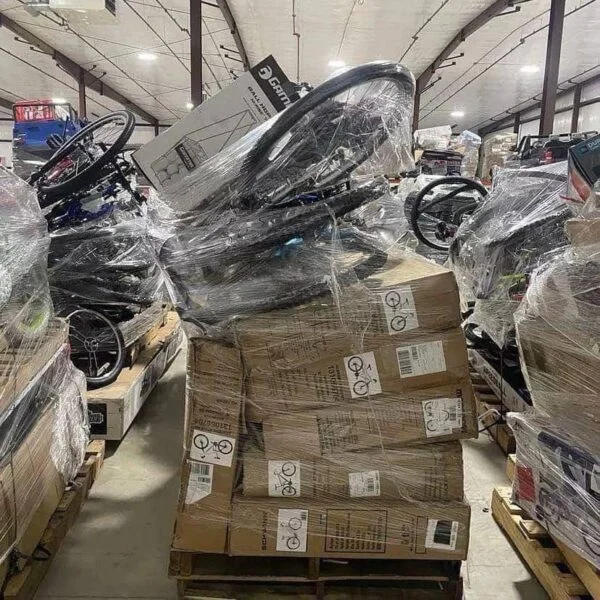
PalletCove photos show representative loads. Contents of each pallet vary, pallets are not individually tested, and contents are sold as described in the listing. PalletCove is an independent reseller and is not affiliated with, endorsed by, or sponsored by any retailer named.
Match model numbers against official recalls
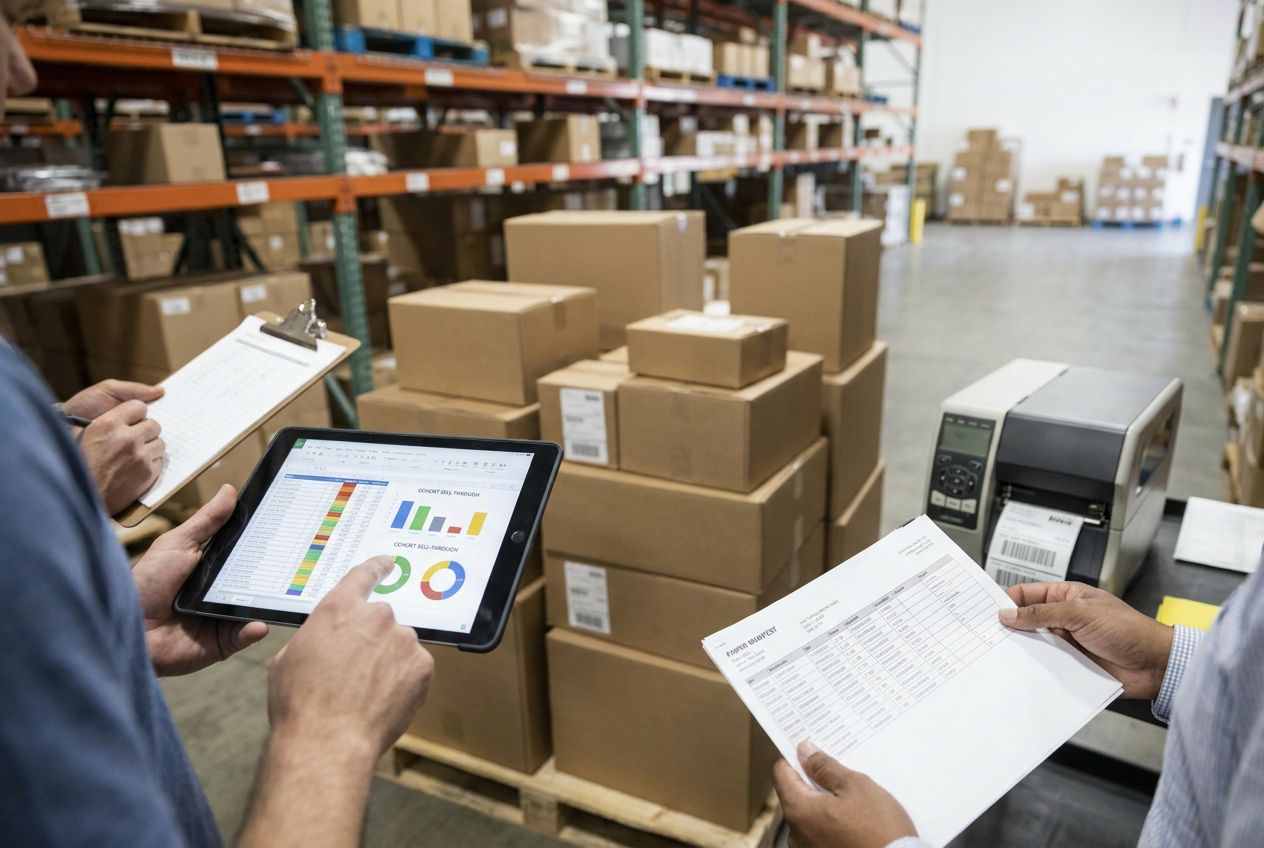
Create a repeatable intake process before merchandise reaches your sales area. Searching only a broad product name is insufficient when a notice depends on a serial range or production date.
- Read the actual product label. Record the brand, manufacturer or importer, exact model number, serial number, lot or batch code, and manufacturing date when present.
- Photograph the identifiers. Include the full label and an overall product view. Packaging can help, but a returned item may be in the wrong box.
- Search the correct official database. Search the model and brand, then try alternate spellings, manufacturer names, and broader product terms if necessary.
- Read the entire notice. Compare model suffixes, date ranges, dimensions, colors, label locations, and exclusions. A matching product photograph alone is not conclusive.
- Check updates and expanded recalls. Review the current regulator notice and the company’s linked recall page for revised scope or remedy instructions.
- Record the result. Save the notice URL, recall number, search date, identifiers reviewed, reviewer, and decision: no identified match, hold pending clarification, or confirmed affected.
“No identified match” describes a documented search result, not a permanent guarantee of safety. Recheck before listing inventory that has been stored for a substantial period, and subscribe to relevant agency recall alerts. Use those alerts to compare new recalls against both on-hand and previously sold inventory.

If a model matches but the serial label cannot be read, do not assume the item falls outside the affected range. Send the recalling company your available photographs and request written identification guidance. Keep the item unavailable while the question remains open.
Quarantine inventory before it can be sold
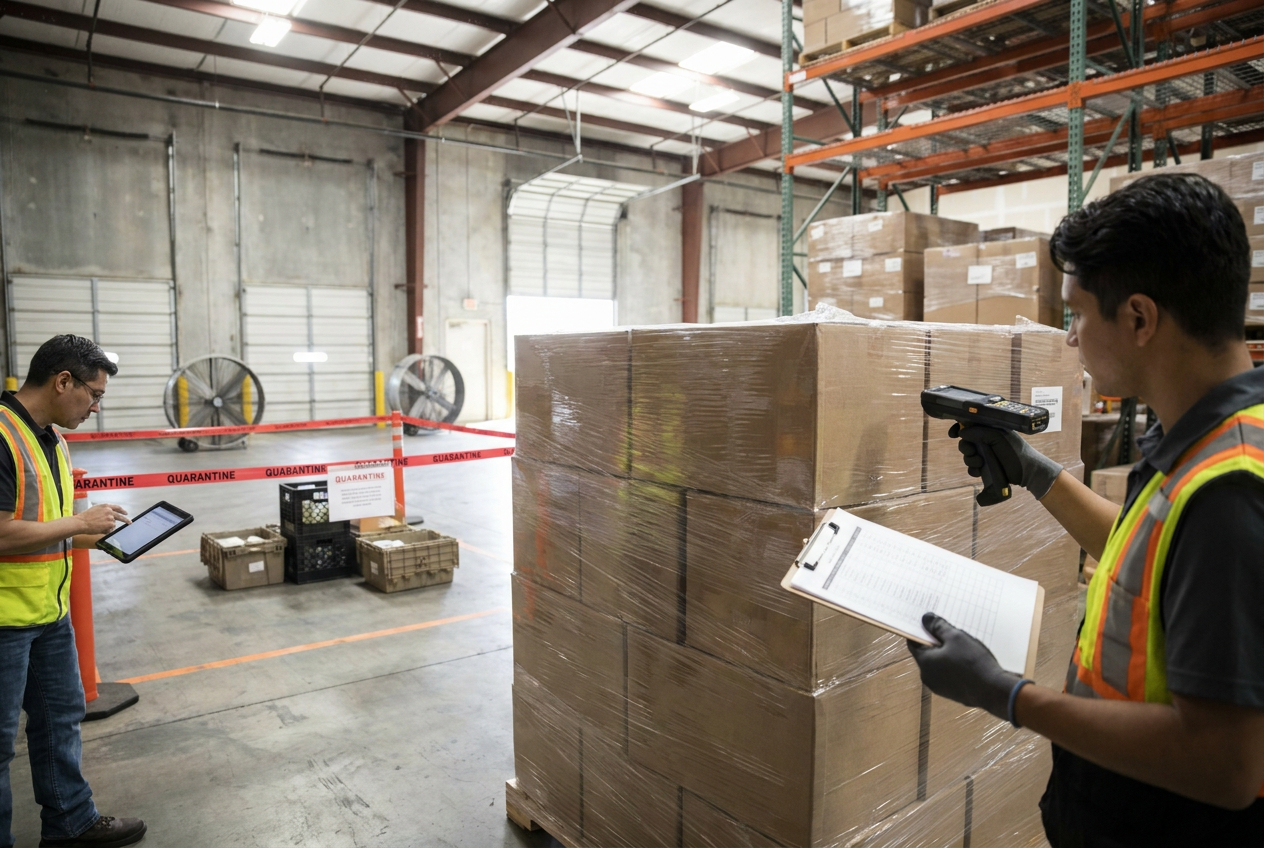
Quarantine means physically separating inventory and blocking it in your sales systems. A sticky note alone is inadequate if another person can still list, pick, or ship the unit.
- Assign a hold number linked to the supplier order, pallet, and affected product identifiers.
- Move the merchandise to a clearly marked restricted area and prevent customer access.
- Disable marketplace listings, point-of-sale availability, scheduled promotions, and fulfillment allocations.
- Record quantities received, held, already sold, and later returned or remedied.
- Identify related stock elsewhere, including storage locations and third-party fulfillment facilities.
- Name the person authorized to remove the hold and specify the evidence required.
Follow any immediate stop-use instructions. Do not energize, charge, disassemble, or transport a hazardous product merely to confirm that it works. Damaged batteries and other hazardous goods may require specialized handling; obtain instructions before mailing or moving them.
If affected goods have already sold, stop further sales and contact the recalling company about the reseller response. Identify customers through order records, communicate the official notice and stop-use instructions where applicable, and document outreach. Businesses may also have independent reporting obligations under product-safety law; consult the responsible regulator or qualified counsel rather than assuming a supplier has handled everything.
Follow the remedy, then document release
Recall remedies are product-specific. A refund program does not authorize an improvised repair, and receiving replacement parts does not prove that a repair was completed correctly.
Ask the recalling company whether the program covers your inventory, what documentation a liquidation reseller must supply, and how multiple units should be handled. Do not promise your own customer a manufacturer refund until eligibility is confirmed.
| Official remedy | Evidence to retain | Release decision |
|---|---|---|
| --- | --- | --- |
| Authorized repair | Instructions, completion record, required labels, and applicable confirmation | Release only after the prescribed remedy and resale conditions are satisfied. |
| Replacement | Claim reference, replacement identifiers, and original-item disposition | Screen the replacement before listing it. |
| Refund and return | Authorization, shipment instructions, tracking, and credit record | Do not sell the original recalled item. |
| Specified disposal | Written instructions and requested destruction or disposal evidence | Remove the affected item from saleable inventory. |
Some recalls provide a way to correct the hazard so a properly remedied product can be resold; others do not. Verify the specific notice and applicable requirements before releasing any unit. Never treat an ordinary repair receipt or a successful power-on check as equivalent to the recall remedy.
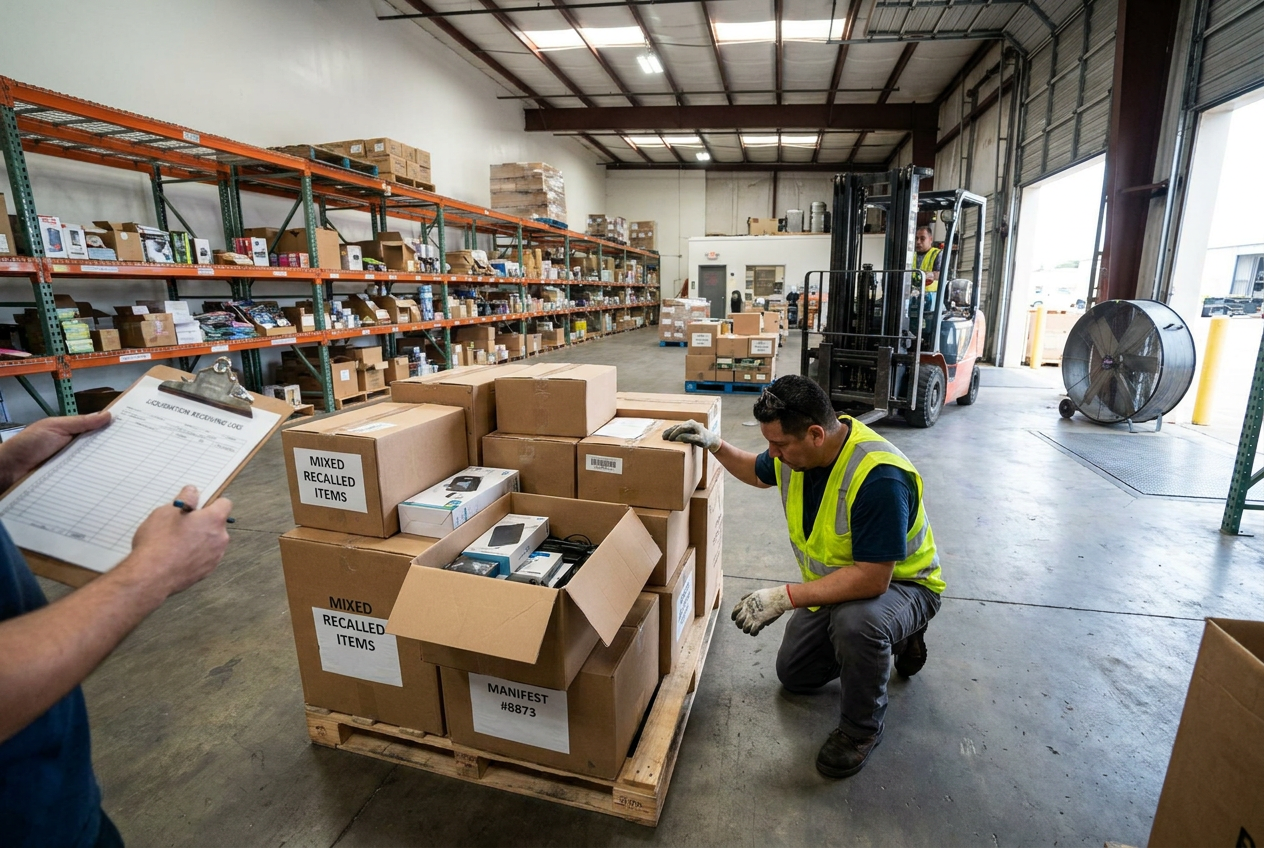
Do not donate, bundle, or relabel affected goods to bypass the restriction. Obtain specific guidance before recovering components: the hazard may be in the very part you intend to sell, and the notice may require destruction or return of the complete unit.
Keep purchasing, delivery, and claim records connected
Supplier vetting means checking a supplier’s identity, business practices, and written terms before purchasing. It supports traceability but does not replace product-level recall checks. An invoice is the seller’s transaction document identifying the purchase and charges; use wholesale invoice documentation guidance to keep that purchase trail usable.
A W-9 is an IRS form used to provide a taxpayer identification number and certification. It does not certify merchandise safety, recall status, or supplier quality. For the separate bookkeeping workflow, see record-keeping for liquidation inventory purchases.
Maintain one connected file containing the listing, manifest if provided, invoice, delivery records, label photographs, recall search results, correspondence, remedy evidence, and final disposition. Track quarantined inventory separately from saleable stock so it is not accidentally relisted.
At PalletCove, freight is included in the listed price. Free shipping is the only delivery option on every order to all 48 contiguous states, including orders for liquidation pallets in Texas and liquidation pallets in Florida. When comparing lots, budget internally for identification, quarantine space, and compliant disposition without assuming every piece is saleable.
No payment is collected on the website order form. After order review, a secure card link is emailed; Visa, Mastercard, American Express, and Discover credit and debit cards are the only accepted payment method, as explained in the wholesale order payment policy.
Handling takes 1–3 business days after payment clears. Transit from Houston is typically 3–7 business days, for an estimated 4–10 business days total. The processing cutoff is 2:00 PM Central Time, America/Chicago, Monday–Friday; after-cutoff confirmations begin the next business day. Weekends and applicable holidays do not count.
On delivery day, photograph the load, visible damage, packaging, and shipment identifiers. Request delivery-issue reporting within 48 hours, then keep recall screening separate from transport-damage inspection.
Under the U.S. Refund & Returns Policy, products explicitly listed as NEW ONLY qualify for defective and non-defective returns and exchanges within 30 calendar days of delivery. Returns are by mail; the customer is responsible for the return label and shipping, and the restocking fee is 15% of the product price. Refund processing takes 10 calendar days after authorized return receipt and inspection, or approval where no physical return is required. Mixed/used loads have separate claims terms, not routine change-of-mind returns; the requested 48-hour delivery report does not shorten eligible new-product returns. A recall remedy is a separate process—do not ship hazardous goods back without instructions.
Common mistakes that create avoidable exposure
- Screening only the manifest: compare the delivered product’s label, especially with customer returns.
- Treating sealed packaging as clearance: unused inventory can be affected by a recall.
- Adding a warning instead of stopping sale: disclosure does not override a recall-related sales prohibition.
- Clearing an entire pallet after checking one unit: model and manufacturing ranges can differ within a load.
- Losing the link between intake and disposal: preserve unit identifiers and quantities through the final outcome.
- Forgetting old listings: monitor stored goods, scheduled listings, and fulfillment inventory when new notices appear.
Use the liquidation pallets inventory hub to understand available buying formats, but keep safety release decisions at the identifiable-product level.
Frequently asked questions
Can I sell recalled merchandise if I disclose the recall?
No. For products subject to the applicable CPSC recall sales prohibition, disclosure and buyer consent do not authorize the sale. Hold the product and follow the official remedy.
Does a working product still need the recall remedy?
Yes, if its identifiers fall within the recall. A hazard may occur intermittently or only under particular conditions, so normal operation does not establish safety.
What if the model matches but the serial number is missing?
Keep the item on hold and contact the recalling company for identification guidance. Do not infer that an unreadable or missing number puts the unit outside the recall.
Can I resell an item after an authorized recall repair?
Potentially, if the prescribed remedy has been completed and resale is permitted under the applicable recall requirements. Retain evidence tied to that unit and verify release conditions rather than assuming every repair qualifies.
Who pays when recalled goods appear in a liquidation load?
The outcome depends on the recall program, purchase terms, and applicable legal rights. Document the issue with both the supplier and recalling company; do not assume either an automatic supplier credit or manufacturer reimbursement.
Talk to PalletCove Liquidation
Before ordering, ask what identification and manifest information is available, plan a quarantine area, and assign responsibility for recall screening. For the broader business framework, return to our resale certificate and sales tax policy.
PalletCove Liquidation LLC is located at 4000 Telephone Rd Unit B11, Houston, TX 77087. Call (713) 819-3904 or email sales@palletcoveliquidation.com. Hours are Mon–Fri 8:00 AM – 6:00 PM CT, Sat 9:00 AM – 2:00 PM CT, Sun closed.
For listing-specific questions, contact our order desk or review current inventory. Keep every potentially affected item off sale until its identity, recall status, and authorized disposition are resolved.
About PalletCove Liquidation
Published by PalletCove Liquidation LLC, based in Houston, Texas. Our buying guides cover evaluating liquidation inventory and preparing for delivery. Consult the current product listing and store policies for purchase terms.