At a glance
Learn how clearance cycles, delivery lead times, preparation work and local demand shape seasonal liquidation purchases—and when holding inventory for next year makes more sense.

Knowing when to buy seasonal liquidation means separating two calendars: when retailers release excess stock and when your customers want to buy it. Those windows often overlap imperfectly. A holiday load can become available just as local shoppers stop looking for its contents.
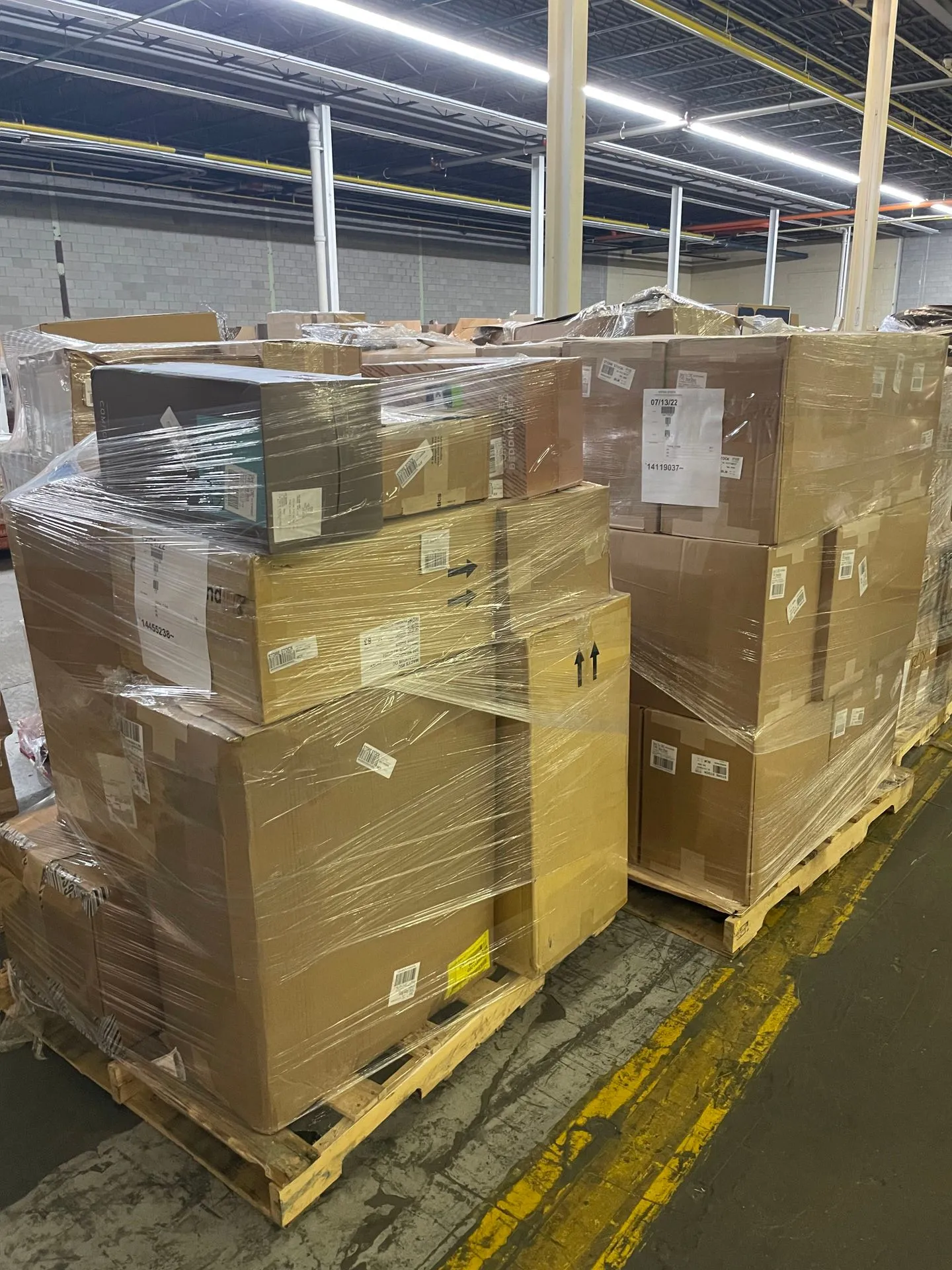
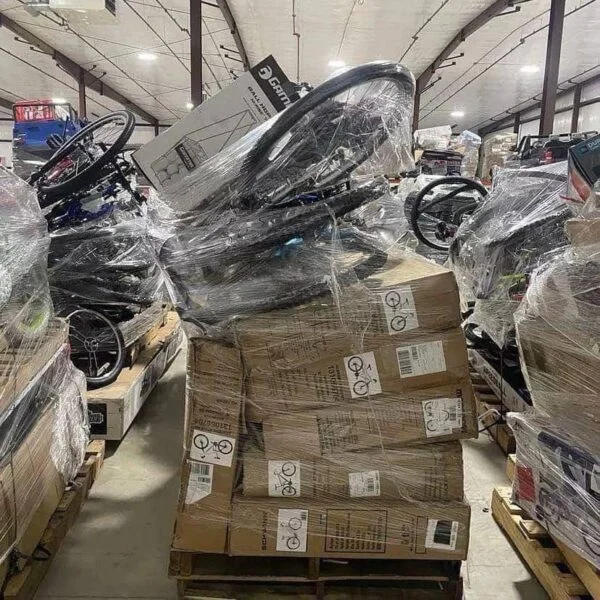
A liquidation pallet is a palletized wholesale lot sold through a liquidation channel, potentially containing excess inventory, returned goods or other listed merchandise. For the broader purchasing process, use our guide to buying liquidation pallets. This article focuses on deciding whether a seasonal load can reach your sales floor in time—or deserves storage until another selling window.
The practical rule is to work backward from your first useful selling date, not merely the holiday itself. Account for payment clearance, delivery, inspection, preparation and the time your sales channel needs to attract buyers.
How seasonal clearance cycles affect availability
Seasonal liquidation does not follow one nationwide release schedule. Retailers may clear merchandise before an event, after it ends, during assortment changes or after processing customer returns. Additional consolidation and resale steps can separate the original clearance date from a supplier’s available inventory.
Three windows matter:
- Before the season: Leftover prior-year stock or assortment changes may support early purchasing, but relevant inventory is not guaranteed.
- During the season: A load may still serve active demand, provided your preparation and selling times fit the remaining window.
- After the season: Clearance and returns may create buying opportunities, but event-specific merchandise often becomes a storage decision rather than an immediate sales opportunity.
Overstock is excess inventory; shelf pulls are goods removed from retail shelves. Customer returns are items returned by shoppers, while salvage identifies merchandise listed for recovery, repair or parts rather than assumed ready-to-sell use. None of these terms alone guarantees condition or seasonal suitability.
A condition grade is the seller’s stated classification of merchandise condition. Read its definition in the particular listing rather than assuming grades are standardized across suppliers. Any as-is language should also be evaluated alongside the listing and applicable policy, not interpreted as a universal rule for every product.
Buy against your last useful preparation date, not the excitement of finding seasonal stock at a lower price.
Build a calendar around actual buying behavior
Your selling window begins when customers start shopping and ends when demand becomes too weak to justify more inventory. That window may close well before the event: online buyers need delivery time, while event organizers often shop earlier than individual households.
The following calendar is a planning framework, not a prediction of PalletCove inventory releases.
| Selling occasion | Demand signal to watch | Purchasing approach | Main timing risk |
|---|---|---|---|
| --- | --- | --- | --- |
| Spring gardening and outdoor use | Local weather and early customer inquiries | Prepare before local activity increases | Cold or wet conditions delay demand |
| Summer recreation | School breaks, travel and sustained warm weather | Have listings ready before peak outings | Late arrivals miss much of the season |
| Back-to-school | Local district and college start dates | Work backward from shopping weeks before classes | Nearby districts have different calendars |
| Halloween | Decoration planning and October events | Separate early decor demand from last-minute purchases | Date-specific demand drops sharply afterward |
| Winter holidays | Decorating, gifting and customer delivery deadlines | Finish preparation before your channel’s shopping peak | Holiday closures reduce available workdays |
| Post-holiday clearance | Next-year demand and storage capacity | Buy selectively for a deliberate carryover plan | Cash and space remain committed for months |
For resellers sourcing liquidation pallets in Texas, local heat can support some outdoor categories beyond traditional summer dates. Buyers seeking liquidation pallets in Ohio may face different weather-driven windows. Neither state is one uniform market: use local sales records, event dates and customer inquiries rather than statewide assumptions.

Work backward through delivery and preparation
Start with the date merchandise must be ready for customers. Then subtract your own preparation period, the estimated delivery period and a contingency buffer appropriate to the consequences of arriving late.
PalletCove’s handling time is 1–3 business days after payment clears. Transit from Houston is typically 3–7 business days, for an estimated 4–10 business days total. Free shipping is the only delivery option on every order to all 48 contiguous states, and freight is included in the listed price.
The processing cutoff is 2:00 PM Central Time, America/Chicago, Monday–Friday. After-cutoff confirmations begin the next business day. Weekends and applicable holidays do not count, so ten business days should not be treated as ten calendar days. These are estimates, not guaranteed arrival dates.
Use this sequence:
- Set the date your inventory must be photographed, priced and available.
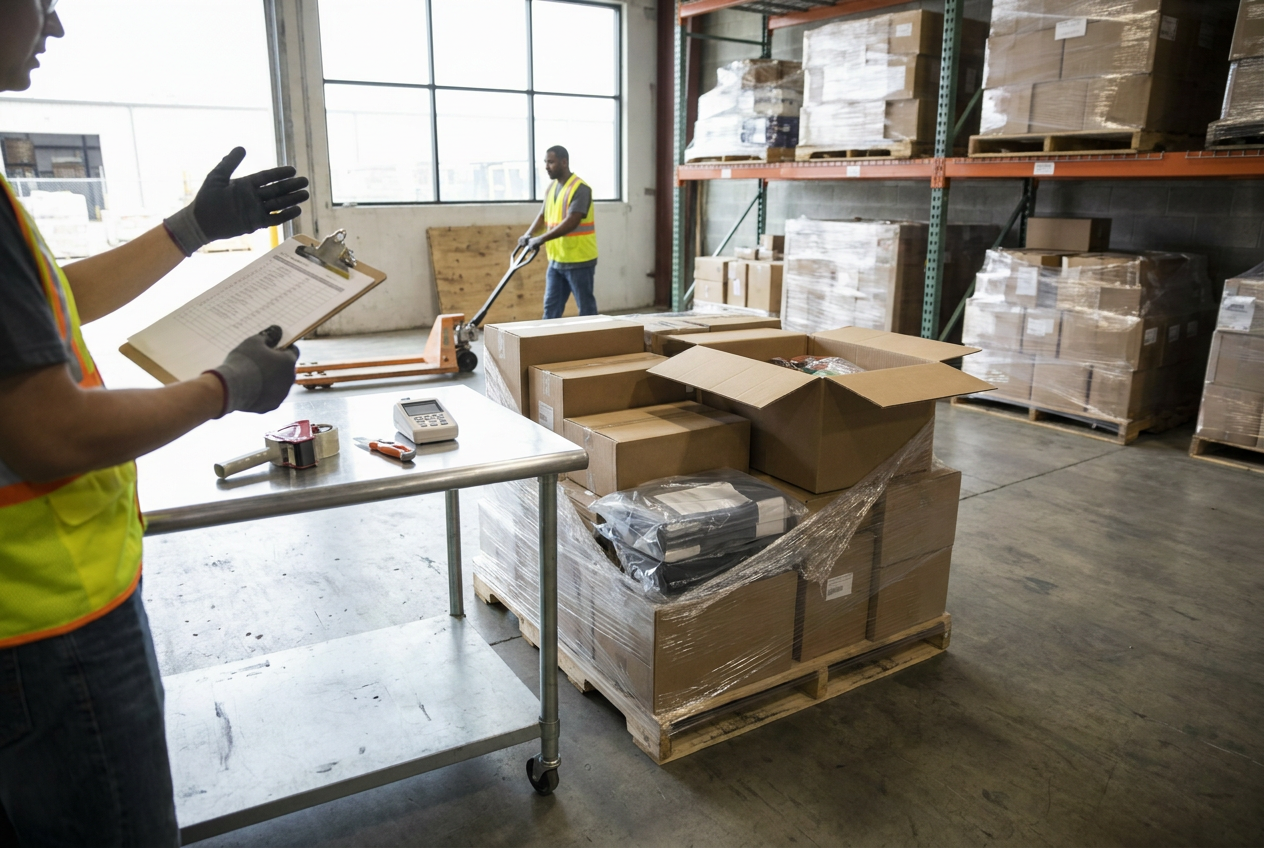
- Subtract receiving, sorting, inspection and listing time based on your actual capacity.
- Count backward using the upper end of the estimated delivery range.
- Add room for uncertainty and allow time for order review and payment clearance.
- Check whether enough customer shopping time remains after launch.
For example, if you need five working days to prepare a load, combining that with ten estimated delivery business days means planning at least fifteen business days before launch, before adding contingency. This is a planning example, not a promised fulfillment schedule.
Inspection means examining received merchandise and packaging to document condition, identify discrepancies and decide what preparation is needed. It is not equivalent to supplier testing: PalletCove pallets are not individually tested.
Match the load to the time you can actually use
A pallet listing is the product page describing a particular offered lot. Its unit count is the stated number of merchandise units; its category mix describes the types of goods included. Both affect your seasonal workload, but neither tells you how many items will be suitable for your particular selling channel.
A manifest is an inventory document that may identify products, quantities and other available details. If one is provided, check how much of the load is genuinely seasonal. If one is not provided, do not substitute representative photos for an itemized contents promise.
Photos show representative loads, contents vary from pallet to pallet, and merchandise is sold as described in the listing. Avoid assuming that visible decorations, outdoor products or giftable items will appear in your order.
The general merchandise category can be a starting point for evaluating broader assortments, while the truckloads category is relevant when your throughput supports larger purchases. Neither category name establishes a particular seasonal assortment.
Individual pages such as the Amazon General Merchandise Truckload listing and Macy’s Textile Truckload listing are places to review current descriptions—not evidence that holiday goods or a specific condition are included. PalletCove is an independent reseller and is not affiliated with, endorsed by or sponsored by any retailer named.
A pallet-scale order and a full trailer create different preparation demands. LTL means less-than-truckload transport, where freight shares trailer capacity; a truckload is a larger load rather than a promise of a particular unit count. Confirm the offered load format and receiving requirements rather than assuming every truckload fills a trailer identically. The truckload buying guide covers that broader decision.
For category selection, see choosing liquidation pallet categories for your sales channel. For document checks, use pallet listing red flags to review before ordering. Here, the decisive question is whether the listed assortment and required work fit your remaining selling days.
Decide whether to sell now, store or skip
Separate merchandise into three planning groups: date-specific items, weather-dependent goods and products with year-round uses. A holiday-dated item usually has less flexibility than an ordinary household textile, although actual suitability depends on the product.
Compare three scenarios before ordering:
- Sell this season: Enough demand remains after delivery and preparation, with a realistic route to customers.
- Carry into next season: Storage is suitable, the merchandise is likely to remain relevant, and you can leave the purchase funds committed.
- Skip the load: Preparation capacity, uncertain contents or storage constraints outweigh its usefulness to your calendar.
The listed purchase price includes freight. Your planning budget should still include your own labor, storage, sales-channel expenses, packaging and any preparation or disposal work the actual merchandise requires. An average purchase cost per listed unit is not the same as cost per sellable unit, especially where condition and contents vary.
For carryover purchases, check dated packaging, expiration information where applicable, compatibility changes, moisture sensitivity and storage requirements. Also consider whether bulky inventory will block receiving space for faster-moving loads.
Set a markdown review date and a final seasonal exit date before buying. Decide whether remaining goods will be stored, repositioned for another use where accurately described, or removed from your active assortment. A lower asking price cannot fix a selling window that has already closed.

Order and receive without losing the selling window
Keep a short first-pallet checklist: listing reviewed, budget approved, receiving space ready, preparation time reserved and seasonal deadline recorded. Common mistakes include spending the full budget on inventory, scheduling photographs before goods arrive and ordering more units than staff can process.
No payment is collected on the website order form. After order review, a secure card link is emailed; credit and debit cards—Visa, Mastercard, American Express and Discover—are the only accepted payment method. Review the payment policy and remember that handling begins after payment clears, not when the order form is submitted. Valid resale certificates are reviewed and applied where the buyer’s state allows.
On delivery day, document the load and packaging, retain the listing and available manifest, and record visible damage or discrepancies. Begin sorting promptly enough to discover issues before merchandise is scattered among sales channels. Delivery-issue reporting is requested within 48 hours; that request does not shorten eligible new-product return rights.
Under the United States Refund & Returns Policy, products explicitly listed as NEW ONLY qualify for defective and non-defective returns and exchanges within 30 calendar days of delivery. Returns are by mail, with the customer responsible for the return label and shipping; the restocking fee is 15% of the product price. Refund processing takes 10 calendar days after authorized return receipt and inspection, or approval where no physical return is required.
Mixed and used loads have separate claims terms, not routine change-of-mind returns. Do not treat overstock, shelf pulls, customer returns or salvage as new without explicit listing evidence. A missed season is therefore something to prevent through purchasing discipline, not something to assume a return will resolve.
Frequently asked questions
How far ahead should I buy seasonal liquidation?
Work backward from your ready-to-sell date using estimated delivery, your preparation time and contingency. PalletCove’s estimated delivery total is 4–10 business days after payment clears, but sorting, photography and customer acquisition require additional time.
Is immediately after a holiday always the best time to buy?
No. Post-holiday stock may suit next-year planning, but its usefulness depends on condition, product relevance, storage and available cash. A load that misses current demand can be a poor purchase even if its price looks attractive.
Can I rely on photos to identify seasonal contents?
No. Photos show representative loads, and individual pallet contents vary. Use the actual listing and any available manifest, and clarify missing details before committing to an event-specific plan.
Should I choose a pallet or a truckload for seasonal sales?
Choose the volume you can receive, inspect and prepare before the selling window narrows. A truckload requires sufficient space and throughput; a smaller purchase may better match uncertain demand or limited preparation capacity.
Where should I start comparing available loads?
Use the liquidation pallets hub to orient your search, then compare actual descriptions against your calendar. Availability alone does not make a load suitable: check its timing, condition and assortment together.
Talk to PalletCove Liquidation
The best seasonal purchase is one that fits your customer demand, preparation capacity and cash calendar. Return to the liquidation pallet purchasing guide for the full buying process, then review current inventory with a realistic ready-to-sell date in mind.
For listing questions or ordering help, contact our order desk.
- Business: PalletCove Liquidation LLC
- Address: 4000 Telephone Rd Unit B11, Houston, TX 77087
- Phone: (713) 819-3904
- Email: sales@palletcoveliquidation.com
- Hours: Mon–Fri 8:00 AM – 6:00 PM CT, Sat 9:00 AM – 2:00 PM CT, Sun closed
About PalletCove Liquidation
Published by PalletCove Liquidation LLC, based in Houston, Texas. Our buying guides cover evaluating liquidation inventory and preparing for delivery. Consult the current product listing and store policies for purchase terms.