At a glance
Assess craft supplies liquidation pallets for dried glue, missing kit parts, material specifications, and dye-lot consistency before committing to inventory your customers may not be able to use.

Craft supplies liquidation pallets should be assessed by usable projects, not package count alone. A sealed glue bottle may have deteriorated, a kit may lack its essential template, and yarn with the same color name may come from visibly different dye lots. Those differences determine what a reseller can accurately describe and offer.
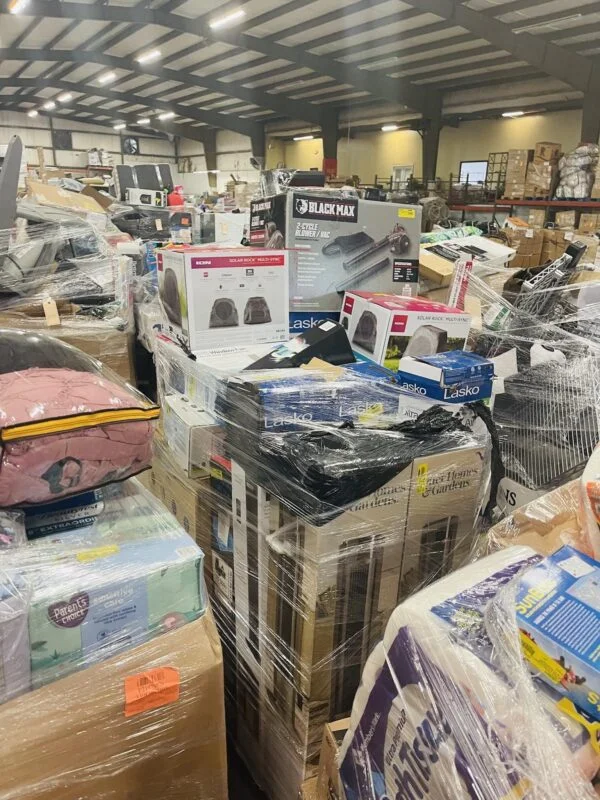
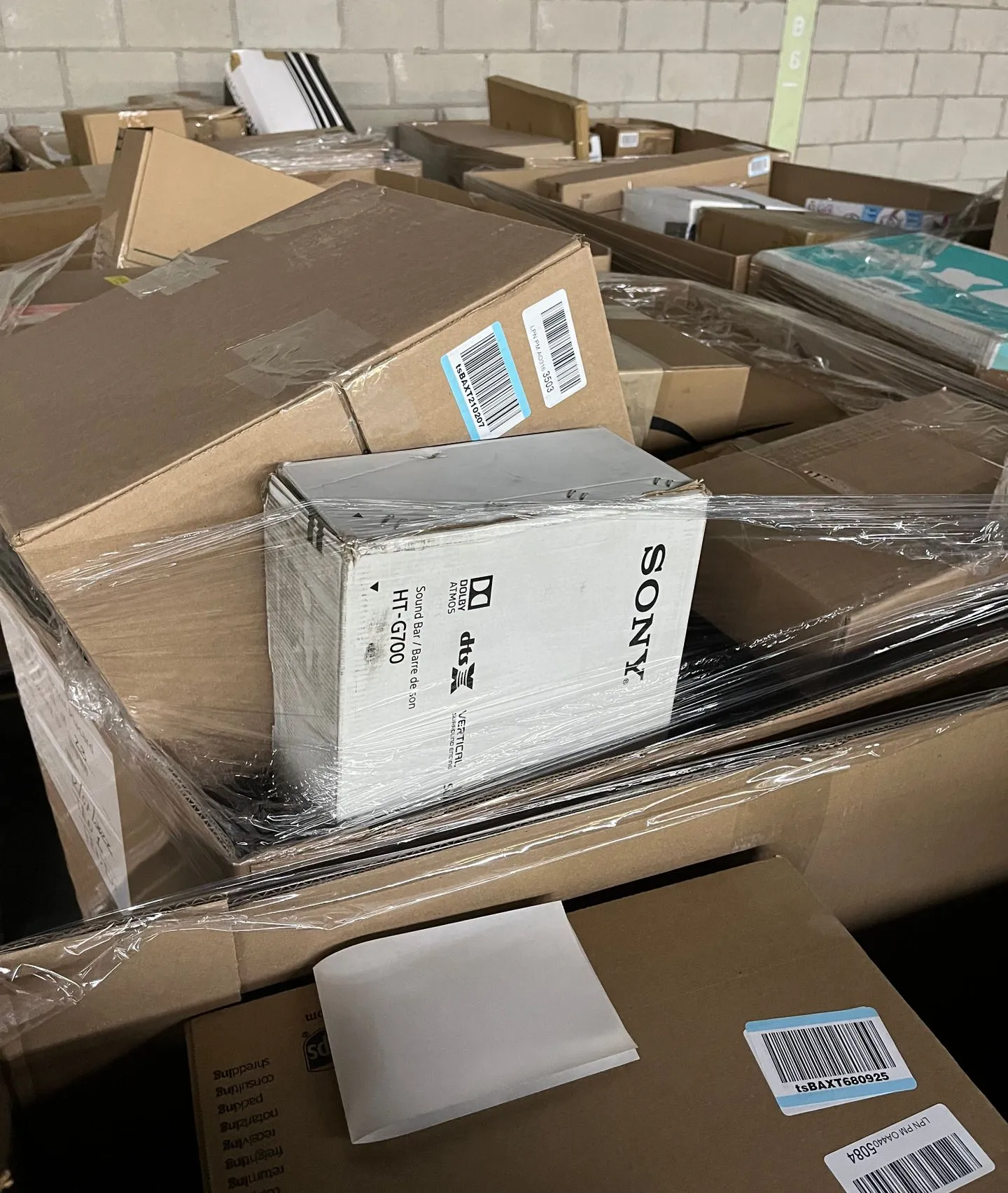
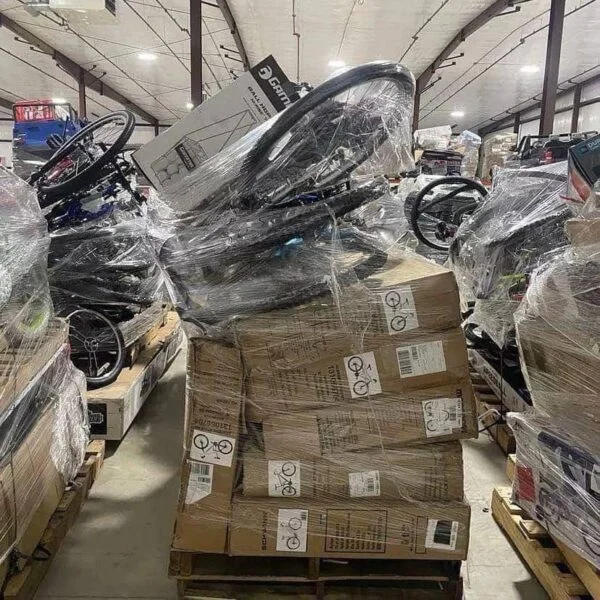
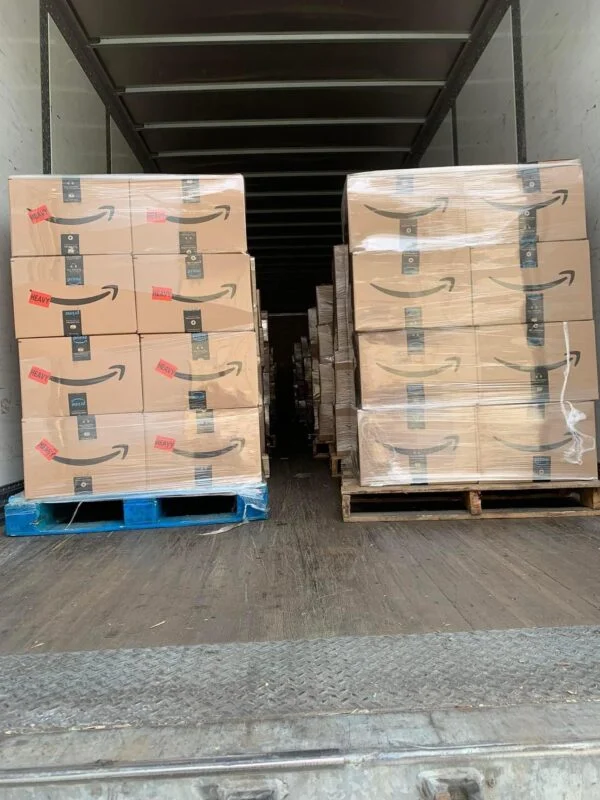
Start with PalletCove’s liquidation load categories for the broad category picture. This guide focuses on craft-lot usability: the evidence to request before ordering, checks to perform after delivery, and distinctions to preserve when sorting inventory. Photos show representative loads, contents of each pallet vary, and pallets are not individually tested. Contents are sold as described in the listing.
1. Identify the load type and actual condition
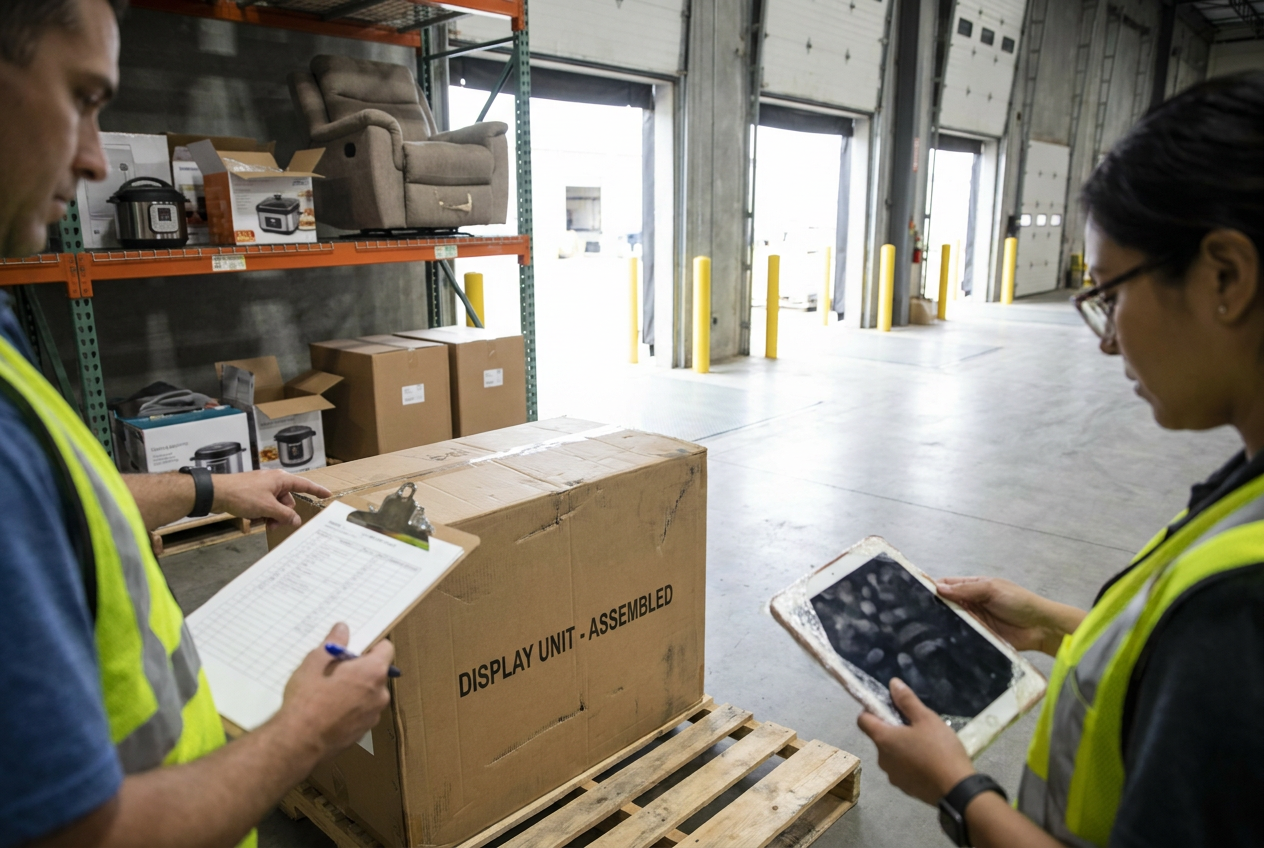
A liquidation pallet is a bulk unit of merchandise sold together. A truckload is a larger shipment, often occupying a full trailer; it does not automatically mean a uniform assortment. Craft stock can include adhesives, paper, fabric, yarn, beads, paints, project kits, and equipment, with different storage and completeness risks.
General merchandise means a mixed assortment spanning product categories. A general merchandise load may be worth investigating for craft-related stock, but the category name does not establish that crafts are included. Likewise, available truckload categories describe purchasing scale, not a guarantee of craft content.
Keep neighboring categories distinct: electronics are powered or electronic devices; tools are implements used for making, repair, or installation; apparel means clothing; HBA means health and beauty aids; and home goods are household furnishings and everyday domestic products. A craft cutting machine, utility knife, blank garment, cosmetic glitter, and decorative textile are not interchangeable simply because they support creative projects. Footwear and outdoor power equipment require separate suitability checks.
A condition grade describes the stated merchandise condition, but grading systems are not universal. Interpret these common terms cautiously:
- Overstock is excess inventory; it does not establish adhesive freshness.
- Shelf pulls were removed from retail display and may have worn packaging or labels.
- Customer returns may contain opened containers, missing parts, or substituted contents.
- Salvage may require recovery for parts or materials rather than ordinary retail resale.
- As-is describes an allocation of condition risk; read the listing and applicable terms rather than assuming completeness.
Use the guide to pallet types and conditions to distinguish these supply streams. Never relabel a lot as new unless the listing explicitly supports that condition.
2. Read the manifest as a usability record
A manifest is an inventory record describing the load, potentially including item names, identifiers, quantities, and condition information. It is useful evidence, not proof that every kit is complete or every liquid remains usable. Ask whether quantities mean individual pieces, retail packs, inner cartons, or cases.
For craft stock, request available SKU or UPC information, package size, material composition, color codes, batch identifiers, and date markings. Clarify whether the document describes the offered load or a representative assortment. Treat missing fields as unknowns, not favorable assumptions.
| Product group | Useful manifest detail | Receiving check | Resale concern |
|---|---|---|---|
| --- | --- | --- | --- |
| Glue and sealants | Formula, volume, date or batch code | Seal, leakage, consistency | Hardened or ineffective adhesive |
| Project kits | Kit version, contents list, quantity unit | Essential parts and instructions | Project cannot be completed |
| Yarn and fabric | Fiber, weight, dimensions, dye lot | Labels and shade consistency | Mismatched coordinated projects |
| Paper and vinyl | Size, thickness, finish, compatibility | Warping, curl, adhesive backing | Poor cutting or application |
| Paint and resin | Chemistry, components, date information | Separation, leaks, component match | Incomplete or degraded system |
The office supplies pallet inspection guide covers adjacent paper and stationery concerns. For accessories used with craft equipment, the power-tool accessory compatibility guide reinforces why a similar appearance is not a substitute for an exact specification.
3. Assess adhesives, paints, and other aging materials
Adhesives deserve a separate receiving workflow because packaging condition is only one clue. An intact cap cannot establish storage temperature, age, or performance. Water-based products can suffer from freezing or evaporation; reactive products can cure after exposure to moisture or air. Follow the manufacturer’s instructions for the particular formulation.
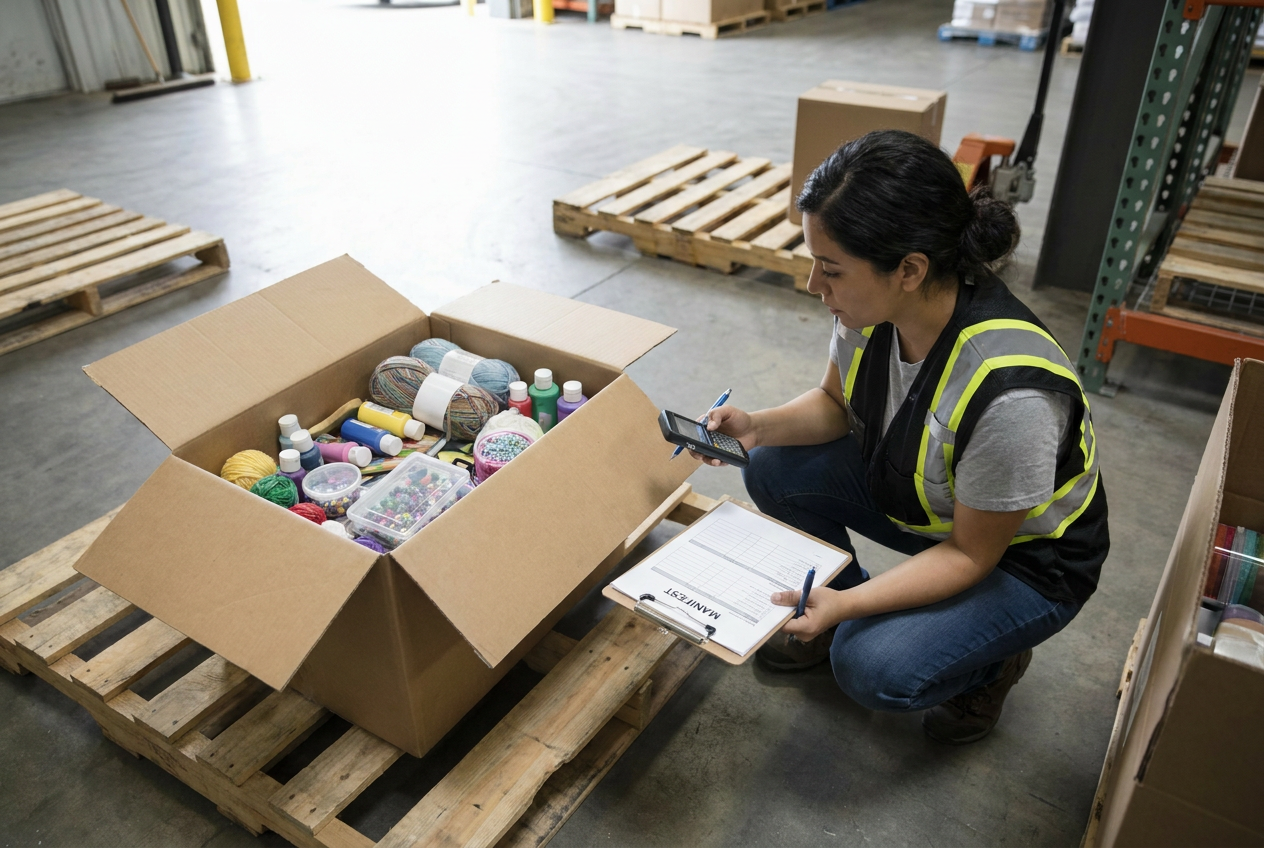
Use a staged process after delivery:
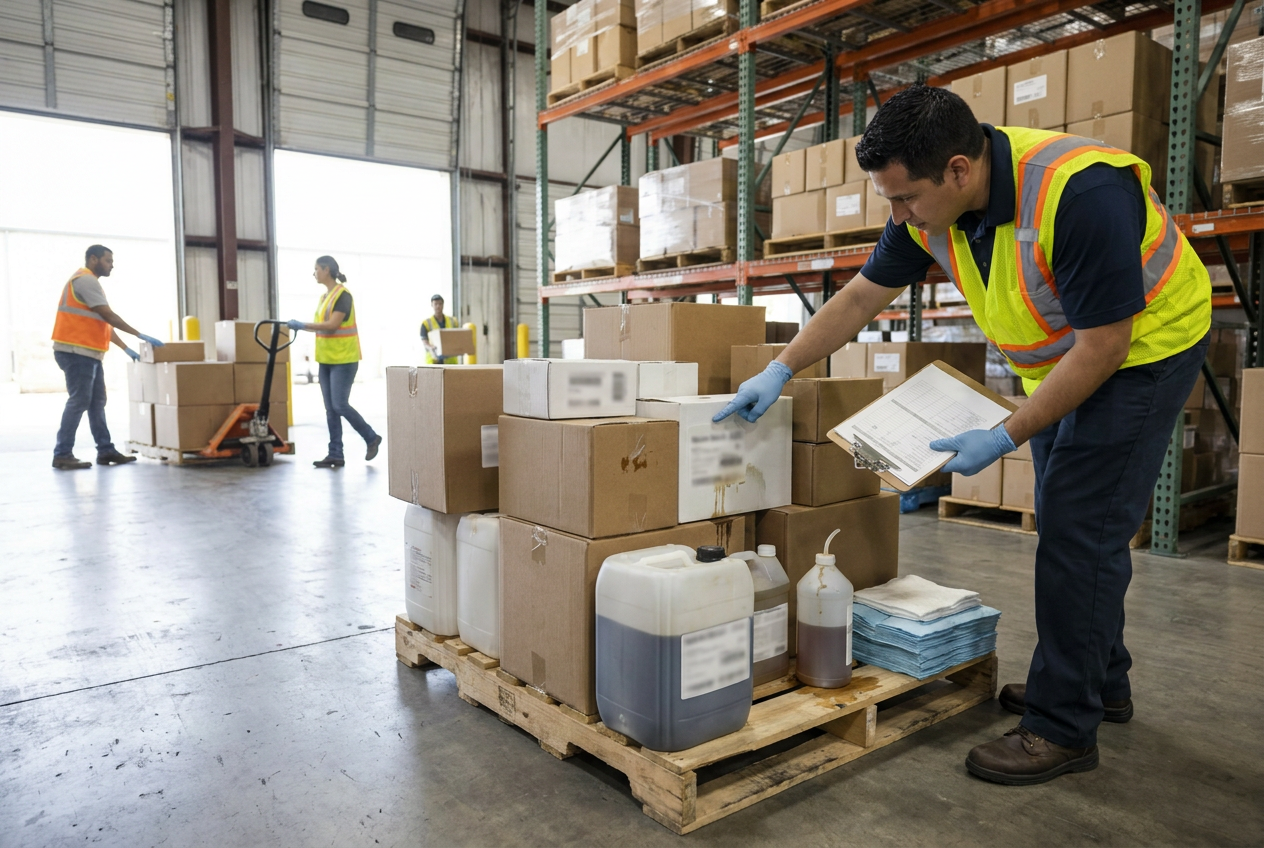
- Isolate leaking, swollen, damaged, or unidentified containers before routine sorting.
- Read product labels, warnings, storage requirements, and any stated shelf-life information. A batch code is not necessarily an expiration date.
- Look for loose caps, broken seals, crusted nozzles, hardened contents, unusual clumping, or separation that does not resolve as directed.
- Where appropriate, select samples across cartons, batches, and visible conditions. Record what was opened and examined.
- For a safe, manufacturer-directed performance check, use the intended substrate and allow the specified cure time. Initial tack alone does not establish a durable bond.
Some paints naturally settle, while certain adhesives are irreversibly damaged after separation. Do not assume that shaking, adding water, or using solvent restores a product. Two-part resin systems require the correct paired components and specified mixing ratio; unmatched bottles are not a complete kit.
Consult labels and available safety data sheets for ventilation, protective equipment, storage, and disposal guidance. Never open unknown chemicals merely to smell them. Opened evaluation samples should not subsequently be described as unopened stock.
A usable craft lot combines functional consumables, complete projects, known specifications, and compatible batches—not just a high piece count.
4. Determine whether kits can actually be completed
A kit’s most important part may be inexpensive but difficult to replace. A missing pattern, proprietary mold, connector, or instruction sheet can prevent completion even when most components remain. Compare each kit version with its own contents list rather than a similar-looking package.
Sort kits into documented outcomes:
- Complete against the available contents list, with consumable condition assessed separately.
- Incomplete but repairable using an exact, suitable replacement.
- Suitable for component resale with omissions clearly disclosed.
- Unsuitable for sale because of damage, unidentified substances, or unresolved safety concerns.
Do not use gross weight alone to verify completeness. A missing stencil or needle may barely affect package weight, while replacement packing material can disguise a shortage. Check for instructions, templates, batteries where specified, fasteners, specialty fittings, and required adhesive.
For children’s kits, preserve age grading and safety warnings. Do not reconstruct a children’s product from loose components and imply that it is an original complete kit. Check applicable recall information before offering affected products for sale.
Track replacement cost and labor separately. Rebuilding a few high-demand kits may be practical; sourcing a missing proprietary part across a large lot may not be. That decision needs evidence, not an assumption that every incomplete kit is recoverable.
5. Verify material specifications and coordinated batches
Craft buyers often need repeatable results. “Blue yarn,” “white cardstock,” and “clear vinyl” are insufficient descriptions when projects depend on thickness, fiber content, adhesive type, or color matching.
For yarn, retain fiber composition, weight category, length, care instructions, color code, and dye lot. For fabric, record usable dimensions, fiber content, stretch, construction, and any labeled finish. Inspect for moisture damage, fading, cut sections, and inconsistent usable width.
For paper, record dimensions, grammage when provided, coating, and finish. Paper-weight conventions vary, so an unexplained pound rating should not be treated as equivalent to a known grams-per-square-meter specification. For vinyl, distinguish adhesive-backed material from heat-transfer material and preserve application instructions and compatibility information.

Group coordinated materials by manufacturer identifier, product line, color code, and batch or dye-lot number. A shared color name does not guarantee a visual match. Compare materials under consistent neutral lighting, but do not replace missing batch documentation with a visual guess.
Calculate quantities within each matching group. Twelve skeins split among several dye lots may not support the same project as twelve matching skeins. If batch information is absent, describe it as unknown; avoid advertising an entire lot as matched.
6. Price the workload and choose the right scale
The listed price is the purchase-price starting point, with freight included. Your internal cost model should also account for receiving labor, sorting, replacement components, storage, repackaging, and appropriate disposal of unusable material. None of these calculations guarantees profit or resale value.
A practical planning formula is:
Estimated cost per usable sale unit = (listed purchase price + your handling and preparation costs) ÷ estimated usable sale units.
Define a sale unit consistently. A bead, a bag of beads, and a completed jewelry kit are different units. Before purchase, use conservative scenarios for unknown usability; after receiving, replace estimates with documented results.
The liquidation pallet inventory hub helps orient pallet-scale purchasing, while the truckload buying guide addresses larger receiving commitments. LTL means less-than-truckload freight, where a shipment shares trailer capacity; a full trailer requires greater unloading and staging capacity.
If reviewing the Amazon General Merchandise Truckload listing or WM GM Truckloads Pallets listing, check the current descriptions rather than inferring craft content from their names. Neither title establishes a craft-only assortment. PalletCove is an independent reseller and is not affiliated with, endorsed by, or sponsored by any retailer named.
7. Order, receive, and document exceptions
Before submitting an order, clarify unresolved listing questions, delivery access, and receiving requirements. No payment is collected on the website order form. After order review, a secure card link is emailed; credit and debit cards—Visa, Mastercard, American Express, and Discover—are the only accepted payment method. Valid resale certificates are reviewed and applied where the buyer’s state allows.
Free shipping is the only delivery option on every order to all 48 contiguous states, and freight is included in the listed price. Buyers researching liquidation pallets in Texas and liquidation pallets in Florida receive that same shipping arrangement.
Handling takes 1–3 business days after payment clears. Transit is typically 3–7 business days from Houston, for an estimated 4–10 business days total. The processing cutoff is 2:00 PM Central Time, America/Chicago, Monday–Friday; after-cutoff confirmations begin the next business day. Weekends and applicable holidays do not count.
On delivery day:
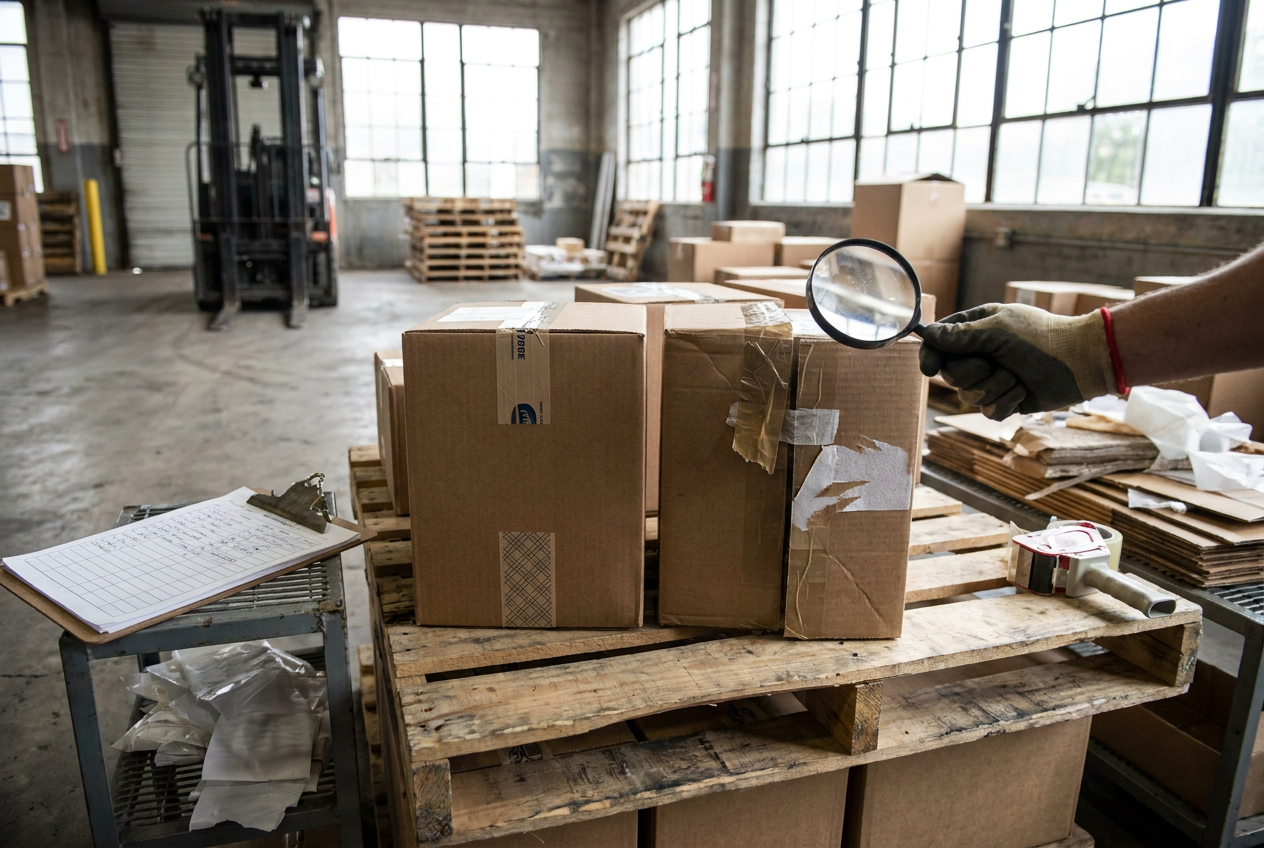
- Photograph the shipment, labels, wrapping, and visible damage before disturbing it, where safe.
- Compare shipping units with delivery paperwork and record visible exceptions.
- Isolate leaks or wet cartons and preserve relevant packaging.
- Reconcile contents against the applicable listing and manifest, documenting shortages and condition concerns.
- Request delivery-issue assistance within 48 hours, providing clear photographs and order details.
Under the United States Refund & Returns Policy, products explicitly listed as NEW ONLY qualify for defective and non-defective returns and exchanges within 30 calendar days of delivery. Returns are by mail; the customer is responsible for the return label and shipping, and a restocking fee of 15% of the product price applies. Refund processing takes 10 calendar days after authorized return receipt and inspection, or approval where no physical return is required. Mixed/used loads have separate claims terms, not routine change-of-mind returns; the requested 48-hour delivery-issue reporting does not shorten eligible new-product returns.
Frequently asked questions
Can sealed craft glue still be unusable?
Yes. Age, storage conditions, or a compromised seal can affect usability without obvious exterior damage. Check manufacturer guidance and document any receiving evaluation rather than treating sealed packaging as proof of performance.
Does a manifest prove that every kit is complete?
No. A manifest may identify a kit without verifying its internal components. Compare received kits with their exact contents lists and assess included consumables separately.
Can different dye lots be sold together?
Yes, provided the description accurately discloses the batch differences and avoids claiming a coordinated match. Keep identifiable lots separated so buyers can select quantities suitable for their projects.
How many items should a reseller sample?
There is no universal sample size that proves an entire mixed lot is usable. Spread checks across product types, cartons, batches, and visible conditions, then increase inspection when defects appear. A sample result should not be presented as item-level verification of the whole load.
Is a truckload better than a pallet for crafts?
Only when the assortment, receiving capacity, and sorting workload fit your operation. More pieces do not resolve unknown adhesive age, missing specifications, or fragmented color runs. Evaluate usable sale units rather than volume alone.
Talk to PalletCove Liquidation
Before buying, establish four things: consumable condition, kit completeness, material specifications, and matching-batch quantities. Return to the wholesale liquidation category guide for broader load comparisons, then review current inventory and contact our order desk about listing details that remain unclear.
PalletCove Liquidation LLC is located at 4000 Telephone Rd Unit B11, Houston, TX 77087. Call (713) 819-3904 or email sales@palletcoveliquidation.com. Hours: Mon–Fri 8:00 AM – 6:00 PM CT, Sat 9:00 AM – 2:00 PM CT, Sun closed.
About PalletCove Liquidation
Published by PalletCove Liquidation LLC, based in Houston, Texas. Our buying guides cover evaluating liquidation inventory and preparing for delivery. Consult the current product listing and store policies for purchase terms.