At a glance
Handle liquidation purchase disputes with a clear evidence file, timely written claims, and measured escalation. Learn what to document without assuming a refund or card reversal is available.

Liquidation purchase disputes are disagreements about whether an order, payment, delivery, or merchandise matches the transaction’s documented terms. For an independent reseller, the strongest starting point is not a demand for reimbursement: it is a clear record of what was promised, what arrived, and exactly where those two differ.
This guide explains how to preserve evidence, submit a timely claim, and escalate an unresolved issue without assuming a refund or card reversal is available. For the broader business-policy context, start with PalletCove’s sales tax and resale certificate policy. A resale certificate is a document supporting a qualifying purchase for resale; valid certificates are reviewed and applied where the buyer’s state allows. Sales tax is a tax imposed on taxable sales, not a merchandise-condition guarantee.
The practical goal is to make your claim understandable to someone who did not place the order or receive the shipment. Separate verified facts from estimates, preserve the original evidence, and ask for a written decision tied to the applicable terms.
1. Identify what kind of dispute you have
A disappointing resale outcome is not automatically evidence that a liquidation pallet was misdescribed. Define the specific issue before choosing an escalation route.
| Issue | Evidence to preserve | First question to resolve |
|---|---|---|
| --- | --- | --- |
| Alleged quantity shortage | Listing, manifest, receiving count, labels | Was the disputed quantity expressly committed? |
| Condition mismatch | Saved condition wording, detailed photos | What condition did the listing actually describe? |
| Delivery damage | Arrival photos, packaging, delivery record | What was visibly damaged when received? |
| Wrong merchandise | Order identifiers, labels, item records | Does the delivered load match the purchased listing? |
| Billing discrepancy | Invoice, card transaction, correspondence | Was the amount authorized and recorded correctly? |
| Delayed delivery | Payment-clearance date, tracking, messages | Is the shipment outside the stated estimate? |
An invoice is the seller’s transaction document identifying the purchase, price, and other order details. It should be considered alongside the listing and written confirmations, not substituted for them. Our guide to wholesale invoice requirements for liquidation buyers explains the document’s broader role.
A claim is your request for review and a remedy. A return is a separate, authorized movement of merchandise back to the seller. A card dispute is an issuer-administered process. Starting one does not establish eligibility for the others.
2. Establish the load and condition baseline
A liquidation pallet is a bulk merchandise unit sold under a listing’s description. A truckload is a larger bulk order; confirm the listed scope rather than assuming every truckload represents identical quantities or a fully occupied trailer. LTL means less-than-truckload transportation, where freight shares trailer capacity; a full trailer shipment has a different receiving footprint.
Review the guide to liquidation pallet types and buying liquidation truckloads when identifying the purchase format. For this dispute, however, the controlling evidence is the description saved for your actual order.
A condition grade is the seller’s description of merchandise condition, not a universal industry certification:
- Customer returns: Merchandise previously returned by customers; do not infer functionality or completeness beyond the listing.
- Overstock: Excess inventory; this label alone does not establish NEW ONLY return eligibility.
- Shelf pulls: Merchandise removed from retail display or inventory; packaging and condition depend on the description.
- Salvage: Merchandise described for recovery, parts, repair, or similar purposes; use the specific listing’s meaning.
- As-is: A sale descriptor whose scope must be read with the listing and applicable terms, not treated as a blanket answer to every claim.
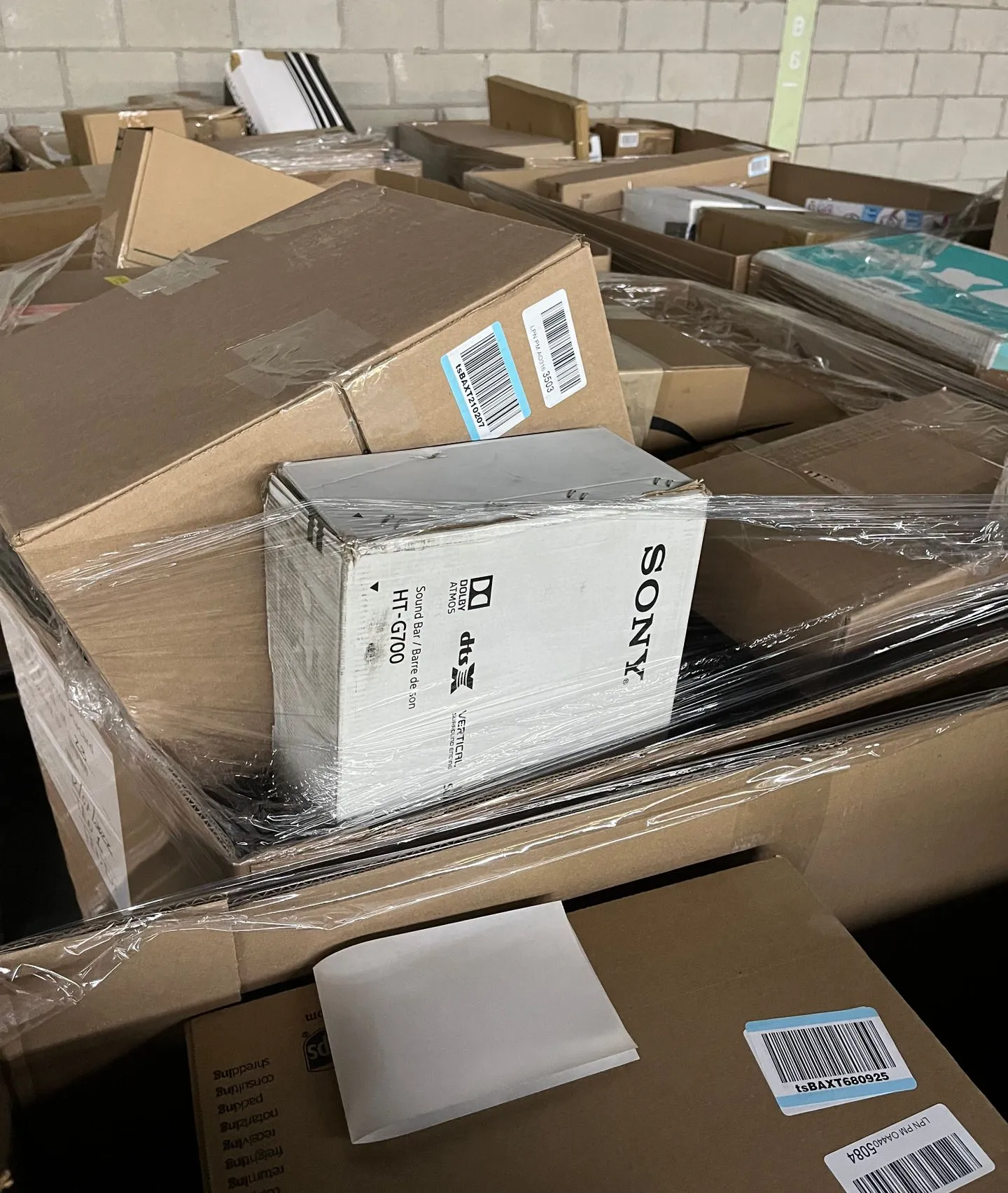
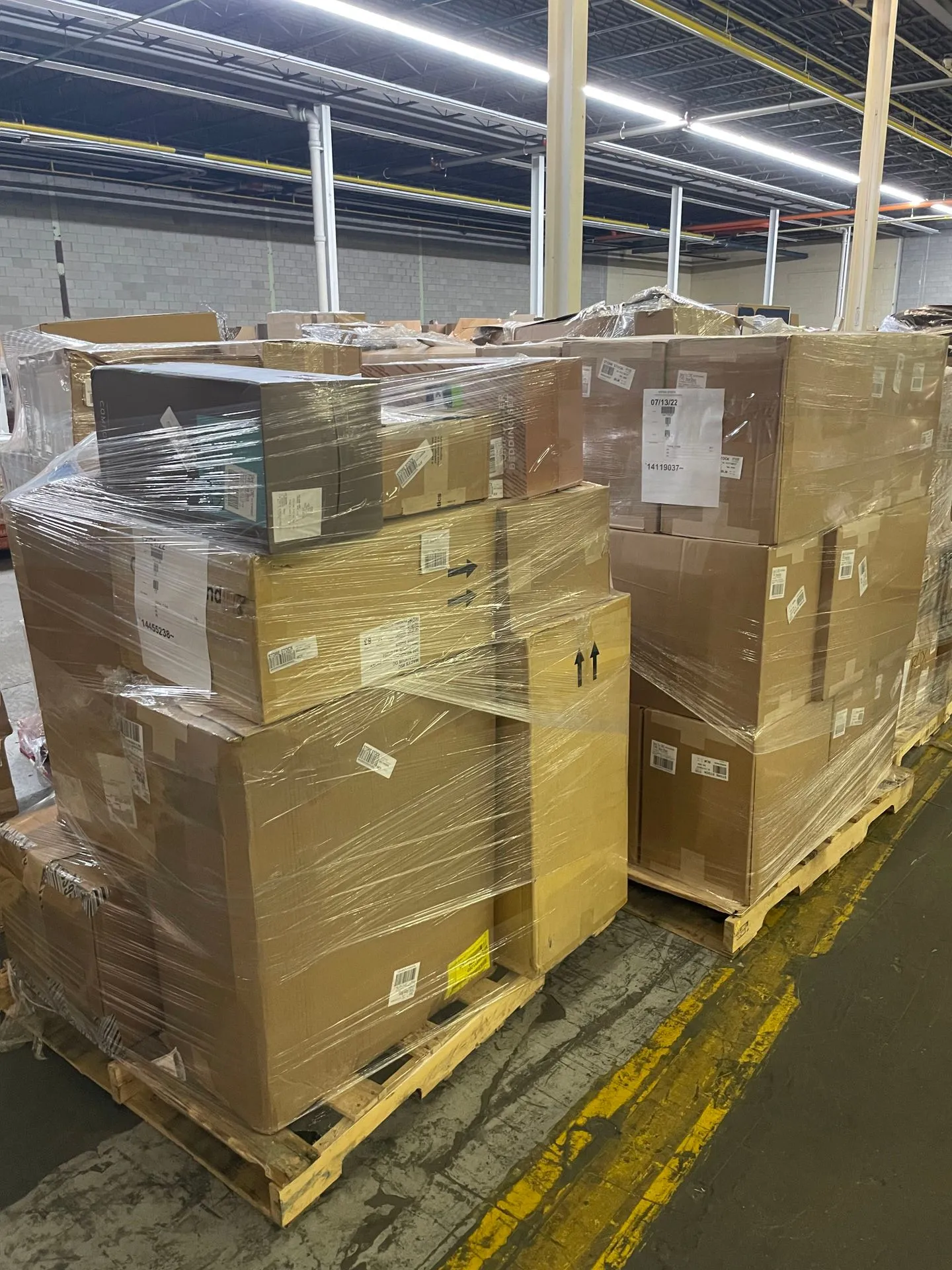
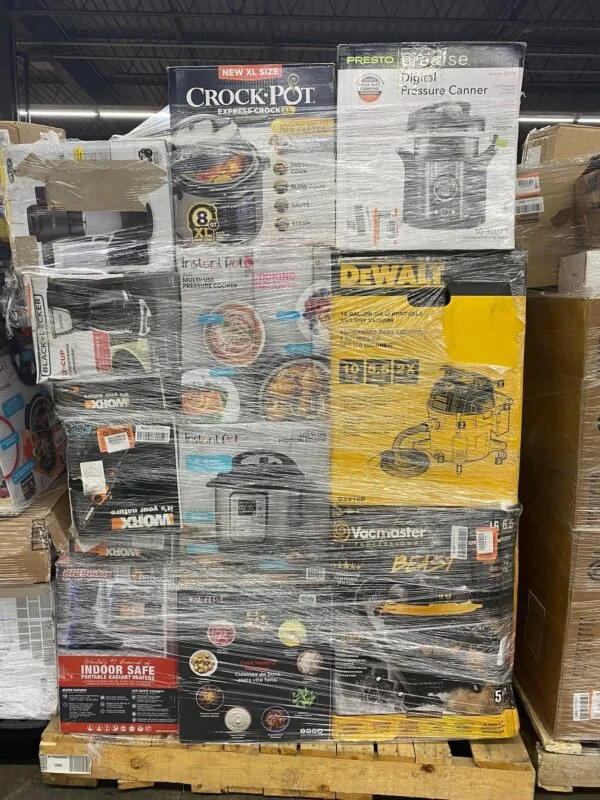
Photos show representative loads. Contents of each pallet vary, pallets are not individually tested, and contents are sold as described in the listing. An example photograph does not establish that every pictured item belongs in your shipment.
A manifest is a merchandise list associated with a load. If provided, save its original version and any statements about completeness, accuracy, substitutions, or estimates. Distinguish a listed pallet count from an estimated piece count and a specific item commitment from a category description.
Catalog organization can help locate evidence: general merchandise listings and truckload inventory are different category destinations. For a purchase such as an Amazon General Merchandise Truckload or Macy’s Textile Truckload, save that specific product page without inferring condition from its name. PalletCove is an independent reseller and is not affiliated with, endorsed by, or sponsored by any retailer named.
3. Preserve the order record before it changes
Create a folder named with the order number and purchase date. Keep original files intact and use separate annotated copies when highlighting discrepancies.
- Save the listing as a PDF, including its URL, capture date, condition description, quantity language, price, and exclusions.
- Save any manifest, quote, written clarification, order confirmation, and invoice.
- Preserve the policy language available when ordering and any later authorization or amendment.
- Keep payment confirmations and relevant card transaction records, with sensitive details redacted in shared copies.
- Maintain a dated timeline of payment clearance, dispatch updates, delivery, inspection, reporting, and replies.
Supplier vetting means checking a supplier’s identity, terms, contact information, and transaction practices before buying. A W-9 is a U.S. tax form used to provide taxpayer identification information; it is not proof that a load meets a description or that a refund is owed. Do not attach sensitive tax documents to a merchandise claim unless specifically needed through an appropriate channel.
For ongoing filing practices, consult record-keeping for liquidation inventory purchases. Keep this dispute’s evidence separate from ordinary inventory valuation notes: projected resale earnings are not the same as documented purchase discrepancies.

4. Verify payment, pricing, and delivery timing
PalletCove accepts only credit and debit cards: Visa, Mastercard, American Express, and Discover. After order review, a secure card link is emailed; no payment is collected on the website order form. Compare the reviewed order and invoice with the authorized amount, and consult the wholesale order payment policy for the payment framework.
Free shipping is the only delivery option on every order to all 48 contiguous states. Freight is included in the listed price. When documenting a pricing dispute, identify the exact disputed invoice line rather than inventing a separate freight allocation.
Handling takes 1–3 business days after payment clears. Transit is typically 3–7 business days from Houston, for an estimated 4–10 business days total. The processing cutoff is 2:00 PM Central Time, America/Chicago, Monday–Friday; after-cutoff confirmations begin the next business day. Weekends and applicable holidays do not count.
These are estimates, not a guaranteed arrival date. Before alleging delay, identify when payment cleared and request the current shipment status in writing.
The same evidence approach applies to liquidation pallets in Texas and liquidation pallets in Florida. A state landing page or the general liquidation pallets hub does not replace the terms of a specific order.
5. Inspect delivery and preserve physical evidence
Prepare to document the shipment before unpacking mixes it with existing inventory. For a large load, assign one person to record counts and another to photograph labels and visible condition when practical.
- Photograph the shipment as received, including wrapping, pallet condition, labels, and visible damage.
- Compare the number of delivered handling units with the delivery paperwork and order documentation.
- Note observable damage or shortages accurately on the delivery record where possible; retain a copy.
- Record what could not be checked at arrival rather than claiming a complete inspection occurred.
- Unpack methodically and connect each disputed item or group to its pallet or shipment identifier.
- Retain relevant packaging and separate disputed merchandise from saleable inventory while awaiting instructions.
A delivery signature, damage notation, or photograph may support review, but none guarantees a remedy. If damage is concealed until unpacking, record when it was discovered and preserve the surrounding packaging.
Avoid unsupported extrapolation. If you have inspected only part of a truckload, report the inspected sample and observed discrepancy, not an assumed defect rate for the whole load. Do not repair, discard, or resell disputed goods before asking whether doing so would affect review, unless safety requires action; document any necessary safety measures.
Preserve evidence first, report promptly, and request a written review. Neither a delivery notation nor a card dispute guarantees a refund.
6. Submit a specific claim and check eligibility
PalletCove requests delivery-issue reporting within 48 hours. Send an initial written report promptly even if a detailed count remains underway, then identify what evidence you will supplement. This reporting request does not shorten eligible new-product 30-day returns.
Under the Refund & Returns Policy, United States products explicitly listed as NEW ONLY qualify for defective and non-defective returns and exchanges within 30 calendar days of delivery. Returns are by mail, the customer is responsible for the return label and shipping, and the restocking fee is 15% of the product price. Refund processing is 10 calendar days after authorized return receipt and inspection, or approval where no physical return is required.
Mixed and used loads have separate claims terms, not routine change-of-mind returns. Do not treat overstock, shelf-pull, customer-return, mixed, used, or salvage descriptions as verified new condition. Ask which terms apply to your particular order before shipping anything back.
Use this claim structure:
- Identification: Order number, buyer name, delivery date, and shipment reference.
- Promised specification: Quote the relevant listing or written commitment exactly.
- Observed discrepancy: State what was received and how it differs.
- Evidence: Attach labeled photographs, relevant documents, and a count worksheet.
- Requested resolution: Ask for review and an explanation of available remedies without assuming approval.
- Next step: Request acknowledgment, a case reference, and an expected response date.
For example: “The saved order confirmation specifies [quantity]. Our receiving record shows [quantity], with [inspection limitations]. Attached are the confirmation, delivery record, and labeled photographs. Please review the discrepancy and confirm the applicable claim terms and next steps.”

7. Escalate without overstating your rights
If the first response does not resolve the issue, keep the same evidence file and narrow the unanswered question. Escalation is more effective when each step has a clear purpose.
- Follow up on the existing thread. Reference the case number and requested response date rather than sending contradictory accounts.
- Request a supervisory review. Ask which listing statement or policy provision supports the decision and what additional evidence would matter.
- Document any proposal. Obtain written details about affected goods, authorization, deadlines, deductions, and completion steps before acting.
- Ask your card issuer about applicable procedures promptly. Explain the transaction accurately and ask about deadlines and required evidence. Availability and outcomes depend on the circumstances and applicable rules; a temporary credit is not necessarily a final decision.
- Consider qualified advice for a material unresolved loss. A legal adviser can assess contractual options, jurisdiction, and practical costs. A complaint to an appropriate agency does not itself award reimbursement.
Do not describe an authorized purchase as unauthorized merely because the merchandise is disputed. Do not seek duplicate recovery, hide a supplier resolution from an issuer, or assume ongoing supplier discussions pause outside deadlines.
Common mistakes include relying solely on representative photos, missing the initial reporting request while counting every item, returning goods without authorization, and demanding projected resale profits as though they were a promised purchase term.
Frequently asked questions
Does an unmanifested load automatically support a shortage claim?
No. Identify any express quantity commitment, such as a pallet count, and compare that commitment with your receiving evidence. Lack of an itemized manifest does not create a guaranteed item mix.
Can I report a problem before finishing the inspection?
Yes. Report the known facts promptly, explain which portions remain uninspected, and provide a realistic update plan. Avoid presenting preliminary findings as final load-wide totals.
Does the 48-hour reporting request replace the new-product return window?
No. Delivery issues should be reported within 48 hours, but eligible products explicitly listed as NEW ONLY retain the stated 30-calendar-day return window. Separate claims terms apply to mixed and used loads.
Will a card dispute guarantee my money back?
No. Ask your issuer about applicable rules, time limits, and documentation requirements. Supplier correspondence and original transaction evidence remain important, and any provisional credit may be subject to further review.
What if the supplier rejects my claim?
Request the reason in writing and identify any evidence the decision appears to overlook. Preserve the response, seek a focused review, and evaluate outside options without assuming reimbursement is available.
Talk to PalletCove Liquidation
For an existing order, include its number, delivery date, and a concise description when you contact our order desk. For future purchases, compare current inventory descriptions before ordering, and revisit the sales tax and resale certificate policy for the broader policy context rather than treating a merchandise claim as tax advice.
PalletCove Liquidation LLC
4000 Telephone Rd Unit B11, Houston, TX 77087
Phone: (713) 819-3904
Email: sales@palletcoveliquidation.com
Hours: Mon–Fri 8:00 AM – 6:00 PM CT, Sat 9:00 AM – 2:00 PM CT, Sun closed.
A useful dispute file makes the transaction easy to reconstruct. Preserve the original terms, document the actual discrepancy, report promptly, and escalate with a specific request for review—not an assumption that a refund or payment reversal must follow.
About PalletCove Liquidation
Published by PalletCove Liquidation LLC, based in Houston, Texas. Our buying guides cover evaluating liquidation inventory and preparing for delivery. Consult the current product listing and store policies for purchase terms.