At a glance
Match pallet jack capacity, fork dimensions and receiving conditions to liquidation loads. Learn which weights to verify, how to check pallet fit and when to stop an unsafe move.
A pallet jack’s capacity label answers one question: how much the equipment is rated to lift under its specified conditions. It does not establish whether the forks fit a particular liquidation pallet, whether that pallet can support its contents, or whether your receiving route is safe.
For independent resellers, choosing the right pallet jack weight capacity starts with the heaviest individual loaded pallet—not the average weight across a shipment. Then check fork dimensions, load distribution and every surface the load must cross. Our guide to buying liquidation truckloads covers the broader purchasing process; this article focuses on matching equipment to the actual receiving task.
What pallet jack weight capacity means
Rated capacity is the maximum load the manufacturer permits under the equipment’s stated operating conditions. Find it on the jack’s data plate and confirm the model-specific instructions in its manual. Manual and powered pallet jacks have different controls and operating requirements; familiar-looking forks do not make them interchangeable.
Many standard manual models carry ratings around 5,000–5,500 pounds, but compact, low-profile and specialized models vary. Never infer capacity from appearance. A missing or unreadable plate is a reason to identify the equipment before using it, not to guess.
The weight being lifted includes merchandise, the pallet itself, cartons, wrapping and other packaging. Capacity also assumes the load is supported and positioned as the manufacturer specifies. An off-center load, damaged pallet or incomplete fork insertion can create an unsafe move below the labeled limit.
The safe match is a verified load weight, compatible pallet and fork geometry, and an approved operating route—not simply a large capacity number.
Do not apply a universal “safety percentage” as a substitute for manufacturer instructions. Selecting equipment with room above verified expected loads can be sensible, but extra rated capacity cannot correct unstable stacking or unsuitable ground.
Verify individual pallet weights before choosing equipment
A liquidation pallet is merchandise grouped on a handling platform for wholesale sale. A truckload is a shipment sold or transported at truckload scale; a full trailer describes the trailer-wide load, which may reach its usable space or weight limit without containing a standard number of pallets.
LTL means less-than-truckload transportation, where shipments generally share trailer space. Neither an LTL designation nor a truckload listing tells you the weight of its heaviest pallet. For shipment-size distinctions, see partial truckload versus full truckload buying.
Request these details before settling on equipment:
- Individual gross pallet weights, or a documented maximum when individual weights are unavailable.
- Pallet length, width, loaded height and accessible fork-entry sides.
- Whether the load is palletized, floor-loaded or mixed.
- Any known overhang, irregular packaging or unusual weight concentration.
- Whether available weights are measured, estimated or merchandise-only.
A manifest is an inventory document describing shipment contents, sometimes including quantities, identifiers and condition information. It is not automatically a certified weight record. A bill of lading is the freight document identifying the shipment and transportation details; its shipment-level weight also does not necessarily establish individual pallet weights.
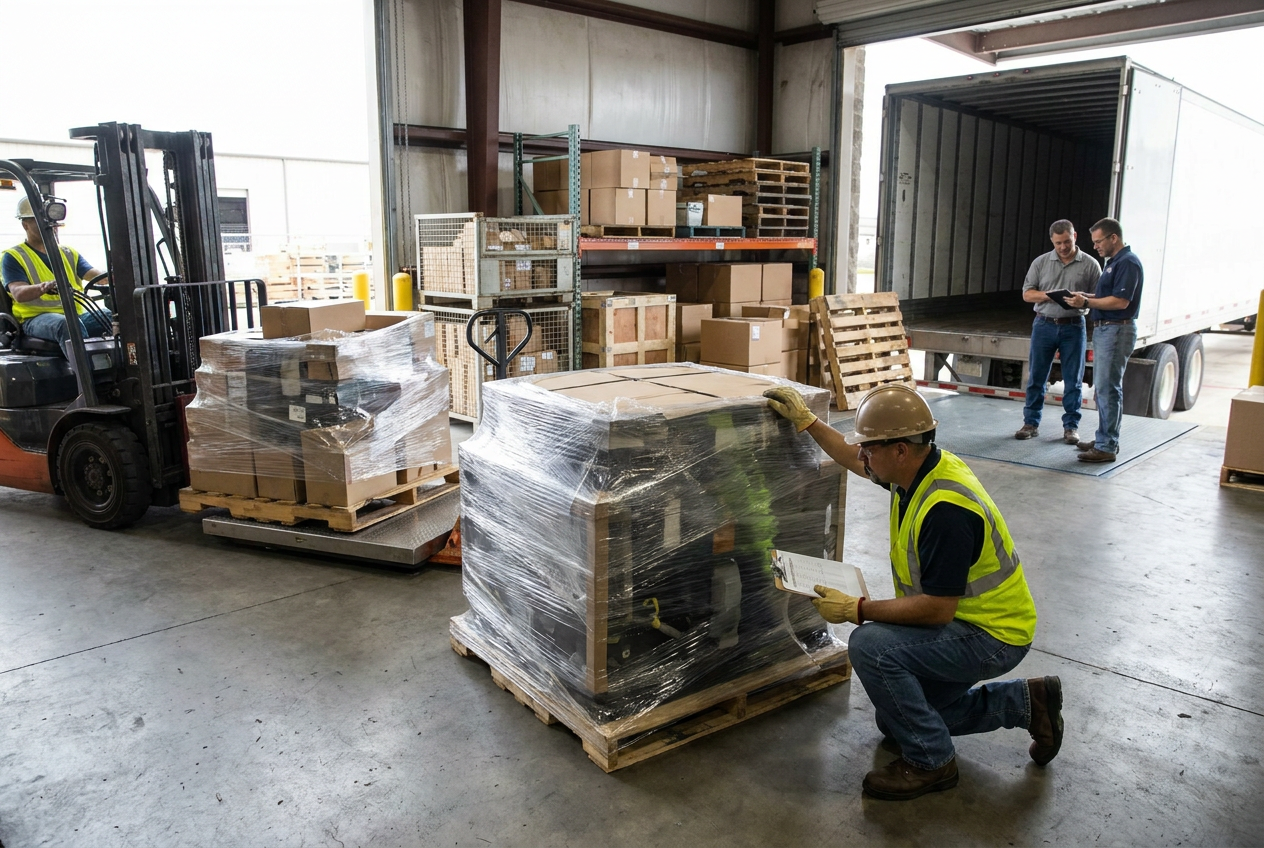
For example, dividing a hypothetical 20,000-pound shipment across ten pallets gives a 2,000-pound average. It does not rule out one pallet weighing 4,500 pounds. If only aggregate weight is available, request better information or arrange a suitable weighing method before committing to a move. Never use a successful test lift as proof of safe capacity.
Check fork dimensions and pallet compatibility
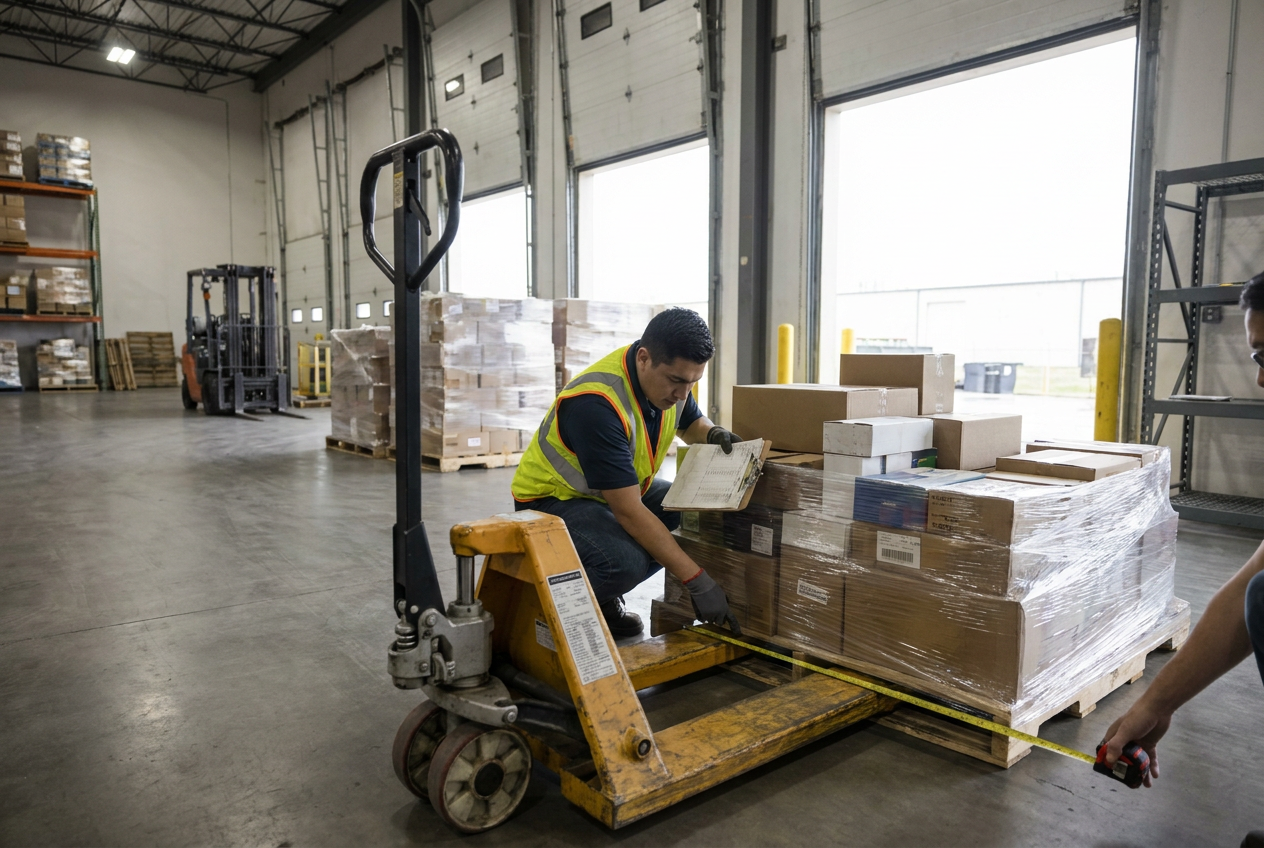
A common pallet footprint is 48 by 40 inches, and common manual jack configurations include approximately 48-inch forks with a 27-inch overall outside fork width. These are examples, not compatibility guarantees. Entry direction, deck construction and load-wheel clearance still matter.
| Check | What to establish | Why it matters |
|---|---|---|
| --- | --- | --- |
| Gross load weight | Merchandise plus pallet and packaging | Must remain within the jack’s applicable rating |
| Fork length | Support required from the intended entry side | Short insertion may leave the load unsupported |
| Outside fork width | Fit within the usable pallet openings | Overall pallet width does not describe opening clearance |
| Lowered fork height | Clearance beneath the pallet deck | Low openings may require different equipment |
| Load-wheel position | Clearance from bottom boards and obstructions | Wheels must operate without catching or damaging the pallet |
| Raised clearance | Clearance over permitted joints and transitions | Lift height is limited and is not a ramp solution |
| Pallet condition | Sound boards, blocks and fasteners | A damaged platform can fail below the jack’s capacity |
Two-way and four-way entry descriptions need care: a pallet accessible to forklift tines from a side may not accommodate a pallet jack’s load wheels from that side. Inspect the actual opening and wheel path. Do not force entry through resistance or assume notched stringers make every approach usable.
Fully position the forks as the manufacturer directs and center the load. Check that fork tips cannot catch another pallet or obstacle. If fit is wrong, use compatible equipment or an approved transfer process; do not improvise with loose blocks or tip-only lifting.
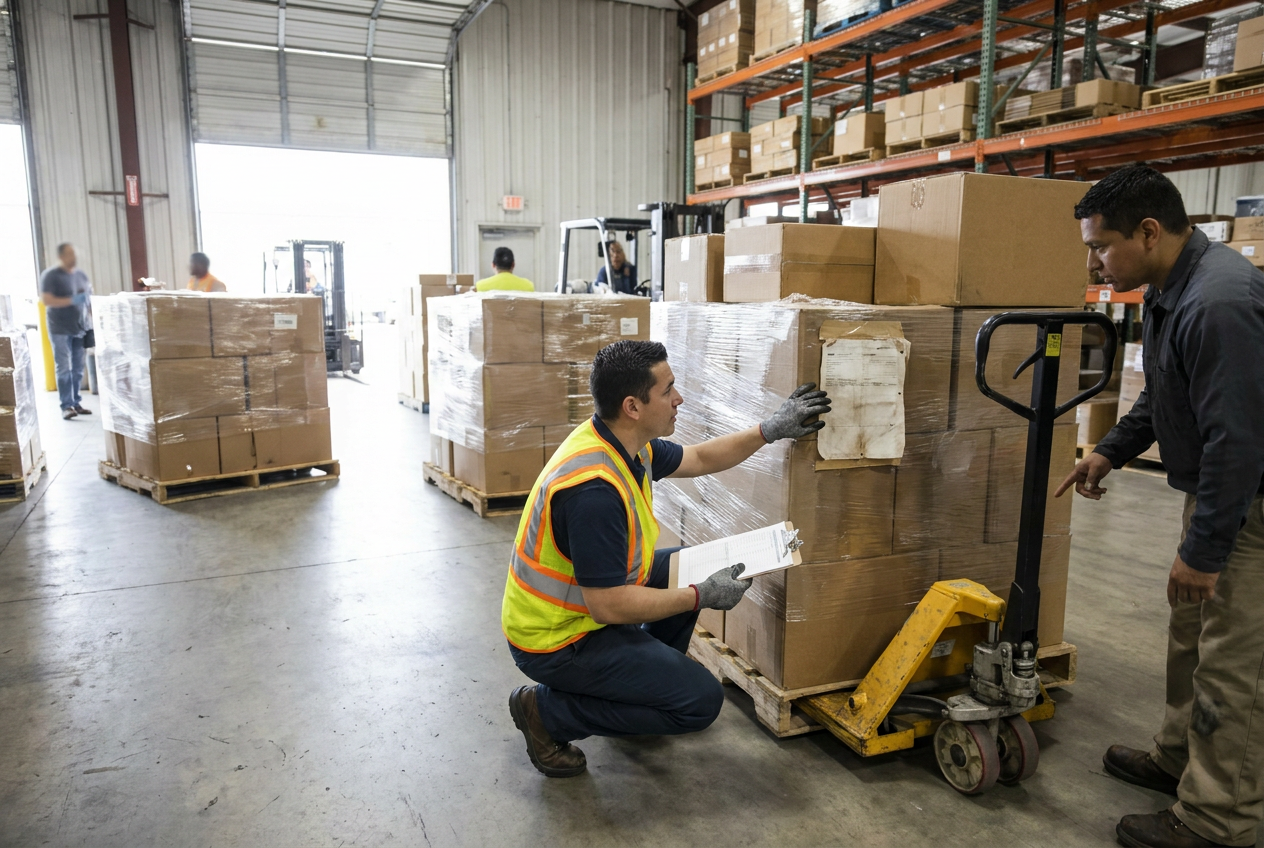
Match the load and receiving route—not just the rating
Dense merchandise can create concentrated loading; bulky merchandise can obscure the operator’s view or produce a high center of gravity. Neither a category name nor pallet height reliably predicts weight. A tightly wrapped load can still be unstable underneath the wrapping.
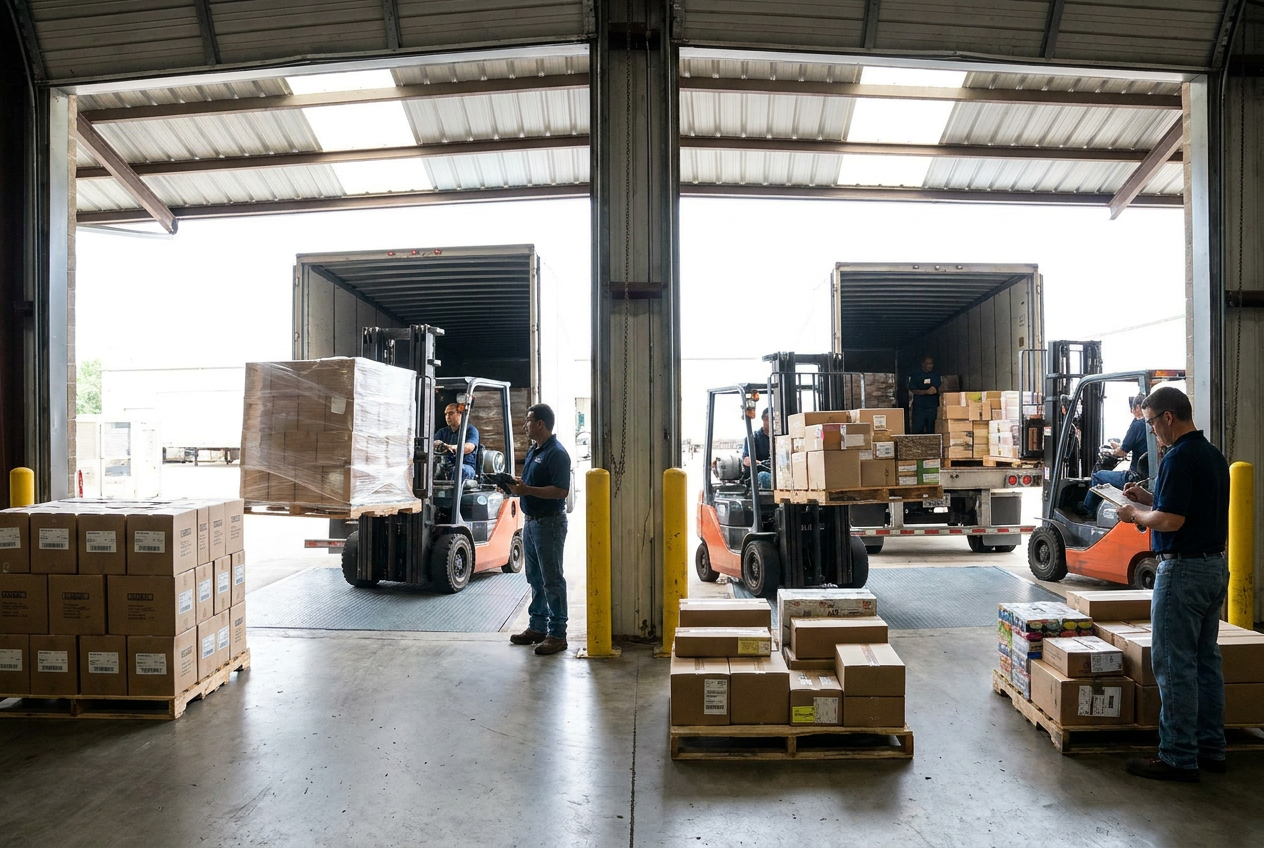
A loading dock is an elevated receiving platform used to transfer goods between a building and a vehicle. Inspect the entire route from the trailer to the storage position, including dock equipment, floors, turns and staging space. A manual pallet jack is not an unloading solution for a trailer standing above ground level without an appropriate transfer arrangement.
Conditions that require a different plan
- Slopes: A manual jack may have no effective service brake. Do not treat its lifting rating as approval for ramp travel; follow the manufacturer’s restrictions.
- Rough or soft surfaces: Gravel, broken pavement, potholes and soft asphalt can stop small wheels or destabilize a load.
- Dock transitions: Confirm the dockboard or leveler is rated for the combined applicable load, including handling equipment and operator where relevant.
- Trailer hazards: Confirm the vehicle is secured through the receiving site’s approved procedure and the trailer floor is suitable before entry.
- Tight aisles: Allow room for the handle, operator and turning load, not just the pallet footprint.
- Damaged or leaning loads: Isolate them and arrange qualified handling rather than attempting to straighten them while moving.
The route’s weakest component governs the operation. A higher-capacity jack cannot upgrade a dockboard, weak floor or damaged pallet. Powered equipment also requires appropriate operator training and authorization; use is not simply a matter of pushing fewer pounds by hand.
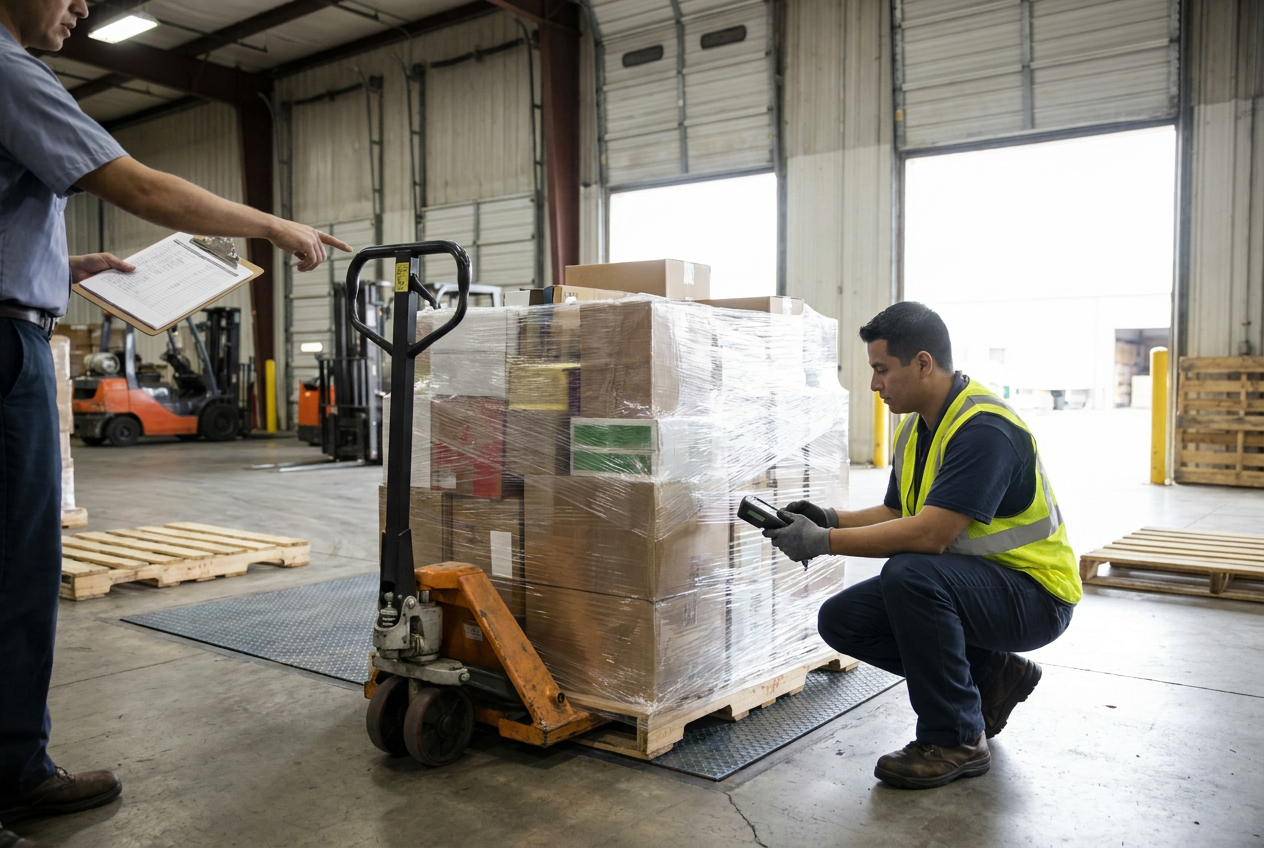
Read listings for handling requirements, not weight assumptions
Use liquidation truckloads for sale and the liquidation pallets inventory hub to identify the buying format, then inspect the specific listing. The truckloads category groups larger purchasing options, while the general merchandise category can include varied merchandise that requires load-by-load handling checks.
Compare the details available for a Home Depot Tool and Hardware Truckload with a Macy’s Textile Truckload. These names are not evidence of pallet weights, dimensions or condition. Confirm those details rather than assigning assumed weights by merchandise type. PalletCove is an independent reseller, not affiliated with, endorsed by or sponsored by any retailer named.
Condition grade describes merchandise condition, not pallet integrity:
- Customer returns: Returned merchandise; do not assume unused or working condition.
- Overstock: Excess inventory; the term alone does not verify a NEW condition listing.
- Shelf pulls: Merchandise removed from selling shelves, with condition governed by the listing.
- Salvage: Merchandise described for salvage purposes; plan around the stated limitations.
- As-is: Read the specific description and applicable claims terms rather than interpreting the phrase as a universal condition guarantee.
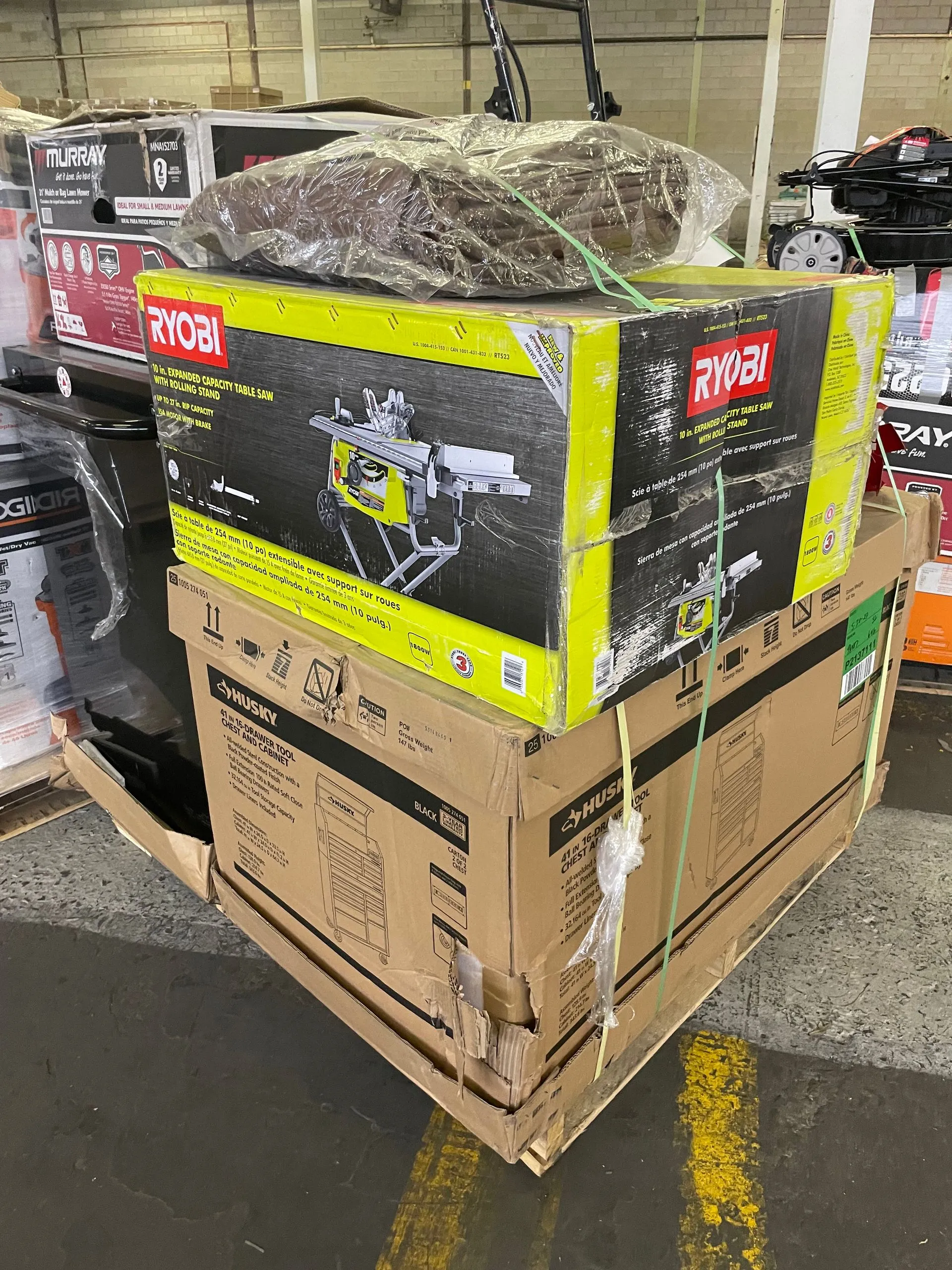
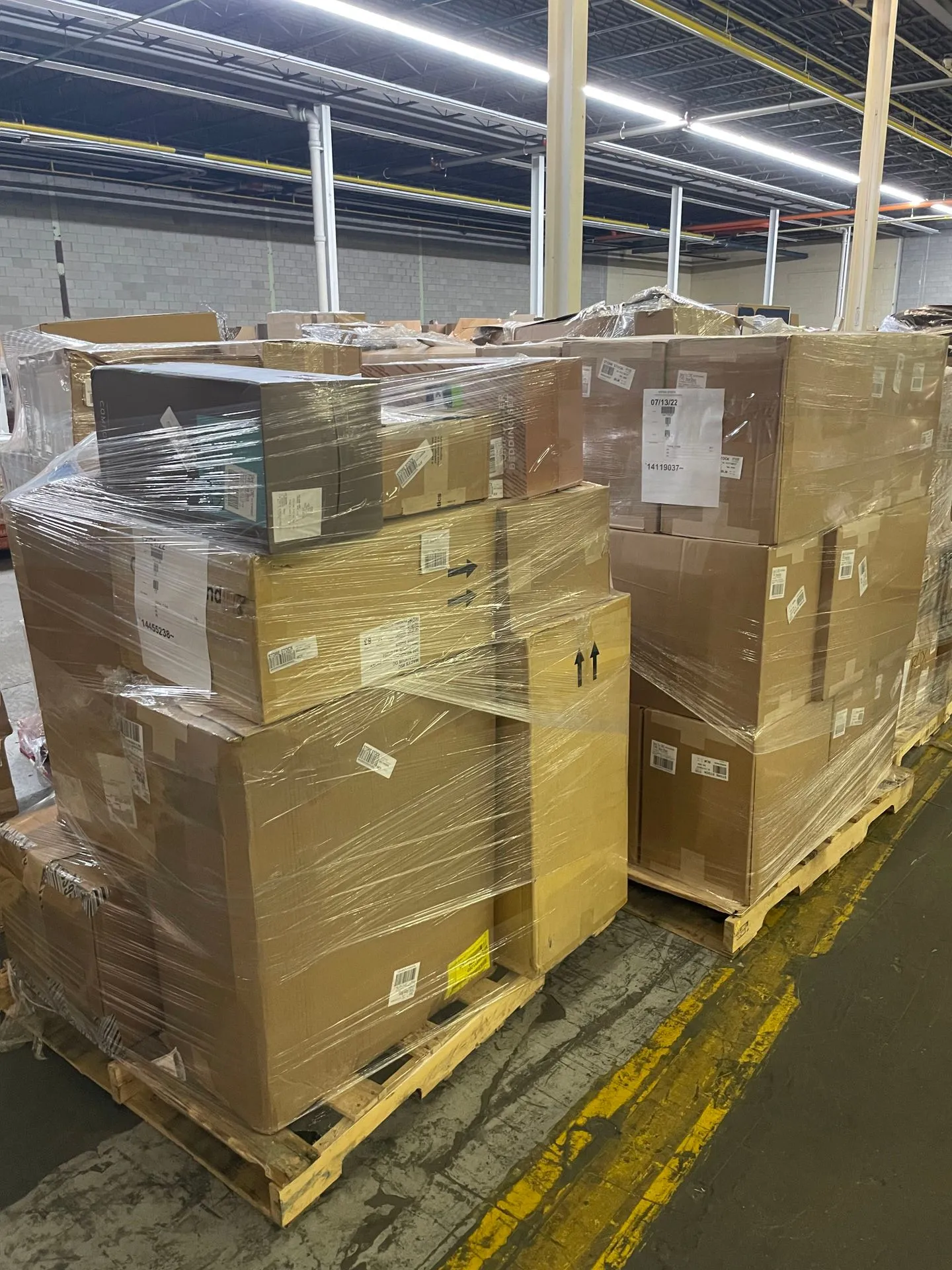
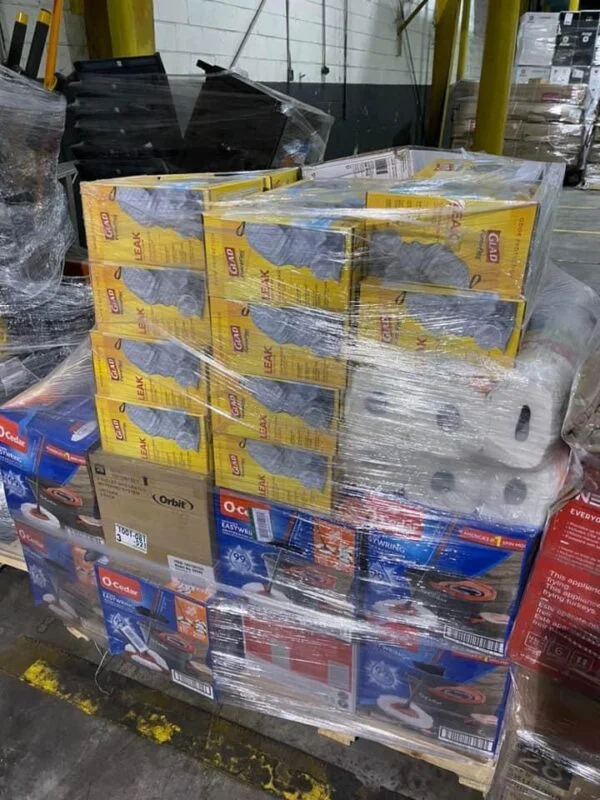
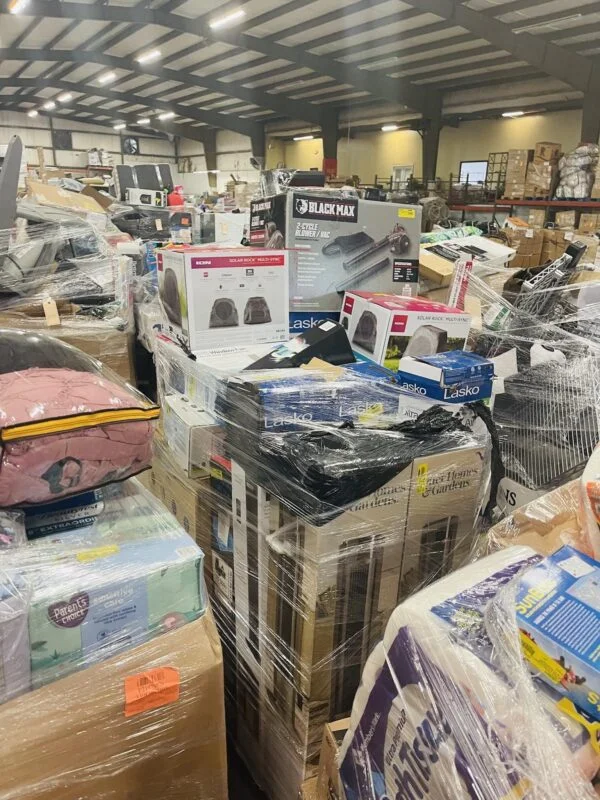
Photos show representative loads. Contents of each pallet vary, pallets are not individually tested, and contents are sold as described in the listing. A manifest helps with inventory planning but does not replace physical handling information.
Order with receiving constraints already identified
PalletCove’s listed price includes freight. Free shipping—the only delivery option—is available on every order to all 48 contiguous states. It does not mean every property or pallet jack is compatible with the arriving load. Buyers sourcing liquidation pallets in Texas and liquidation pallets in Florida should verify receiving access and unloading arrangements before ordering.
No payment is collected on the website order form. After order review, a secure card link is emailed; Visa, Mastercard, American Express and Discover credit and debit cards are the only accepted payment method. Valid resale certificates are reviewed and applied where the buyer’s state allows.
Handling takes 1–3 business days after payment clears. Transit from Houston is typically 3–7 business days, for an estimated total of 4–10 business days. The processing cutoff is 2:00 PM Central Time, America/Chicago, Monday–Friday; after-cutoff confirmations begin the next business day. Weekends and applicable holidays do not count. Check the shipping policy and delivery timing when planning equipment availability.
Inspect on delivery before moving into storage
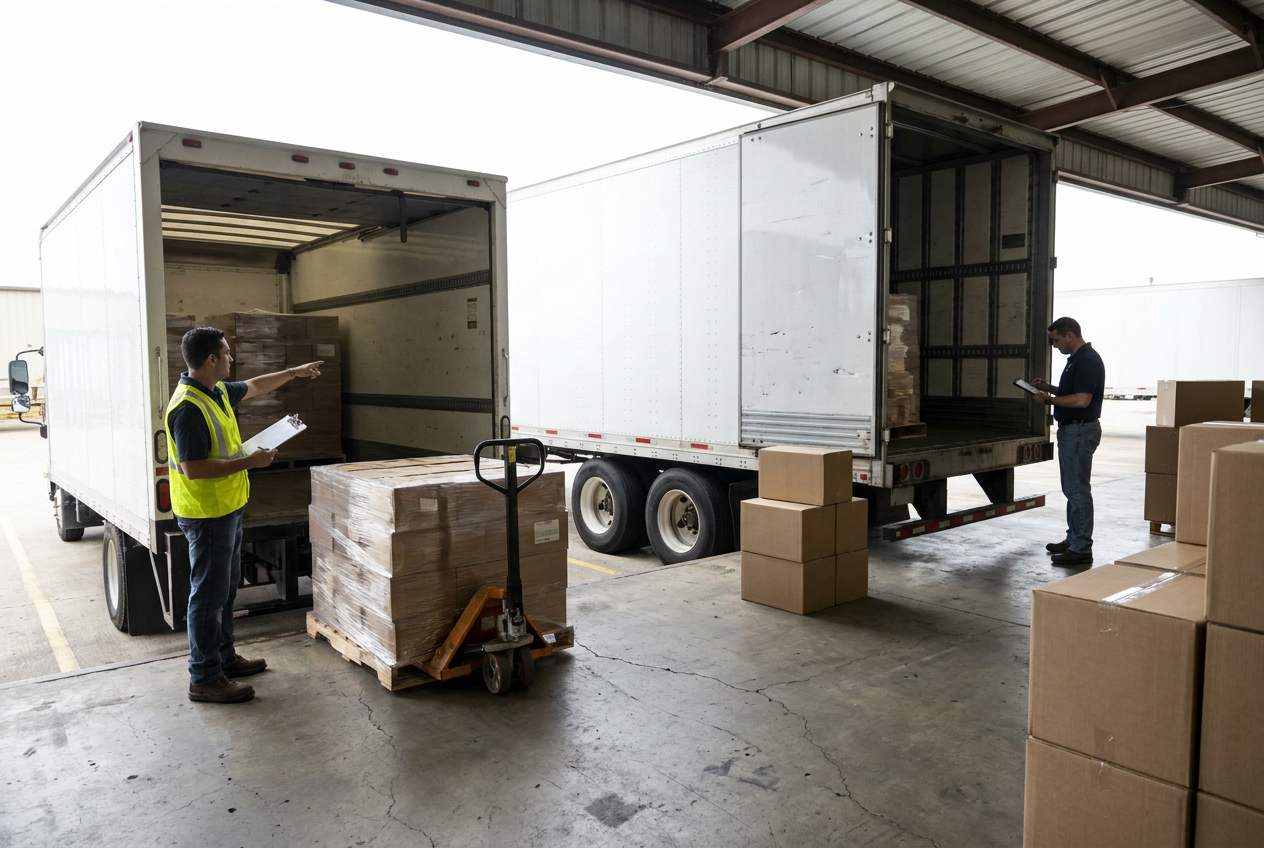
Arrange receiving access and a trained operator ahead of arrival. The freight delivery appointment guide addresses scheduling; do not assume a universal 24-hour advance call.
- Compare shipment identifiers and available pallet counts with the bill of lading.
- Photograph visible damage, shifted contents and pallet condition before movement when safe.
- Record visible exceptions on delivery paperwork and retain copies.
- Check the jack’s wheels, forks, hydraulics and controls according to its inspection procedure.
- Confirm load weight, fork entry and route before lifting; stop if anything is uncertain.
- Stage loads on sound, level surfaces without obstructing exits or aisles.
Trailer length alone—including a 53-foot trailer—does not establish pallet count or individual weights. Likewise, storage planning must account for floor suitability and stable placement, not just how many pallets fit into a room.
Report delivery issues within 48 hours. Under the Refund & Returns Policy, United States products explicitly listed as NEW ONLY qualify for defective and non-defective returns and exchanges within 30 calendar days of delivery. Returns are by mail, with the customer responsible for the return label and shipping; the restocking fee is 15% of the product price. Refund processing takes 10 calendar days after authorized return receipt and inspection, or approval where no physical return is required. Mixed/used loads have separate claims terms, not routine change-of-mind returns; the 48-hour delivery-reporting request does not shorten eligible new-product returns.
Frequently asked questions
Is a 5,500-pound pallet jack enough for liquidation pallets?
Only if every load is within its applicable rating and fits the equipment correctly. Verify individual gross weights, pallet construction and operating conditions; the rating alone is insufficient.
Can I divide truckload weight by pallet count?
That calculation gives an average, not the maximum individual weight. Use individual weights or a documented maximum to select handling equipment.
Will standard forks fit every 48-by-40-inch pallet?
No. Entry openings, bottom boards, lowered fork height and load-wheel travel can prevent compatibility even when the external footprint matches.
Can a pallet jack unload floor-loaded merchandise?
Not directly: floor-loaded goods sit on the trailer floor rather than on accessible pallets. They require a separate unloading and palletizing plan before a pallet jack can move suitable assembled loads.
What if the jack lifts the pallet but is difficult to move?
Stop and investigate rather than adding force or people. Excessive resistance can indicate wheel problems, unsuitable surfaces, interference or an incorrect load arrangement; lifting successfully does not prove the move is safe.
Talk to PalletCove Liquidation
Choose handling equipment from verified gross weights, actual pallet geometry and a suitable receiving route. For shipment-level planning, return to the liquidation truckload buying guide, then contact our order desk with your receiving constraints and review current inventory.
PalletCove Liquidation LLC
4000 Telephone Rd Unit B11, Houston, TX 77087
Phone: (713) 819-3904
Email: sales@palletcoveliquidation.com
Hours: Mon–Fri 8:00 AM – 6:00 PM CT, Sat 9:00 AM – 2:00 PM CT, Sun closed
About PalletCove Liquidation
Published by PalletCove Liquidation LLC, based in Houston, Texas. Our buying guides cover evaluating liquidation inventory and preparing for delivery. Consult the current product listing and store policies for purchase terms.