At a glance
Do Texas inventory resellers need an LLC? Compare business structures, separate formation from tax paperwork, and learn what to review before buying liquidation pallets or truckloads.

You generally do not need an LLC just to start reselling inventory in Texas. A person operating alone can conduct business as a sole proprietor, subject to applicable registration, licensing, and other requirements. An LLC is a business-structure choice—not a universal permission slip to buy liquidation pallets.
The important question is whether an llc for reselling fits your exposure, ownership plans, and administrative capacity. Buying inventory, storing it, handling customer complaints, and signing warehouse agreements create different risks from occasionally selling personal belongings.
Entity formation is also separate from tax registration and purchasing documentation. For PalletCove’s purchasing rules, start with the sales tax and resale certificate policy: valid resale certificates are reviewed and applied where the buyer’s state allows. This article provides general business information, not individualized legal or tax advice.
1. Sole proprietorship versus LLC: what actually changes?
A sole proprietorship is a business owned by one individual without a separate legal entity between the owner and the operation. An LLC, or limited liability company, is a legal entity formed under state law. A one-person business can be an LLC; having employees or partners is not a prerequisite.
| Decision point | Sole proprietorship | Texas LLC |
|---|---|---|
| --- | --- | --- |
| Legal identity | Owner and business are not separate legal persons | Entity is legally separate from its owner or owners |
| Formation | No LLC formation filing; other requirements may apply | Certificate of formation filed with the Texas Secretary of State |
| Business obligations | Owner is generally personally responsible | Members generally have limited liability for entity obligations, with exceptions |
| Administration | Usually simpler to establish and maintain | Registered agent, entity records, and ongoing compliance require attention |
| Co-ownership | A sole proprietorship has only one owner | Can accommodate multiple members through documented ownership arrangements |
| Wholesale paperwork | Uses the individual’s identity and any properly registered business name | Uses the LLC’s correct legal identity and authorized representatives |
A trade name, often called a DBA or assumed name, does not itself create an LLC or liability protection. Texas assumed-name filing requirements depend on the business structure and circumstances; confirm the applicable process before using a different business name.
An LLC changes the legal structure of your resale business. It does not replace purchasing documentation, insurance, safe operating practices, or professional advice.
2. Keep entity formation separate from tax paperwork
Several documents can appear during wholesale onboarding, but they serve different purposes:
- Formation documents establish the LLC. They do not establish that a particular inventory purchase qualifies for any tax treatment.
- Sales tax is a tax imposed under applicable law on certain sales. Questions about your registration, collection, or filing obligations belong with the relevant agency or a qualified adviser.
- A resale certificate is documentation a buyer provides to support qualifying resale purchases. Valid resale certificates are reviewed and applied where the buyer’s state allows.
- An invoice is the seller’s transaction document identifying the parties, merchandise, price, and relevant order details. It is not an entity-formation document.
- A W-9, formally IRS Form W-9, requests a taxpayer identification number and certification. It does not establish that a supplier is reliable or that merchandise meets a stated condition.
An EIN, or employer identification number, is a federal identifier; receiving one does not create an LLC. Likewise, LLC formation does not answer which tax registrations your particular operation needs.
Use the correct legal purchasing name consistently. If an individual begins purchasing before an LLC exists, do not assume those earlier contracts and invoices automatically become LLC transactions afterward. Ask counsel how to document any transfer of inventory or contractual obligations, and ask an accountant how to handle the records.

3. When an LLC deserves closer consideration
There is no universal number of pallets, monthly revenue threshold, or truckload count that makes an LLC mandatory. Consider the nature of your commitments rather than a single sales milestone.
A sole proprietor testing a small resale operation may value administrative simplicity. However, small inventory purchases can still create meaningful exposure: a customer could allege an injury, stored goods could damage rented premises, or a contract dispute could exceed the original purchase price.
An LLC deserves closer examination when you:
- Sign a warehouse lease or take on recurring commercial obligations.
- Hire workers or have other people handling inventory.
- Add a co-owner or accept outside investment.
- Sell products carrying meaningful safety, repair, or warranty concerns.
- Purchase full truckloads or commit substantial funds to inventory.
- Want clearer separation between personal assets and business operations.
Limited liability is not absolute. Personal guarantees, an owner’s own wrongful conduct, and circumstances supporting disregard of the entity can create personal exposure. An LLC also does not make an unsafe product safe or replace appropriate insurance.
Before signing a lease or guarantee, ask a Texas business attorney to explain exactly who is obligated. Discuss product liability, premises exposure, inventory coverage, and vehicle use with a licensed insurance professional. These decisions should reflect what you actually sell and how you operate, not just whether your name ends in “LLC.”
4. Establish the business before scaling purchases
If you choose an LLC, treat formation as the beginning of an operating system rather than a one-time purchase of paperwork.
- Confirm ownership and authority. Decide who owns the business and who may place orders, sign agreements, or approve spending.
- Complete formation correctly. Verify current Texas Secretary of State requirements, maintain a registered agent and registered office, and consider a written company agreement.
- Address separate registrations. Have the appropriate agencies or advisers identify requirements for your activities, business name, and location.
- Separate business finances. Keep business transactions distinct and preserve documentation of owner contributions, reimbursements, and withdrawals.
- Align purchasing records. Match the legal buyer across order requests, invoices, supplier records, and delivery documentation.
- Maintain the entity. Track applicable deadlines, changes of address, and required records instead of assuming formation ends compliance work.
An accountant can help design inventory records before your first large purchase. The companion guide to bookkeeping for liquidation inventory purchases addresses record-keeping in more detail.
For every load, retain the listing description, invoice, payment confirmation, manifest if provided, delivery documents, and claim correspondence. The guide to wholesale invoice requirements for liquidation buyers covers transaction documentation without confusing it with formation paperwork.
5. Match inventory exposure to your business structure
A liquidation pallet is a bulk grouping of merchandise sold as a lot. A truckload is a larger shipment that can involve a full trailer. Neither term guarantees a particular item count, condition, or resale outcome.
Use the liquidation pallets inventory hub to explore pallet options. Compare the operational planning in the liquidation pallet buying guide with the larger commitments discussed in the liquidation truckload buying guide.
Load types, condition grades, and manifests
Category-level loads group merchandise by a broad merchandise type rather than letting the buyer select every item. The general merchandise category and truckload inventory category represent different ways to browse purchasing options, not promises about condition.
A condition grade is a seller’s description of merchandise condition. Read the actual listing rather than assuming all suppliers use the same grading system:
- Overstock describes excess inventory; the label alone does not establish new condition.
- Shelf pulls are goods removed from selling shelves and may have packaging or handling differences.
- Customer returns have been returned by prior customers; completeness and functionality can vary.
- Salvage generally signals inventory intended for parts, repair, recovery, or similar uses, subject to the listing.
- New should be used only when the listing explicitly identifies the merchandise that way.
A manifest is an inventory list associated with a load. When one is available, check what it describes, whether quantities are represented as exact or estimated, and whether its scope matches the offered lot. A manifest is not proof of item-level testing or future resale proceeds.
For example, compare the descriptions of the Amazon General Merchandise Truckload and Macy’s Textile Truckload rather than inferring condition from their names. PalletCove is an independent reseller, not affiliated with, endorsed by, or sponsored by any named retailer.
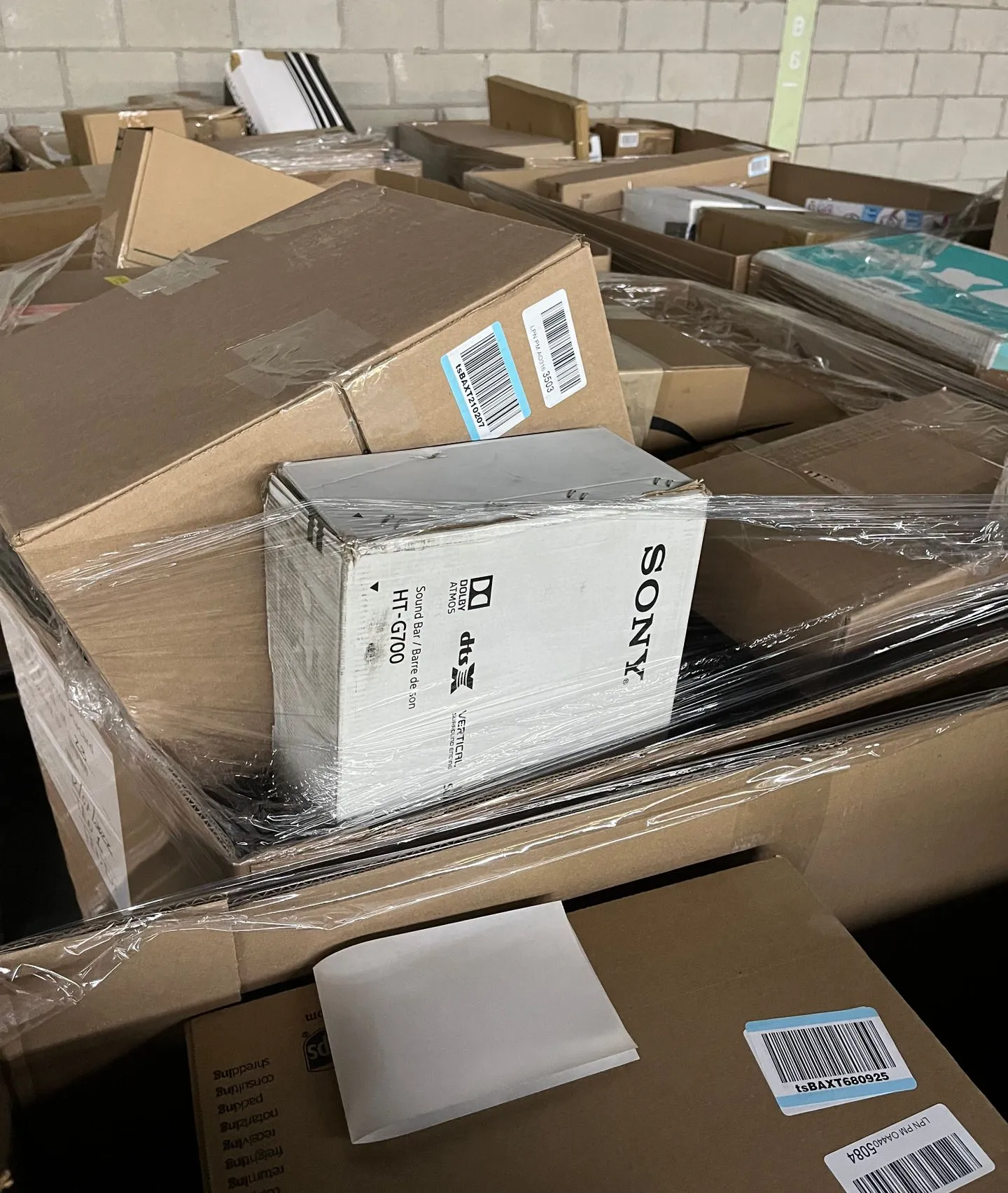
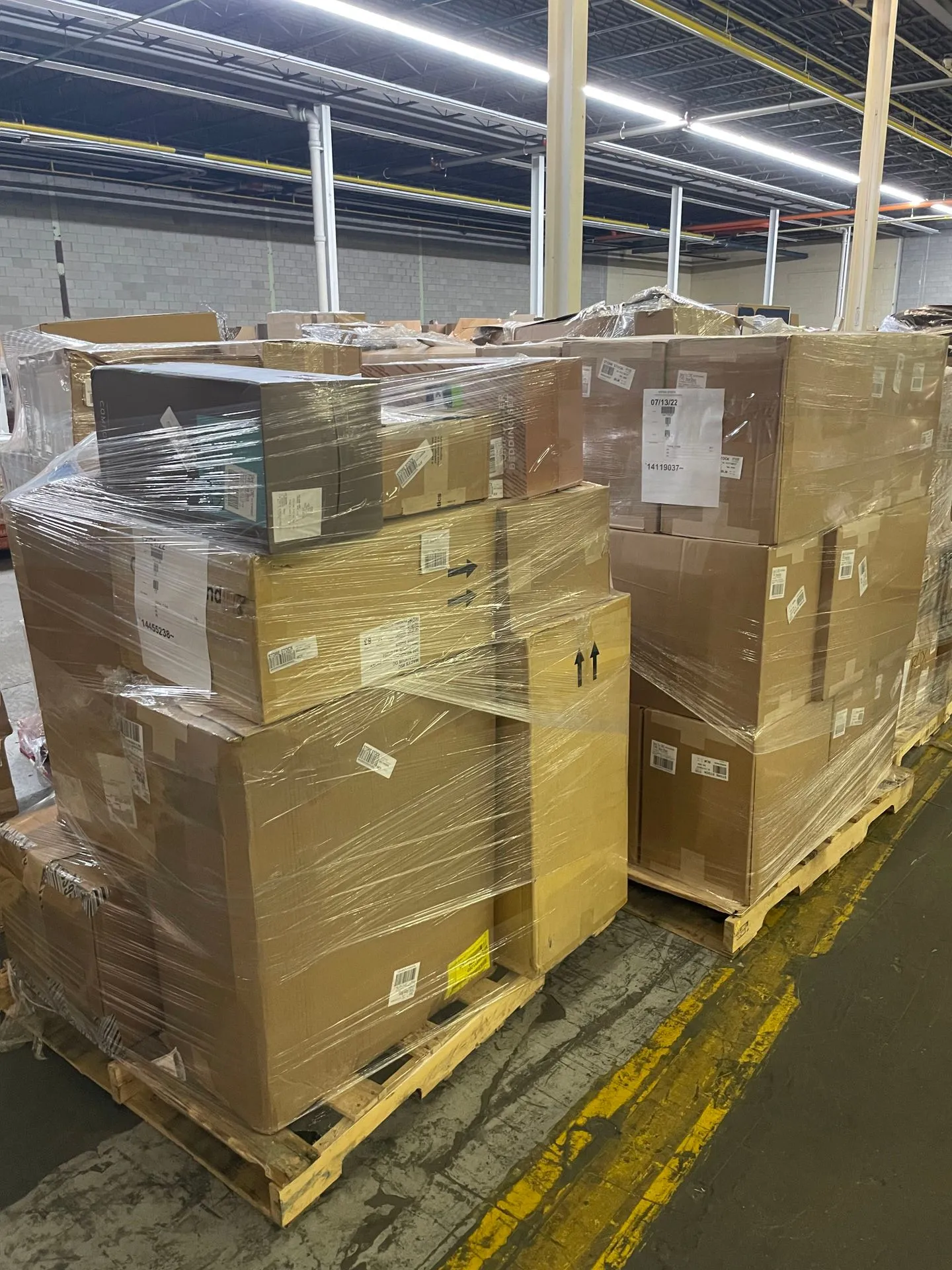
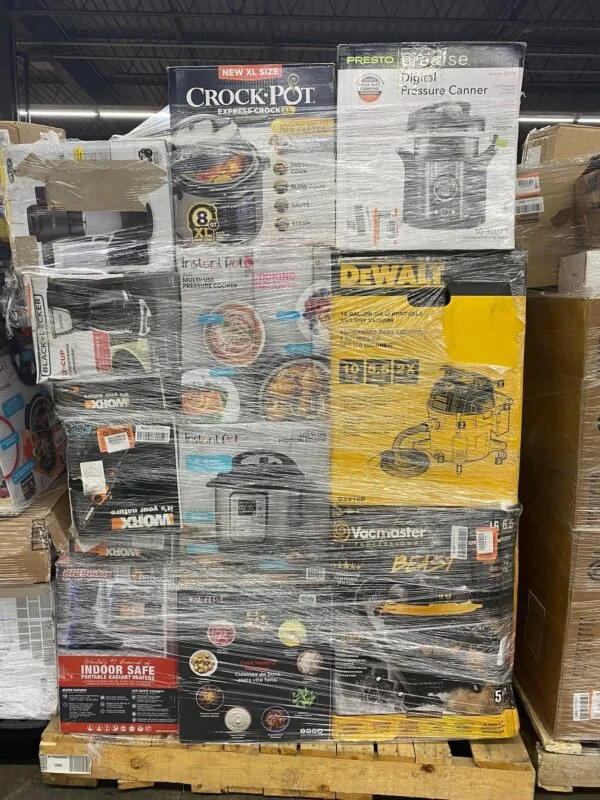
Photos show representative loads. Each pallet’s contents vary, pallets are not individually tested, and contents are sold as described in the listing. If a listing uses “as-is,” review its scope alongside the applicable policies; do not interpret it as eliminating every possible claim or return right.
6. Order, pay, receive, and document the load
Supplier vetting means checking a supplier’s identity, documented offering, transaction process, and policies before committing funds. An LLC certificate or W-9 alone does not complete that check. Paying safely and understanding invoices are distinct tasks from deciding your own entity structure.
Pricing and payment
Budget from the listed purchase price and your own downstream operating costs, including storage, sorting, repairs where appropriate, and selling expenses. Do not treat an advertised retail reference or manifest total as expected revenue.
At PalletCove, freight is included in the listed price. Free shipping is the only delivery option, on every order, throughout the 48 contiguous states. That includes buyers exploring liquidation pallets in Texas and liquidation pallets in Florida.
No payment is collected on the website order form. After order review, PalletCove emails a secure card link. Visa, Mastercard, American Express, and Discover credit and debit cards are the only accepted payment method; see the wholesale order payment policy.
Delivery timing and inspection
Handling takes 1–3 business days after payment clears. Transit from Houston is typically 3–7 business days, for an estimated 4–10 business days total. The processing cutoff is 2:00 PM Central Time, America/Chicago, Monday–Friday; after-cutoff confirmations begin the next business day. Weekends and applicable holidays do not count.
LTL means less-than-truckload transportation; a full-trailer shipment presents different space and receiving demands. Confirm receiving arrangements for the actual order rather than assuming your storage location can accommodate either format.
At delivery, compare the shipment with available paperwork, photograph visible damage and load condition, and record discrepancies accurately on delivery documents where appropriate. Preserve packaging and supporting records while seeking instructions. Request delivery-issue reporting within 48 hours; this does not shorten eligible new-product return windows.
Returns and claims
Under the United States Refund & Returns Policy, products explicitly listed as NEW ONLY qualify for defective and non-defective returns and exchanges within 30 calendar days of delivery. Returns are by mail; the customer is responsible for the return label and shipping. The restocking fee is 15% of the product price.
Refund processing takes 10 calendar days after authorized return receipt and inspection, or approval where no physical return is required. Mixed and used loads have separate claims terms, not routine change-of-mind returns. Keep formation questions separate from these contractual rights: purchasing through an LLC does not rewrite the listing or return policy.

7. Common mistakes and when to get advice
Avoid forming an LLC solely because someone promised automatic tax savings, guaranteed wholesale access, or complete personal protection. Also avoid mixing personal and business records, using inconsistent buyer names, or buying more inventory than you can safely receive and store.
Consult a business attorney before adding owners, signing significant guarantees, transferring existing contracts, or confronting a serious product-liability concern. Consult a CPA or qualified tax adviser about entity-specific reporting, registration questions, and inventory accounting. For multi-state selling or marketplace activity, bring facts about where you operate and sell rather than assuming Texas formation resolves every question.
Prepare a short adviser packet: ownership plans, sales channels, anticipated inventory types, storage arrangements, sample supplier terms, and existing obligations. That makes professional advice more targeted and useful.
Frequently asked questions
Is an llc for reselling required in Texas?
Generally, no. A single owner can operate as a sole proprietor, subject to applicable requirements; an LLC is a separate structural choice that deserves review as obligations and risks grow.
Does forming an LLC replace a resale certificate?
No. Formation and resale documentation serve different purposes. Valid resale certificates are reviewed and applied where the buyer’s state allows.
Can I start as a sole proprietor and form an LLC later?
Yes, but changing structures requires more than changing your storefront name. Review ownership of existing inventory, contracts, supplier accounts, and records with appropriate advisers.
Will an LLC protect me from every inventory dispute?
No. Limited liability has exceptions, and personal guarantees or your own conduct may still create exposure. Clear contracts, accurate records, suitable insurance, and safe practices remain important.
Does purchasing a truckload mean I should form an LLC?
Not automatically. A truckload can increase financial and operational exposure, making legal and insurance review more worthwhile. Base the decision on your entire operation rather than shipment size alone.
Talk to PalletCove Liquidation
Choose your business structure deliberately, then keep entity records, purchasing documents, and operational responsibilities aligned. For the broader purchasing framework, review our sales tax and resale certificate requirements; valid resale certificates are reviewed and applied where the buyer’s state allows.
PalletCove Liquidation LLC can clarify listings and order procedures, while your attorney or accountant addresses individualized formation and tax questions. Review current inventory or contact our order desk before placing an order.
- Address: 4000 Telephone Rd Unit B11, Houston, TX 77087
- Phone: (713) 819-3904
- Email: sales@palletcoveliquidation.com
- Hours: Mon–Fri 8:00 AM – 6:00 PM CT, Sat 9:00 AM – 2:00 PM CT, Sun closed
About PalletCove Liquidation
Published by PalletCove Liquidation LLC, based in Houston, Texas. Our buying guides cover evaluating liquidation inventory and preparing for delivery. Consult the current product listing and store policies for purchase terms.