At a glance
Check Houston-area address restrictions before storing liquidation inventory at home, scheduling customer pickups or receiving pallets. Learn which offices, documents and practical limits to review.

Searching for reselling business zoning requirements in Houston requires a different approach than checking a conventional zoning map. Houston does not have conventional use-based zoning, but that does not make every address suitable for inventory storage, customer pickups or commercial deliveries.
A reseller must check the property's actual jurisdiction, recorded restrictions, lease or association rules, applicable building and fire requirements, and delivery access. An address with “Houston” in its mailing address is not necessarily inside Houston city limits.
Keep property permission separate from purchasing paperwork. A resale certificate is documentation supporting an eligible purchase for resale; sales tax is a tax on taxable sales. Neither establishes permission to operate at an address. For the broader purchasing framework, consult our reseller sales tax and resale certificate policy: valid resale certificates are reviewed and applied where the buyer's state allows. This article is a property-checking framework, not legal or tax advice.
1. Establish which rules govern the exact address
Inside Houston, asking “What is my business zoning?” may not identify the restrictions that matter. Start with the parcel, municipality and proposed activities—not simply the business name.
Outside Houston, incorporated municipalities may have conventional zoning and home-occupation rules. Unincorporated Harris County is different again: do not assume either Houston's process or a neighboring city's zoning ordinance applies. County development, floodplain and fire requirements may still matter.
| Address question | Where to begin | What to establish |
|---|---|---|
| --- | --- | --- |
| Is the parcel inside city limits? | Official municipal boundary tools and the relevant planning office | Governing jurisdiction, not just postal city |
| Are private restrictions recorded? | County clerk records, title documents and association records | Business-use, storage, parking and delivery restrictions |
| Does an existing building approval fit the activity? | Local permitting or building department | Whether proposed storage, retail or warehouse use requires review |
| Are there fire-safety concerns? | Responsible fire marshal or fire-prevention office | Storage arrangement, exits and commodity-specific requirements |
| Is the property in a regulated floodplain? | Relevant floodplain administrator | Applicable development and building requirements |
For Houston addresses, the Houston Planning and Development Department and Houston Permitting Center are useful starting points. Ask which office handles your particular question and request the applicable written requirements. Public permits do not automatically override private restrictions.
No conventional zoning does not mean unrestricted commercial use. Verify the address, the activity and the property's private restrictions before buying inventory.
2. Write an operating description before asking for approval
“Online resale business” is too vague for a useful answer. Listing products at a desk is different from storing stacked pallets, repairing returns or bringing buyers to a garage.
Prepare a one-page description that includes:
- Indoor storage area, proposed shelving and maximum inventory volume.
- Merchandise types, packaging and any batteries, liquids or aerosols.
- Whether you will sort, photograph, repair, repackage or dismantle goods.
- Expected customer visits, employee presence and operating hours.
- Delivery frequency, approximate shipment size and expected vehicle type.
- Parking, loading, waste storage, signage and outdoor activity.
Ask: “At this parcel, may I store this merchandise indoors, receive these deliveries and conduct these activities? What approvals or limits apply?” Then ask whether removing customer visits or relocating inventory would change the answer.
Retain dated responses, the description you submitted and any conditions attached. An answer about quiet desk work does not necessarily cover later expansion into a warehouse operation. Recheck before increasing storage, hiring on-site staff or adding public pickups.

3. Check home storage, customer traffic and private restrictions
Home inventory storage
Review the recorded deed restrictions and amendments, lease, condominium documents and homeowners association rules where applicable. Look for language addressing business use, commercial vehicles, nuisance, outdoor storage, garages and accessory buildings. If wording is unclear, obtain qualified legal interpretation rather than assuming silence means permission.
A landlord's permission may be necessary but insufficient. Likewise, an association's approval does not replace building or fire review. Get relevant approvals in writing and identify any limits on volume or activity.
Assess the storage space itself. Keep exits, electrical equipment and required access routes clear. Do not assume residential floors or attic spaces can support concentrated inventory loads; seek qualified advice where capacity is uncertain. Ask the fire authority about storage height, aisle access and potentially hazardous goods.
Customer pickups and neighborhood impacts
Appointment-only sales can still create customer traffic. Ask specifically about visits, parking, queues, signs and loading rather than assuming a scheduled pickup is exempt from restrictions.
Consider the combined impact of delivery vehicles, packing waste, noise and repeated buyer visits. A home with room for boxes may still be unsuitable for retail-style activity. Online-only sales eliminate some traffic, but not storage or delivery restrictions.
Alternatives when a residence does not fit
A permitted commercial storage or warehouse space may be more workable. However, self-storage leases may prohibit operating a business, receiving freight, conducting sales or handling certain merchandise. Verify the actual contract and approved use before treating any rented unit as a substitute warehouse.
4. Match inventory scale to the approved space
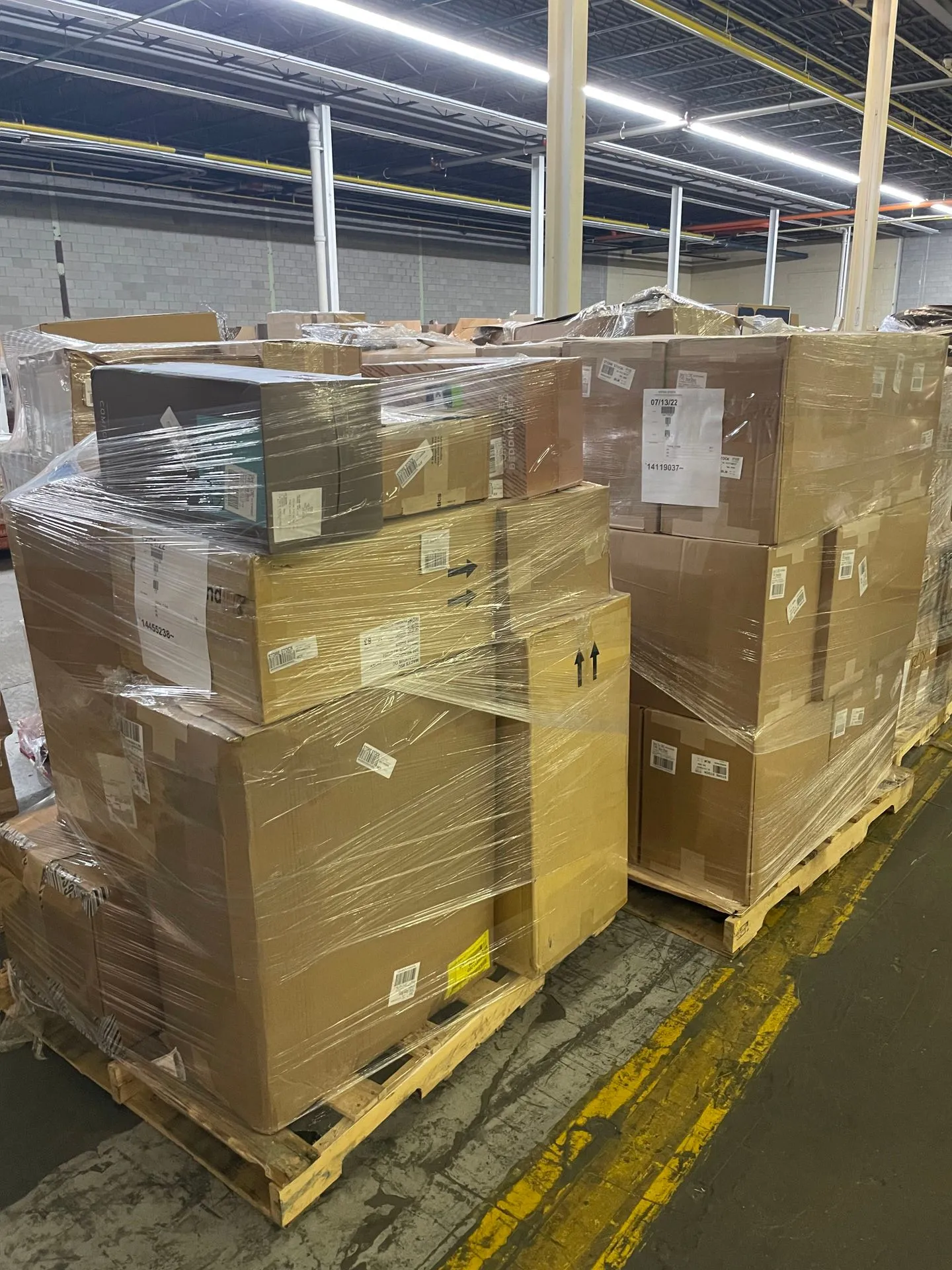
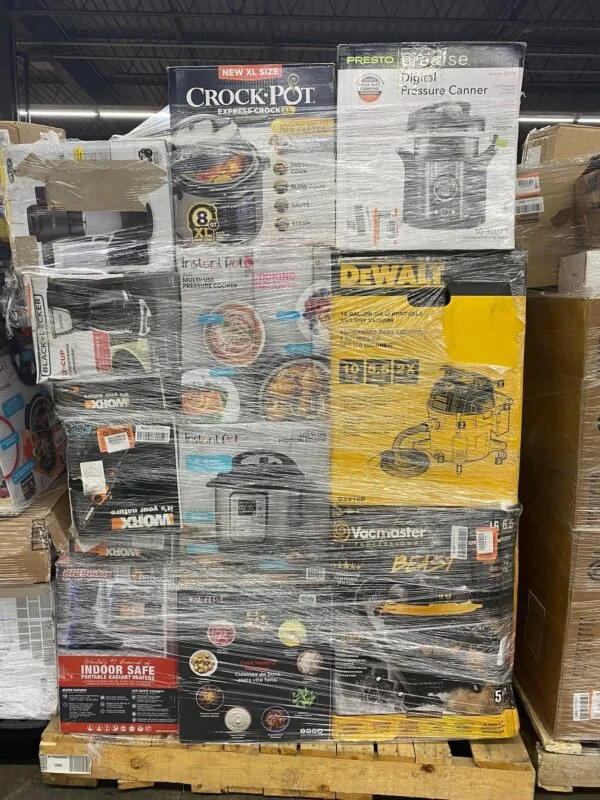
A liquidation pallet is a bulk unit of merchandise sold together for resale. A truckload is a larger shipment; a full trailer creates substantially different receiving and storage demands than a pallet. LTL means less-than-truckload transportation, where a shipment shares trailer capacity with other freight. It describes transportation, not permission to unload at a residence.
Use the liquidation pallet inventory hub to understand available options, then compare the space implications using our pallet buying guide and truckload buying guide. Do not choose a load solely because its total price fits your budget.
Broad general merchandise inventory may require flexible sorting space, while truckload inventory requires planning around larger receiving and storage volumes. Listings such as the Shoes Truckload and Macy’s Textile Truckload are starting points for asking about packaging, dimensions and handling—not evidence that either fits a particular home.
Condition and manifests affect the footprint
A condition grade describes the listing's stated merchandise condition, not a standardized guarantee across suppliers. Overstock generally means excess inventory; shelf pulls are goods removed from selling shelves; customer returns were returned by buyers; salvage may require repair, parts recovery or disposal. None should automatically be treated as new.
A manifest is an inventory document describing a load's contents, with detail varying by listing. Ask whether one is available and what its quantities and descriptions represent. Do not infer exact contents from photographs.
PalletCove photos show representative loads. Contents of each pallet vary, pallets are not individually tested, and contents are sold as described in the listing. Budget space for inspection, sorting, uncertain items and packaging waste. “As-is” wording is not a substitute for reading the stated condition and applicable claims terms.
5. Verify commercial occupancy and freight access
Before signing a commercial lease, ask the permitting authority whether the existing occupancy approval covers your proposed combination of storage, retail sales, sorting and repairs. A former office or retail unit is not automatically approved for warehouse storage. Ask whether a change of use, alterations, racks, signs or other work requires permits or review.
Request the landlord's available occupancy documents, building plans and restrictions on deliveries. Make approval contingencies part of lease discussions where appropriate. Also confirm that insurance covers the proposed inventory and activities; a policy does not itself authorize the use.
Separate legal permission from physical access:
- Check entrances, overhead clearances and the route from unloading point to storage.
- Identify lawful loading locations without blocking sidewalks, streets or emergency access.
- Confirm receiving equipment, personnel and handling arrangements before ordering.
- Tell the order desk about residential access, gates, restricted hours and other site limitations.
- Do not assume the carrier can place merchandise inside a garage or building.
For buyers comparing liquidation pallets in Texas with liquidation pallets in Florida, the property check remains local to each delivery address. Availability of shipping does not establish permission to receive or store inventory there.

6. Order only after the address passes review
Supplier vetting means checking a supplier's identity, policies, listing details and transaction process before purchasing. Keep that separate from checking your own property's permissions. PalletCove is an independent reseller and is not affiliated with, endorsed by or sponsored by any retailer named.
Review the listed price, merchandise description, available manifest and condition before submitting an order. Freight is included in the listed price. Free shipping is the only delivery option on every order to all 48 contiguous states; that does not remove the need to confirm suitable receiving arrangements.
PalletCove accepts only credit and debit cards—Visa, Mastercard, American Express and Discover—through a secure card link emailed after order review. No payment is collected on the website order form. Review the wholesale order payment policy before proceeding.
Handling takes 1–3 business days after payment clears. Transit from Houston is typically 3–7 business days, for an estimated 4–10 business days total. The processing cutoff is 2:00 PM Central Time, America/Chicago, Monday–Friday; after-cutoff confirmations begin the next business day. Weekends and applicable holidays do not count. Do not use that estimate as a guaranteed date for starting occupancy or arranging customer pickups.
An invoice is the supplier's transaction document describing the purchase and charges. Follow the wholesale invoice documentation guide and retain records using the reseller inventory bookkeeping guide. A W-9 is a federal form supplying taxpayer identification and certification information; it is not a business license, property approval or proof of supplier reliability.
7. Document delivery and preserve claims rights
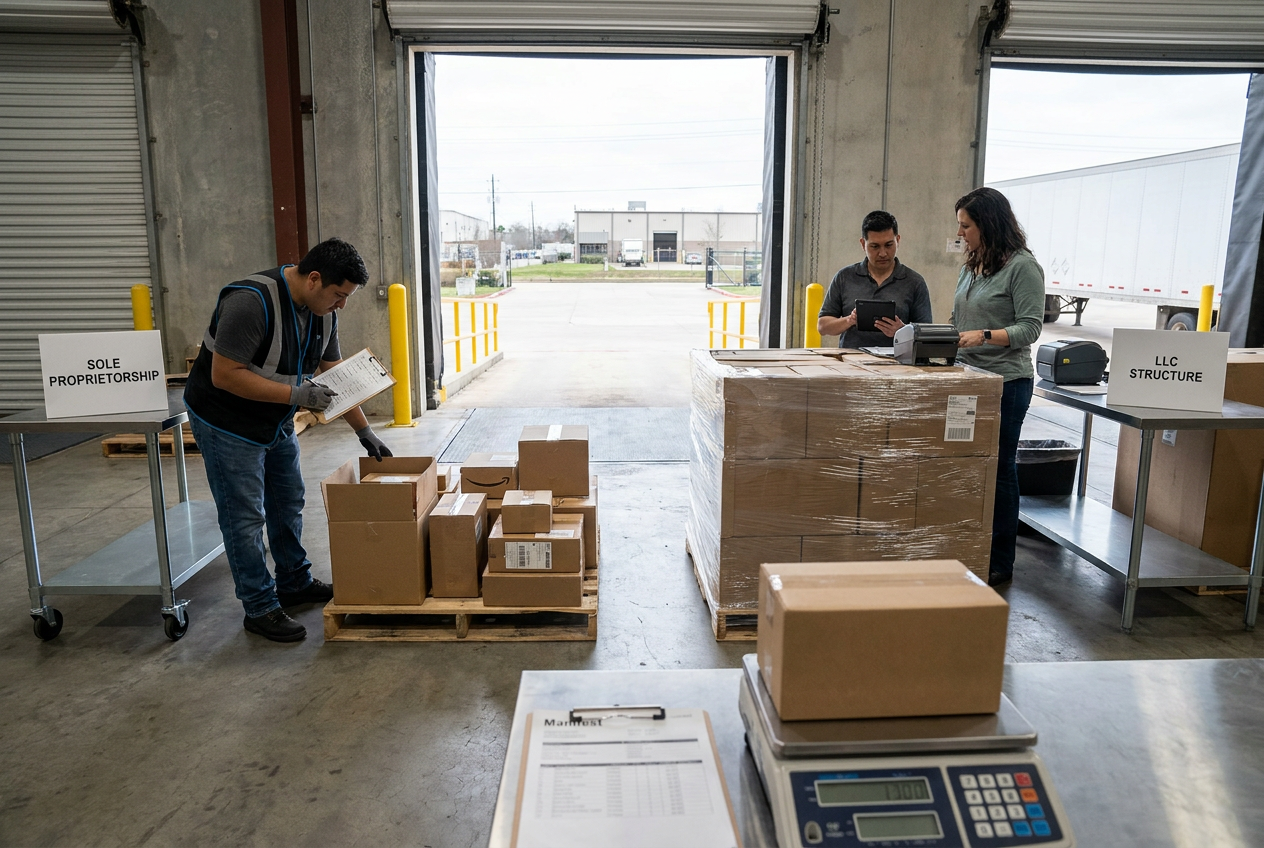
On arrival, inspect what is reasonably accessible and safe before moving goods into storage. Photograph visible damage, packaging and shipment identifiers. Note observable exceptions on delivery paperwork when possible, and retain the invoice, listing, available manifest and relevant correspondence.
Request delivery-issue reporting within 48 hours. This does not shorten eligible new-product return rights. Separate merchandise awaiting review from sale-ready stock, and avoid letting an unresolved shipment obstruct exits or receiving areas.
Under the United States Refund & Returns Policy, products explicitly listed as NEW ONLY qualify for defective and non-defective returns and exchanges within 30 calendar days of delivery. Returns are by mail; the customer is responsible for the return label and shipping. The restocking fee is 15% of the product price, and refund processing takes 10 calendar days after authorized return receipt and inspection, or approval where no physical return is required.
Mixed/used loads have separate claims terms, not routine change-of-mind returns. A later discovery that inventory cannot legally remain at your address does not establish a merchandise defect. Avoid the common mistakes of purchasing before permission is confirmed, equating a mailing address with city jurisdiction, and assuming an LLC or resale certificate authorizes home warehousing.
Frequently asked questions
Does Houston require zoning approval for every resale business?
Houston does not have conventional use-based zoning. The relevant questions concern your actual activities, building and fire requirements, recorded restrictions and other address-specific rules. Ask the responsible offices what review applies to your proposed operation.
Can I store liquidation pallets in my garage?
Do not assume permission merely because the inventory is indoors. Check deed restrictions, lease or association rules, structural suitability, fire access and delivery arrangements. Describe the merchandise and intended maximum volume when requesting guidance.
Are customer pickups allowed if they are appointment-only?
Appointment-only pickups can still constitute business activity and generate traffic. Confirm the applicable restrictions on visitors, parking, signage and loading. An online storefront does not make physical pickups invisible to property rules.
Does a resale certificate authorize my storage address?
No. It relates to purchasing documentation, not land use, occupancy or private property restrictions. Valid resale certificates are reviewed and applied where the buyer's state allows.
Can a full truckload be delivered to a residential address?
Do not assume a residence is suitable. Legal loading access, vehicle clearance, receiving arrangements, permitted storage and private restrictions all need review. Discuss the actual site before ordering rather than relying on shipping availability alone.
Talk to PalletCove Liquidation
Confirm the address first, then choose a load that fits its approved activities and practical capacity. For the broader purchasing framework, revisit our sales tax and resale certificate policy for resellers. Bring your receiving constraints and listing questions when you contact our order desk, and compare them with current inventory before ordering.
PalletCove Liquidation LLC
4000 Telephone Rd Unit B11, Houston, TX 77087
Phone: (713) 819-3904
Email: sales@palletcoveliquidation.com
Hours: Mon–Fri 8:00 AM – 6:00 PM CT, Sat 9:00 AM – 2:00 PM CT, Sun closed.
About PalletCove Liquidation
Published by PalletCove Liquidation LLC, based in Houston, Texas. Our buying guides cover evaluating liquidation inventory and preparing for delivery. Consult the current product listing and store policies for purchase terms.